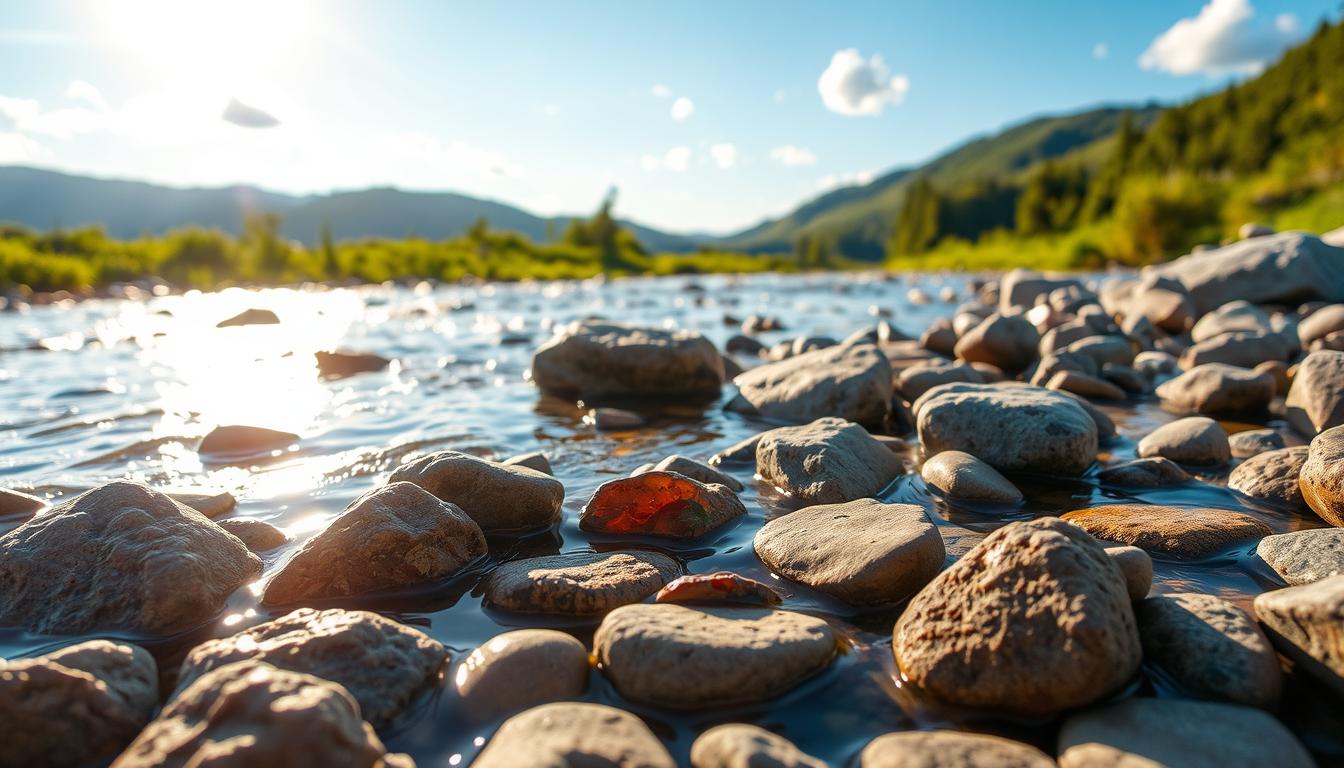
Why Riverbeds Are Good For Rock Collecting becomes clear once you understand how water naturally sorts and exposes geological treasures. Rivers act like giant rock tumblers, breaking down larger formations and depositing smooth, polished specimens in accessible locations.
The constant flow of water creates perfect conditions for discovering quality rocks without heavy digging or specialized equipment. Most rock collectors find their best specimens along riverbanks where centuries of erosion have done the hard work of extraction and sorting.
TL;DR
- Riverbeds concentrate rocks through natural sorting, with heavier specimens settling in predictable locations like inside bends and downstream from rapids.
- Water polishes rocks for 50-100 years on average, creating smooth surfaces that reveal colors and patterns impossible to see in rough specimens.
- Spring floods expose new rock layers annually, with the best collecting typically happening 2-4 weeks after major water events.
- River-collected rocks require zero tumbling or polishing, saving collectors $200-500 in equipment costs compared to raw quarry specimens.
Why Riverbeds Are Good For Rock Collecting
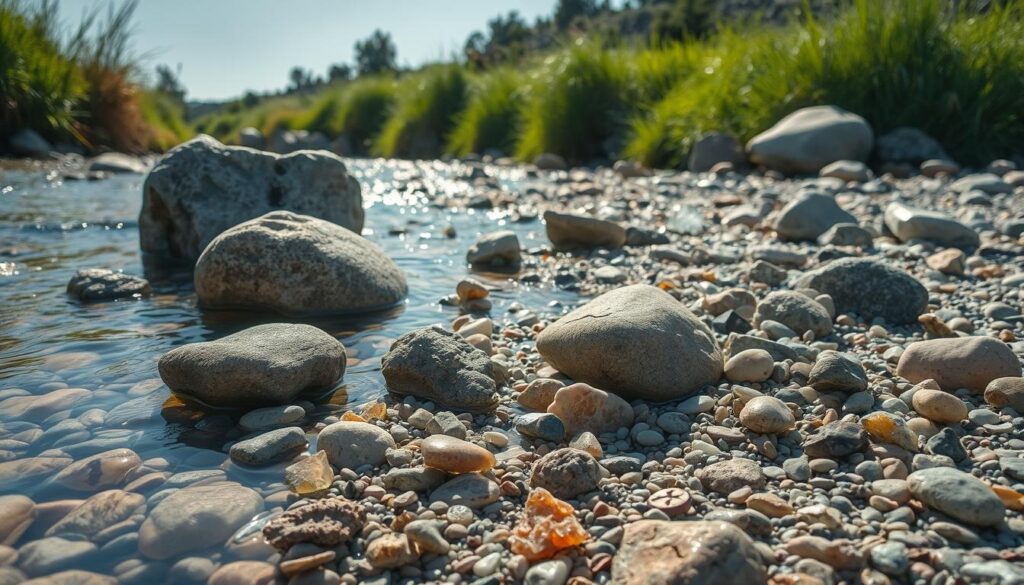
Rivers create natural rock processing systems that work continuously to sort and polish geological specimens. The flowing water breaks rocks free from their original formations and transports them downstream, creating concentrated deposits in specific areas.
Heavy rocks like jasper and agate settle quickly in calm pools and inside river bends. Lighter materials wash away, leaving behind dense concentrations of the most interesting specimens in easily accessible locations.
Natural Rock Processing Benefits
Water acts as nature’s rock tumbler, smoothing rough edges and revealing hidden beauty in ordinary-looking stones. This natural polishing process takes decades but produces results that artificial tumbling rarely matches.
The constant movement removes dirt and oxidation that normally hide a rock’s true colors. Fresh specimens often show brilliant patterns and mineral inclusions that would remain invisible in their original matrix.
Sorting by Density and Size
River currents naturally separate rocks by weight and durability. Harder materials like quartz and chalcedony survive the tumbling process while softer rocks break apart and wash away as sediment.
This natural selection process means riverbed specimens tend to be high-quality materials worth collecting. You’ll find fewer worthless rocks and more genuine finds compared to random surface collecting, especially when you understand the rock types collectors commonly find in different environments.
- Heavy specimens – settle in deeper pools and calm backwaters where current slows
- Medium-weight rocks – collect along gravel bars and shallow areas
- Lightweight materials – wash downstream or float away entirely
- Durable stones – survive repeated tumbling while soft rocks crumble
Accessibility and Exposure
Riverbeds offer easy access to rock formations that would otherwise require digging or blasting. Water erosion exposes layers that might be buried under dozens of feet of overburden in other locations.
Most productive collecting spots sit within walking distance of public access points. You can often fill a collecting bag in a single afternoon without any special equipment or permits.
Seasonal Exposure Patterns
Spring floods and heavy rains regularly expose fresh material by washing away accumulated sediment. Each major water event redistributes rocks and reveals new specimens that were previously buried.
The best collecting happens during low water periods following significant floods. New material appears on gravel bars while high water marks show where the heaviest specimens likely settled.
- Monitor water levels. Check local gauging stations to identify optimal collecting times after flood events.
- Target inside bends. Rivers deposit their heaviest cargo where current speed decreases on curved sections.
- Search gravel bars. Look for recently exposed bars where new material appears after high water.
- Check downstream from obstacles. Rocks collect behind boulders, fallen trees, and bridge supports where current slows.
Timing Your Collecting Trips
Visit riverbeds 2-4 weeks after major rain events when water levels drop but new specimens remain visible. Fresh deposits haven’t been picked over by other collectors yet.
Types of Rocks Found in Riverbeds
River systems transport rocks from their entire watershed, creating diverse collecting opportunities in single locations. You might find specimens from mountain formations hundreds of miles upstream mixed with local materials.
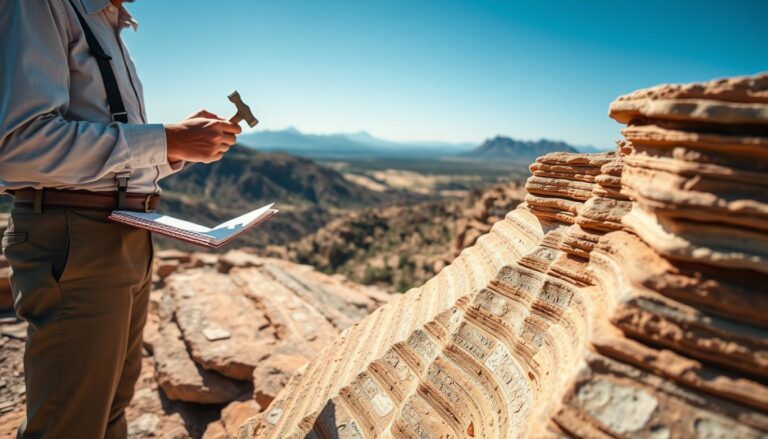
The variety depends on your river’s source region and the rock types present in the surrounding geology. Rivers draining volcanic areas produce different specimens than those flowing through sedimentary or metamorphic terrain, and learning how to read rock layers when collecting helps you understand what to expect.
Common River Rock Finds
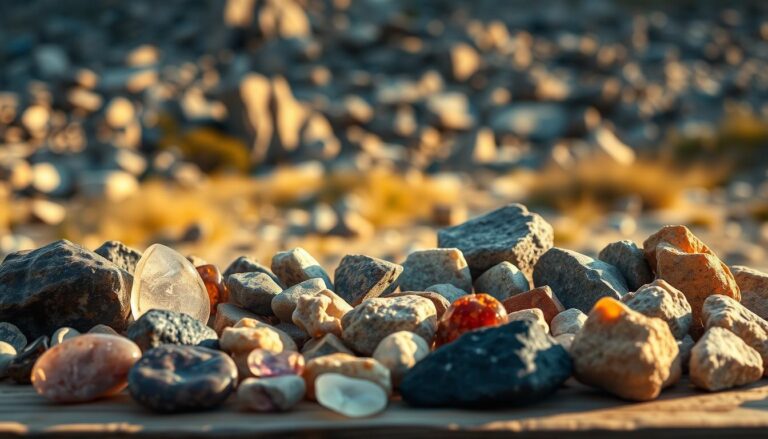
- Agate and chalcedony – weather out of volcanic rocks and concentrate in gravel deposits
- Jasper varieties – resist weathering and show up as colorful rounded specimens
- Quartz crystals – break free from veins and appear as clear or colored fragments
- Petrified wood – survives transport better than most organic materials
- Fossils – wash out of sedimentary formations and collect in quiet pools
- Native metals – gold, silver, and copper concentrate in heavy sand deposits
Equipment and Safety Considerations
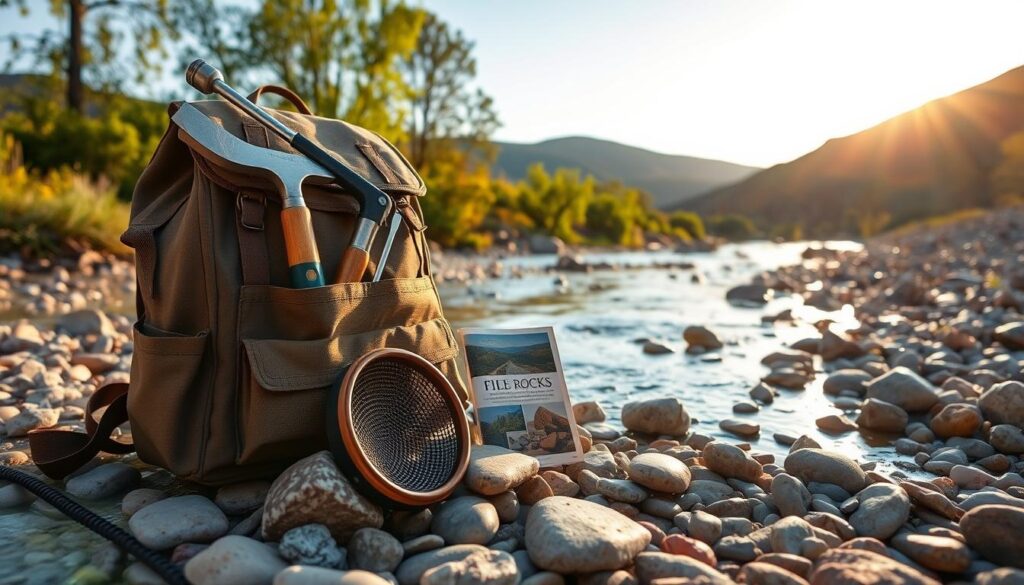
Riverbed collecting requires minimal specialized equipment compared to other rock hunting methods. Basic tools and safety gear handle most situations you’ll encounter, and understanding geology basics every rock collector should know helps you identify valuable specimens.
Water hazards present the main safety concern, especially during spring runoff or after recent rains. Always check current conditions and avoid collecting during high water periods.
Essential Collecting Gear
- Sturdy boots – provide traction on wet rocks and protect feet from sharp edges
- Collection bags – bring several sizes for different specimens
- Small shovel or trowel – helps dig specimens out of gravel deposits
- Hand lens or magnifier – identifies small crystals and mineral inclusions
- Camera – documents finds and locations for future reference
Frequently Asked Questions
What makes riverbeds better than other collecting locations?
Riverbeds concentrate high-quality specimens through natural sorting and provide easy access to materials from wide geographic areas. Water polishing reveals colors and patterns while removing worthless soft rocks.
When is the best time to collect rocks from riverbeds?
The ideal time is 2-4 weeks after major flooding when water levels drop but new specimens remain exposed on gravel bars. Spring and early summer typically offer the most productive conditions.
Do I need permission to collect rocks from riverbeds?
Permission requirements vary by location and land ownership. Many public waterways allow casual collecting, but always check local regulations and respect private property boundaries.
What types of rocks are most commonly found in rivers?
Rivers typically contain agate, jasper, quartz varieties, petrified wood, and fossils. The specific types depend on the geological formations present in the river’s watershed area. Many of these represent rocks that commonly contain crystals due to the natural selection process of water transport.
Final Thoughts
Why Riverbeds Are Good For Rock Collecting comes down to natural processes that do most of the work for you. Rivers sort, polish, and concentrate specimens while providing easy access to materials from vast geographic areas.
Start exploring local waterways during low water periods and you’ll quickly discover why experienced collectors return to riverbeds year after year for their best finds. Using geology maps for rockhounding can help you identify the most promising river systems in your area.