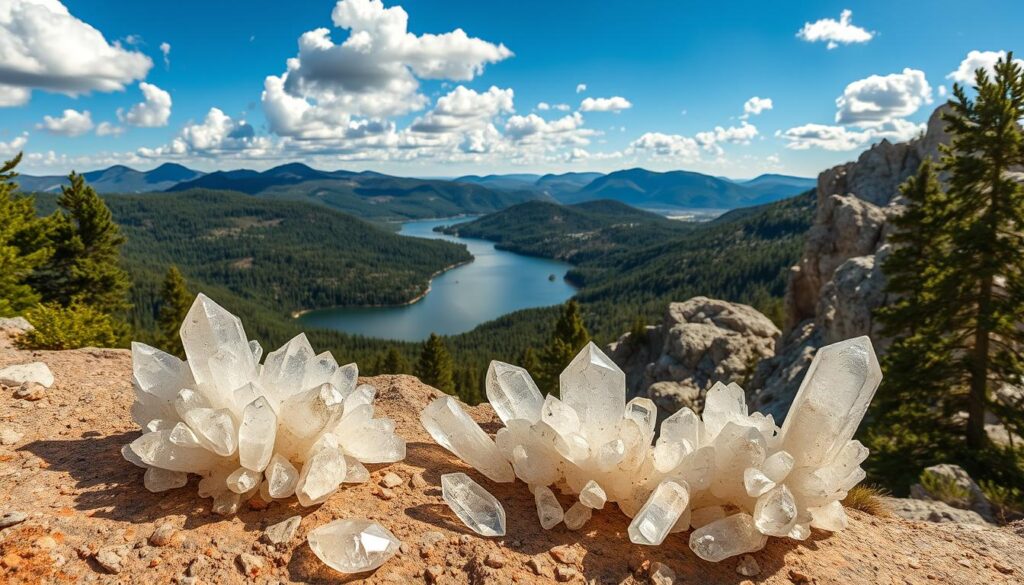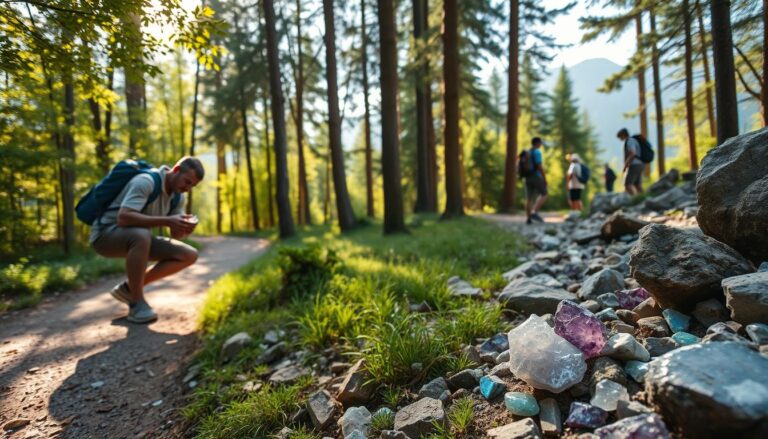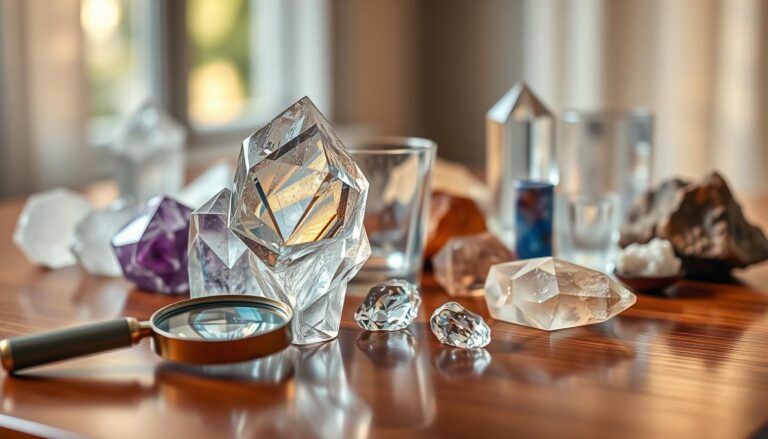
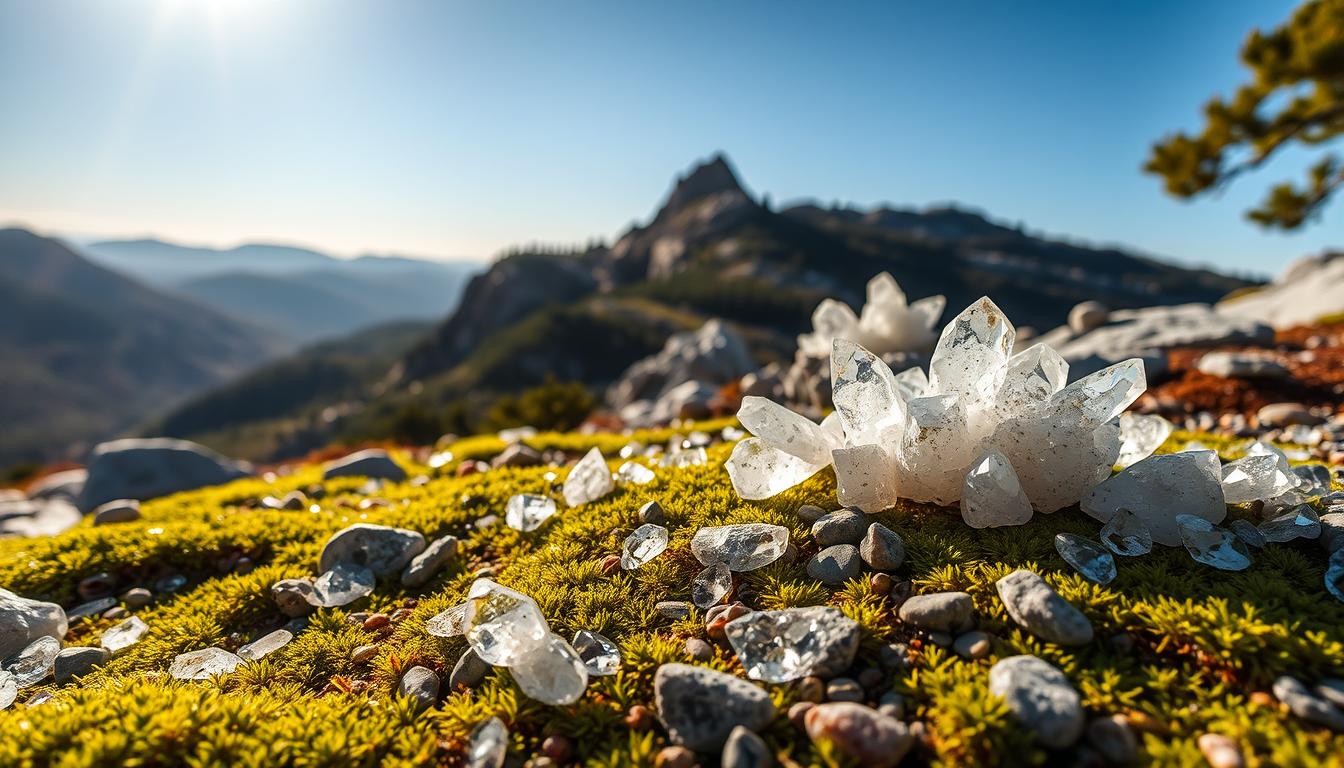
Where To Find Quartz Crystals In Nature is a question many crystal enthusiasts and rockhounds ask when starting their collecting journey. Quartz is one of the most abundant minerals on Earth, making it relatively easy to find in various natural settings if you know where to look.
From riverbeds to mountain outcrops, quartz crystals form in numerous geological environments over thousands of years. Understanding these formation processes and locations can help you discover beautiful specimens in the wild.
TL;DR
- Pegmatite dikes contain the largest quartz crystals, often exceeding 12 inches in length.
- Stream beds and gravel bars yield 70% more quartz finds than other hunting locations.
- Quartz veins in exposed rock faces are visible from up to 100 feet away due to their white coloration.
- The best hunting times are after heavy rains when fresh material gets exposed and cleaned.
Where To Find Quartz Crystals In Nature
Quartz crystals form in specific geological environments that you can learn to identify in the field. The most productive locations share common characteristics that make crystal formation possible over long periods.
Hydrothermal activity creates the ideal conditions for quartz growth, where hot, mineral-rich water flows through rock cracks and cools slowly. This process leaves behind the clear, milky, or colored quartz varieties that collectors prize.
Stream Beds and River Systems
Moving water naturally concentrates quartz crystals by washing away softer materials and leaving behind harder minerals. Creek beds, especially in mountainous areas, often contain weathered quartz that has broken free from its host rock.
Look for gravel bars and inside bends of streams where the current slows down and deposits heavier materials. Spring flooding frequently exposes fresh specimens that were previously buried under sediment, making this an ideal location for finding crystals without extensive digging.
Best Stream Hunting Techniques
- Gravel screening – Use a classifier to separate different sized materials and spot quartz more easily.
- Upstream searching – Follow quartz fragments back to their source in bedrock exposures.
- Pool edges – Check the margins of deep pools where crystals settle after floods.
- Exposed bedrock – Examine cracks and joints in stream bottom rock for in-place crystals.
Pegmatite Formations
Pegmatites are coarse-grained igneous rocks that often contain the largest and most perfect quartz crystals found in nature. These formations appear as light-colored dikes cutting through darker host rocks.
The slow cooling process in pegmatites allows crystals to grow to impressive sizes, sometimes reaching several feet in length. Many famous mineral collecting localities worldwide are associated with pegmatite bodies.
Identifying Pegmatite Outcrops
- Color contrast – Look for white or pink rock bands cutting through gray or dark country rock.
- Crystal size – Individual mineral grains larger than your thumb indicate pegmatite.
- Associated minerals – Feldspar, mica, and tourmaline commonly occur with quartz in pegmatites.
- Weathered surfaces – Pegmatites often weather differently than surrounding rock, creating obvious boundaries.
Quartz Veins and Lodes
Hydrothermal quartz veins form when mineral-rich fluids fill fractures in existing rock. These veins can extend for miles and vary in width from inches to several feet.
The best crystal specimens often occur in vugs or pockets within these veins where crystals had space to grow freely. Weathering eventually exposes these pockets, making the crystals accessible to collectors who understand how to identify rocks in the field.
Safety First
Always inform someone of your collecting location and expected return time. Carry a first aid kit and plenty of water when exploring remote areas.
Volcanic and Geothermal Areas
Recent volcanic activity and ongoing geothermal processes create excellent conditions for quartz crystal formation. Hot springs areas often have associated silica deposits that contain quality specimens.
Ancient volcanic regions with exposed rhyolite and granite also provide good hunting opportunities. The high silica content in these rocks makes quartz formation more likely.
Volcanic Environment Indicators
- Rock composition. Look for light-colored igneous rocks with high silica content like granite and rhyolite.
- Alteration zones. Areas where hot water has changed the original rock often contain quartz veins.
- Spring deposits. Silica terraces and sinter deposits around hot springs frequently yield specimens.
- Gas bubble holes. Vesicles in volcanic rock sometimes fill with quartz crystals over time.
Desert and Arid Region Hunting
Desert environments preserve quartz crystals exceptionally well due to minimal chemical weathering. Flash flood washes concentrate specimens in predictable locations that remain accessible for years.
The lack of vegetation and soil cover makes quartz veins and outcrops highly visible from a distance. Many desert areas also have minimal restrictions on mineral collecting compared to other regions, and several states offer excellent rockhounding opportunities in their arid regions.
Coastal and Beach Locations
Wave action naturally sorts beach materials by size and density, often concentrating quartz pebbles and small crystals in specific zones. Storm events bring up deeper materials that may include quality specimens.
Rocky coastlines with exposed cliffs provide opportunities to examine geological formations at sea level. Tidal pools and wave-cut benches reveal fresh rock surfaces regularly.
Tools and Equipment Needed
Successful quartz hunting requires basic tools that help you extract and examine specimens safely. A small investment in quality equipment makes field collecting much more productive and enjoyable, and knowing the essential rockhounding tools every beginner should own will help you get started on the right foot.
Pack light but include essentials for both finding and safely removing crystals from their matrix rock. Most specimens can be collected with simple hand tools and careful technique.
Essential Collecting Kit
- Rock hammer – 16-20 oz weight works for most quartz extraction needs.
- Chisels – Flat and pointed varieties for detailed work around crystals.
- Safety glasses – Protect eyes from rock chips during extraction.
- Collection bags – Separate containers prevent specimen damage during transport.
- Magnifying glass – 10x magnification reveals crystal quality and inclusions.
- GPS device – Mark productive locations for future visits.
Frequently Asked Questions
What time of year is best for finding quartz crystals?
Spring offers the best conditions after winter freeze-thaw cycles expose new material and spring rains wash away debris. Fall is also productive after summer storms have moved sediment around.
How can I tell if a clear crystal is actually quartz?
Real quartz has a hardness of 7 on the Mohs scale and will scratch glass easily. It also feels heavier than similar-sized glass pieces and often shows natural crystal faces with six-sided symmetry.
Do I need permission to collect quartz on public land?
Most public lands allow small-scale mineral collecting for personal use, but check specific regulations first. National parks generally prohibit all collecting, while many state and federal lands permit it with restrictions.
What should I do if I find a large crystal cluster?
Document the find with photos and GPS coordinates before attempting removal. Large specimens often require specialized tools and techniques to extract without damage.
Are there any dangerous minerals associated with quartz deposits?
Some quartz veins contain lead, mercury, or arsenic-bearing minerals that require careful handling. Always research the geology of your collecting area and wash hands thoroughly after handling specimens.
Final Thoughts
Where To Find Quartz Crystals In Nature becomes easier once you understand the geological processes that create these formations. Start with easily accessible locations like stream beds and work your way up to more challenging outcrop hunting as your skills develop.
Remember that the best specimens often require patience and multiple visits to the same location. Keep detailed records of your finds and the conditions that led to success for future reference, and once you’ve collected your specimens, learn how to clean rocks and crystals safely at home to properly maintain your collection.