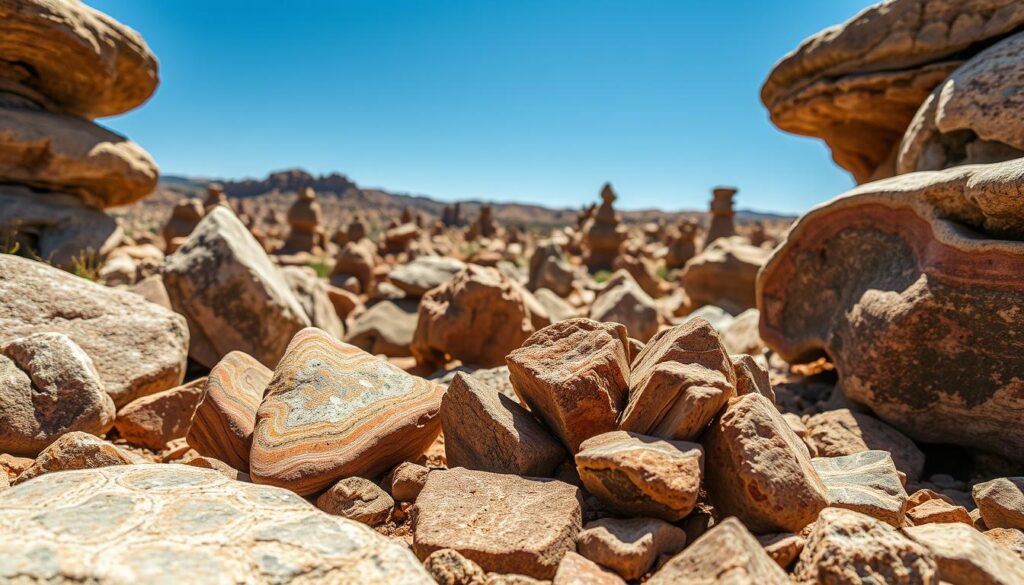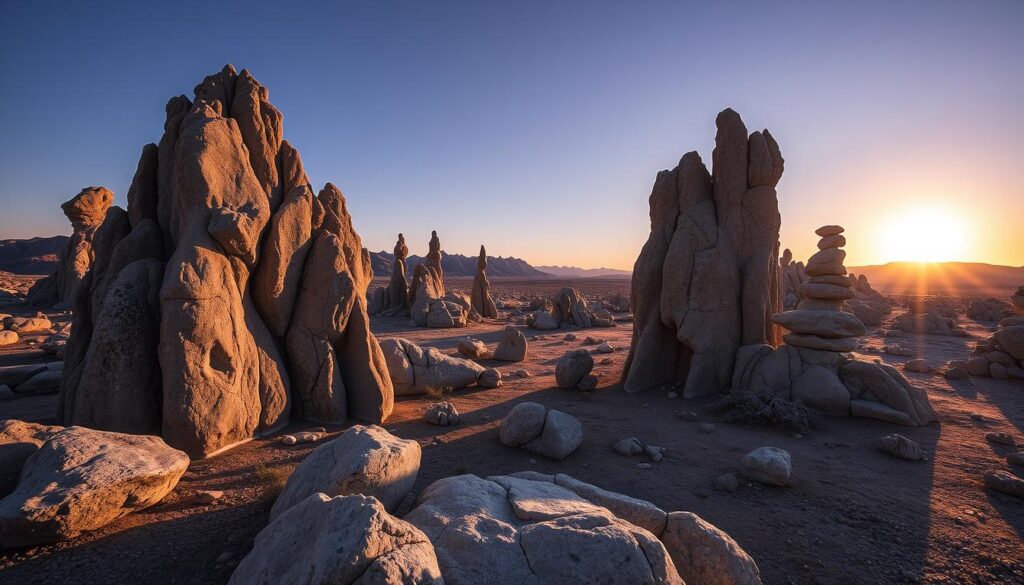
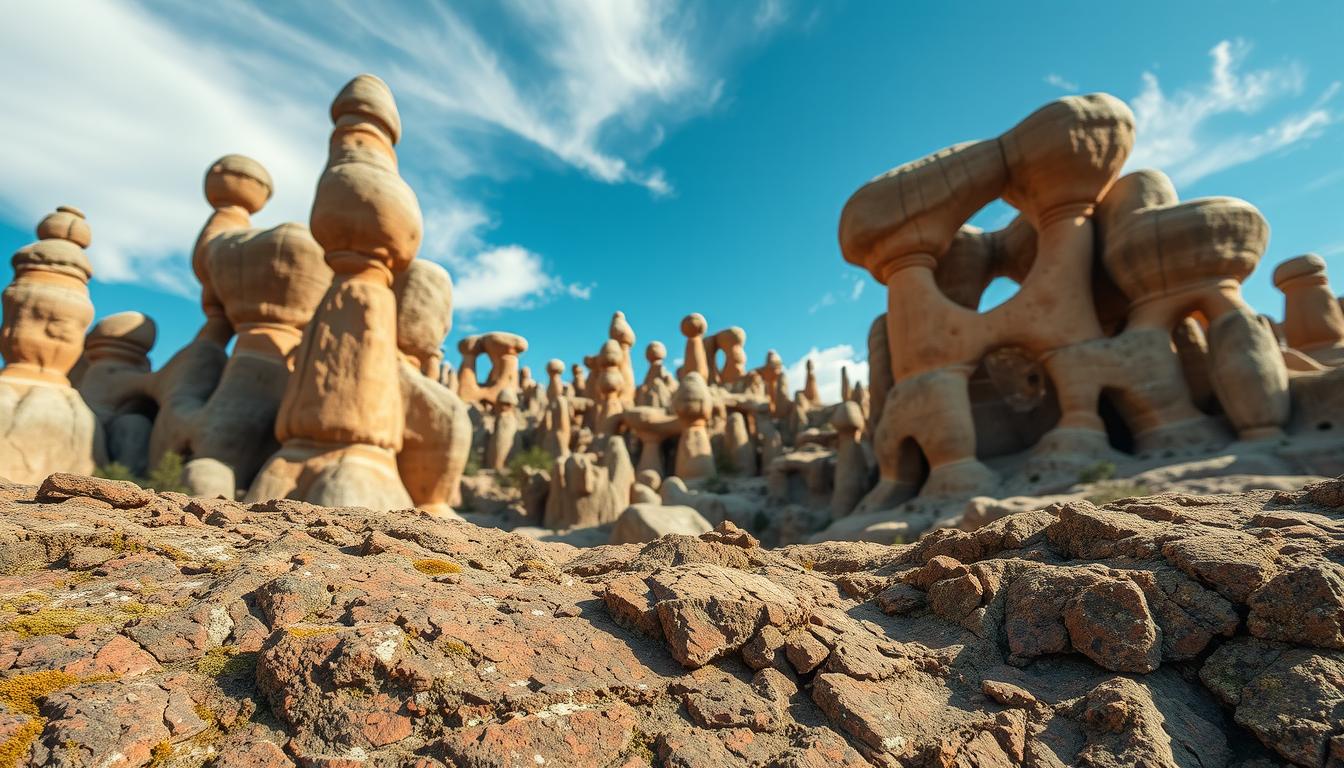
Unusual Rocks That Look Man Made have fascinated geologists and travelers for centuries, creating natural sculptures that seem too perfect to be carved by wind, water, and time alone. These geological wonders challenge our understanding of what nature can create without human intervention.
From perfectly spherical boulders to geometric formations that rival ancient architecture, these rocks prove that Earth is the ultimate artist. Many of these formations have sparked debates about their origins and continue to draw curious visitors from around the world.
TL;DR
- The Moeraki Boulders in New Zealand are nearly perfect spheres measuring up to 7 feet in diameter, formed over 4 million years ago.
- Giant’s Causeway in Ireland features 40,000 interlocking basalt columns created by volcanic activity 50-60 million years ago.
- Trovants in Romania actually grow and move, expanding by 4-5 centimeters after heavy rains due to their unique mineral composition.
- Devil’s Tower in Wyoming rises 867 feet with vertical columns so precise they appear artificially constructed.
Unusual Rocks That Look Man Made Around the World
Nature has produced some of the most incredible rock formations that challenge our perception of what’s possible without human tools. These geological marvels showcase the incredible power of natural processes working over millions of years.
Each formation tells a unique story of volcanic activity, erosion, sedimentation, or chemical reactions that created something extraordinary. Let’s explore some of the most remarkable examples that continue to puzzle and amaze visitors worldwide, including naturally occurring stones with unique features that demonstrate nature’s artistic capabilities.
Moeraki Boulders, New Zealand
The Moeraki Boulders on New Zealand’s South Island appear like giant stone marbles scattered across Koekohe Beach. These nearly perfect spheres range from 1.5 to 7 feet in diameter and weigh several tons each.
These boulders formed on the ancient sea floor through a process called concretion, where minerals gradually accumulated around a central core over 4 million years. The Māori legend tells a different story, claiming they’re food baskets from an ancestral canoe that was wrecked on the shore.
Giant’s Causeway, Ireland
Ireland’s Giant’s Causeway features approximately 40,000 interlocking basalt columns that create a natural stepping stone path into the Atlantic Ocean. The columns are mostly hexagonal, though some have four, five, seven, or eight sides.
This UNESCO World Heritage site formed when intense volcanic activity created a lava plateau 50-60 million years ago. As the lava cooled rapidly, it contracted and fractured into the geometric patterns we see today.
Living and Moving Rock Formations
Trovants, Romania
The Trovants of Romania’s Vâlcea County are perhaps the most unusual rocks on Earth because they actually grow and move. These spherical stones can expand by 4-5 centimeters after heavy rainfall.
Composed of a hard stone nucleus surrounded by sand, the Trovants grow when rainwater rich in calcium carbonate infiltrates their structure. Some locals believe these rocks reproduce, as smaller stones often appear near larger ones after storms.
Sailing Stones, Death Valley
Death Valley’s Racetrack Playa features massive boulders that mysteriously move across the desert floor, leaving long, straight trails behind them. Some of these rocks weigh over 700 pounds yet somehow glide across the flat surface.
Scientists recently solved this mystery by discovering that thin sheets of ice form on rare rainy nights, then break up and float on morning winds, pushing the rocks along the slippery mud surface beneath.
Architectural Marvels Created by Nature
Devil’s Tower, Wyoming
Rising 867 feet above the surrounding landscape, Devil’s Tower appears like an ancient fortress with its vertical columns and flat top. The tower’s sides feature nearly parallel cracks that create natural climbing routes used by rock climbers worldwide.
This igneous intrusion formed underground about 50 million years ago, then was exposed as softer surrounding rock eroded away. Native American tribes have sacred stories about this formation, calling it Bear’s Lodge or Bear’s Tipi.
Uluru (Ayers Rock), Australia
Uluru stands 1,142 feet high in Australia’s Red Centre, appearing like a massive monolith dropped from space. This sandstone formation changes color throughout the day, glowing brilliant red at sunrise and sunset.
The rock formed over 550 million years ago and extends far underground, with most of its bulk hidden beneath the surface. Aboriginal Australians consider Uluru sacred and have creation stories explaining its formation and significance.
Photography Tip
Visit these formations during golden hour for the best lighting and colors. Many locations offer guided tours that provide geological context and cultural significance.
Geometric Perfection in Stone
Fingal’s Cave, Scotland
Scotland’s Fingal’s Cave on the island of Staffa features the same hexagonal basalt columns as Giant’s Causeway, creating a natural cathedral with perfect acoustics. The cave extends 270 feet deep into the island.
The cave’s natural acoustics inspired Felix Mendelssohn’s famous orchestral overture “The Hebrides” after his 1829 visit. Vikings knew this cave as Uamh-Binn, meaning “cave of melody” due to the haunting sounds created by waves and wind.
Wave Rock, Australia
Western Australia’s Wave Rock appears as a massive ocean wave frozen in time, standing 50 feet high and stretching 360 feet long. The granite formation’s curved shape and striped coloration create a perfect illusion of moving water.
This rock formed through a process called chemical weathering, where groundwater gradually dissolved minerals along the base while the top remained intact. The stripes result from algae and lichen growth along water flow lines.
Spherical Wonders and Perfect Circles
Stone Spheres of Costa Rica
Costa Rica’s Diquís Delta contains over 300 nearly perfect stone spheres ranging from a few inches to 8 feet in diameter. These pre-Columbian artifacts are so precisely carved that some deviate from perfect roundness by only 2 millimeters.
Created by the Diquís culture between 600-1000 CE, these spheres required advanced knowledge of geometry and stone-working techniques. Many theories exist about their purpose, from astronomical calendars to markers of social status.
Koutu Boulders, New Zealand
The Koutu Boulders near Hokianga Harbour feature perfectly round stones embedded in sandstone cliffs like giant marbles in concrete. These concretions formed in much the same way as the Moeraki Boulders but remain partially embedded in their host rock.
Erosion gradually exposes these boulders, creating an otherworldly landscape where spherical stones appear to grow from solid rock walls. The site offers excellent examples of how concretions form and weather over geological time.
Frequently Asked Questions
How do rocks form such perfect geometric shapes naturally?
Rocks form geometric shapes through processes like volcanic cooling (creating columns), concretion (forming spheres), and chemical weathering (creating curves). These natural processes follow physical laws that often produce surprisingly regular patterns.
Are any of these rock formations actually man-made?
All the formations mentioned are completely natural, though some like Costa Rica’s stone spheres were shaped by ancient human cultures. The geometric perfection results from natural physical and chemical processes over long time periods.
Can I visit these unusual rock formations?
Most of these formations are accessible to visitors, though some require permits or guided tours. Popular sites like Giant’s Causeway and Uluru have visitor centers and established walking paths.
Why do some rocks appear to move on their own?
Moving rocks like those in Death Valley National Park are pushed by thin ice sheets that form during rare weather conditions. The ice acts like a conveyor belt, slowly pushing heavy boulders across wet, slippery surfaces.
How long did these formations take to create?
Formation times vary dramatically, from millions of years for volcanic columns to thousands of years for concretions. Some processes like the growth of Romania’s Trovants continue today.
Final Thoughts
Unusual Rocks That Look Man Made remind us that nature is the ultimate sculptor, creating masterpieces that rival human architecture and engineering. These geological wonders offer glimpses into Earth’s incredible creative power and the fascinating processes that shape our planet, similar to the strange minerals found around the world that continue to surprise scientists and collectors alike.
Whether you’re drawn to the perfect spheres of New Zealand, the geometric columns of Ireland, or the moving stones of Death Valley, these formations prove that truth is often stranger than fiction. Each site offers unique insights into geological processes and what makes a stone a true natural treasure – combining rarity, beauty, and scientific significance. For collectors seeking to understand why some rocks are highly collectible, these naturally sculpted wonders demonstrate the perfect combination of geological rarity and aesthetic appeal that drives passionate collecting.