Tools Every Mineral Collector Should Own can make the difference between a frustrating hobby and years of successful discoveries. Whether you’re just starting out or looking to upgrade your current setup, having the right equipment transforms how you find, extract, and preserve specimens.
The key is building your toolkit gradually with quality items that will last through countless collecting trips. Smart collectors focus on versatile tools that serve multiple purposes rather than accumulating gadgets they’ll rarely use.
TL;DR
- A 16-20 oz rock hammer with steel handle provides the best balance of power and control for most collecting situations.
- Safety glasses and steel-toed boots prevent 80% of common collecting injuries according to geology field guides.
- Digital calipers measuring to 0.01mm accuracy help identify specimens and document finds for trade or sale.
- UV lights in both long-wave (365nm) and short-wave (254nm) reveal fluorescent minerals invisible under normal light.
Essential Tools Every Mineral Collector Should Own
Your basic toolkit should cover safety, extraction, and identification needs. Start with these core items before adding specialized equipment for specific collecting areas.
Safety gear comes first because hospital visits cost more than any mineral specimen. Protection equipment also lets you work more confidently in challenging locations.
Safety Equipment
- Safety glasses – Wrap-around style with side protection blocks flying rock chips during hammering and chiseling.
- Steel-toed boots – Protect feet from dropped rocks and provide ankle support on uneven terrain.
- Work gloves – Leather palms grip tools securely while protecting hands from sharp edges and rough surfaces.
- Hard hat – Essential for quarry visits or anywhere loose rock might fall from above.
Extraction Tools
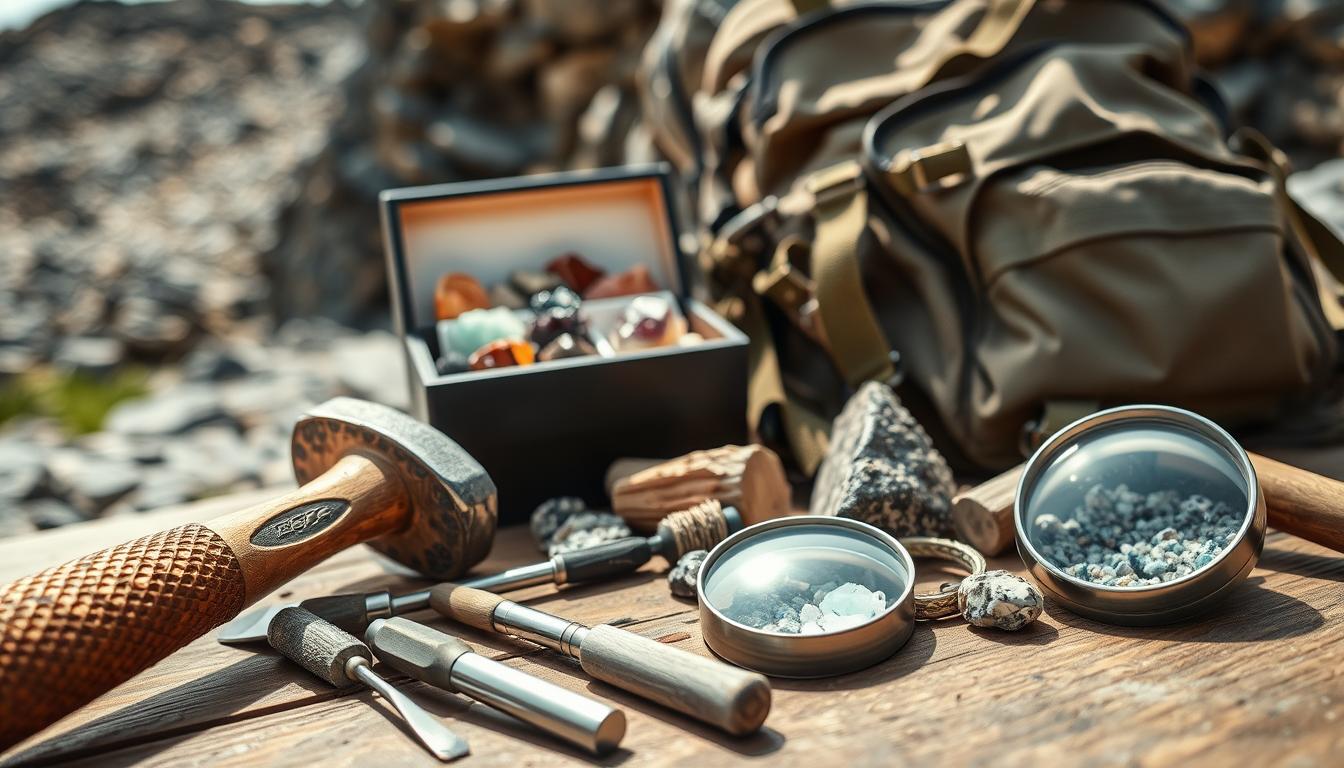
- Rock hammer – Choose 16-20 oz weight with steel handle and replaceable head for durability.
- Cold chisels – Set of 3 sizes (1/4″, 1/2″, 3/4″) for precise splitting along crystal faces.
- Pry bar – 12-18 inch length works specimens loose from tight spaces without damaging crystals.
- Hand shovel – Folding military surplus models pack easily and handle clay or loose material.
Field Collection and Storage
Proper collection and storage in the field prevents damage that can ruin valuable specimens. Organization also helps you remember exactly where each sample came from.
Good record keeping turns casual collecting into valuable reference material for future trips and trading opportunities.
Collection Containers
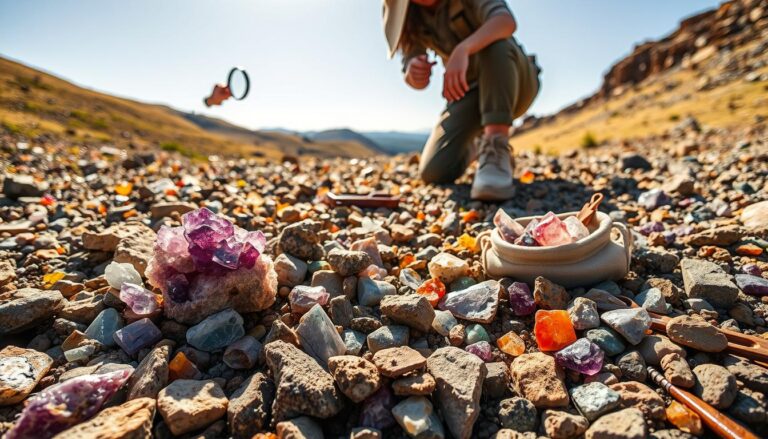
- Canvas collecting bag – Heavy-duty construction with multiple pockets keeps tools organized and specimens separate.
- Newspaper – Wrap each specimen individually to prevent scratching during transport.
- Small boxes – Sturdy cardboard jewelry boxes protect delicate crystals from impact damage.
- Sample bags – Clear plastic with write-on labels for small specimens and location documentation.
Documentation Tools
- Field notebook – Waterproof pages record GPS coordinates, formation details, and associated minerals.
- Permanent markers – Write specimen numbers directly on rocks using fine-tip industrial markers.
- Camera – Document specimens in their natural setting before removal for reference and trading.
- GPS device – Mark exact coordinates of productive locations for return visits.
Start Small and Upgrade
Buy quality basic tools first, then add specialized equipment as you discover which types of minerals interest you most. A good rock hammer and safety gear will serve you for years across all collecting situations.
Identification and Testing Equipment
Accurate identification separates valuable finds from common rocks. These tools help confirm species and document important characteristics for your collection records.
Many identification features only show up under specific testing conditions, making proper equipment crucial for serious collectors who want to identify minerals in the field accurately.
Measuring and Testing Tools
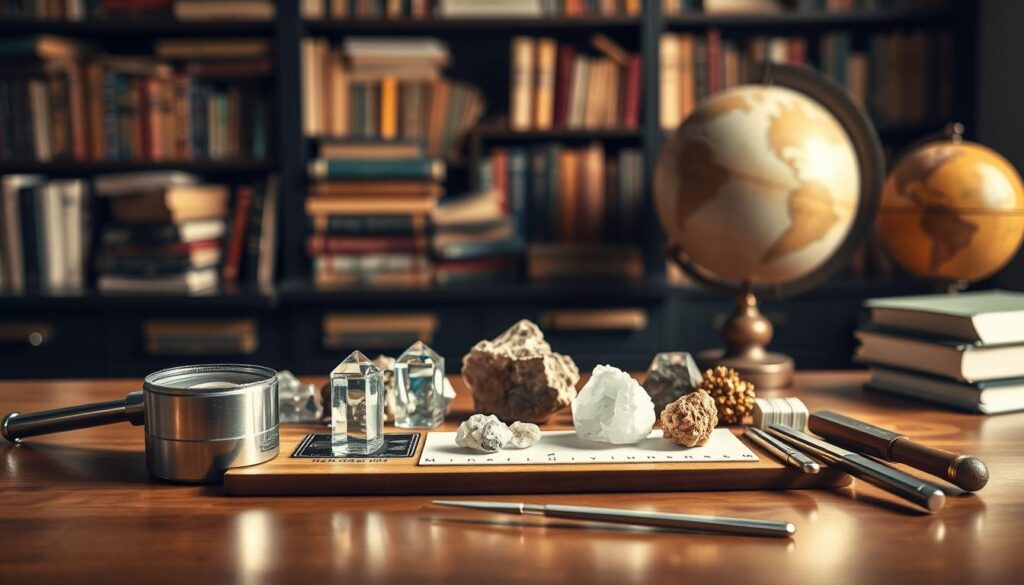
- Digital calipers – 0.01mm precision measures crystal dimensions and helps with identification keys.
- Hardness testing kit – Standard Mohs scale picks (2-9 hardness) identify minerals through scratch resistance.
- Streak plate – Unglazed ceramic tile shows true mineral color when scratched across the surface.
- Magnet – Strong neodymium type detects magnetic minerals like magnetite and pyrrhotite.
Optical Equipment
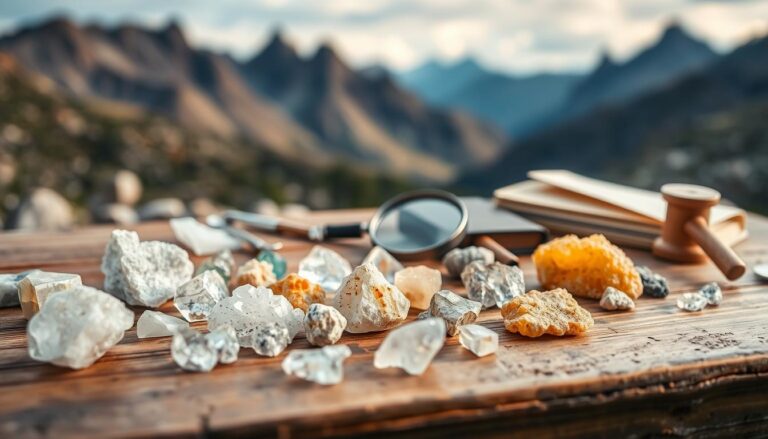
- Hand lens – 10x magnification reveals crystal structure and surface features invisible to naked eye.
- UV light – Long-wave (365nm) and short-wave (254nm) models show fluorescent properties of many minerals.
- Polarizing filters – Crossed polarizers reveal optical properties and help distinguish similar-looking minerals.
Home Laboratory Setup
Your home workspace should support cleaning, testing, and cataloging specimens collected in the field. Good organization makes your collection more valuable and easier to study.
Proper storage also protects specimens from damage and helps maintain their value for potential trades or sales.
Cleaning Equipment
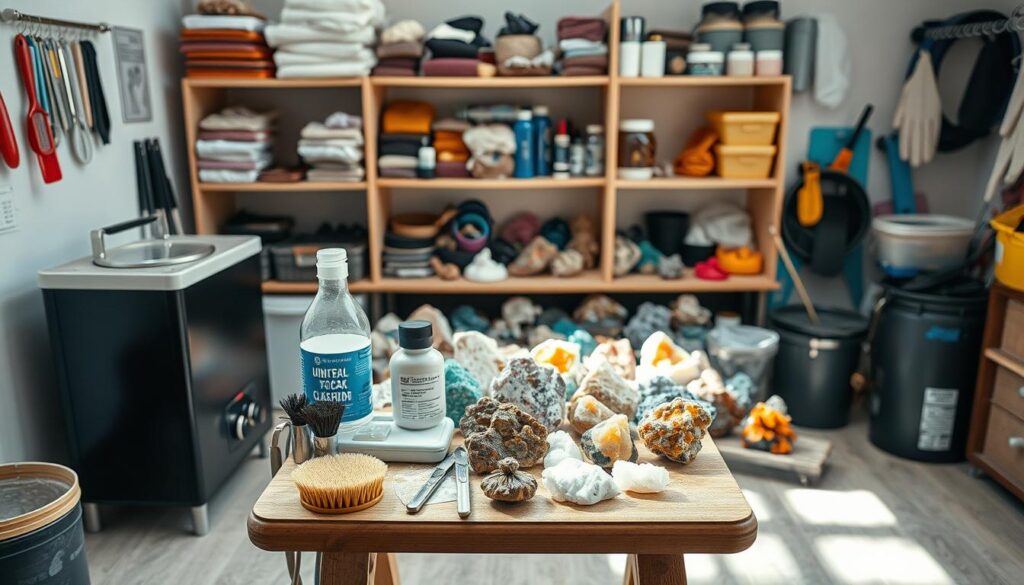
- Ultrasonic cleaner. Removes dirt and clay from crystal surfaces without mechanical scrubbing that can cause damage.
- Soft brushes. Natural bristle toothbrushes clean delicate surfaces while brass brushes remove stubborn deposits.
- Dental picks. Remove matrix material from tight spaces around crystals without applying excessive pressure.
- Mild acids. Dilute muriatic acid dissolves calcite matrix but requires proper ventilation and safety equipment.
Storage and Display
- Specimen boxes – Divided cardboard flats with foam padding protect samples during long-term storage.
- Labels – Pre-printed forms with space for species, locality, date, and collector information maintain documentation.
- Display cases – Glass-front cabinets protect specimens from dust while allowing easy viewing and study.
- Reference books – Regional mineral guides and identification keys support field work and specimen research.
Frequently Asked Questions
What’s the most important tool for beginning mineral collectors?
A quality rock hammer (16-20 oz) with safety glasses represents the best starting investment. These tools handle 90% of collecting situations and last for decades with proper care.
How much should I spend on collecting tools as a beginner?
Budget $200-300 for essential safety gear and basic tools including hammer, chisel set, safety equipment, and collecting bag. Quality tools cost more upfront but save money long-term through durability.
Do I need different tools for different types of mineral collecting?
Basic tools work for most situations, but specialized collecting benefits from specific equipment. Desert collecting needs different preparation than cave mineral hunting or quarry work.
Where can I buy quality mineral collecting tools?
Geology supply companies, rock shops, and mineral shows offer the best selection of specialized tools. Estwing and other manufacturers sell directly through hardware stores for basic safety equipment and some extraction tools.
What safety equipment is absolutely necessary for mineral collecting?
Safety glasses and steel-toed boots prevent the majority of collecting injuries. Add work gloves and a hard hat when working around loose rock or in quarries. The Occupational Safety and Health Administration provides comprehensive guidelines for protective equipment in hazardous work environments.
Final Thoughts
Tools Every Mineral Collector Should Own form the foundation of successful specimen hunting and proper collection management. Start with quality safety gear and basic extraction tools, then expand your kit as you gain experience and discover your collecting preferences.
Consider focusing on minerals best suited for beginners before investing in expensive specialized equipment. Learn about proper cleaning techniques to maintain your specimens, and explore the best locations for finding minerals to make the most of your new tools. Proper storage and display methods will protect your investment and showcase your growing collection.
Invest in durable equipment that will serve you for years rather than cheap tools that break after a few field trips. Good tools not only improve your collecting success but also keep you safe during the adventure.