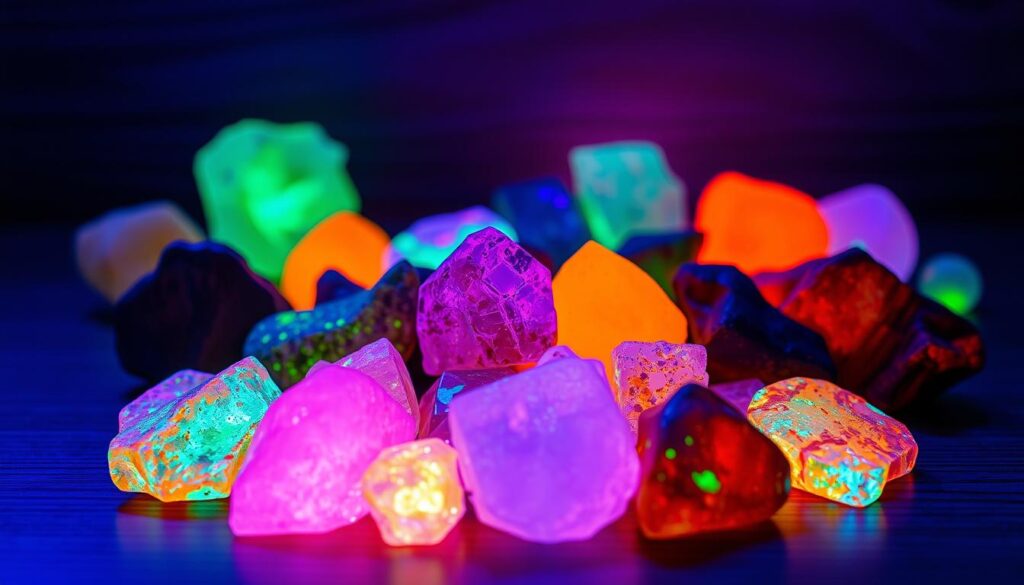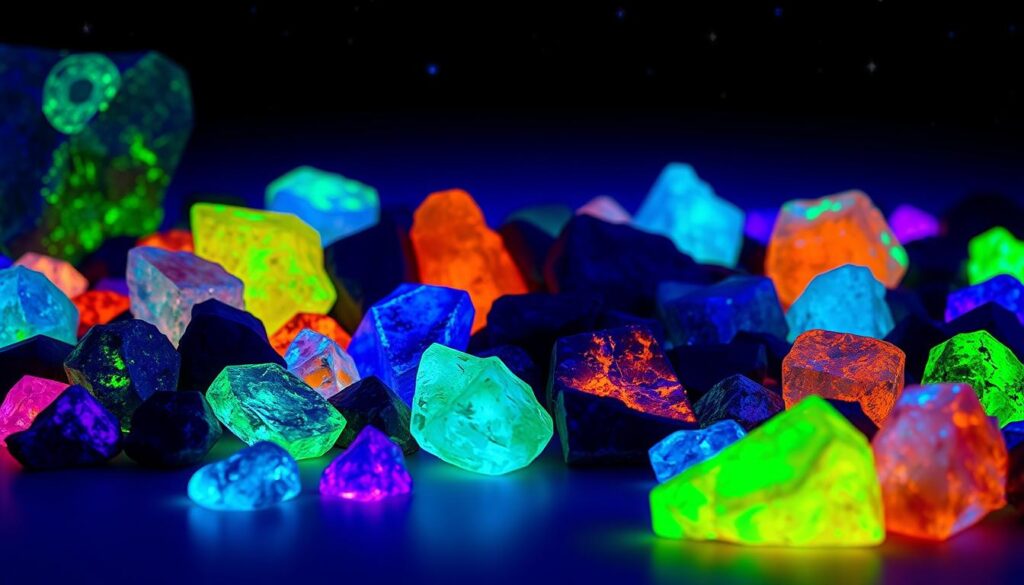
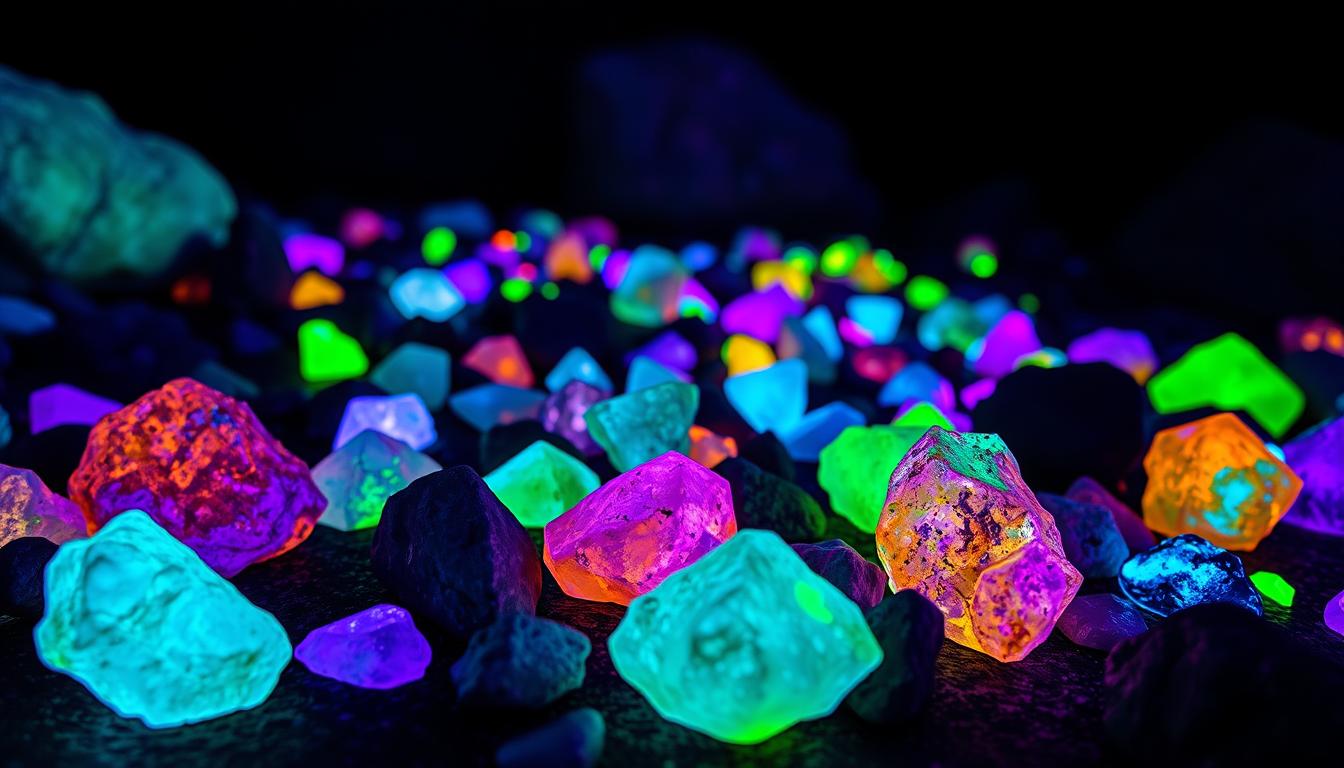
Stones That Glow Under UV Light offer a fascinating glimpse into the hidden world of fluorescent minerals that transform under ultraviolet illumination. These remarkable geological specimens reveal vibrant colors and patterns invisible to the naked eye, creating an almost magical experience for collectors and nature enthusiasts alike.
From common quartz varieties to rare mineral specimens, UV-reactive stones can be found in locations around the world, each displaying unique fluorescent properties. Whether you’re a seasoned rockhound or simply curious about this natural phenomenon, understanding which stones exhibit UV fluorescence opens up exciting opportunities for exploration and discovery.
TL;DR
- Over 4,000 mineral species exhibit fluorescence under UV light, with calcite, fluorite, and willemite being among the most common.
- UV lights with 365nm wavelength produce the strongest fluorescent reactions in most glowing stones.
- Franklin, New Jersey contains the world’s largest concentration of fluorescent minerals with over 300 documented species.
- Petroleum-based inclusions in rocks create blue-white fluorescence, making them valuable for geological surveys.
Stones That Glow Under UV Light
Fluorescent minerals contain trace elements or crystal defects that absorb invisible ultraviolet light and re-emit it as visible colors. This process, called photoluminescence, creates the stunning glow effects that make these stones so captivating under UV illumination.
The intensity and color of fluorescence depend on several factors including the specific activator elements present, crystal structure, and the wavelength of UV light used. Most fluorescent stones show their best colors under shortwave UV light (254nm), though some respond better to longwave UV (365nm).
Common Fluorescent Stone Types
Many familiar minerals exhibit remarkable fluorescent properties that completely transform their appearance under UV light. These specimens with unique features range from widely available rocks to rare collector’s pieces found in specific geological formations.
Calcite
Calcite ranks among the most common fluorescent minerals, displaying colors from bright red and orange to green and blue under UV light. The fluorescence varies dramatically based on trace elements like manganese, which creates red fluorescence, or rare earth elements that produce green colors.
Mexican calcite specimens often show particularly intense fluorescence, with some varieties glowing bright red or pink. These formations occur in limestone caves and hydrothermal deposits where specific chemical conditions allow for fluorescent activator incorporation.
Fluorite
Named for its fluorescent properties, fluorite displays some of the most intense UV reactions of any mineral. Colors range from deep blue and purple to bright yellow and green, often showing distinct color zones within a single crystal.
English Blue John fluorite produces exceptional purple fluorescence, while Chinese fluorite specimens often glow brilliant green or yellow. The fluorescence results from rare earth element substitutions in the crystal lattice structure.
Willemite
Willemite creates one of the most distinctive fluorescent displays, glowing bright green under shortwave UV light. This zinc silicate mineral occurs primarily in the famous Franklin and Sterling Hill mines in New Jersey.
Pure willemite shows the strongest green fluorescence, while manganese-bearing varieties may display orange or red colors. The intensity of willemite’s fluorescence makes it easily identifiable even in mixed mineral specimens.
Specialized UV-Reactive Materials
Beyond traditional minerals, several specialized materials and formations exhibit unique fluorescent properties that create distinctive visual displays under ultraviolet illumination.
Petroleum Inclusions
Rocks containing petroleum or hydrocarbon inclusions often fluoresce blue-white under UV light. This property proves invaluable for petroleum geology, allowing geologists to identify oil-bearing formations and assess reservoir potential.
Limestone and sandstone formations frequently contain these fluorescent petroleum traces, particularly in sedimentary basins with active or historical oil deposits. The intensity of fluorescence often correlates with hydrocarbon concentration levels.
Synthetic Materials
Modern synthetic materials create controlled fluorescent effects for commercial applications. Fluorescent powders and dyes can be incorporated into concrete, plastics, and paints to create UV-reactive surfaces and objects.
Some synthetic stones and jewelry incorporate fluorescent compounds to mimic natural mineral fluorescence. While these materials lack geological significance, they demonstrate the same basic photoluminescence principles as natural specimens.
UV Safety First
Always wear UV-protective eyewear when using shortwave UV lights, as prolonged exposure can damage your eyes. Use UV lights in well-ventilated areas and avoid direct skin exposure during extended viewing sessions.
Best Locations for Fluorescent Stone Collecting
Specific geological formations and mining areas offer the best opportunities for finding naturally fluorescent stones. These premier collecting locations concentrate the right chemical conditions and mineral compositions that create strong UV-reactive specimens.
- Franklin, New Jersey – Home to over 300 fluorescent mineral species including willemite, calcite, and esperite.
- Ilimaussaq Complex, Greenland – Contains rare earth fluorescent minerals like sodalite and tugtupite.
- Mont Saint-Hilaire, Quebec – Produces diverse fluorescent specimens including fluorite and sodalite varieties.
- Långban, Sweden – Famous for fluorescent manganese minerals and rare species.
- Sterling Hill, New Jersey – Sister location to Franklin with similar fluorescent mineral assemblages.
Equipment for UV Stone Hunting
Effective fluorescent mineral collecting requires specific equipment designed to produce the right wavelengths of ultraviolet light. Professional-grade UV lamps provide the intensity needed to reveal weak fluorescence in field conditions.
Shortwave UV lamps (254nm) work best for most fluorescent minerals, while longwave lamps (365nm) reveal different fluorescent responses in the same specimens. Portable battery-powered units allow for field collecting, though AC-powered lamps provide stronger illumination for detailed examination.
- Choose your UV light. Start with a combination shortwave/longwave unit to see the full range of fluorescent responses.
- Use proper safety gear. UV-protective glasses and long sleeves prevent eye and skin damage during extended use.
- Work in darkness. Complete darkness maximizes fluorescent visibility and reveals subtle color variations.
- Document your finds. Photograph specimens under both normal and UV light to record their properties.
Frequently Asked Questions
Do all minerals glow under UV light?
No, only about 15% of known mineral species exhibit fluorescence under UV light. The fluorescence requires specific trace elements or crystal defects that can absorb UV energy and re-emit it as visible light.
What’s the difference between shortwave and longwave UV light for stones?
Shortwave UV (254nm) typically produces stronger fluorescence in most minerals, while longwave UV (365nm) may reveal different colors or activate different fluorescent minerals in the same specimen.
Can fluorescent stones lose their glow over time?
Most fluorescent stones maintain their properties indefinitely, though prolonged exposure to intense UV light or high temperatures can sometimes fade fluorescence in certain minerals.
Are fluorescent stones more valuable than non-fluorescent ones?
Fluorescence can increase value for collectors, especially in specimens with intense or rare colors, but it doesn’t automatically make a stone more valuable than non-fluorescent varieties of the same mineral.
Is it safe to handle fluorescent stones?
Yes, fluorescent stones are safe to handle normally. The fluorescence itself poses no health risk, though standard mineral collecting precautions apply for potentially toxic species.
Final Thoughts
Stones That Glow Under UV Light represent one of nature’s most captivating phenomena, transforming ordinary-looking rocks into brilliant displays of color and light. Whether you’re exploring famous collecting localities or examining specimens in your own collection, UV-reactive minerals offer endless opportunities for discovery and appreciation.
Start your fluorescent mineral journey with a basic UV light and visit local rock shops or mineral shows to see these amazing specimens firsthand. Understanding what makes certain rocks highly collectible will help you build a valuable collection of these hidden world of glowing stones that awaits your exploration.