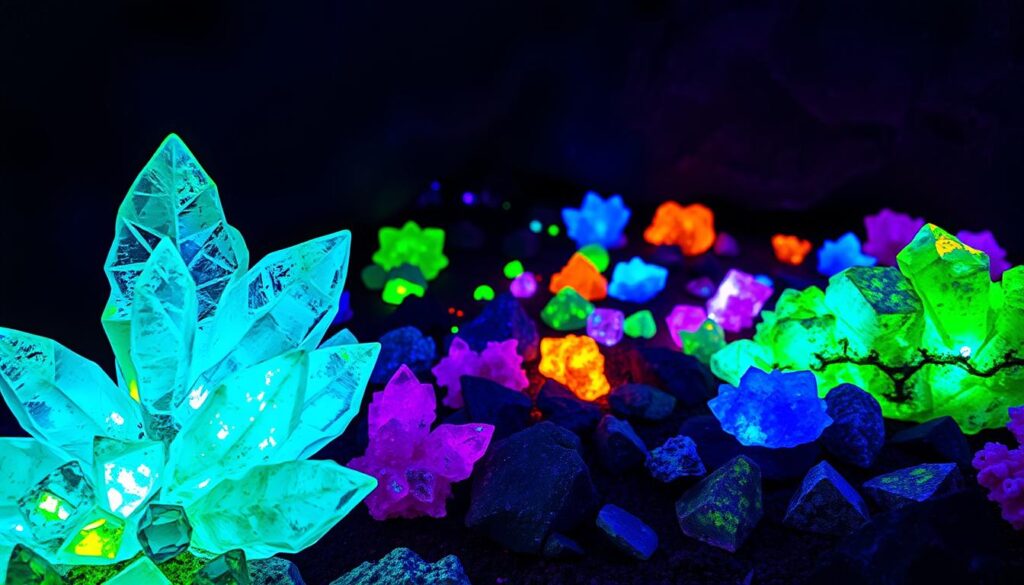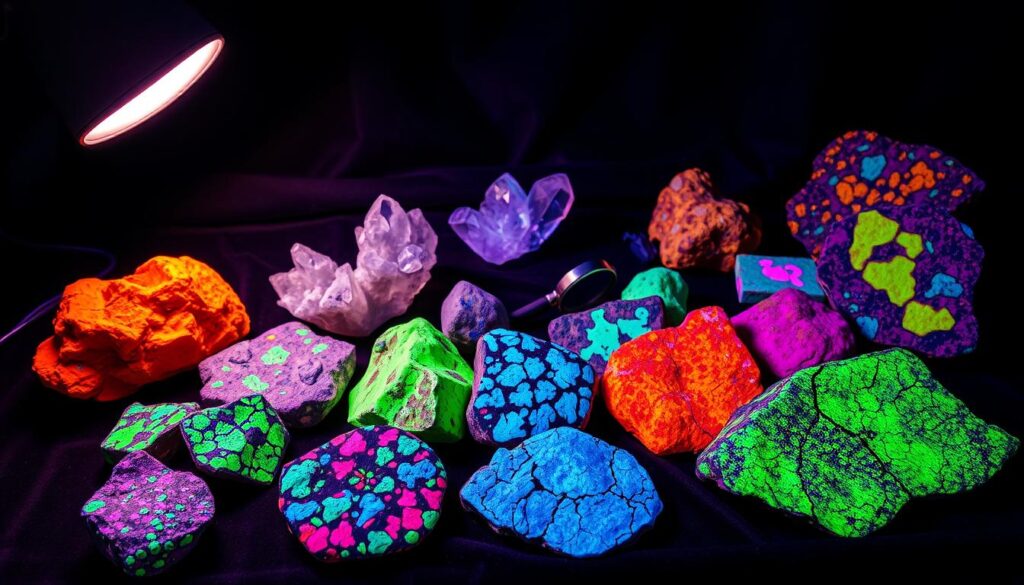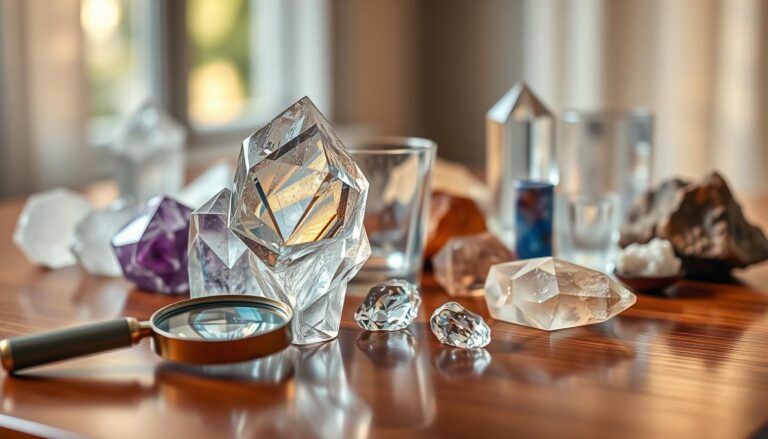
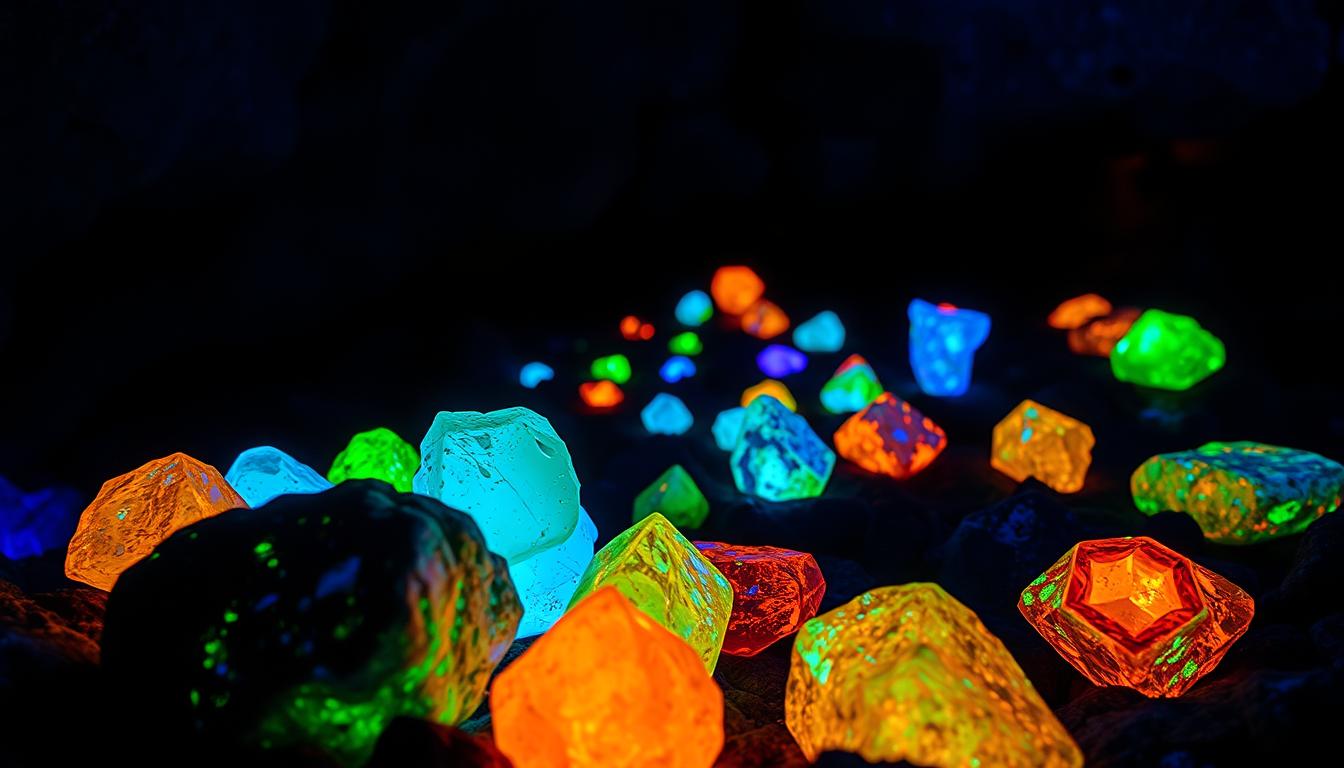
Rocks That Glow Under UV Light create stunning displays when exposed to ultraviolet radiation, revealing hidden fluorescent properties that remain invisible under normal lighting conditions. These fascinating geological specimens contain specific minerals that absorb UV energy and emit it back as visible light in brilliant colors ranging from electric green to deep purple.
Fluorescent minerals have captivated collectors and scientists for decades, offering a magical glimpse into the hidden world of geological chemistry. Whether you’re a seasoned rockhound or just starting your mineral collection, understanding which rocks exhibit this remarkable property opens up an entirely new dimension of discovery.
TL;DR
- Over 500 known minerals exhibit fluorescence under UV light, with fluorite being the most common example.
- Short-wave UV light (254nm) reveals different fluorescent properties than long-wave UV (365nm) in the same specimen.
- Willemite from Franklin, New Jersey glows bright green and is considered the world’s most famous fluorescent mineral locality.
- A basic UV flashlight costs $15-30 and immediately reveals fluorescent properties in common minerals like calcite and sodalite.
Rocks That Glow Under UV Light: The Science Behind Fluorescence
Fluorescence occurs when certain minerals absorb ultraviolet radiation and immediately re-emit that energy as visible light. The specific wavelength of light emitted depends on the mineral’s crystal structure and trace elements present within the specimen.
This phenomenon happens because UV photons excite electrons in the mineral to higher energy levels. When these electrons return to their ground state, they release energy as photons of visible light, creating the glowing effect we observe.
Short-Wave vs Long-Wave UV Light
Different types of UV light reveal different fluorescent properties in the same rock specimen. Short-wave UV light (254 nanometers) penetrates less deeply but often produces more intense fluorescence, while long-wave UV light (365 nanometers) may reveal entirely different colors or activate minerals that don’t respond to short-wave radiation.
Many serious collectors use dual-wavelength UV lamps to fully explore their specimens’ fluorescent potential. Some minerals only fluoresce under one wavelength, making both types essential for complete mineral identification.
Common Fluorescent Minerals and Their Colors
Certain minerals consistently produce spectacular fluorescent displays, making them favorites among collectors and researchers. Each mineral family tends to emit characteristic colors that help with identification.
Fluorite
Fluorite earned its name from this very property and represents the classic example of mineral fluorescence. Purple fluorite typically glows blue under UV light, while green varieties often emit yellow or pink fluorescence.
This mineral forms in a wide range of geological environments and can be found worldwide. Specimens from certain localities, like Rogerley Mine in England, produce exceptionally vivid blue fluorescence that’s prized by collectors.
Calcite
Calcite exhibits tremendous variety in its fluorescent response, glowing in colors ranging from red and orange to pink and white. The specific trace elements present in each specimen determine the exact color produced under UV exposure.
Mexican calcite often produces brilliant red fluorescence, while specimens from certain American localities glow bright pink or orange. This mineral’s abundance makes it an excellent choice for beginning fluorescent mineral collectors.
Willemite
Willemite from Franklin, New Jersey produces some of the most intense green fluorescence found in any mineral. These specimens often contain associated minerals like calcite and franklinite that create stunning multi-colored displays under UV light.
The Franklin mining district is world-famous among fluorescent mineral collectors, producing specimens that glow so brightly they can be seen from across a dark room. Original Franklin willemite specimens command premium prices in the collector market.
UV Safety First
Always wear UV-protective eyewear when using ultraviolet lamps for extended periods. Never look directly at UV bulbs, as they can cause eye damage even through brief exposure.
Popular Collecting Locations
Certain geological locations around the world have gained fame for producing exceptional fluorescent mineral specimens. These localities often developed their unique mineral assemblages through specific geological processes that concentrated fluorescent-activating elements.
Franklin and Sterling Hill, New Jersey
These adjacent zinc mining districts produced over 300 different mineral species, with many exhibiting brilliant fluorescence. The area’s unique geology created ideal conditions for forming fluorescent minerals through metamorphic processes.
Collectors can still visit local dumps and mine tailings to search for fluorescent specimens. The Franklin Mineral Museum maintains extensive displays of local fluorescent minerals and offers collecting opportunities.
Langban, Sweden
This historic mining district produced numerous rare fluorescent minerals, including tephroite that glows bright orange and jacobsite with red fluorescence. Swedish specimens often display complex mineral associations with multiple fluorescent phases.
Many Langban minerals exhibit phosphorescence – continuing to glow briefly after UV light removal. This property adds another dimension to the collecting appeal of specimens from this locality.
Mont-Saint-Hilaire, Quebec
This alkaline intrusion complex hosts over 375 mineral species, many showing remarkable fluorescent properties. Sodalite from this locality glows intense orange, while other local minerals display yellow, green, and red fluorescence.
The diversity of fluorescent minerals at Mont-Saint-Hilaire makes it a world-class collecting locality. Specimens often contain multiple fluorescent minerals in single hand samples, creating complex and beautiful displays.
Building Your Fluorescent Rock Collection
Starting a fluorescent mineral collection requires some basic equipment and knowledge of where to find suitable specimens. Most collectors begin with common fluorescent minerals before advancing to rarer and more expensive specimens, making it important to understand which rocks are best for beginners to start their collection journey.
Essential Equipment
- UV Lamp – Choose models offering both short-wave and long-wave capabilities for maximum versatility.
- Safety Glasses – Protect your eyes from harmful UV radiation during specimen examination.
- Dark Environment – Fluorescence appears most vivid in completely dark conditions.
- Storage System – Keep specimens organized and protected from light damage over time.
Beginner-Friendly Specimens
New collectors should focus on readily available and affordable fluorescent minerals that demonstrate the phenomenon clearly. These specimens provide learning opportunities without significant financial investment, and proper rockhounding tools will help you examine and care for your finds.
- Mexican Calcite. Inexpensive specimens that glow bright red or pink under long-wave UV light.
- Green Fluorite. Common mineral that typically produces yellow or blue fluorescence depending on variety.
- Sodalite. Usually glows orange under UV light and can be found at reasonable prices.
- Aragonite. Often fluoresces white, yellow, or green and helps demonstrate basic fluorescent principles.
Frequently Asked Questions
Are fluorescent rocks radioactive or dangerous?
Most fluorescent minerals are completely safe to handle and display. Only a few uranium-bearing minerals require special precautions, and these are clearly labeled by reputable dealers.
Why do some rocks glow different colors under different UV wavelengths?
Different activator ions respond to specific wavelengths of UV light. A single mineral may contain multiple fluorescent activators that respond to either short-wave or long-wave UV radiation.
Can I find fluorescent rocks in my backyard?
Fluorescent minerals exist worldwide, but concentrated deposits are relatively rare. Check with the U.S. Geological Survey for local geology maps and visit known mineral localities in your area for the best chances of success.
Do fluorescent rocks lose their glow over time?
True fluorescence is a physical property that doesn’t diminish with age. However, some specimens may develop surface coatings or suffer damage that reduces their fluorescent response.
Final Thoughts
Rocks That Glow Under UV Light offer collectors and enthusiasts a fascinating window into the hidden properties of Earth’s minerals. These spectacular specimens demonstrate the complex chemistry occurring within crystal structures and provide endless opportunities for discovery and wonder.
Start with basic equipment and common fluorescent minerals to explore this captivating hobby. Your collection will grow naturally as you learn to identify different fluorescent responses and discover your favorite mineral specimens. Remember to properly store your rocks and crystals to preserve their fluorescent properties, and consider learning how to clean them safely to maintain their spectacular appearance under UV light. Once you’ve built a substantial collection, explore creative ways to display your rock and mineral collection to showcase these amazing specimens.