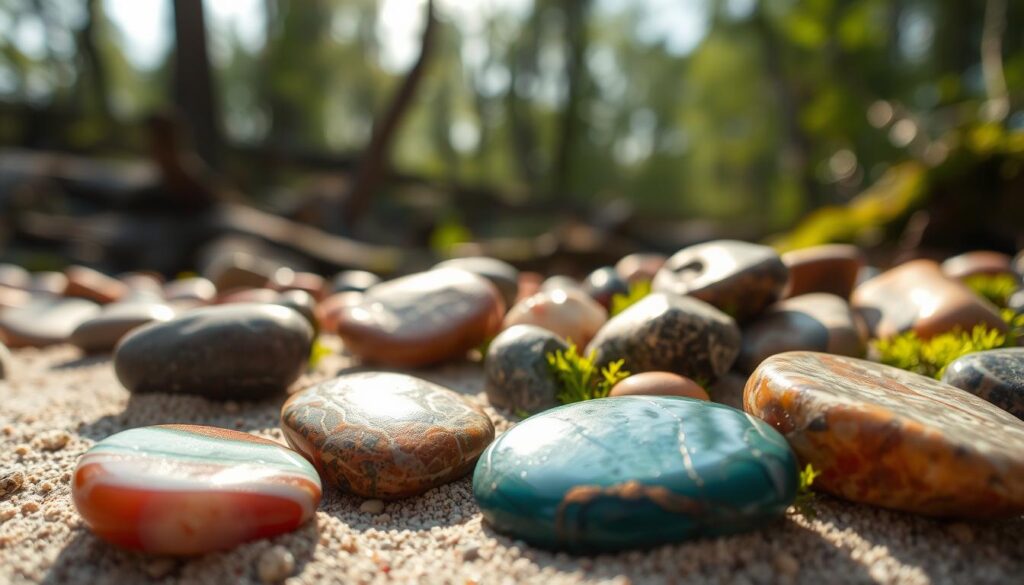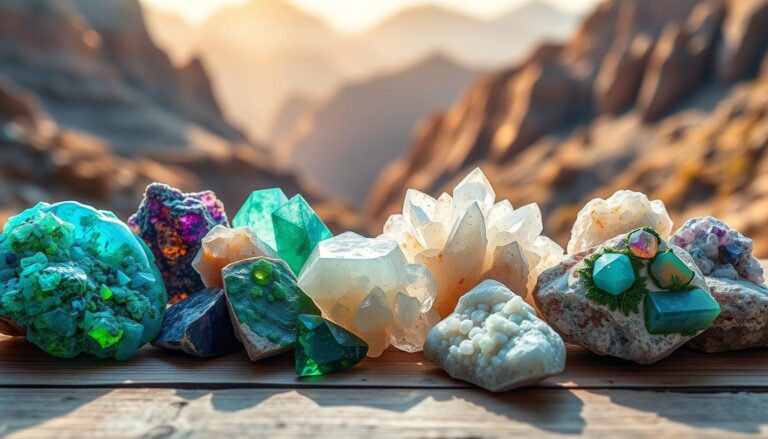
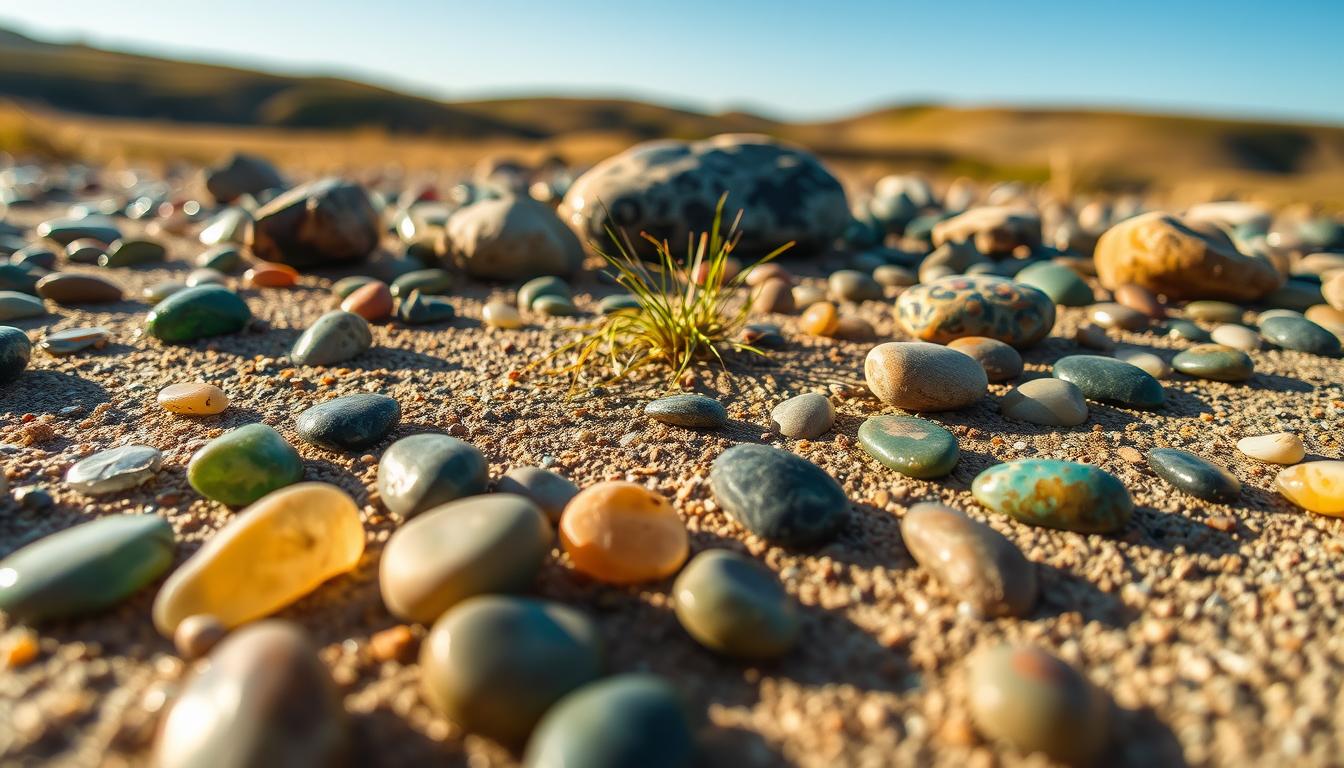
Naturally polished stones found in nature are smooth, rounded rocks that have been shaped by water, wind, and time over thousands of years. These geological treasures can be discovered along coastlines, riverbeds, and desert landscapes where natural forces have worked their magic.
Finding these naturally smoothed stones is like uncovering hidden gems that Mother Nature has carefully crafted. Each stone tells a unique story of weathering, erosion, and the patient work of natural elements. For collectors interested in discovering rare stones collectors actually find, naturally polished specimens represent some of the most accessible treasures available to rockhounds.
TL;DR
- Ocean waves can polish stones to glass-like smoothness in just 20-50 years of constant tumbling.
- Desert-polished stones called “desert varnish” develop their glossy coating over 10,000+ years of wind erosion.
- River stones become rounded after traveling 10-100 miles downstream, depending on rock hardness.
- Beach glass takes 20-40 years to transform from sharp glass shards into smooth, frosted gems.
How Naturally Polished Stones Found in Nature Form
The process of natural stone polishing happens through abrasion, where rocks repeatedly bump against each other and harder surfaces. Water acts as the main agent, carrying stones downstream or rolling them back and forth on beaches with each tide.
Wind also plays a major role, especially in desert environments where sand particles act like natural sandpaper. Over time, sharp edges get worn down, surfaces become smooth, and the stone develops that characteristic polished appearance that makes them so appealing to collectors.
Ocean Wave Action
Coastal environments produce some of the most perfectly polished stones through constant wave action. The rhythmic motion of waves creates a natural tumbling effect, rolling stones against sand and other rocks thousands of times per day.
Salt water adds to the polishing process by slightly dissolving certain minerals, which helps smooth out rough surfaces even faster than fresh water alone.
River Current Polishing
Fast-moving rivers create polished stones through a different process than ocean waves. Stones get caught in the current and bounce along the riverbed, gradually wearing down their rough edges as they travel downstream.
The distance a stone travels and the speed of the current determine how smooth it becomes. Harder stones like quartz may need to travel much further than softer stones like limestone to achieve the same level of polish.
Best Places to Find Naturally Polished Stones
Successful stone hunting requires knowing where natural polishing processes are most active. Look for areas where water and stones interact regularly over long periods. For those seeking the most productive locations, our guide to famous rock and gem collecting locations provides detailed information about the best sites across America.
Rocky Coastlines
Beaches with rocky shores produce the most variety of polished stones. The combination of wave action, different rock types, and constant movement creates ideal conditions for natural polishing.
Search along the high tide line where waves deposit stones after each tide cycle. Early morning after storms often yields the best finds when new stones have been churned up from deeper waters.
Mountain Streams and Rivers
Fast-flowing mountain streams contain polished stones that have tumbled down from higher elevations. Look in areas where the current slows down, such as bends in the river or natural pools.
Spring runoff season brings fresh stones down from the mountains, making it an ideal time for collecting. The increased water flow carries stones that might normally stay hidden under sediment.
Desert Washes
Desert environments create uniquely polished stones through wind erosion and occasional flash floods. These stones often have a distinctive patina or desert varnish that gives them a special appearance.
Flash flood channels concentrate stones in specific areas, making them easier to find than scattered across the open desert.
Best Time for Stone Hunting
Visit beaches and rivers after storms when new stones get exposed and wave action increases. Low tide reveals stones that are usually underwater, giving you access to a wider selection.
Types of Naturally Polished Stones You Can Find
Different rock types respond to natural polishing in unique ways, creating stones with various textures, colors, and levels of shine. Understanding these differences helps you identify valuable finds and recognize naturally occurring stones with unique features that make them particularly special.
Quartz Varieties
Quartz stones polish to a beautiful glossy finish because of their hardness rating of 7 on the Mohs scale. Common varieties include clear quartz, rose quartz, and smoky quartz, all of which develop exceptional shine when naturally tumbled.
Agate and jasper, which are types of chalcedony quartz, create some of the most striking naturally polished stones with their banded patterns and rich colors.
Volcanic Stones
Basalt and other volcanic rocks polish to a deep, dark shine that’s especially attractive. These stones are common along volcanic coastlines and can develop an almost mirror-like surface when properly polished by natural forces.
Obsidian, volcanic glass, creates naturally polished pieces that are incredibly smooth but more fragile than other stone types.
Metamorphic Stones
Slate, marble, and other metamorphic rocks can develop interesting polished surfaces that show their layered or crystalline structure. These stones often have unique patterns that become more visible as natural polishing removes surface material.
Serpentine and soapstone polish to a waxy, smooth finish that feels distinctly different from harder stones like quartz.
What Makes Some Stones Polish Better Than Others
The hardness, mineral composition, and crystal structure of a stone determine how well it responds to natural polishing processes. Harder stones generally achieve better polish but take much longer to smooth out. Understanding these factors is crucial for anyone learning how to build a valuable rock collection focused on naturally polished specimens.
Stones with uniform crystal structure polish more evenly than those with mixed minerals or inclusions. This is why pure quartz varieties often look more polished than granite, which contains multiple different minerals.
Mineral Hardness
The Mohs hardness scale explains why some stones polish better than others. Stones rated 6-8 on the scale (like quartz and feldspar) achieve excellent polish, while very soft stones (1-3) may wear away too quickly to develop a lasting shine.
Very hard stones (9-10) like corundum rarely polish naturally because they resist the abrasive forces that smooth other stones.
Crystal Structure
Stones with regular crystal patterns polish more uniformly than those with irregular structures. This is why single-crystal stones like clear quartz often look more polished than multi-crystal rocks like granite.
Stones with natural fracture lines or weak points may break apart before achieving full polish, which explains why perfect naturally polished specimens are relatively rare.
Caring for Your Naturally Polished Stone Collection
Once you find naturally polished stones, proper care helps preserve their beauty and prevents damage. These stones have already survived intense natural forces, but they still need gentle handling to maintain their polished surfaces. To understand what truly makes these specimens valuable, consider exploring what makes a stone a true natural treasure in terms of geological rarity and cultural significance.
Store stones separately to prevent them from scratching each other, especially when mixing different hardness levels in your collection.
Cleaning Methods
Clean naturally polished stones with warm water and a soft brush to remove sand, salt, or dirt without scratching the polished surface. Avoid harsh chemicals that might dull the natural shine or damage certain mineral types.
For stubborn deposits, soak stones in fresh water overnight before gently scrubbing with a soft toothbrush.
Display Options
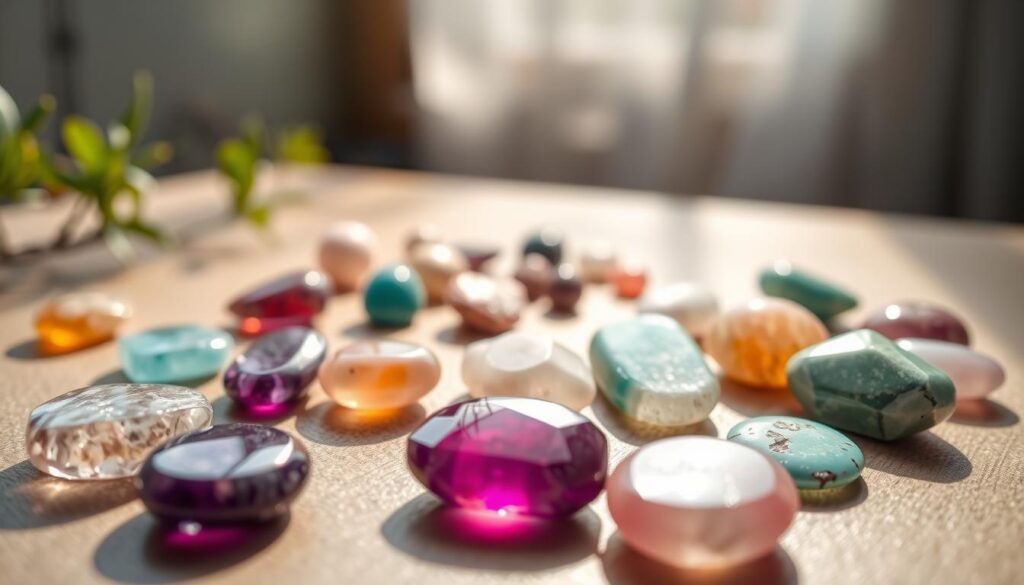
Natural light brings out the best colors and shine in polished stones, but avoid direct sunlight for extended periods as it can fade some stone types. Indoor displays work well for showing off your collection while protecting the stones.
Group stones by color, size, or origin to create attractive displays that highlight the natural polishing process.
Frequently Asked Questions
How long does it take for stones to become naturally polished?
Most stones require 20-100 years of constant natural action to achieve significant polish, though the exact time depends on stone hardness, water conditions, and environmental factors.
Can I speed up the natural polishing process?
While you can’t replicate thousands of years of natural forces, rock tumbling machines can create similar results in 4-6 weeks using graduated grits and constant rotation.
Are naturally polished stones valuable?
Value depends on the stone type, rarity, and degree of polish, with some naturally polished agates, jaspers, and unique specimens commanding collector prices of $10-100 or more.
What’s the difference between naturally polished and artificially tumbled stones?
Naturally polished stones often have irregular shapes and subtle surface variations, while artificially tumbled stones tend to be more uniformly shaped and consistently polished.
Final Thoughts
Naturally polished stones found in nature represent some of Earth’s most patient artwork, shaped by forces that work continuously over decades and centuries. Each stone you discover has traveled a unique journey through water, sand, and time to achieve its smooth, polished surface.
Start exploring beaches, rivers, and desert washes in your area to begin your own collection of these naturally crafted treasures. The search itself becomes as rewarding as the stones you’ll eventually find.