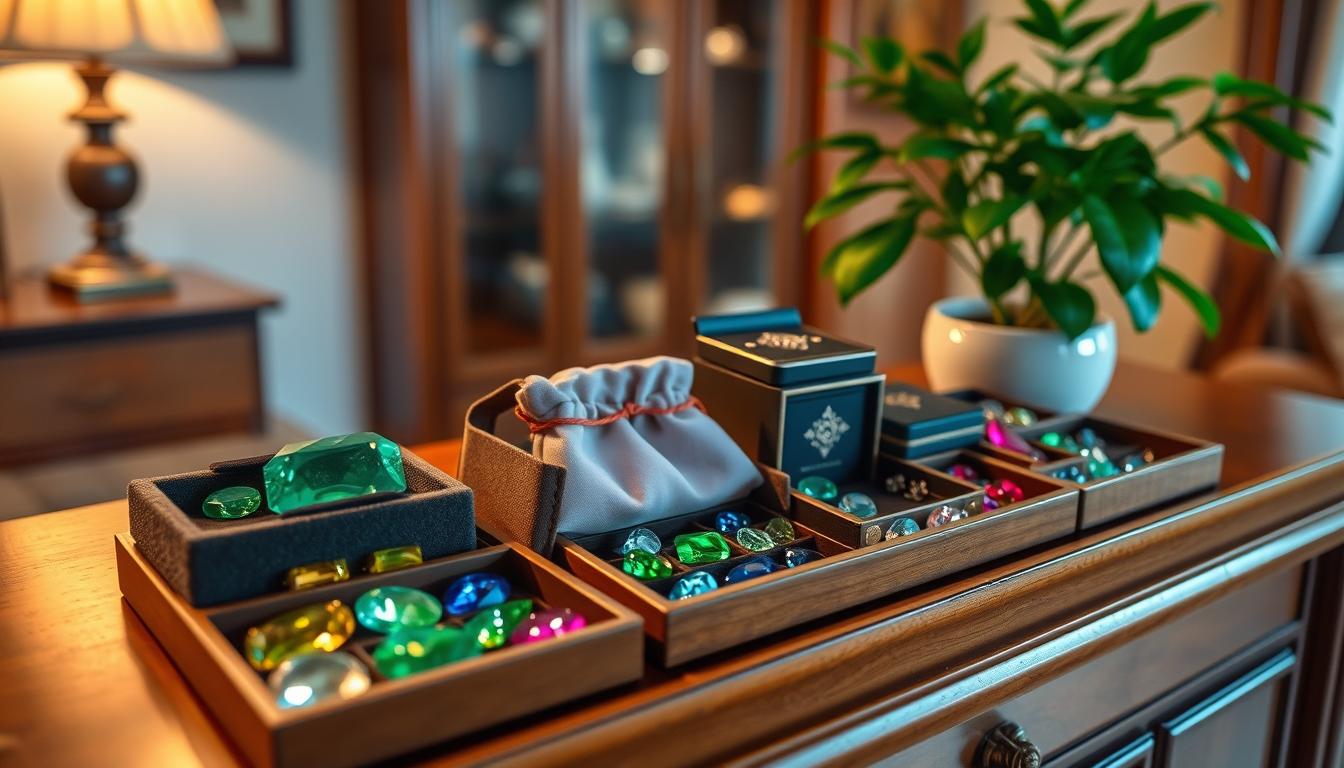
How To Store And Protect Gemstones At Home requires careful attention to prevent damage from scratches, humidity, and light exposure. Many collectors lose significant value by storing their gems incorrectly, leading to chips, color fading, and permanent surface damage.
Proper gemstone storage protects your investment while keeping your collection organized and accessible. Whether you own a single precious stone or an extensive collection, the right storage methods will preserve their beauty and value for years to come.
TL;DR
- Store each gemstone separately in individual soft pouches to prevent scratches from contact with other stones.
- Keep humidity levels between 45-55% using silica gel packets to prevent cracking and color changes.
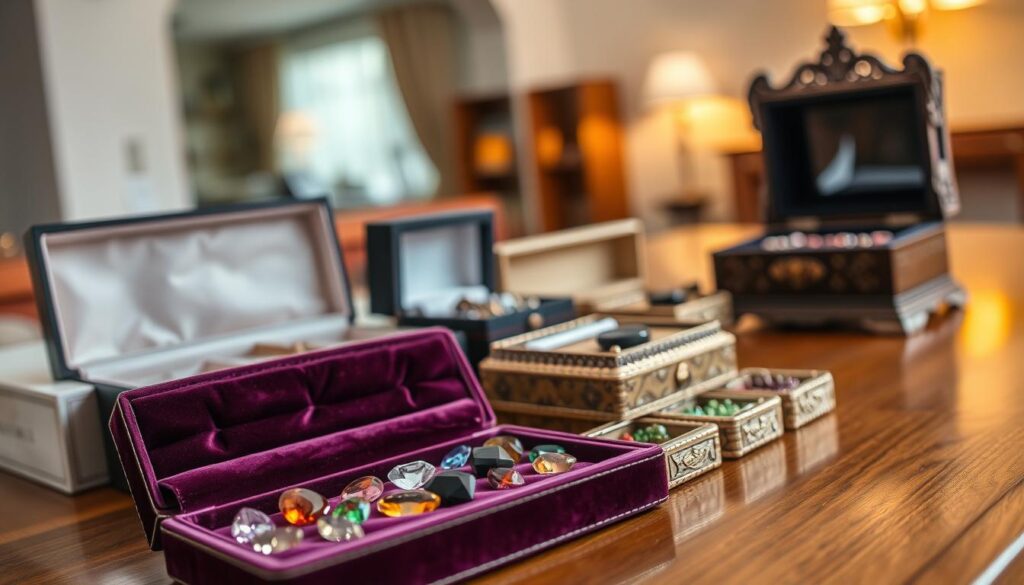
- Use compartmentalized jewelry boxes with felt lining to organize stones by hardness level.
- Avoid direct sunlight and extreme temperatures by storing gemstones in dark, cool locations away from windows.
How To Store And Protect Gemstones At Home
The foundation of gemstone protection starts with understanding that different stones have different vulnerabilities. Hard gemstones like diamonds and sapphires can scratch softer stones like pearls and opals when stored together.
Temperature fluctuations pose another major threat to your collection. Rapid temperature changes can cause internal stress fractures in many gemstones, particularly those with inclusions or natural fissures.
Essential Storage Equipment
Investing in proper storage equipment prevents most common gemstone damage. Here are the key items every collector needs:
- Soft cloth pouches – Individual fabric pouches prevent stone-to-stone contact and scratching.
- Compartmentalized boxes – Jewelry boxes with separate sections keep stones organized and protected.
- Silica gel packets – These control humidity levels and prevent moisture damage.
- Digital hygrometer – Monitors humidity levels in your storage area.
- Acid-free tissue paper – Wraps delicate stones without chemical contamination.
Organizing By Gemstone Hardness
The Mohs hardness scale guides proper gemstone separation during storage. Stones with similar hardness levels can be stored near each other, while those with significant hardness differences need complete separation.
Group your gemstones into these hardness categories for safe storage:
- Ultra-hard stones (9-10). Diamonds, sapphires, and rubies can scratch everything else and need individual storage.
- Hard stones (7-8). Emeralds, topaz, and garnet require separation from softer materials.
- Medium stones (5-6). Turquoise, moonstone, and apatite need extra padding and protection.
- Soft stones (1-4). Pearls, amber, and malachite require the most careful handling and storage.
Climate Control and Environment
Humidity control prevents many common gemstone problems including cracking, color fading, and structural weakness. Most gemstones thrive in stable environments with moderate humidity levels.
Monitor these environmental factors in your storage area:
- Temperature stability – Keep storage areas between 65-75°F with minimal fluctuation.
- Humidity control – Maintain 45-55% relative humidity using dehumidifiers or humidifiers as needed.
- Light exposure – Store gemstones away from direct sunlight to prevent color fading.
- Air circulation – Ensure gentle airflow to prevent moisture buildup without creating drafts.
Special Considerations for Organic Gems
Organic gemstones like pearls, coral, and amber require extra attention due to their composition. These materials are more sensitive to chemicals, humidity changes, and physical damage than mineral gemstones.
Store organic gems with these additional precautions: wrap them in acid-free tissue, avoid plastic containers that can trap moisture, and keep them away from cosmetics and cleaning products. Understanding how to identify gemstones without special tools helps you understand which storage methods work best for each type.
Quick Storage Check
Place a small hygrometer in your gemstone storage area and check it weekly. If humidity rises above 60% or drops below 40%, add or remove silica gel packets immediately.
Security and Insurance Considerations
Valuable gemstone collections need security measures beyond proper physical storage. Document your collection with detailed photographs and professional appraisals for insurance purposes.
Consider these security options based on your collection’s value:
- Home safe – Fire-resistant safes protect against theft and environmental disasters.
- Safety deposit box – Bank storage offers maximum security for high-value pieces.
- Insurance coverage – Specialized jewelry insurance covers loss, theft, and damage.
- Inventory documentation – Maintain detailed records with photos and appraisals.
Common Storage Mistakes to Avoid
Many gemstone owners unknowingly damage their collections through improper storage practices. Understanding common gemstone collecting mistakes that cost beginners money protects your investment and preserves stone quality.
Watch out for these storage errors:
- Mixing different hardness levels – Hard stones will scratch softer ones during movement or vibration.
- Using plastic bags – Plastic can trap moisture and create chemical reactions with certain stones.
- Storing in direct sunlight – UV light fades many gemstone colors permanently over time.
- Ignoring humidity levels – Both excessive moisture and extreme dryness can damage gemstones.
- Overcrowding storage spaces – Cramped conditions increase the risk of chips and scratches.
Regular Maintenance Schedule
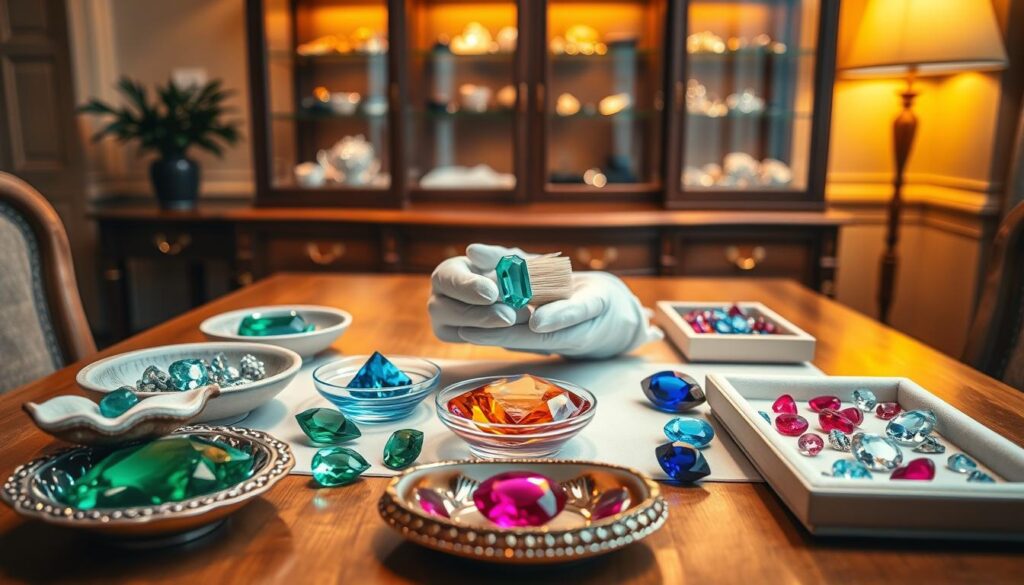
Establish a routine maintenance schedule to monitor your stored gemstones and storage conditions. Monthly checks help you catch problems before they cause permanent damage.
Include these tasks in your maintenance routine: inspect stones for new chips or color changes, check humidity levels and adjust as needed, clean storage containers and replace worn padding, and update inventory records with any changes or new acquisitions. Learning how to tell if a gemstone is real or fake ensures you’re protecting authentic stones with proper storage methods.
Frequently Asked Questions
Can I store different types of gemstones together?
Only store gemstones together if they have similar hardness levels on the Mohs scale. Different hardness levels will cause scratching and damage when stones move against each other.
What’s the best humidity level for gemstone storage?
Maintain humidity between 45-55% for most gemstones. Use silica gel packets or a dehumidifier to control moisture levels in your storage area.
Should I wrap gemstones in tissue paper?
Use only acid-free tissue paper for wrapping gemstones. Regular tissue paper contains chemicals that can damage certain stones over time.
How often should I check my stored gemstones?
Inspect your stored gemstones monthly for any changes in color, chips, or cracks. Also check storage conditions like humidity levels and container integrity.
Is it safe to store gemstones in a bank safety deposit box?
Safety deposit boxes provide excellent security but may have humidity issues. Add silica gel packets and check on your stones periodically if using bank storage.
Final Thoughts
How To Store And Protect Gemstones At Home becomes simple when you follow proper hardness separation, climate control, and security measures. Starting your gemstone collecting journey with proper storage habits prevents costly damage and preserves your collection’s value.
Start by organizing your current collection by hardness level and investing in appropriate storage containers. Whether you’re considering loose gemstones vs set stones for collectors, proper storage techniques will maintain their beauty and value for generations with consistent care and attention.