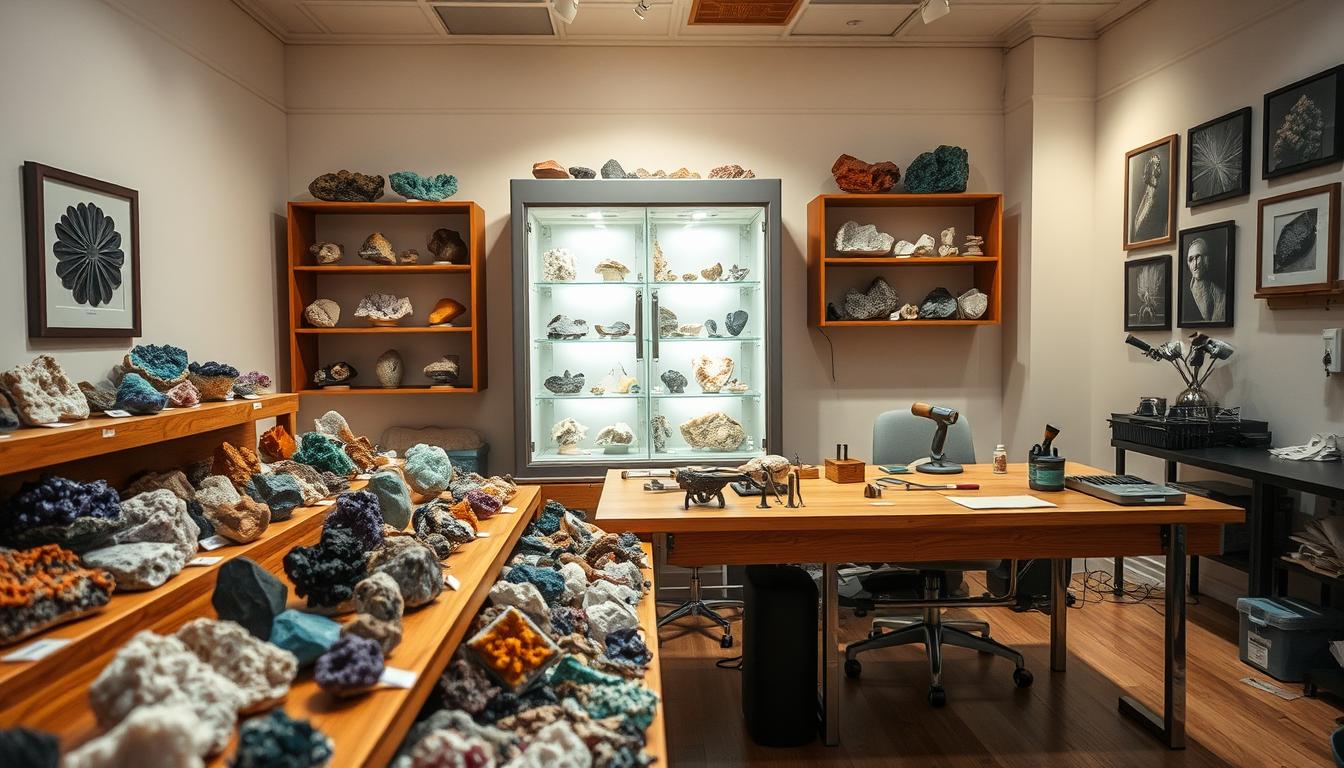
How To Store And Display Mineral Specimens requires careful planning to preserve their natural beauty while keeping them safe from damage. Whether you’re a seasoned collector or just starting your mineral journey, proper storage and display techniques will protect your investment and showcase your specimens at their best.
The right approach combines practical storage solutions with attractive display methods that highlight each specimen’s unique characteristics. From humidity control to lighting considerations, every detail matters when caring for your mineral collection.
TL;DR
- Store minerals at 40-60% humidity using silica gel packets to prevent damage from moisture fluctuations.
- Use individual compartments or soft padding between specimens to avoid scratches and chips during storage.
- Display cases with UV-filtering glass protect light-sensitive minerals like amethyst and fluorite from fading.
- Label each specimen with location, date found, and mineral name using archival-quality materials that won’t yellow over time.
How To Store And Display Mineral Specimens Safely
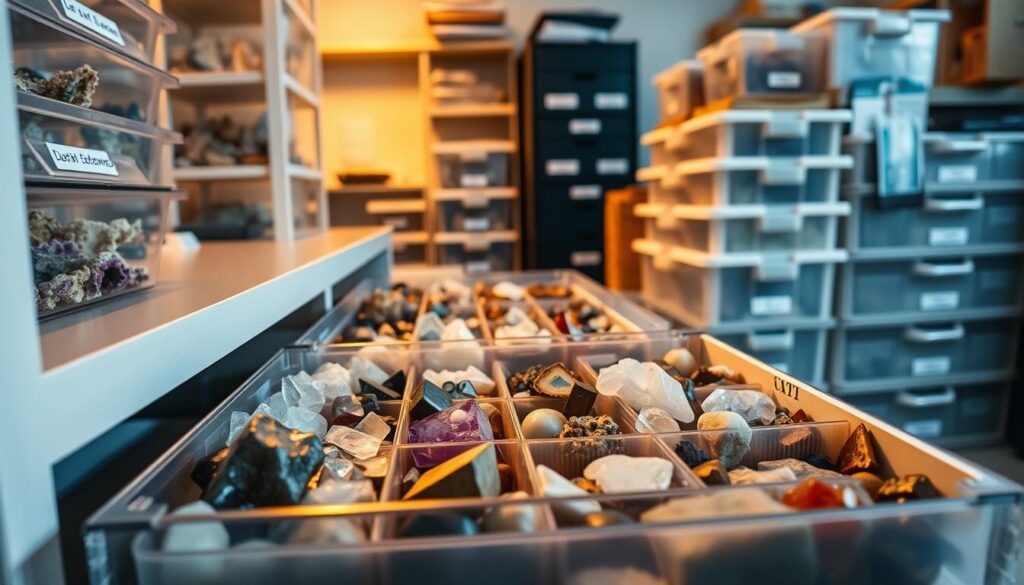
Proper storage forms the foundation of mineral care, protecting your specimens from environmental damage and physical harm. The key factors to control are humidity, temperature, light exposure, and physical protection.
Humidity presents the biggest threat to most mineral collections, with levels above 60% promoting rust on iron-bearing specimens and below 40% causing some minerals to crack or lose water content. Use a digital hygrometer to monitor conditions and place silica gel packets in storage containers to maintain stable moisture levels.
Essential Storage Equipment
- Specimen boxes – Individual cardboard or plastic boxes with foam padding for each mineral.
- Storage cabinets – Wooden or metal cabinets with adjustable shelves and good ventilation.
- Bubble wrap – Acid-free bubble wrap or tissue paper for wrapping delicate specimens.
- Desiccant packs – Silica gel packets to control moisture in enclosed spaces.
- Labels – Archival-quality labels that won’t fade or become brittle over time.
Creating Attractive Display Areas
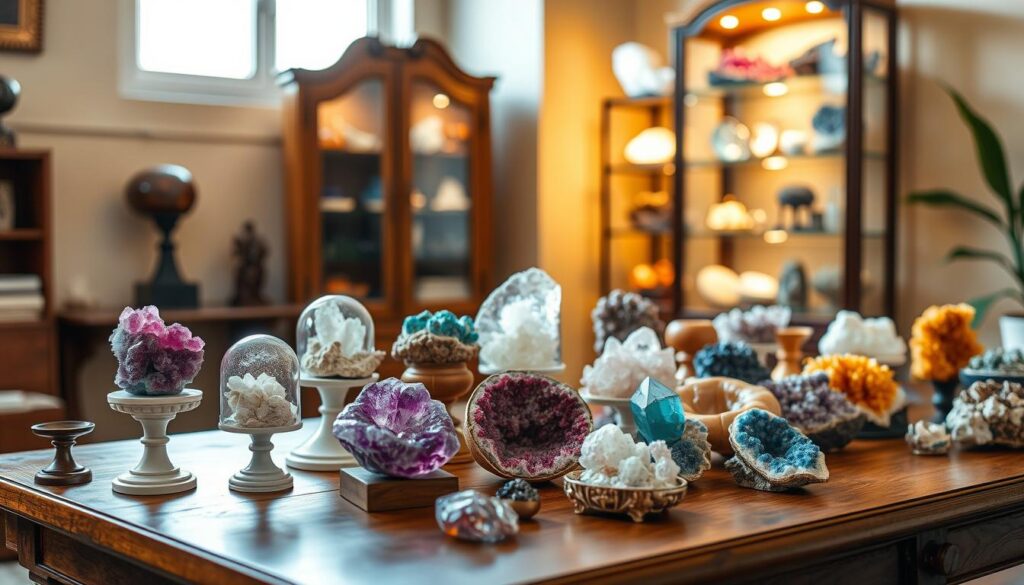
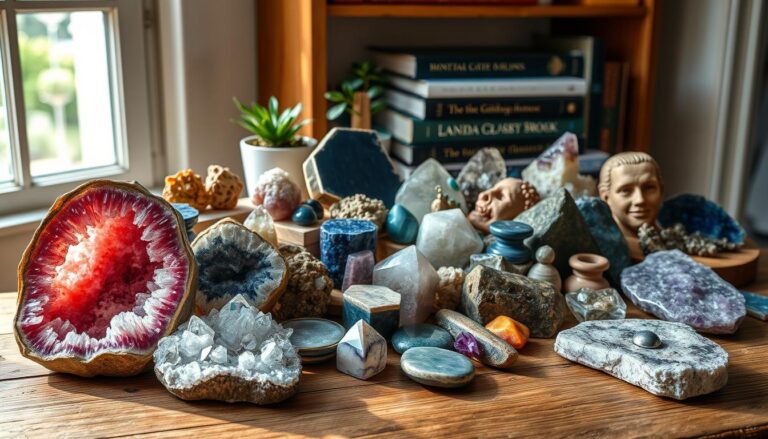
Display cases transform your mineral collection from hidden storage into an educational and decorative feature of your home. Choose cases that balance protection with visibility, allowing you to enjoy your specimens while keeping them safe.
Glass display cases offer the best protection from dust, handling, and environmental changes while providing clear viewing from multiple angles. Look for cases with adjustable shelving and good interior lighting to highlight each specimen’s best features.
Display Case Options
- Wall-mounted cases – Save floor space while creating an eye-catching wall display.
- Tabletop cases – Perfect for showcasing your best specimens at eye level.
- Standing cabinets – Larger collections benefit from full-height display cabinets with multiple shelves.
- Rotating displays – Motorized bases allow viewers to see specimens from all angles.
Lighting Your Mineral Display
Proper lighting brings out the natural colors and crystal faces that make minerals so captivating to observe. LED lights work best because they produce minimal heat and can be positioned to eliminate shadows while highlighting key features.
Avoid direct sunlight and fluorescent lighting, which can fade light-sensitive minerals over time. Many collectors use adjustable LED strips inside display cases, allowing them to customize the lighting angle for each specimen.
Photography Setup Tip
Position a small LED light at a 45-degree angle to your specimen when photographing your collection. This creates natural-looking shadows while avoiding harsh reflections on crystal faces.
Lighting Considerations by Mineral Type
- Transparent minerals – Backlighting reveals internal structures and inclusions.
- Metallic specimens – Side lighting prevents overwhelming reflections while showing luster.
- Fluorescent minerals – UV lights reveal hidden colors but should be used sparingly to prevent damage.
- Dark minerals – Bright white LED lighting brings out subtle color variations and crystal details.
Organizing and Cataloging Your Collection
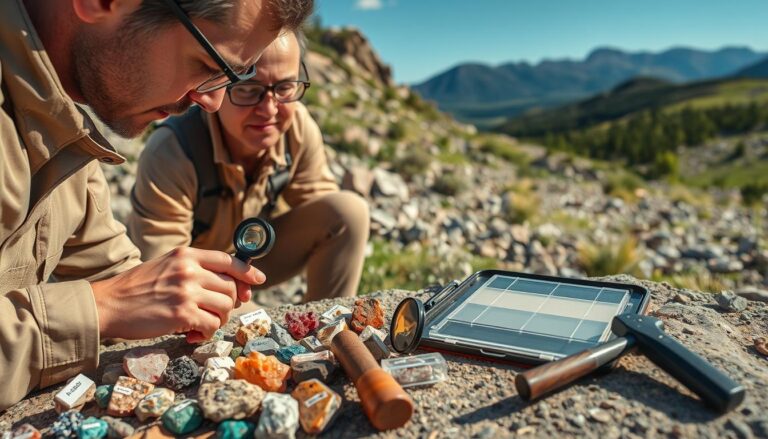
A well-organized system helps you locate specimens quickly while providing valuable information about each piece’s history and characteristics. Start with basic information like mineral name, location found, and acquisition date, then add details as your knowledge grows. For beginners looking to build their collection systematically, understanding which specimens to prioritize can help guide your cataloging approach.
Digital cataloging systems work well for larger collections, allowing you to search by multiple criteria and include photographs. Simple spreadsheet programs provide all the functionality most collectors need without requiring specialized software.
Essential Record Information
- Specimen identification. Include both common and scientific mineral names when known.
- Source location. Record the specific mine, quarry, or collecting site where found.
- Physical measurements. Note dimensions, weight, and crystal system for reference.
- Acquisition details. Include date obtained, source (self-collected, purchased, traded), and cost.
- Storage location. Track where each specimen is stored or displayed for easy retrieval.
Cleaning and Maintenance
Regular maintenance keeps your specimens looking their best while preventing long-term damage from dust accumulation and handling. Most minerals only need gentle cleaning with a soft brush, but some require special care depending on their hardness and chemical composition.
Always research the specific cleaning requirements for each mineral type before attempting any cleaning procedures. Some specimens, like halite or gypsum, can dissolve in water, while others may be damaged by common cleaning solvents.
Safe Cleaning Methods
- Soft brushes – Use natural bristle brushes or clean paintbrushes for dusting.
- Compressed air – Remove dust from delicate crystal faces without physical contact.
- Distilled water – Safe for most hard minerals, avoid tap water which contains dissolved minerals.
- Isopropyl alcohol – Effective for removing oils and fingerprints from stable minerals.
Frequently Asked Questions
What’s the best humidity level for storing minerals?
Maintain humidity between 40-60% using silica gel packets or a dehumidifier. This range prevents both moisture damage and excessive drying that can cause cracking.
Can I store different minerals together in the same container?
Store specimens separately or use dividers to prevent harder minerals from scratching softer ones. Understanding the hardness differences between minerals helps you make better storage decisions and wrap each piece individually in acid-free tissue paper for extra protection.
How do I prevent my amethyst from fading?
Keep amethyst away from direct sunlight and fluorescent lighting, which cause the purple color to fade over time. Display cases with UV-filtering glass provide the best protection.
What information should I include on specimen labels?
Include the mineral name, location where found, date collected, and your specimen number for catalog reference. Use archival-quality paper and ink that won’t fade.
How often should I clean my mineral display?
Dust your display cases monthly and clean individual specimens only when necessary. Over-handling can cause more damage than accumulated dust in most cases.
Final Thoughts
How To Store And Display Mineral Specimens becomes much easier when you establish good habits from the start of your collecting journey. Proper storage prevents damage while attractive displays let you enjoy your specimens daily.
Focus on controlling humidity and protecting specimens from physical damage first, then enhance your displays with good lighting and organization systems as your collection grows. Whether you’re just learning how to build your first collection or expanding an established one, these storage and display principles will serve you well. For serious collectors, consider joining the International Mineralogical Association for advanced preservation techniques and research on mineral stability.