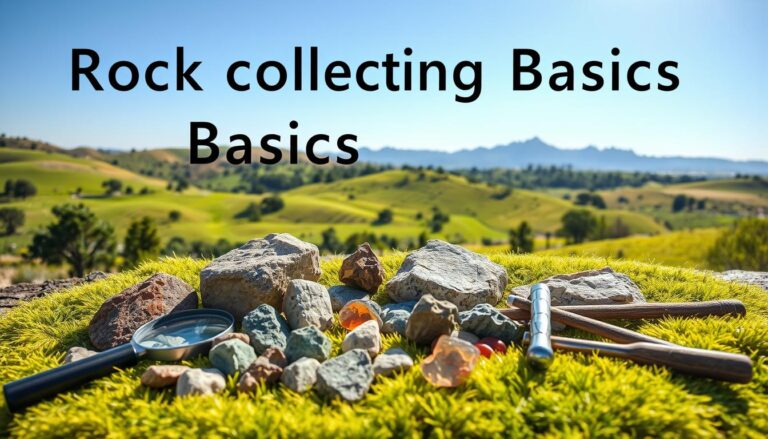
How To Read Rock Layers When Collecting is a fundamental skill that transforms casual rock hunting into informed geological exploration. Understanding the story written in stone layers helps you identify the best specimens and discover the geological history of your collecting area.
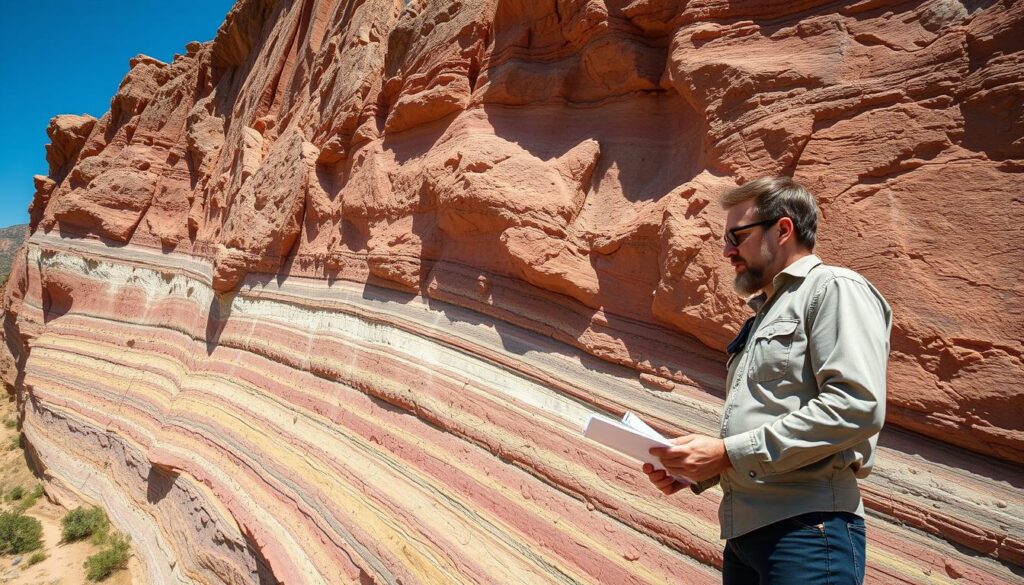
Rock layers, or strata, act like pages in Earth’s history book, with each layer representing a different time period and environmental condition. Learning to interpret these layers will dramatically improve your collecting success and help you understand what treasures might be hidden in each formation.
TL;DR
- Sedimentary rock layers follow the Law of Superposition – older layers sit below younger ones in undisturbed formations.
- Limestone layers often contain the best fossil specimens, while sandstone frequently holds agates and petrified wood.
- Contact zones between different rock types produce 75% of collectible minerals through chemical reactions.
- Tilted or folded layers indicate geological upheaval and often expose multiple time periods in a single outcrop.
How To Read Rock Layers When Collecting
The foundation of reading rock layers starts with recognizing the three main rock types and how they form distinct collecting opportunities. Sedimentary rocks create horizontal layers through gradual deposition, igneous rocks form from cooling magma, and metamorphic rocks result from heat and pressure transformation.
Each rock type tells you what to expect when collecting. Sedimentary layers often contain fossils and form the classic “layer cake” appearance you see in canyon walls, while igneous intrusions cut through existing layers and create contact zones rich in minerals.
Identifying Layer Sequences
Start by looking for color changes, texture differences, and composition variations between layers. These boundaries mark different geological time periods and environmental conditions that affected what formed in each layer.
The most productive collecting strategy involves targeting these boundary zones where different rock types meet. Chemical reactions at these contact points often create unique minerals and crystals that don’t form elsewhere.
Reading Sedimentary Sequences
Sedimentary layers follow predictable patterns that reveal ancient environments. Thick limestone layers indicate warm, shallow seas perfect for fossil formation, while sandstone suggests ancient beaches or river systems that concentrated heavy minerals.
- Limestone layers – Look for fossils, calcite crystals, and geodes in weathered sections.
- Sandstone formations – Search for agates, jasper, and petrified wood in erosion channels.
- Shale deposits – Check for pyrite nodules, marcasite, and preserved plant fossils.
- Conglomerate layers – Examine for rounded gemstones and unusual rock fragments.
Spotting Igneous Intrusions
Igneous rocks that pushed through existing layers create some of the richest collecting areas. These intrusions appear as different-colored rock cutting across the normal layer pattern, often creating dramatic contact zones.
Look for pegmatite dikes – light-colored intrusions that often contain large crystals of quartz, feldspar, and mica. These formations frequently yield collectible specimens because the slow cooling process allowed large crystals to form.
Follow the Weather Pattern
Collect after heavy rains when fresh material gets exposed and washed clean. Weathered surfaces often reveal the best specimens that mechanical forces have freed from solid rock.
Understanding Geological Time
The principle of superposition means that in undisturbed areas, older layers sit below younger ones. This helps you target specific time periods known for particular types of specimens or fossils.
However, geological forces often tilt, fold, or overturn these layers. Learning to recognize these disruptions helps you understand why you might find marine fossils on mountaintops or why certain valuable minerals concentrate in unexpected places.
Recognizing Structural Changes
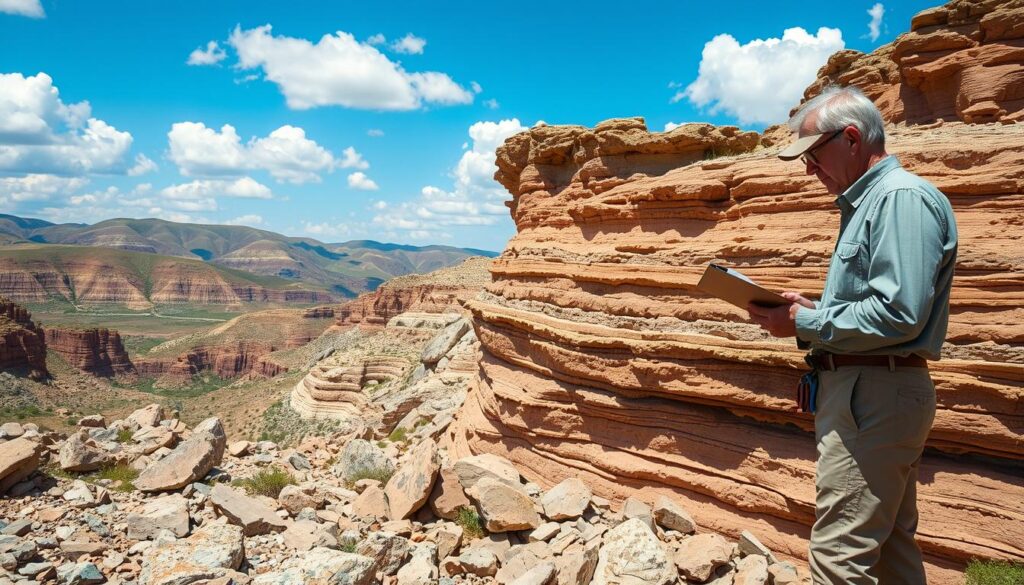
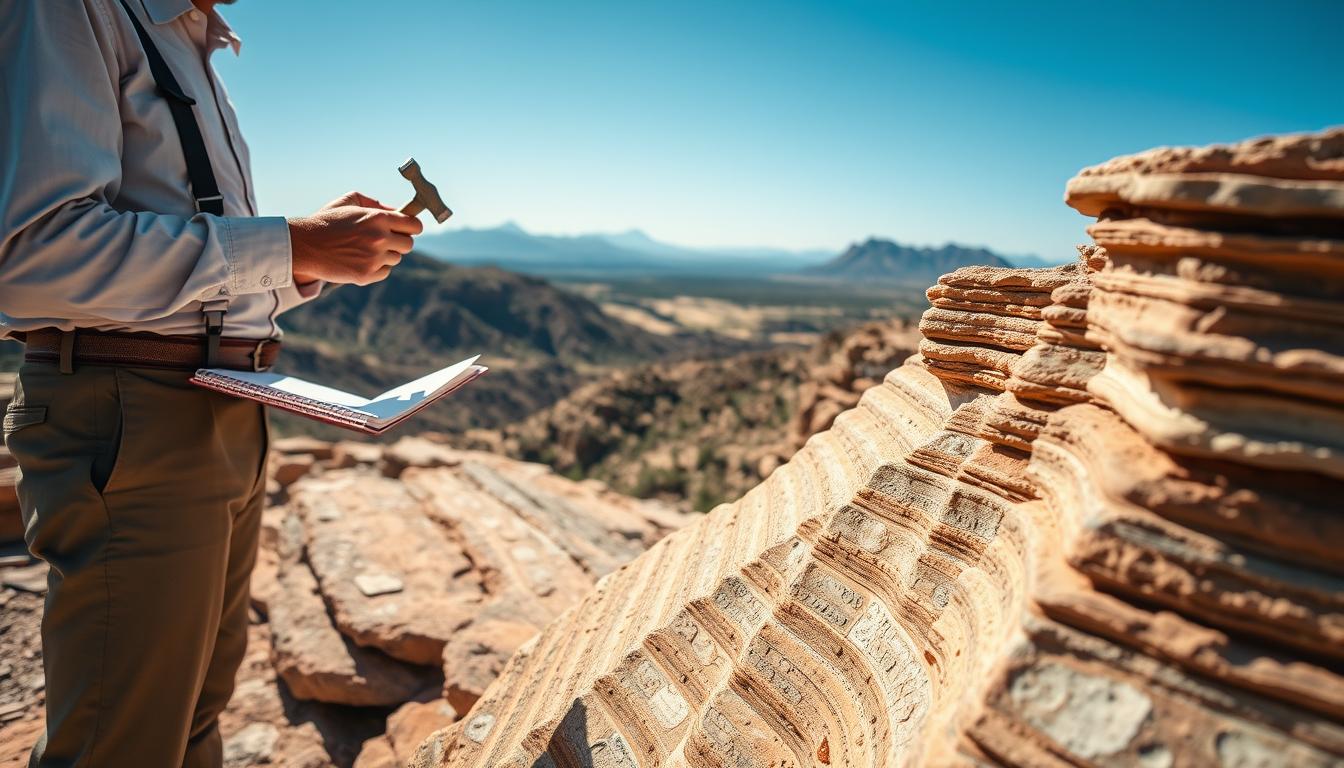
Folded or faulted rock layers create collecting opportunities by exposing multiple geological time periods in a small area. These disrupted zones also create stress fractures where crystals and minerals often form.
- Look for tilted layers. These exposures show multiple time periods and often contain varied specimen types in a compact area.
- Find fault zones. Movement along faults creates fractures that fill with quartz, calcite, and other collectible minerals.
- Identify anticlines and synclines. These folds concentrate certain minerals and expose deep formations at the surface.
Practical Layer Reading Techniques
Develop a systematic approach to examining rock exposures by starting with the overall pattern, then focusing on individual layers. Carry a small notebook to record which layers produce the best specimens for future reference.
Pay attention to weathering patterns, as different rock types erode at different rates. Softer layers often form valleys or recessed areas, while harder layers create ridges or protruding ledges where specimens collect.
Tools for Layer Analysis
A magnifying glass helps identify mineral composition and crystal structure in individual layers. A small hammer and chisel allow you to test rock hardness and examine fresh surfaces beneath weathered exteriors.
- Streak plate – Test mineral colors on unglazed ceramic to aid identification.
- Acid bottle – A drop of vinegar identifies limestone and marble layers that fizz.
- Magnet – Locate iron-bearing minerals and meteorite fragments in certain layers.
- UV light – Reveal fluorescent minerals that might be invisible in daylight.
Frequently Asked Questions
How do you tell the age of rock layers?
Use the principle of superposition – in undisturbed formations, deeper layers are older than those above them. Fossils within layers also help determine relative age periods.
What types of specimens form in contact zones?
Contact zones between different rock types often produce garnets, tourmalines, and various crystal formations due to chemical reactions during formation.
Why are some rock layers tilted or vertical?
Geological forces like mountain building, earthquakes, and crustal movement can tilt, fold, or overturn originally horizontal sedimentary layers over millions of years.
Which rock layers contain the best fossils?
Fine-grained sedimentary rocks like limestone and shale preserve fossils best because they form in calm water environments that don’t damage organic remains.
Final Thoughts
How To Read Rock Layers When Collecting opens up a systematic approach to finding better specimens by understanding the geological processes that created them. Each layer tells part of Earth’s story and provides clues about what treasures might be hidden within.
Start practicing these techniques at your next collecting site and keep notes about which layers produce the best results. Your success rate will improve dramatically once you learn to read the geological story written in stone.