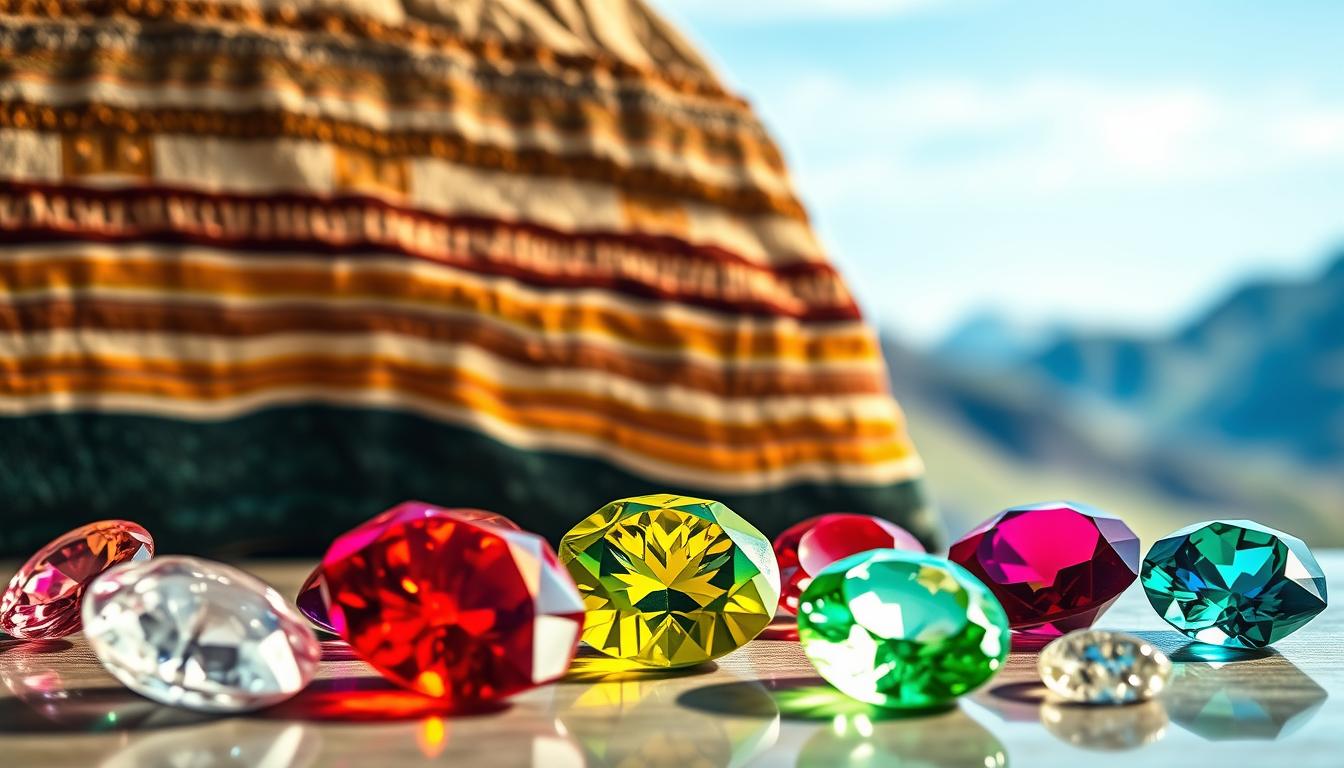
How Geological Conditions Affect Gem Quality depends on a complex interplay of temperature, pressure, chemical composition, and time during formation deep within the Earth. The specific geological environment where a gemstone forms determines everything from its color and clarity to its overall durability and value.
Understanding these formation processes helps explain why certain locations produce exceptional gems while others yield lower-quality stones. The geological story behind each gemstone reveals why some specimens command premium prices while others remain relatively affordable.
TL;DR
- Temperature ranges between 400-1,200°C during formation directly influence gem color and crystal structure quality.
- Pressure conditions exceeding 1 GPa create the dense crystal lattices that give gems their hardness and brilliance.
- Trace element concentrations as low as 0.1% can completely transform a colorless mineral into a valuable colored gemstone.
- Formation time periods spanning millions of years allow perfect crystal growth that eliminates inclusions and flaws.
How Geological Conditions Affect Gem Quality
The geological environment acts as nature’s laboratory, where specific conditions must align perfectly to create high-quality gemstones. Temperature serves as the primary catalyst, with most precious gems forming at temperatures between 400 and 1,200 degrees Celsius deep within the Earth’s crust and mantle.
Pressure works alongside temperature to compress mineral structures into the dense, ordered arrangements that give gems their exceptional hardness. Without sufficient pressure – typically exceeding 1 gigapascal – crystal structures remain loose and weak, resulting in poor-quality stones that lack the durability collectors seek.
Temperature’s Role in Crystal Formation
High temperatures provide the energy needed for atoms to arrange themselves into perfect crystal lattices. Emeralds form in hydrothermal veins at temperatures around 500-600°C, while diamonds require the extreme heat found 150-200 kilometers below the surface where temperatures reach 1,000-1,200°C.
Rapid temperature changes during cooling can create internal stress fractures that significantly reduce gem quality. The most valuable specimens form when temperatures decrease gradually over thousands of years, allowing crystal structures to relieve stress naturally.
Optimal Temperature Ranges by Gem Type
- Diamonds – 1,000-1,200°C in the upper mantle
- Rubies and Sapphires – 600-900°C in metamorphic environments
- Emeralds – 500-600°C in hydrothermal veins
- Garnets – 400-700°C in regional metamorphism
- Quartz varieties – 300-500°C in various environments
Pressure Effects on Gem Structure
Pressure determines how tightly atoms pack together in crystal structures, directly affecting a gem’s hardness, density, and optical properties. Diamond’s exceptional hardness of 10 on the Mohs scale results from carbon atoms being compressed under pressures exceeding 4.5 GPa.
Insufficient pressure during formation creates crystal structures with weak atomic bonds and numerous defects. These low-pressure gems often appear cloudy, crack easily, and lack the fire and brilliance that make gems valuable.
Pressure Requirements for Premium Quality
- Deep crustal formation. Gems forming 20-40 kilometers deep experience pressures of 0.5-1.2 GPa, sufficient for most precious stones.
- Mantle conditions. Diamond formation requires pressures above 4.5 GPa found only in the upper mantle.
- Tectonic compression. Mountain-building events create localized high-pressure zones ideal for ruby and sapphire formation.
Chemical Environment and Trace Elements
The chemical composition of surrounding rocks determines which elements are available during gem formation. Pure aluminum oxide creates colorless corundum, but tiny amounts of chromium transform it into red ruby, while iron and titanium create blue sapphire.
These trace elements – often comprising less than 1% of the crystal structure – are responsible for the most dramatic differences in gem value. A flawless red ruby containing 0.1% chromium can be worth 100 times more than an identical colorless corundum crystal.
Formation Time Matters
Gems that form slowly over millions of years develop fewer inclusions and more perfect crystal structures. Rapid formation often traps impurities and creates internal stress that reduces quality.
Key Chemical Factors
- Host rock composition – Provides the base elements for crystal formation
- Fluid chemistry – Transports trace elements that create color
- pH levels – Affects which elements remain in solution
- Oxygen fugacity – Controls oxidation states of coloring elements
Time and Crystal Growth Rates
The duration of gem formation significantly impacts final quality, with slower growth rates generally producing superior crystals. Quick formation in rapidly changing environments often results in zoned crystals with varying quality throughout the stone.
Pegmatite formations, where gems grow slowly from cooling magma over thousands of years, frequently yield museum-quality specimens. In contrast, gems from volcanic environments may form quickly but often contain numerous inclusions and structural defects.
Geological Setting Types
Different geological environments create distinct quality characteristics in gems. Metamorphic settings produce gems through the transformation of existing rocks under heat and pressure, often creating stones with excellent clarity but limited size.
Igneous environments form gems directly from cooling magma, potentially creating larger crystals but with higher inclusion rates. Hydrothermal settings use hot, mineral-rich fluids to transport and deposit gem materials, often producing high-quality crystals in veins and cavities.
Primary Formation Environments
- Pegmatites – Large, well-formed crystals with excellent clarity
- Metamorphic zones – High-quality but typically smaller specimens
- Hydrothermal veins – Variable quality depending on fluid chemistry
- Placer deposits – Pre-concentrated high-quality gems weathered from primary sources
Frequently Asked Questions
Why do gems from certain locations cost more than others?
Specific geological conditions in certain regions create optimal formation environments that consistently produce higher-quality gems with better color, clarity, and crystal structure.
Can synthetic gems match the quality of natural ones?
Modern synthetic processes can control temperature, pressure, and chemistry precisely, often creating gems with fewer inclusions than natural stones, though they typically lack the trace elements that create unique natural characteristics.
How long does it take for high-quality gems to form naturally?
Formation times vary widely, from thousands of years for hydrothermal gems to millions of years for diamonds and other mantle-derived stones. Slower formation generally correlates with higher quality.
What makes some gem deposits more productive than others?
Productive deposits typically have optimal combinations of temperature, pressure, chemical composition, and stable conditions over long periods, plus geological processes that concentrate gems in accessible locations.
Final Thoughts
How Geological Conditions Affect Gem Quality reveals the incredible precision required for nature to create truly exceptional gemstones. The perfect alignment of temperature, pressure, chemistry, and time explains why certain locations become legendary for producing world-class gems while others yield only industrial-grade materials.
Understanding these formation processes helps collectors appreciate why premium gems command high prices and guides prospectors toward the most promising geological environments for discovering new deposits according to geological survey research.