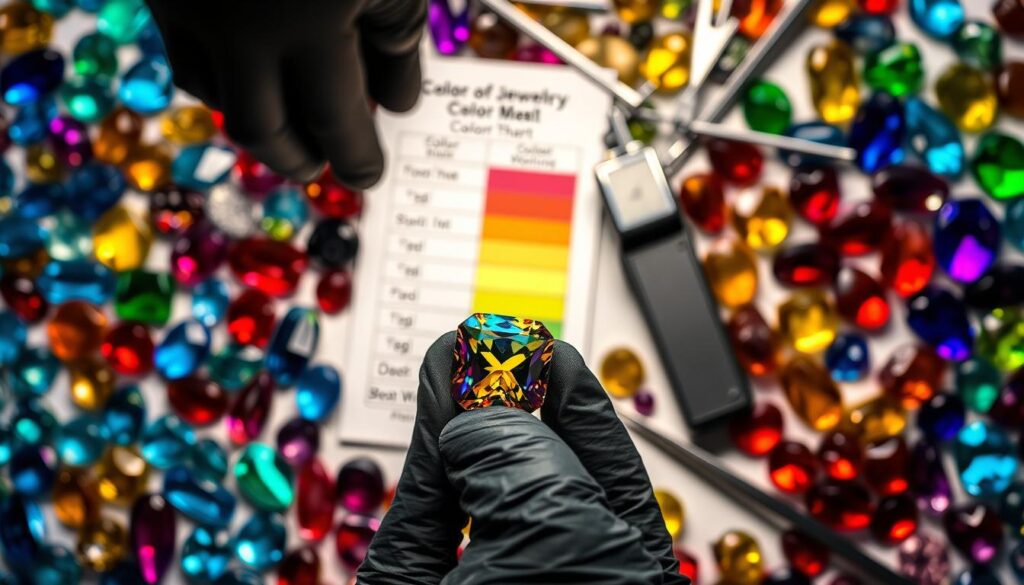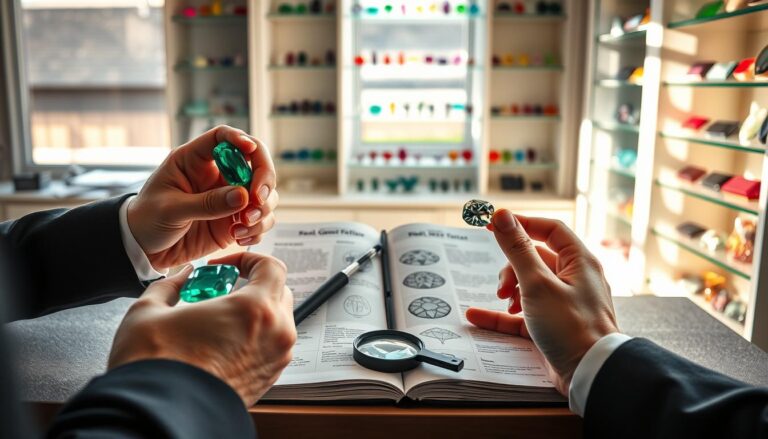
How Gemstone Quality Is Graded Simple Guide might seem complex at first, but understanding the basic factors can help you make better purchasing decisions and appreciate the stones you own. Professional gemologists use specific criteria to evaluate precious and semi-precious stones, determining their market value and overall beauty.
Whether you’re buying your first piece of jewelry or building a collection, knowing these grading standards helps you spot quality stones and avoid overpaying for inferior gems.
TL;DR
- The 4 Cs (Cut, Color, Clarity, Carat) form the foundation of gemstone grading, with each factor rated on specific scales.
- Color grades range from D (colorless) to Z (light yellow) for diamonds, while colored stones use saturation and tone measurements.
- Clarity grades from FL (Flawless) to I3 (Included) indicate the presence and visibility of internal flaws or inclusions.
- Professional certification from GIA, AGS, or SSEF adds 10-20% to a stone’s value but guarantees accurate grading.
How Gemstone Quality Is Graded Simple Guide
Gemstone grading follows internationally recognized standards that evaluate four main characteristics. These standards ensure consistency across different jewelers and markets worldwide.
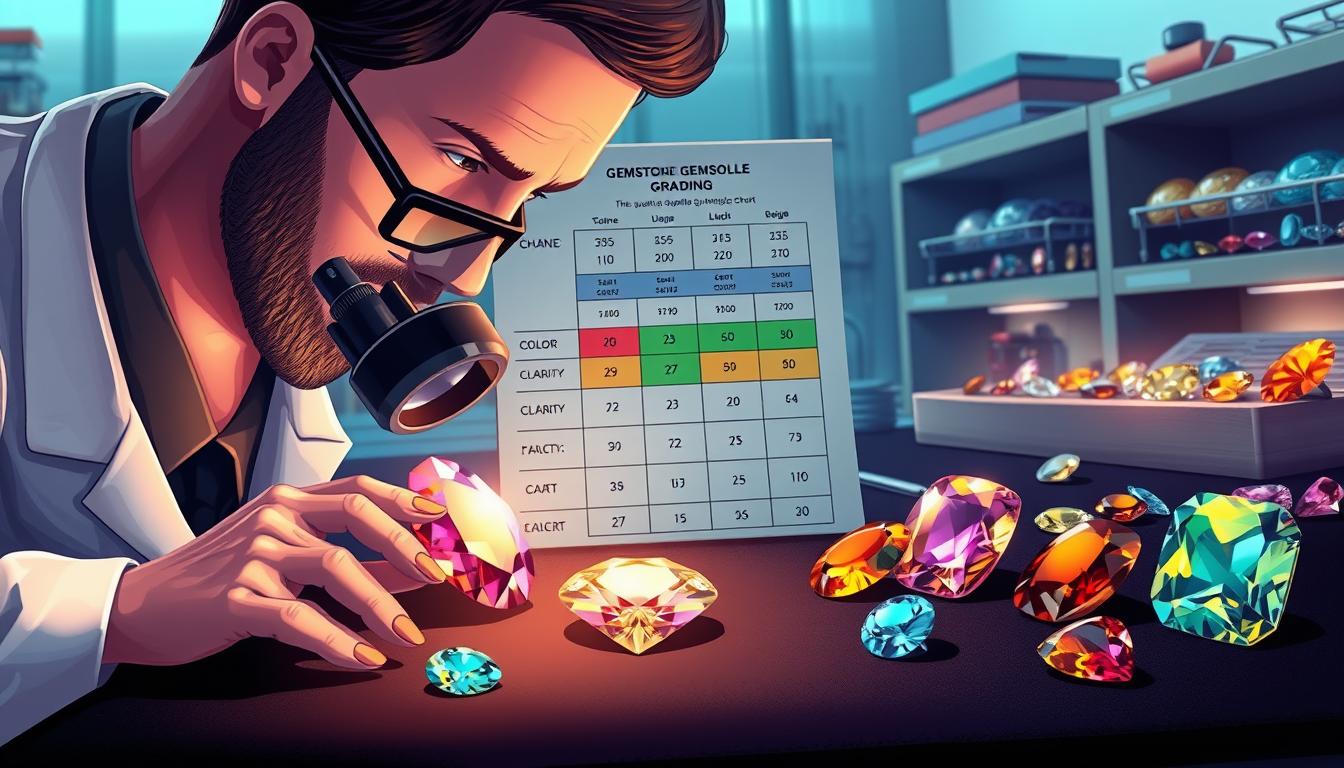
Professional gemologists use specialized tools like microscopes, refractometers, and spectroscopes to measure each quality factor precisely. The combination of these measurements creates an overall grade that determines the stone’s value and desirability.
The Four Cs of Gemstone Grading
Every gemstone receives evaluation based on four primary factors known as the Four Cs. These criteria apply to both precious stones like diamonds, rubies, and emeralds, as well as semi-precious varieties.
Cut Quality and Proportions
Cut refers to how well a gemstone has been shaped and faceted to maximize its brilliance and fire. A well-cut stone reflects light internally and returns it to your eye as sparkle and color flashes.
- Excellent Cut – Perfect proportions with maximum light return and brilliance.
- Very Good Cut – Minor proportion variations with excellent light performance.
- Good Cut – Acceptable proportions with good overall appearance.
- Fair Cut – Noticeable proportion issues affecting brilliance.
- Poor Cut – Significant problems with light leakage and dullness.
Color Grading Systems
Color evaluation varies between colorless stones like diamonds and colored gemstones like sapphires or emeralds. For diamonds, grades run from D (completely colorless) to Z (light yellow or brown tint).
Colored stones receive grades based on three factors: hue (the basic color), saturation (color intensity), and tone (lightness or darkness). The most valuable colored stones typically show vivid saturation with medium tone levels.
Clarity and Inclusion Assessment
Clarity grades measure the presence, size, and visibility of internal flaws called inclusions and external blemishes. Most gemstones contain some natural inclusions formed during their creation process.
- Flawless (FL). No inclusions or blemishes visible under 10x magnification.
- Internally Flawless (IF). No internal inclusions, only minor surface blemishes.
- Very Very Slightly Included (VVS1-VVS2). Extremely difficult to see inclusions under 10x magnification.
- Very Slightly Included (VS1-VS2). Minor inclusions visible under 10x magnification.
- Slightly Included (SI1-SI2). Inclusions easily visible under 10x magnification.
- Included (I1-I3). Inclusions visible to the naked eye, potentially affecting durability.
Carat Weight Measurement
Carat weight measures a gemstone’s actual mass, with one carat equaling 200 milligrams or 0.2 grams. Larger stones are exponentially rarer than smaller ones, making carat weight a major value factor.
Points measure fractions of carats, with 100 points equaling one full carat. A 50-point stone weighs half a carat, while a 75-point gem weighs three-quarters of a carat.
Smart Buying Tip
Look for stones just under popular carat weights like 0.90 instead of 1.00 carats. You’ll save significant money while getting nearly identical visual size and beauty.
Professional Certification and Lab Reports
Independent gemological laboratories provide official grading reports that document a stone’s characteristics and authenticity. These certificates protect buyers from misrepresentation and help establish fair market values.
Major Certification Bodies
Several internationally recognized labs offer gemstone grading services with varying levels of reputation and strictness. Choose stones with certificates from established organizations for maximum confidence.
- GIA (Gemological Institute of America) – Most respected lab worldwide with consistent grading standards.
- AGS (American Gem Society) – Known for strict cut grading and detailed light performance analysis.
- SSEF (Swiss Gemmological Institute) – European lab specializing in colored stone identification and origin determination.
- Gübelin Gem Lab – Premium Swiss lab focusing on high-value colored stones and origin reports.
Special Considerations for Colored Stones
Colored gemstones require additional evaluation factors beyond the standard Four Cs. Origin, treatment history, and rarity all influence final grades and market values significantly.
Origin and Geographic Source
Some gemstone sources command premium prices due to their reputation for producing exceptional quality stones. Kashmir sapphires, Burmese rubies, and Colombian emeralds often sell for multiples of similar stones from other locations.
Advanced testing can sometimes determine a stone’s geographic origin, adding valuable information to grading reports. However, origin determination requires sophisticated equipment and expert analysis.
Treatment and Enhancement Disclosure
Most colored gemstones receive some form of treatment to improve their appearance or durability. Common treatments include heat treatment, fracture filling, and clarity enhancement through various processes.
Reputable dealers and certification labs always disclose known treatments, as this information significantly affects value. Untreated stones of good quality command premium prices compared to enhanced examples. Understanding how to tell if a gemstone is real or fake becomes crucial when evaluating treated versus natural stones.
Frequently Asked Questions
What’s the most important factor in gemstone grading?
Cut quality typically has the biggest impact on a stone’s beauty and brilliance, though all four factors work together to determine overall value. Learning about common gemstone cuts can help you understand how this affects grading.
Do I need a certified gemstone for jewelry purchases?
Certification is recommended for stones over one carat or expensive purchases, as it guarantees accurate grading and protects against misrepresentation.
How much does professional grading cost?
Basic gemstone certification typically costs $50-200 depending on the lab and services requested, with specialized tests like origin determination costing more.
Can gemstone grades change over time?
The physical characteristics don’t change, but grading standards can evolve, and different labs may assign slightly different grades to the same stone.
Final Thoughts
How Gemstone Quality Is Graded Simple Guide provides the foundation for making informed jewelry purchases and understanding what makes stones valuable. Master these basic concepts and you’ll shop with confidence while avoiding common beginner mistakes.
Start by examining stones in person when possible, comparing different grades side by side to train your eye for quality differences. Whether you’re interested in the best gemstones for new collectors or seeking high-end investment pieces, understanding grading standards will serve you well.