Understanding geology is the foundation for successful rockhounding and gemstone collecting. The earth’s geological processes create the conditions that form beautiful crystals, valuable minerals, and precious gemstones over millions of years.
Whether you’re searching for quartz in Arkansas or hunting for agates along Lake Superior, knowing how rocks form and where to look gives you a major advantage in the field. This guide covers the essential geological concepts that will transform your collecting success.
TL;DR
- The three rock types (igneous, sedimentary, metamorphic) form different minerals through distinct processes spanning millions of years.
- Contact zones between rock types produce 80% of the best collecting sites due to mineral exchange during formation.
- Weathering patterns reveal subsurface geology – look for color changes and mineral staining on exposed rock faces.
- Geological maps show rock age and type for any location, helping you predict what minerals you might find before visiting.
Geology Guide Fundamentals
Geology explains how the earth’s crust formed over billions of years through heat, pressure, and chemical processes. These same forces create the minerals and gemstones that collectors prize today.
The key to successful rockhounding lies in understanding three basic rock formation processes. Each process creates different types of minerals under specific conditions that you can learn to recognize in the field.
The Three Rock Types and Their Treasures
Every rock on Earth belongs to one of three categories based on how it formed. Understanding these categories helps you predict what minerals you might find in any location.
Igneous Rocks – Fire-Formed Minerals
Igneous rocks form when molten rock (magma) cools and solidifies either underground or on the surface. The cooling speed determines crystal size and mineral variety.
- Slow cooling (granite) – Creates large crystals like quartz, feldspar, and mica that are easy to identify and collect.
- Fast cooling (obsidian) – Forms volcanic glass and small crystals, often creating unique specimens.
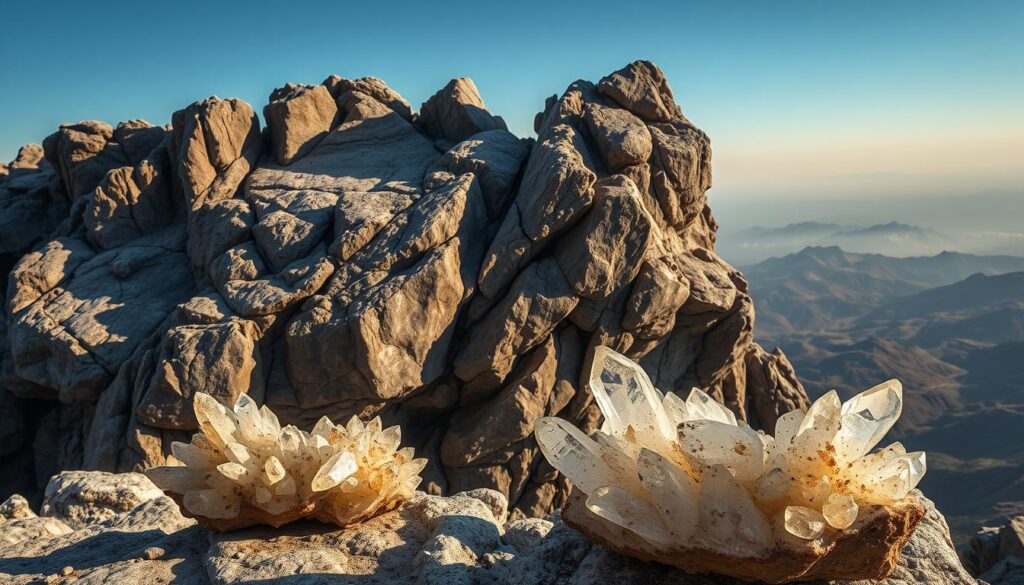
- Pegmatites – Extremely slow cooling creates giant crystals of beryl, tourmaline, and topaz.
- Volcanic areas – Look for agates, jasper, and peridot in ancient lava flows.
Sedimentary Rocks – Layered Treasures
Sedimentary rocks form when particles settle in layers and compress over time. These rocks often contain fossils and form in predictable patterns that make collecting easier.
- Limestone areas – Host caves where calcite crystals and geodes develop.
- Sandstone layers – Contain quartz crystals and sometimes opals between layers.
- Shale formations – Preserve fossils and occasionally contain pyrite nodules.
- Conglomerate rocks – Mix different rock types, creating diverse collecting opportunities.
Metamorphic Rocks – Pressure-Forged Gems
Metamorphic rocks form when existing rocks change due to heat and pressure without melting completely. This process often creates the most valuable gemstones.
- Marble zones – Metamorphosed limestone that may contain ruby, sapphire, and spinel.
- Schist formations – Often contain garnet, staurolite, and kyanite crystals.
- Gneiss areas – May host emerald, aquamarine, and other beryl varieties.
- Quartzite regions – Sometimes contain well-formed quartz crystals in vugs.
Reading the Landscape for Mineral Clues
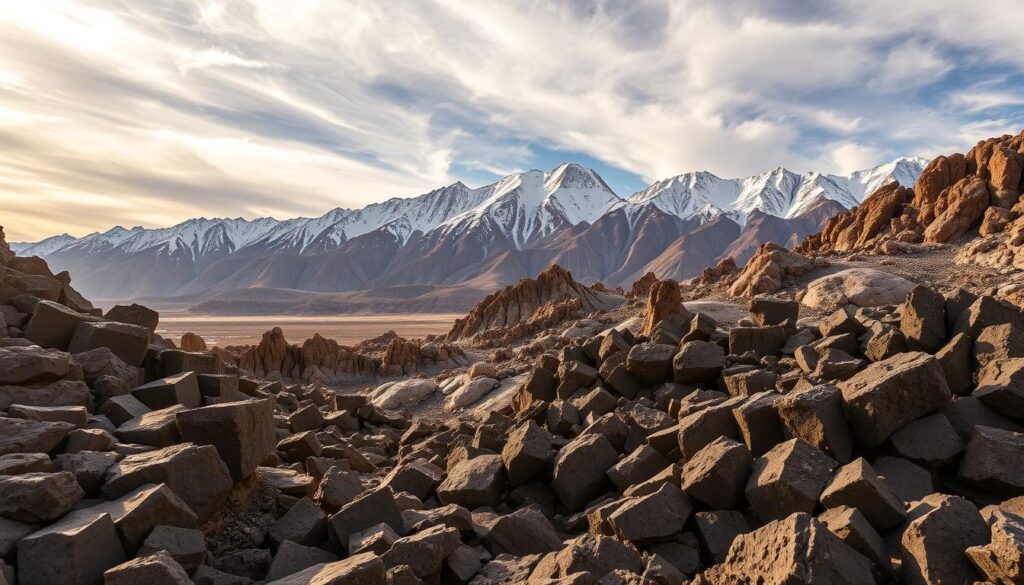
The earth’s surface provides constant clues about the geology beneath your feet. Learning to read these signs helps you locate productive collecting areas without expensive equipment.
Successful collectors develop an eye for geological features that indicate mineral-bearing rocks below. These geological clues can guide you to productive collecting sites even in unfamiliar territory.
Contact Zones – Prime Collecting Areas
Contact zones occur where different rock types meet, creating ideal conditions for mineral formation. These boundaries often produce the best collecting sites because of chemical exchange between rock types.
- Identify color changes. Look for distinct color bands or transitions in exposed rock faces that indicate different rock types.
- Search for mineral staining. Iron oxides create red, yellow, or brown stains that mark areas where minerals weathered out.
- Follow fault lines. Cracks and fractures allow mineral-rich fluids to flow and deposit crystals.
- Check stream beds. Water concentrates heavy minerals and exposes fresh rock surfaces.
Use Geological Maps
Download free geological maps from the USGS website before visiting any collecting area. These maps show rock types, ages, and formations that help predict what minerals you might find.
Geological Time and Mineral Formation
Understanding geological time scales helps explain why certain minerals form in specific locations. Most collector-quality crystals require millions of years to develop under stable conditions.
Different geological eras created distinct mineral assemblages that collectors can learn to recognize. Ancient geological events shaped today’s best collecting areas through processes that continue influencing mineral formation.
Precambrian Shields – Ancient Crystal Treasures
Precambrian rocks (older than 540 million years) form the stable cores of continents. These ancient formations often contain the largest and highest-quality crystals because they had time to develop without interruption.
- Canadian Shield – Source of Lake Superior agates and amethyst deposits.
- Brazilian Shield – Produces world-class quartz, tourmaline, and topaz specimens.
- Australian Shield – Contains major opal fields and sapphire deposits.
- African Shield – Hosts famous diamond pipes and emerald mines.
Mountain Building Events
Mountain-building episodes create the heat and pressure needed to form metamorphic gemstones. Each major mountain range hosts characteristic mineral assemblages based on the rocks involved and conditions present.
- Appalachian Mountains – Contain emerald, aquamarine, and garnet in metamorphic rocks.
- Rocky Mountains – Host sapphire, topaz, and beryl in granite-related deposits.
- Sierra Nevada – Produce gold, quartz crystals, and tourmaline specimens.
- Cascade Range – Create agates, jasper, and peridot through volcanic activity.
Practical Field Geology Skills
Applying geological knowledge in the field requires practice, but several simple techniques help you evaluate any collecting site quickly. These skills develop naturally as you spend more time examining rocks and minerals outdoors.
Start by learning to identify common rock types and their typical mineral associations. Field identification techniques become second nature with practice and greatly improve your collecting success.
Testing Rock Hardness
The Mohs hardness scale helps identify minerals using simple tools you can carry in your pocket. This quick test often confirms or rules out specific mineral possibilities.
- Fingernail (2.5). Scratches gypsum, talc, and other soft minerals.
- Penny (3.5). Scratches calcite but not fluorite or harder minerals.
- Steel knife (5.5). Scratches apatite but not feldspar or quartz.
- Glass (5.5-6). Gets scratched by quartz, topaz, and harder gemstones.
Observing Crystal Systems
Crystal shapes provide immediate clues about mineral identity because each mineral crystallizes in predictable forms. Learning basic crystal systems helps you identify specimens even when they’re partially embedded in rock.
- Cubic – Pyrite, fluorite, and garnet form cube-based shapes.
- Hexagonal – Quartz, beryl, and corundum crystallize with six-sided symmetry.
- Orthorhombic – Topaz, olivine, and sulfur form rectangular prisms.
- Triclinic – Plagioclase feldspar and turquoise have no regular symmetry.
Frequently Asked Questions
What geological features indicate good mineral collecting areas?
Look for contact zones between different rock types, fault lines, mineral staining, and areas where streams cut through bedrock. These features often concentrate minerals and expose fresh collecting surfaces.
How do I use geological maps for rockhounding?
Geological maps show rock types, ages, and formations for any area. Download free USGS maps and look for igneous intrusions, metamorphic zones, and sedimentary formations known to host your target minerals.
Why do certain regions produce better gemstones than others?
Geological history determines mineral quality through factors like cooling rate, pressure conditions, and chemical environment. Stable continental shields and active mountain belts create the best conditions for large, well-formed crystals.
What’s the difference between primary and secondary mineral deposits?
Primary deposits form where minerals originally crystallized in bedrock, while secondary deposits occur where weathering concentrated minerals in streams or soil. Both types offer collecting opportunities but require different search strategies.
Final Thoughts
Geology Guide fundamentals provide the foundation for successful rockhounding and mineral collecting adventures. Understanding how rocks form and where to look gives you a significant advantage in finding quality specimens.
Start applying these concepts on your next collecting trip and notice how geological awareness improves your success rate. The earth’s story is written in the rocks beneath your feet – learning to read that story transforms collecting from luck into skill.