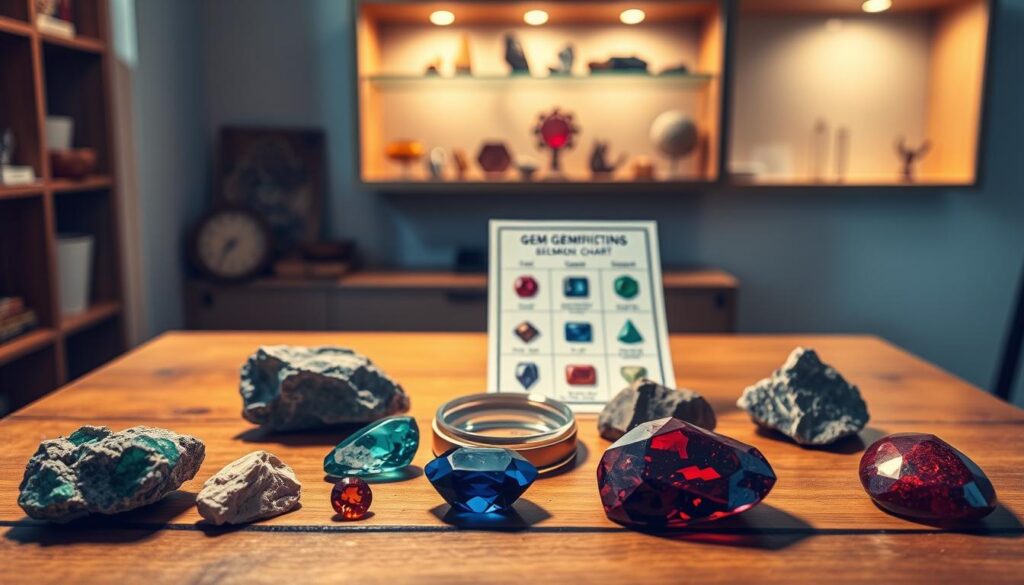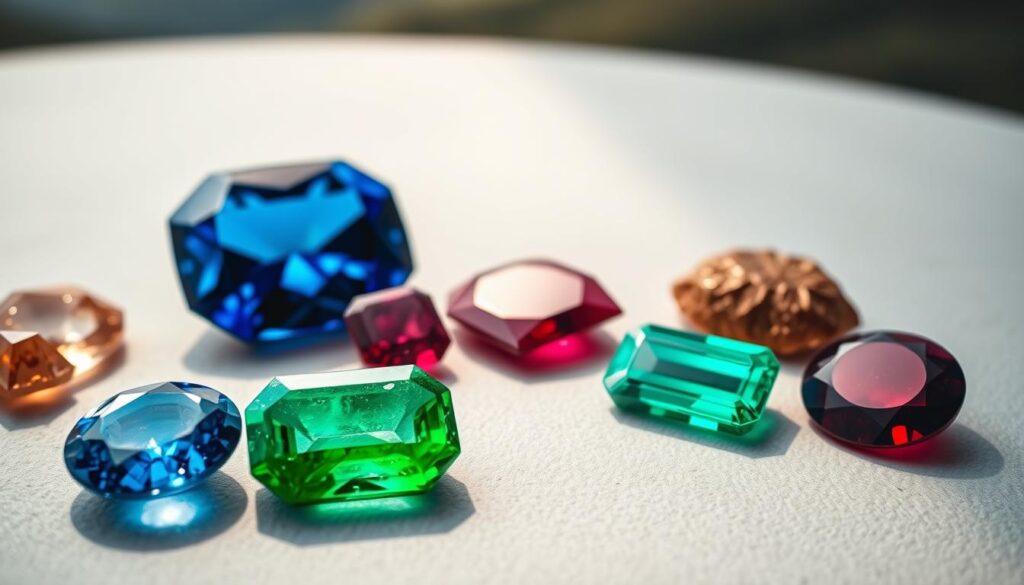
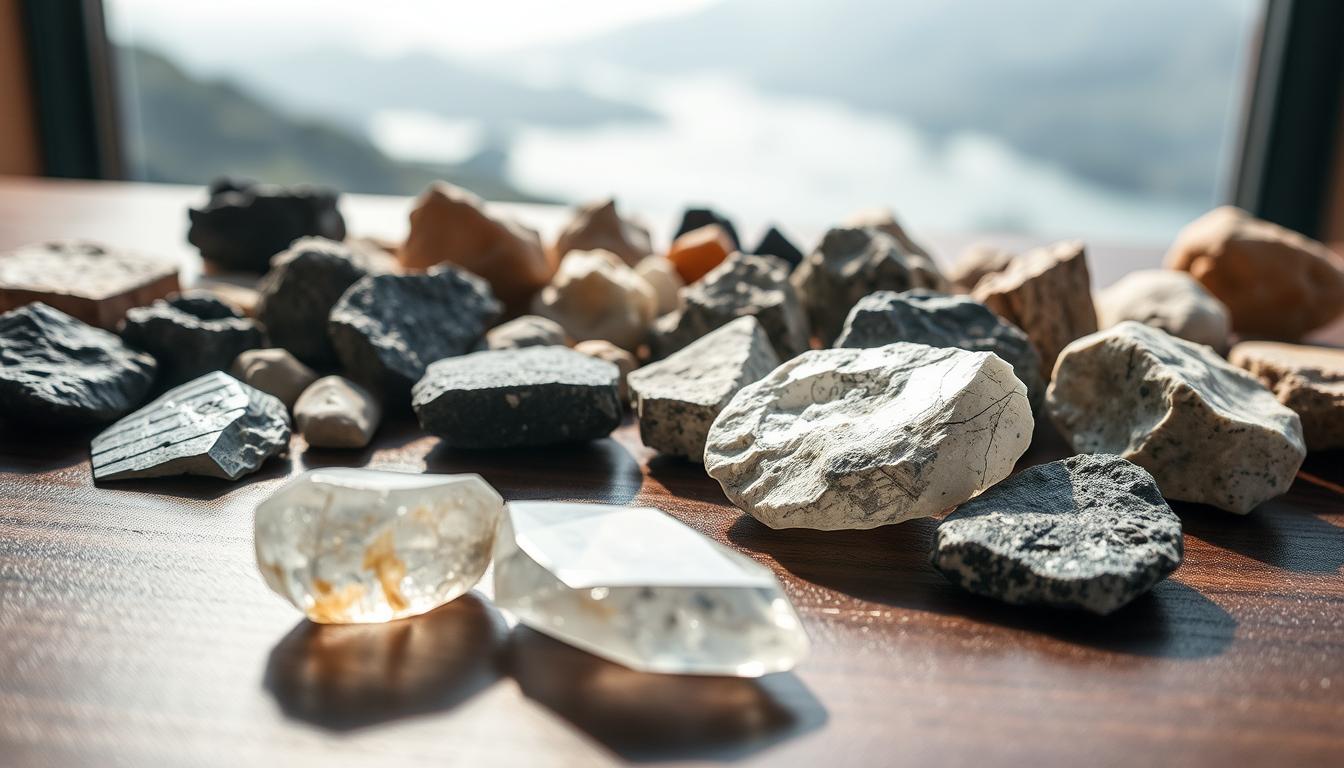
Rocks Often Mistaken For Gemstones can fool even experienced collectors. Many common minerals share visual similarities with precious stones, making accurate identification challenging. Understanding these lookalikes helps prevent costly mistakes when collecting or purchasing gems.
The most frequently confused rocks include quartz varieties, pyrite, obsidian, and feldspar minerals. Each of these materials has specific characteristics that distinguish them from genuine gemstones when you know what to look for.
TL;DR
- Pyrite has a hardness of 6-6.5 compared to gold’s 2.5-3, making it much harder than real gold.
- Clear quartz rates 7 on the Mohs scale while diamond rates 10, showing a significant hardness difference.
- Obsidian breaks with curved fractures called conchoidal fractures, unlike true gemstones.
- Feldspar shows two directions of cleavage at 90 degrees, which precious gems typically don’t display.
Rocks Often Mistaken For Gemstones: The Most Common Mix-ups
Several minerals consistently trick collectors into thinking they’ve found valuable gems. These imposters share enough visual similarities with precious stones to create confusion, especially for beginners.
The key to avoiding these mistakes lies in understanding the specific properties that separate common rocks from genuine gemstones. Testing hardness, observing crystal structure, and checking optical properties will reveal the true identity of suspicious specimens.
Quartz Varieties That Fool Collectors
Quartz represents the most common source of gemstone confusion due to its incredible variety of colors and forms. Many quartz specimens closely resemble much more valuable gems, leading to frequent misidentification. Learning where to find quartz crystals in nature can help you understand their common occurrence and distinguish them from rarer gemstones.
Amethyst vs Purple Gemstones
Amethyst quartz often gets mistaken for more expensive purple stones like tanzanite or purple sapphire. While beautiful, amethyst has a hardness of 7 compared to sapphire’s 9, and it lacks the high refractive index that creates sapphire’s exceptional brilliance.
Citrine and Yellow Stone Confusion
Yellow citrine quartz frequently passes for yellow sapphire or even yellow diamond among novice collectors. The telltale difference lies in hardness testing and optical properties – citrine will scratch glass but shows none of the fire and brilliance of genuine yellow sapphires.
Rose Quartz Imposters
Pink rose quartz sometimes gets confused with more valuable pink stones like morganite or pink tourmaline. Rose quartz typically appears cloudier and less transparent than these genuine gems, with a distinctly different crystal structure when examined closely.
Quick Hardness Test
Use a steel nail (hardness 5.5) to test suspected quartz – it should easily scratch the nail. If the specimen won’t scratch steel, you might have something more valuable than quartz.
Pyrite: The Classic “Fool’s Gold”
Pyrite earns its nickname “fool’s gold” because countless prospectors have mistaken its metallic shine for real gold. This iron sulfide mineral creates cubic crystals with a brassy yellow color that can look remarkably similar to gold nuggets.
The easiest way to distinguish pyrite from gold involves simple physical tests. Pyrite feels much lighter than gold and breaks apart when struck with a hammer, while gold bends without breaking.
- Color difference – Pyrite shows a brassy yellow while gold appears more orange-yellow
- Hardness test – Pyrite rates 6-6.5 on the Mohs scale versus gold’s 2.5-3
- Streak test – Pyrite leaves a black streak when scratched on ceramic, gold leaves no streak
- Weight comparison – Gold feels significantly heavier due to its higher specific gravity
Obsidian and Black Stone Mix-ups
Volcanic obsidian creates confusion because of its glass-like appearance and deep black color. Many people mistake it for valuable black gemstones like onyx, black tourmaline, or even black diamond.
Obsidian forms when volcanic lava cools rapidly, creating natural glass rather than a crystalline structure. This fundamental difference shows up in how the material breaks and behaves under testing.
Identifying Obsidian Characteristics
Obsidian displays several unique properties that distinguish it from genuine black gemstones. Its conchoidal fracture pattern creates curved, shell-like breaks that you won’t see in crystalline gems.
The material also shows lower hardness than most gemstones, rating about 5-5.5 on the Mohs scale. True black gemstones typically rate much higher, with black tourmaline reaching 7-7.5 and black diamond hitting the maximum 10.
Feldspar Family Confusion
Feldspar minerals create some of the most convincing gemstone imposters due to their variety of colors and occasional transparency. Moonstone feldspar, in particular, shows optical effects that can fool collectors into thinking they’ve found something rare.
Moonstone vs Genuine Gems
Moonstone feldspar displays a phenomenon called adularescence – a billowy, moon-like glow that moves across the stone’s surface. While beautiful, this effect differs from the optical properties of valuable gems like opals or labradorite.
The key identifying feature of feldspar involves its cleavage pattern. All feldspar minerals show two distinct cleavage directions that meet at nearly 90 degrees, creating flat surfaces when the mineral breaks along these planes.
Professional Identification Methods
While home tests provide useful information, professional gemologists use sophisticated equipment for definitive identification. These methods eliminate guesswork and provide accurate results for valuable specimens.
Specific Gravity Testing
Professional specific gravity measurements compare a stone’s density to water with precise calculations. Each mineral has a characteristic specific gravity range that helps confirm its identity when combined with other test results.
Refractive Index Analysis
Gemologists use refractometers to measure how light bends when passing through a stone. This optical property remains consistent for each mineral type and provides definitive identification data.
Spectroscopic analysis can identify the exact chemical composition of questionable specimens. This advanced testing reveals trace elements and crystal structure details that separate genuine gems from common rock minerals. Understanding how to tell if a rock is valuable or just a rock requires this level of detailed analysis for expensive specimens.
Frequently Asked Questions
How can I tell the difference between pyrite and real gold?
Test the hardness – pyrite is much harder than gold and will scratch a steel nail. Gold is soft and bends rather than breaking when struck with a hammer.
What’s the easiest way to identify quartz varieties?
Quartz has a hardness of 7 and will scratch glass easily. It also shows a distinctive crystal structure with six-sided prisms when well-formed specimens are examined.
Can obsidian be valuable like genuine gemstones?
Obsidian has cultural and decorative value but lacks the rarity and durability of precious gemstones. It’s significantly softer and more brittle than true gems.
When should I get professional gemstone identification?
Seek professional help for any specimen you suspect might be valuable or when home tests give unclear results. Certified gemologists provide accurate identification using specialized equipment.
What tools do I need for basic rock and gemstone identification?
Start with a hardness testing kit, jeweler’s loupe, streak plate, and magnet. These basic tools can help distinguish between common rocks and potential gemstones at home. For beginners, checking out our guide on essential rockhounding tools every beginner should own provides comprehensive equipment recommendations.
Final Thoughts
Rocks Often Mistaken For Gemstones continue to surprise collectors and prospectors who encounter convincing lookalikes in the field. Learning to identify these common imposters saves time, money, and disappointment when hunting for genuine gems. One effective way to avoid these common rockhounding mistakes every beginner should avoid is through careful study and practice with known specimens.
Practice with known specimens and gradually build your identification skills through hands-on experience. The more you handle different rocks and minerals, the better you’ll become at spotting the subtle differences that separate common stones from precious finds. Learning about easy rocks to identify in the field provides a solid foundation for developing these crucial identification skills.