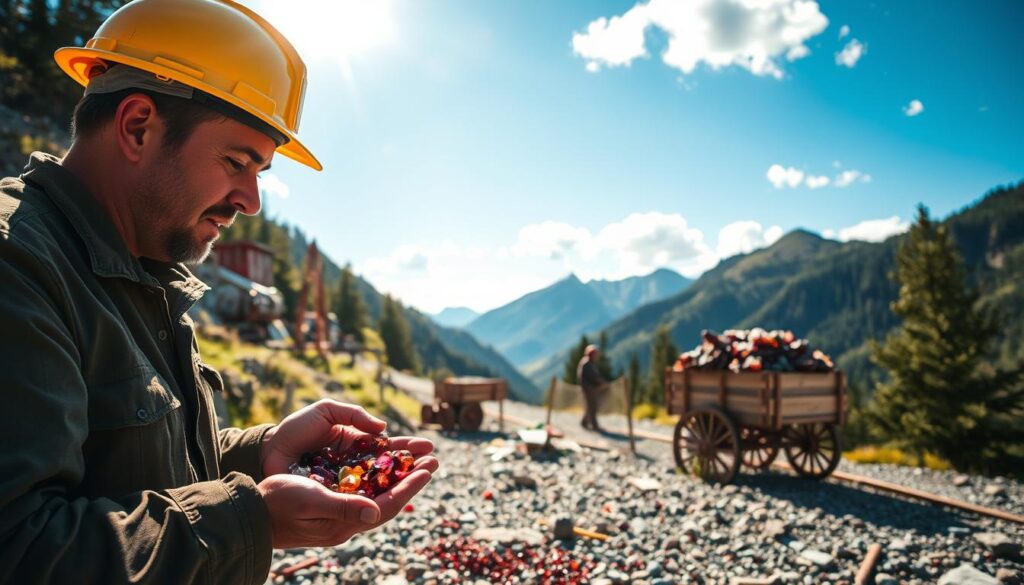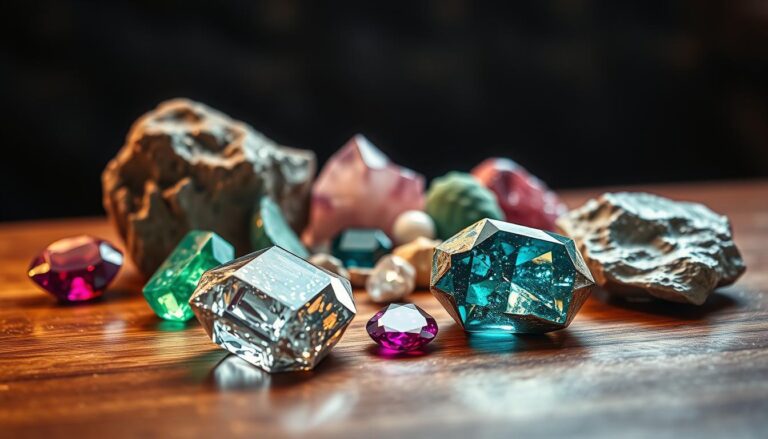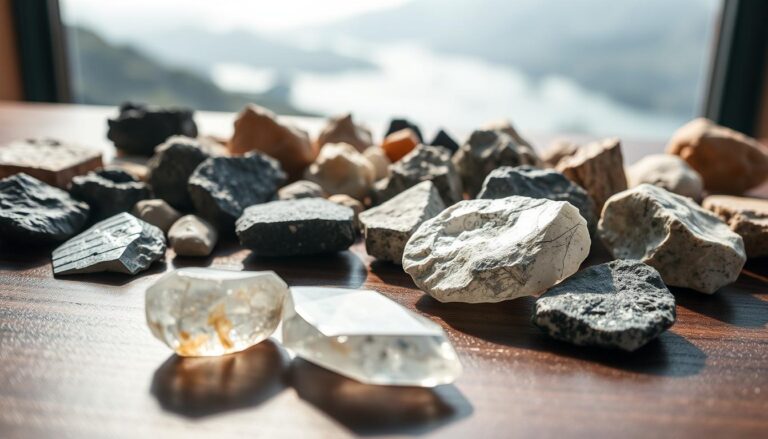
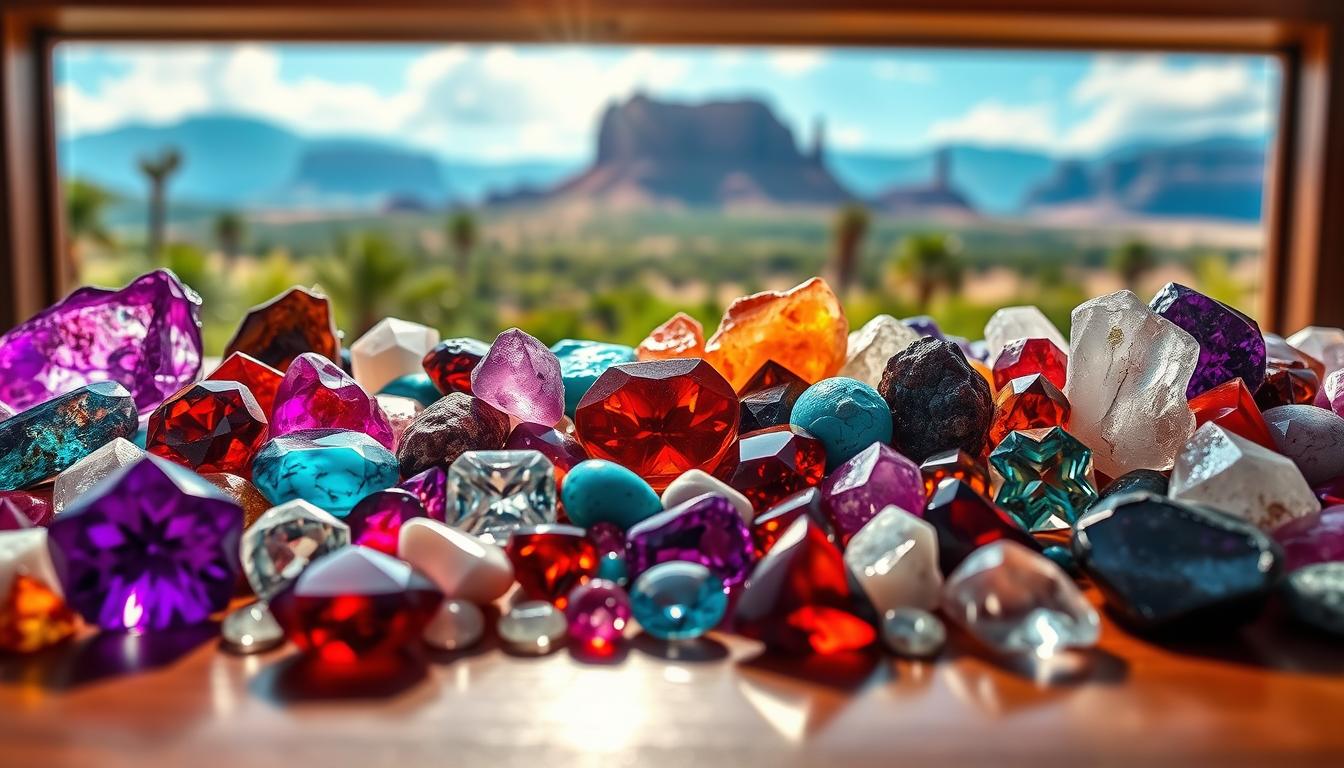
The United States offers incredible opportunities for finding Common Gemstones You Can Find In The United States across diverse geological regions. From the diamond fields of Arkansas to the turquoise mines of Arizona, American soil holds an amazing variety of precious and semi-precious stones. Whether you’re a beginner rockhound or an experienced collector, the country’s rich mineral deposits provide countless chances to discover beautiful specimens.
America’s geological history spans millions of years, creating perfect conditions for gemstone formation. Different regions developed unique mineral compositions based on volcanic activity, sedimentary processes, and tectonic movements that shaped the landscape over time.
TL;DR
- Arkansas produces the only diamonds found naturally in the United States at Crater of Diamonds State Park.
- Arizona and Nevada account for 95% of America’s turquoise production from active mining operations.
- Montana supplies over 80% of North American sapphires from the Rock Creek and Missouri River deposits.
- Oregon beaches yield fire opals and agates that wash up naturally after Pacific storms.
Common Gemstones You Can Find In The United States
American gemstone deposits span from coast to coast, with each region offering distinct varieties based on local geology. The western states dominate turquoise and opal production, while eastern regions excel in garnets and various quartz types.
Quartz Varieties Found Nationwide
Quartz represents the most abundant gemstone family in America, appearing in dozens of colors and formations. Arkansas leads national quartz production with massive crystal deposits in the Ouachita Mountains, making it an excellent location for those interested in finding quartz crystals in nature.
- Amethyst – Purple varieties found in North Carolina, Virginia, and Arizona with colors ranging from pale lavender to deep violet.
- Citrine – Golden yellow to orange-brown specimens primarily from Arkansas and North Carolina deposits.
- Rose Quartz – Pink colored stones abundant in South Dakota, Maine, and California locations.
- Smoky Quartz – Gray to black crystals common in Colorado, New Hampshire, and Montana mountain regions.
- Clear Quartz – Transparent crystals found in nearly every state with notable deposits in Arkansas and New York.
Regional Gemstone Specialties
Each American region developed signature gemstones based on unique geological conditions over millions of years. Understanding these regional patterns helps collectors focus their search efforts in the most productive areas.
Western States Gemstone Hotspots
The American West offers the greatest variety of gemstone types due to intense volcanic and tectonic activity. Desert conditions preserve specimens that might erode in wetter climates.
- Arizona – Turquoise, peridot, chrysocolla, and fire agate from copper mining regions.
- Nevada – Turquoise, opal, garnet, and obsidian from volcanic and sedimentary formations.
- California – Tourmaline, kunzite, benitoite, and jade from coastal mountain ranges.
- Oregon – Sunstone, thunder eggs, and beach agates from volcanic and coastal deposits.
- Montana – Sapphires, garnets, and moss agates from alluvial and mountain sources.
Eastern Region Gemstone Deposits
Eastern states feature older geological formations that created different gemstone types through metamorphic and sedimentary processes. The Appalachian Mountains contain some of America’s oldest mineral deposits.
- North Carolina – Emeralds, rubies, sapphires, and various quartz types from mountain regions.
- Maine – Tourmaline, beryl, and rose quartz from pegmatite formations.
- Virginia – Amazonite, moonstone, and amethyst from Blue Ridge Mountain deposits.
- Georgia – Amethyst, staurolite, and quartz from metamorphic rock formations.
Identifying American Gemstones
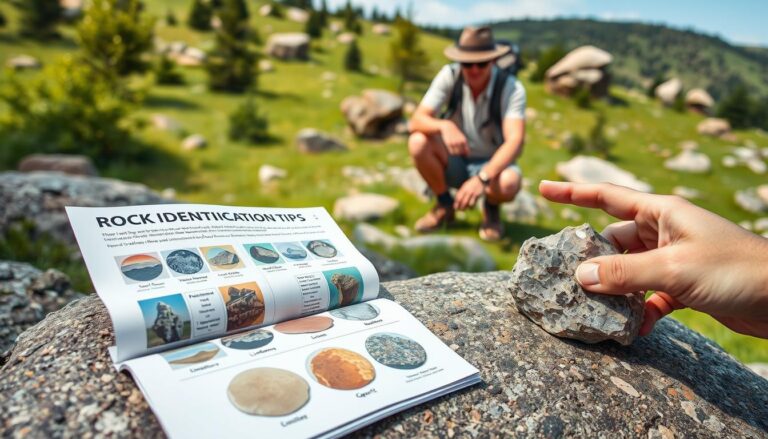
Successful gemstone identification requires understanding basic physical properties that distinguish different mineral types. Most collectors start by learning hardness, color, and crystal structure characteristics. For those new to the hobby, our guide on easy rocks to identify in the field provides an excellent foundation before advancing to more complex gemstone identification.
Key Physical Properties
The Mohs hardness scale from 1-10 provides the most reliable identification method for field testing. Color variations within the same mineral family help narrow down specific gemstone types.
- Test hardness. Use reference materials like steel files (5.5) or glass (5.5) to determine relative hardness.
- Examine color. Note primary colors and any secondary hues or color zoning within specimens.
- Check transparency. Determine if stones are transparent, translucent, or opaque under strong light.
- Observe crystal habits. Look for characteristic crystal shapes and growth patterns.
Quick Field Test
Carry a steel nail (hardness 4.5) and piece of glass for quick hardness tests. Most gemstone varieties rate between 6-9 on the Mohs scale.
Popular Gemstone Hunting Locations
Public and private mining sites across America welcome rockhounds and collectors of all skill levels. Many locations provide equipment rentals and expert guidance for first-time visitors. For those interested in exploring states with the best rockhounding opportunities, these locations offer some of the most productive collecting experiences.
Top Fee-Dig Mining Sites
Fee-dig locations charge daily or hourly rates but guarantee legal collecting rights and often provide tools. These sites typically yield better quality specimens than random rockhounding.
- Crater of Diamonds State Park (Arkansas) – Only public diamond mine where visitors keep what they find.
- Emerald Hollow Mine (North Carolina) – Eastern America’s only public emerald mine with guided tours.
- Gem Mountain (Montana) – Sapphire mining with guaranteed finds and professional equipment.
- Oceanview Mine (California) – Tourmaline and kunzite deposits in San Diego County.
Free Public Collecting Areas
National forests, beaches, and designated collecting areas offer free gemstone hunting opportunities. Success rates vary but costs remain minimal for budget-conscious collectors.
| Location | Primary Gemstones | Best Season |
|---|---|---|
| Oregon Beaches | Agates, jasper | Winter storms |
| Lake Superior Shores | Agates, thomsonite | Spring/summer |
| Arizona Desert | Peridot, garnet | Fall/winter |
Essential Equipment for Gemstone Collecting
Basic tools make gemstone hunting more productive and enjoyable while protecting valuable finds from damage. Most equipment costs under $100 and lasts for years with proper care. Beginning collectors should familiarize themselves with the essential rockhounding tools every beginner should own before venturing into the field.
Must-Have Tools
- Rock hammer – 16-20 oz weight for breaking apart host rock and extracting specimens.
- Hand lens – 10x magnification for examining crystal structures and inclusions.
- Collection bags – Padded pouches prevent damage during transport and storage.
- GPS device – Mark productive locations for future visits and navigation help.
- Field guide – Regional mineral identification books specific to your hunting areas.
Safety and Legal Considerations
Gemstone collecting requires following federal, state, and local regulations that vary by location. Private property requires owner permission, while public lands often restrict or prohibit collecting activities.
- Research regulations. Check current rules for specific collecting areas before visiting.
- Obtain permits. Some locations require advance registration or daily permits.
- Respect private property. Always get written permission from landowners before collecting.
- Follow Leave No Trace principles. Fill holes and minimize environmental impact.
Frequently Asked Questions
What are the most valuable gemstones found in America?
Diamonds from Arkansas, sapphires from Montana, and emeralds from North Carolina represent the most valuable American gemstones. Rare varieties like benitoite from California also command high prices. To learn more about determining if a rock is valuable, consider factors like rarity, clarity, and market demand.
Can beginners find gemstones without expensive equipment?
Yes, many gemstones can be found on beaches, in creek beds, and at public collecting areas using just basic tools. Start with easy targets like agates and quartz before advancing to rarer specimens.
Which states produce the most gemstones commercially?
Arizona leads in turquoise production, Montana dominates sapphire mining, and Arkansas produces all American diamonds. Nevada, California, and North Carolina also maintain significant commercial operations.
Are there seasonal considerations for gemstone hunting?
Spring and fall offer the best collecting conditions in most regions. Beach collecting works best after storms, while desert areas are most comfortable during cooler months.
Final Thoughts
Common Gemstones You Can Find In The United States offer endless opportunities for discovery across diverse American landscapes. From weekend beach combing to serious mining adventures, the country’s geological treasures reward patient collectors with beautiful specimens.
Start exploring your local area first, then branch out to famous collecting regions as your knowledge and equipment improve. Consider joining local rock and mineral clubs to connect with experienced collectors and learn about productive locations in your region.