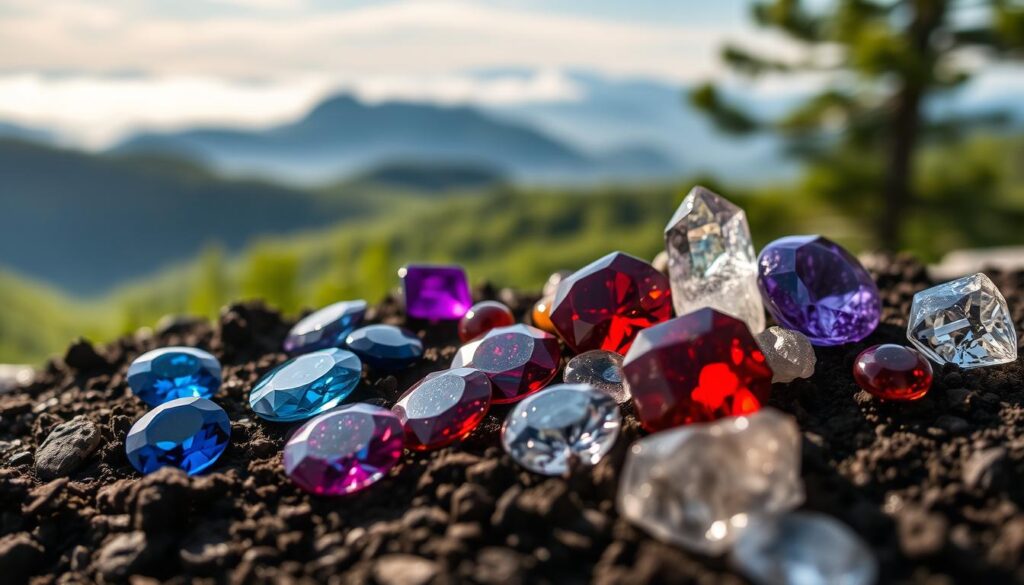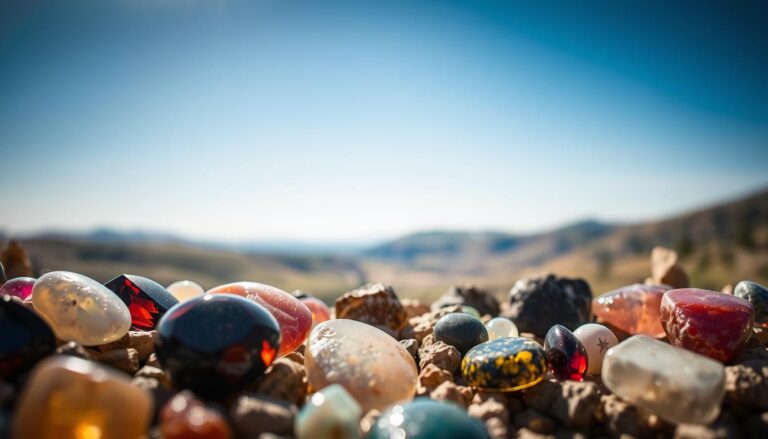
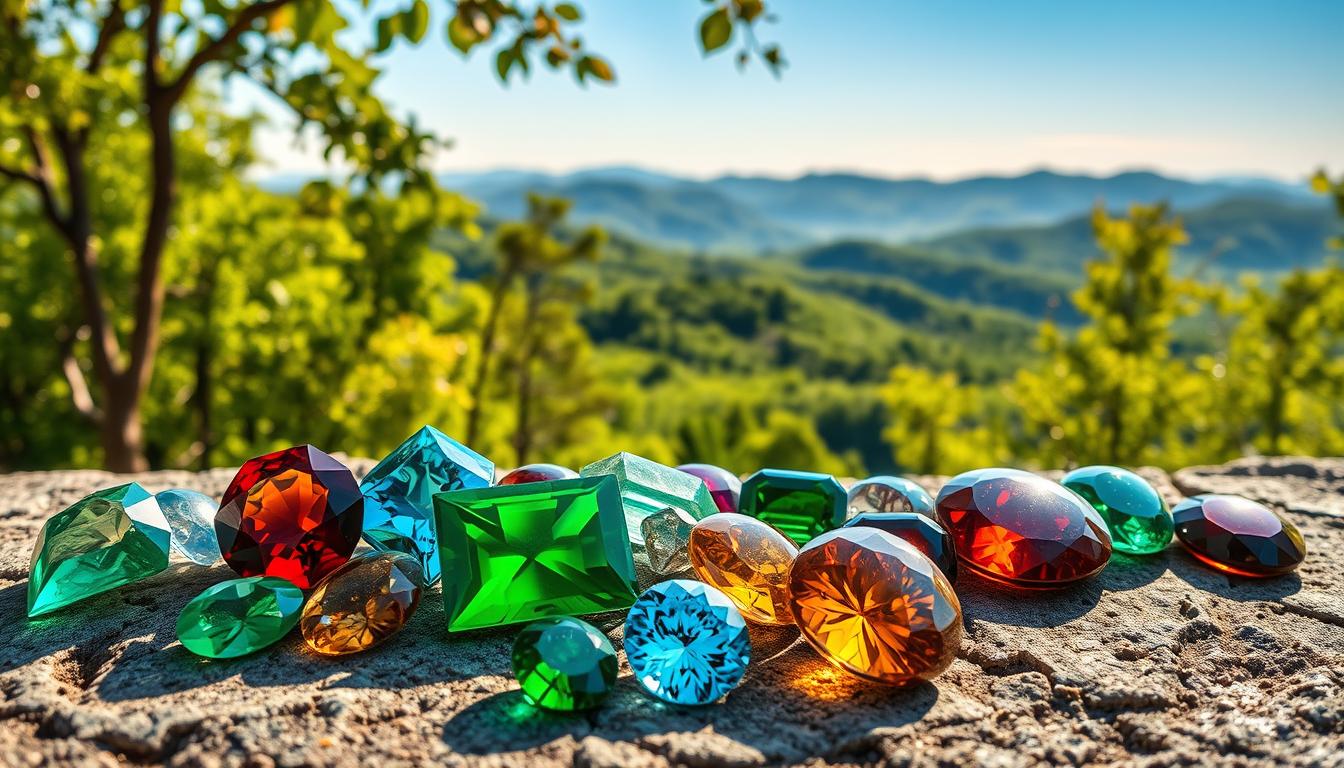
Common Gemstones Found In West Virginia offer rockhounds and mineral enthusiasts a chance to discover some truly remarkable specimens in the Mountain State. West Virginia’s rich geological history has created perfect conditions for forming various gemstones and minerals that attract collectors from across the region.
The state’s diverse terrain, from the ancient Appalachian Mountains to river valleys, provides multiple environments where different types of gemstones can form naturally. Many of these stones can be found through careful searching in public areas, making West Virginia an accessible destination for both beginners and experienced gem hunters.
TL;DR
- Quartz varieties including amethyst, smoky quartz, and clear crystals are the most abundant gemstones found throughout West Virginia’s mountains and streams.
- Garnets appear in metamorphic rocks across 15+ counties, with the best specimens found in Jefferson and Berkeley counties.
- Agate and jasper can be discovered along major river systems, particularly the Potomac and Shenandoah rivers.
- The New River Gorge area produces high-quality tourmaline specimens, some reaching museum-grade quality.
Common Gemstones Found In West Virginia
West Virginia’s geological makeup creates ideal conditions for several types of gemstones to form naturally. The state sits within the Appalachian Mountain system, where millions of years of geological activity have produced metamorphic and igneous rocks that host various mineral deposits.
The most accessible gemstones for collectors include quartz varieties, garnets, and several types of chalcedony. These stones can often be found without special equipment, making them perfect starting points for new rockhounds looking to explore what other states offer, such as Common Gemstones Found in Virginia or Pennsylvania Gemstones Guide.
Quartz Varieties
Quartz represents the most common and diverse group of gemstones found throughout West Virginia. The state’s mountain regions contain numerous quartz deposits in various colors and formations.
Amethyst
Purple amethyst crystals form in cavities within volcanic and metamorphic rocks across the state. The best specimens typically come from the eastern panhandle counties, where iron impurities create the distinctive purple coloration.
Smoky Quartz
Natural radiation exposure creates the gray to black coloration in smoky quartz specimens. These crystals often appear alongside clear quartz in the same formations, particularly in granite outcrops throughout the Allegheny Mountains.
Clear Crystal Quartz
Perfectly clear quartz crystals form some of the most prized specimens in West Virginia. These crystals can reach impressive sizes, with some specimens measuring several inches across and displaying exceptional clarity.
Garnet Deposits
Garnets form when existing rocks undergo metamorphism under high temperature and pressure conditions. West Virginia’s ancient geological processes created numerous garnet-bearing formations across multiple counties.
- Almandine Garnets – Deep red crystals found in schist and gneiss formations throughout the eastern counties.
- Spessartine Garnets – Orange to reddish-brown specimens that appear in manganese-rich deposits.
- Grossular Garnets – Green varieties found in limestone contact zones, though less common than red types.
Jefferson County produces some of the state’s finest garnet specimens, with crystals often embedded in mica schist that can be carefully extracted with proper tools.
Chalcedony Group Stones
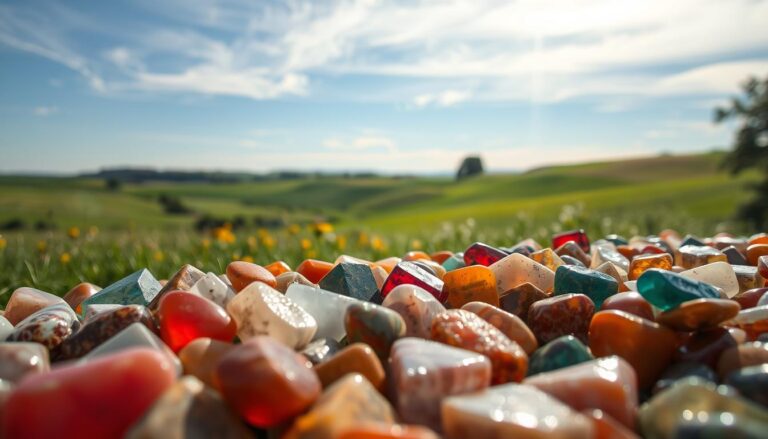
The chalcedony family includes agates, jaspers, and other microcrystalline quartz varieties that form in different geological environments. West Virginia’s river systems concentrate these stones through natural weathering and transport processes.
Agate
Banded agates appear along major waterways where volcanic activity once occurred. The Potomac River system yields particularly nice specimens, including fortification agates with distinct geometric patterns.
Jasper
Red, yellow, and brown jaspers can be found in creek beds and exposed rock formations. These opaque stones often display interesting patterns and take an excellent polish when properly prepared.
Best Collecting Locations
Focus your search efforts along stream beds after heavy rains when fresh material gets exposed. Always obtain permission before collecting on private property and follow Leave No Trace principles.
Tourmaline Specimens
Black tourmaline (schorl) represents the most common tourmaline variety found in West Virginia’s pegmatite formations. These long, prismatic crystals often appear in association with quartz and feldspar minerals.
The New River Gorge region produces exceptional tourmaline specimens, including some rare green and pink varieties. Professional collectors particularly value these specimens for their crystal clarity and size, similar to the tourmaline varieties found in Maine Gemstones.
Other Notable Finds
Several other gemstones and minerals appear throughout West Virginia, though in smaller quantities than the primary types listed above.
- Beryl – Pale aquamarine crystals in pegmatite formations, particularly in the eastern panhandle.
- Fluorite – Purple and clear octahedral crystals found in limestone cavities.
- Calcite – Various colors including honey calcite and clear Iceland spar varieties.
- Pyrite – Metallic gold-colored cubes that form impressive specimen clusters.
Collecting Tips and Locations
Successful gemstone hunting in West Virginia requires understanding where different types of stones are most likely to appear. Stream beds concentrate harder stones like quartz and garnet, while softer minerals often remain in their original rock matrix.
- Research Local Geology. Study geological maps to identify rock types that typically host the gemstones you want to find.
- Check Stream Beds. Running water concentrates durable stones and exposes fresh material after storms.
- Examine Road Cuts. Highway construction exposes fresh rock faces where crystals might be visible.
- Visit Quarries. Active and abandoned quarries often provide access to rock formations not visible elsewhere.
Always carry proper safety equipment including safety glasses, gloves, and a first aid kit when collecting in rocky terrain. Many of the best collecting areas require hiking to reach, so prepare accordingly.
Frequently Asked Questions
What equipment do I need to collect gemstones in West Virginia?
Basic equipment includes a rock hammer, chisel set, safety glasses, collecting bags, and a field guide for mineral identification. A GPS device helps mark productive locations for future visits.
Are there any restrictions on collecting gemstones in West Virginia?
Collecting is prohibited in state parks, national forests, and private property without permission. Always check local regulations and obtain landowner consent before collecting.
When is the best time to search for gemstones?
Spring and early fall provide ideal conditions with comfortable temperatures and good visibility. After heavy rains, stream beds often expose fresh material that’s easier to spot.
How can I identify gemstones I find in the field?
Carry a field guide specific to West Virginia minerals and learn basic tests like hardness, color, and crystal shape. Many local rock shops offer identification services for unusual finds.
What areas of West Virginia produce the best gemstone specimens?
The eastern panhandle counties yield excellent garnets and quartz varieties, while the New River Gorge area produces quality tourmaline specimens. Major river systems concentrate various stone types through natural processes.
Final Thoughts
Common Gemstones Found In West Virginia provide endless opportunities for rockhounds to discover beautiful specimens while exploring the state’s diverse landscapes. From easily found quartz crystals to rarer tourmaline specimens, the Mountain State offers something for collectors at every skill level, much like the variety found in neighboring regions such as Common Gemstones Found In Maryland and North Carolina Gemstones.
Start with easily accessible stream beds and gradually work toward more challenging locations as your experience and equipment improve. The thrill of finding your first quality specimen makes every hour spent searching worthwhile.