Texas Gemstones offer an amazing variety of precious and semi-precious stones spread across the state’s diverse landscape. From the famous blue topaz of Mason County to the colorful agates of West Texas, the Lone Star State provides endless opportunities for rock collectors and gem hunters.
The state’s complex geological history has created rich mineral deposits that attract collectors from around the world. Whether you’re searching for your first specimen or adding to an established collection, Texas delivers some of North America’s most sought-after gems.
TL;DR
- Texas blue topaz, the official state gemstone, is found primarily in Mason County with specimens reaching museum quality.
- The Llano Uplift and Trans-Pecos regions contain the richest gemstone deposits due to their unique geological formations.
- Spring and fall offer the best gem hunting conditions with mild weather and accessible terrain.
- Public rockhounding sites, fee-digging areas, and state parks provide legal access to Texas gemstone locations.
Texas Gemstones and Their Origins
The geological story of Texas spans millions of years, creating the foundation for today’s gemstone deposits. Ancient volcanic activity, sedimentary processes, and tectonic movements combined to form the diverse mineral wealth found throughout the state.
Two major geological regions stand out for their gemstone production. The Llano Uplift contains Precambrian rocks that house topaz and quartz varieties, while the Trans-Pecos region showcases volcanic origins that created unique mineral formations similar to those found in New Mexico’s diverse gemstone deposits.
Formation of Major Deposits
Gemstone formation in Texas occurred through several geological processes over vast time periods. Hydrothermal activity created many quartz deposits, while pegmatite intrusions formed topaz-bearing formations.
The state’s gemstone diversity reflects its varied geological history:
- Igneous processes – Created topaz deposits in granite pegmatites
- Sedimentary layers – Formed agate and jasper through silica replacement
- Metamorphic activity – Produced garnet and tourmaline in specific zones
- Fossilization – Created extensive petrified wood deposits
Texas Blue Topaz: The Crown Jewel
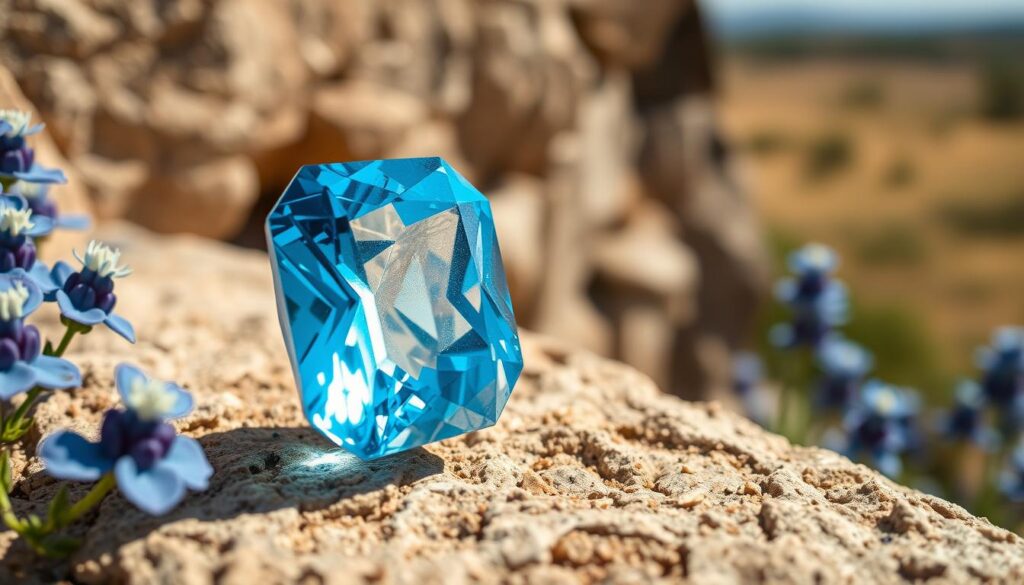
Texas blue topaz holds special significance as the official state gemstone, designated in 1969. Mason County produces the finest specimens, with some crystals reaching exceptional size and clarity that rival gems from anywhere in the world.
The distinctive blue color ranges from pale sky blue to deep London blue. Natural blue topaz from Texas often displays better color saturation than treated specimens from other locations.
Identifying Raw Topaz
Raw topaz displays several key characteristics that help with identification. The mineral rates 8 on the Mohs hardness scale and shows perfect cleavage in one direction.
Look for these features when identifying raw topaz:
- Crystal habit – Prismatic crystals with diamond-shaped cross-sections
- Color – Ranges from colorless to blue, pink, or yellow
- Luster – Vitreous to resinous when fresh
- Transparency – Transparent to translucent in good specimens
Mason County Collecting
Mason County offers both public and private collecting opportunities for topaz hunters. Several fee-dig operations allow visitors to search through topaz-bearing gravels and pegmatite dumps.
The best specimens come from weathered pegmatite formations where topaz crystals have been freed from their host rock. Early morning searches often yield the best results when lighting conditions help identify gems in the gravel.
Quartz Varieties Across Texas
Quartz appears in numerous forms throughout Texas, making it one of the most commonly collected minerals in the state. From clear rock crystal to deep purple amethyst, Texas quartz varieties satisfy collectors at every level and share geological similarities with the exceptional quartz crystals found in Arkansas.
The Alpine region stands out for producing exceptional quartz crystals with museum-quality clarity and size. Some specimens from this area reach several inches in length with perfect terminations.
Amethyst Deposits
The Amethyst Mountains near Alpine contain significant amethyst deposits that have produced specimens for decades. The purple quartz forms in volcanic rock cavities where silica-rich solutions cooled slowly.
Collecting requires careful extraction since amethyst crystals can be fragile. The best specimens show deep purple color with minimal internal fracturing.
Smoky Quartz Locations
Smoky quartz occurs in several Texas locations, often alongside clear quartz varieties. The dark coloration results from natural radiation exposure over geological time periods.
Central Texas produces some of the finest smoky quartz specimens, particularly in areas with granite formations. The crystals range from light gray to nearly black depending on radiation levels.
Best Time for Quartz Collecting
Visit quartz locations after recent rains when freshly exposed crystals are easier to spot. The wet surfaces help distinguish quartz from surrounding rock matrix.
Agate and Jasper Treasures
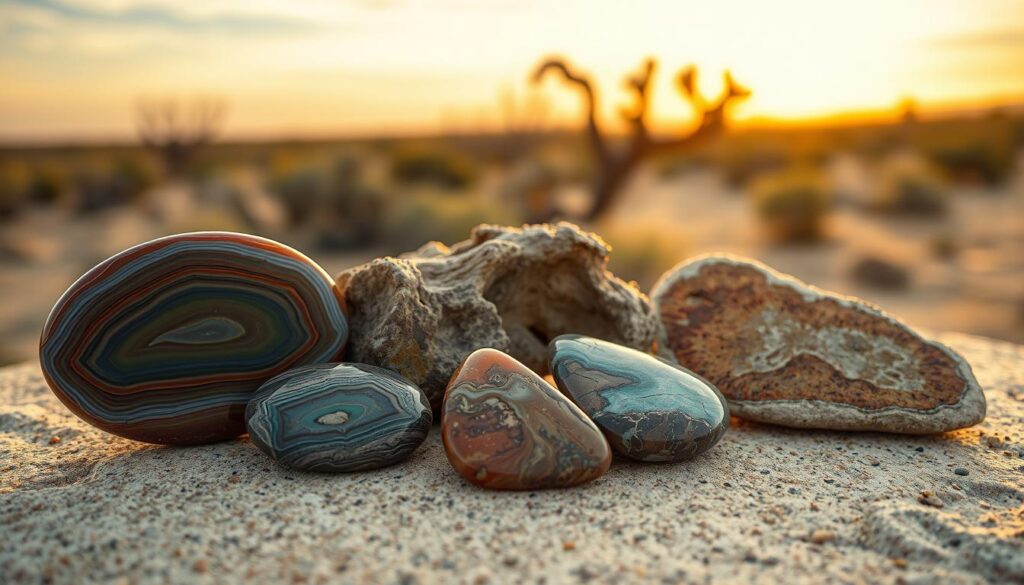
Texas agate and jasper deposits rank among North America’s finest, offering collectors spectacular colors and patterns. West Texas leads production, but quality specimens turn up in locations across the state.
Woodward Ranch in Mason County has gained fame for its exceptional agate specimens. The ranch operates as a fee-dig location where collectors can search for their own specimens in designated areas.
West Texas Agate Hunting
The Big Bend region contains extensive agate deposits formed in ancient volcanic formations. Road cuts and creek beds expose fresh material regularly, especially after flash floods.
Popular agate hunting locations include:
- Terlingua area – Known for colorful moss agates and fortification patterns
- Marathon region – Produces large agate nodules with intricate banding
- Alpine vicinity – Offers mixed agate and jasper specimens
- Study Butte area – Features unique color combinations and patterns
East Texas Jasper
East Texas jasper displays rich colors and detailed patterns that make it popular with both collectors and lapidary artists. The jasper forms through silica replacement of sedimentary materials.
Quality varies significantly by location, with some areas producing gem-grade material suitable for jewelry making. Red, yellow, and brown represent the most common colors, though green and purple specimens occur occasionally.
Other Notable Texas Gemstones
Beyond the major varieties, Texas produces several other gemstones that add diversity to any collection. Petrified wood, tourmaline, garnet, and fluorite all occur in sufficient quantities to attract dedicated collectors.
Each gemstone type requires specific knowledge about formation conditions and collecting techniques. Understanding these factors improves success rates and specimen quality.
Petrified Wood
Texas petrified wood comes from ancient forests that existed millions of years ago. The fossilization process replaced organic material with silica minerals, creating durable and often beautiful specimens.
The best petrified wood shows original wood grain patterns preserved in colorful silica. Some specimens display chatoyancy or other optical effects that increase their value significantly.
Tourmaline and Garnet
Though less common than other Texas gemstones, tourmaline and garnet do occur in specific geological settings. The Trans-Pecos region contains the most promising locations for both minerals, with tourmaline deposits that rival those found in Maine’s famous tourmaline localities.
Tourmaline typically appears in granite pegmatites alongside other rare minerals. Garnet forms in metamorphic zones where temperature and pressure conditions were suitable for its crystallization.
Prime Gem Hunting Locations
Texas offers numerous locations for legal gemstone collecting, from free public sites to specialized fee-dig operations. Each location type provides different advantages depending on your collecting goals and experience level.
State parks with rockhounding areas combine gem hunting with other outdoor activities. These locations often provide tools, guidance, and educational programs for beginners.
Public Rockhounding Sites
Free public sites give everyone access to Texas gemstone collecting. Road cuts, creek beds, and designated collecting areas allow searching without fees or restrictions.
Safety considerations become more important at public sites since supervision and equipment aren’t provided. Bring proper tools, water, and sun protection for successful collecting trips.
Fee-Digging Operations
Fee-digging areas focus on specific gemstone types and often provide higher success rates than public locations. These operations typically offer tools, guidance, and processed material that increases finding opportunities.
Popular fee-dig locations include:
- Topaz hunting in Mason County. Several ranches offer access to topaz-bearing gravels and mining dumps.
- Agate collecting at Woodward Ranch. This location specializes in high-quality agate specimens with diverse patterns.
- Quartz crystal digging near Alpine. Multiple operations provide access to quartz-bearing formations.
Collecting and Processing Tips
Successful gemstone collecting requires proper equipment, timing, and techniques. Understanding these factors before heading to collecting locations saves time and improves results significantly.
Legal considerations vary by location and land ownership. Always verify collecting permissions and follow local regulations to avoid problems during your trips.
Essential Equipment
Basic gem hunting equipment doesn’t require major investment but quality tools make a significant difference in results. Start with essential items and add specialized equipment as experience grows.
Recommended equipment includes:
- Rock hammer – 16-24 ounce weight works for most Texas locations
- Hand lens – 10x magnification for field identification
- Collection containers – Buckets, bags, and boxes for specimens
- Safety gear – Gloves, eye protection, and sturdy footwear
- Documentation supplies – Labels, markers, and field notebook
Optimal Collecting Seasons
Spring and fall provide the best weather conditions for gem hunting across most of Texas. Temperatures remain moderate and rainfall patterns typically don’t interfere with access to collecting locations.
Summer collecting requires early morning or late afternoon timing to avoid extreme heat. Winter collecting can be productive but weather variability may affect access to remote locations, similar to the challenges faced by collectors in Arizona’s desert gemstone hunting areas.
Legal Considerations
Texas collecting laws distinguish between public and private lands with different rules for each category. National and state parks have specific regulations that may limit or prohibit collecting activities.
Private land requires explicit permission from landowners before collecting begins. Many ranchers allow collecting for reasonable fees but advance arrangements are essential.
Frequently Asked Questions
What makes Texas blue topaz different from topaz found elsewhere?
Texas blue topaz displays natural blue coloration and often achieves larger crystal sizes than topaz from other locations. The Mason County deposits produce specimens with exceptional clarity and color intensity.
Can beginners successfully find gemstones in Texas?
Yes, many Texas locations cater to beginners with fee-dig operations that provide tools, instruction, and processed material. State parks also offer guided programs that teach basic collecting techniques.
What’s the best way to identify gemstones in the field?
Use a combination of hardness testing, color observation, crystal habit examination, and luster assessment. A 10x hand lens helps reveal important details that aid in proper identification.
Are there restrictions on collecting gemstones in Texas state parks?
Most Texas state parks prohibit collecting, but some designated areas allow limited rockhounding activities. Always check current regulations and obtain required permits before collecting in any state park.
How should I clean and store newly collected gemstones?
Clean specimens with soap and water, using soft brushes for stubborn dirt. Store gems individually in padded containers to prevent damage, and label each specimen with location and date information.
Final Thoughts
Texas Gemstones represent some of North America’s finest mineral specimens, from the prized blue topaz to spectacular agate formations. The state’s geological diversity ensures that collectors can find quality specimens regardless of their experience level or specific interests.
Start your collecting journey at one of the many fee-dig locations or public sites, then expand to more challenging locations as your knowledge and skills develop.