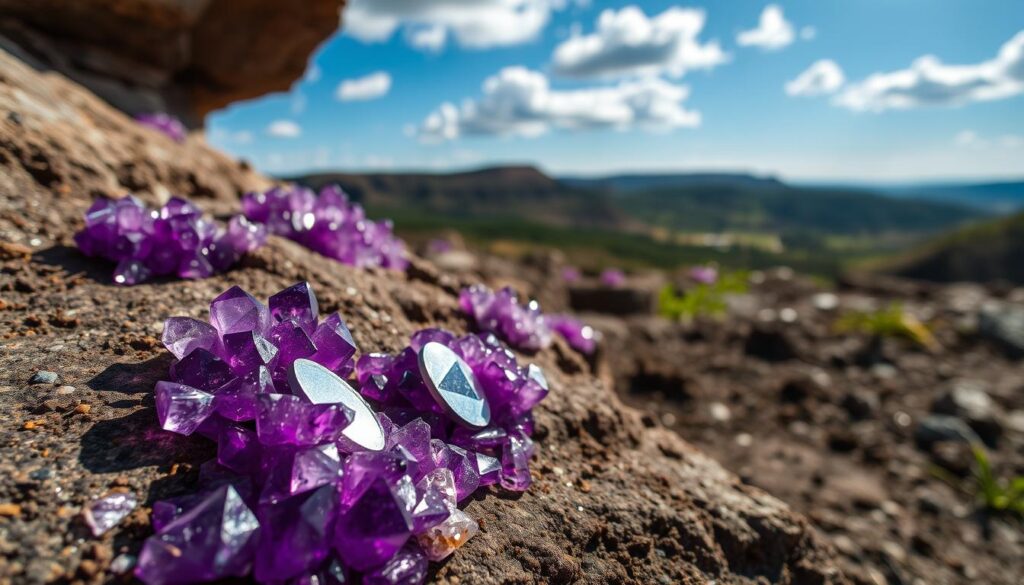
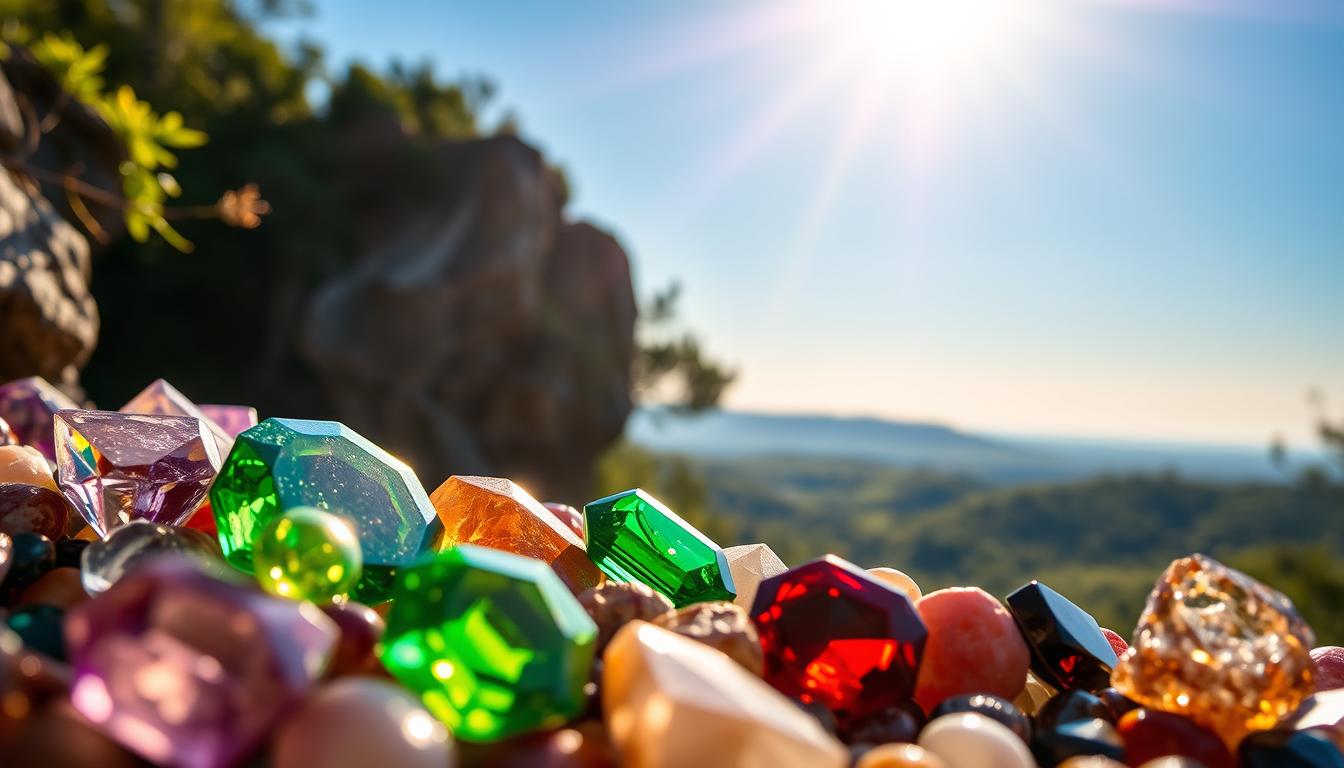
South Carolina Gemstones offer collectors and rock hunters an incredible variety of precious minerals scattered across the state’s diverse landscape. This southeastern gem boasts a rich geological history that has created perfect conditions for amethyst, quartz, beryl, and many other valuable stones to form naturally over millions of years.
The state’s official gemstone is amethyst, a stunning purple variety of quartz that can be found in numerous locations throughout South Carolina. From the mountain regions to coastal plains, gemstone enthusiasts can discover everything from common quartz crystals to rare mineral specimens that command high prices from collectors worldwide.
TL;DR
- Amethyst is South Carolina’s official state gemstone and can be found at Liberty Hill and Brewer Mine locations.
- The Piedmont Region yields the most diverse gemstone deposits including quartz, beryl, garnet, and tourmaline specimens.
- Spring and fall provide the best rockhounding conditions with mild weather and improved visibility after seasonal rains.
- South Carolina’s mineral production was valued at $659 million in 2005, showing significant economic value in gemstone mining.
South Carolina Gemstones Overview
The geological foundation of South Carolina spans millions of years of mountain building, volcanic activity, and erosion cycles. These processes created the perfect environment for gemstone formation across multiple regions of the state.
The state’s varied terrain includes the Piedmont Region with its metamorphic and igneous rocks, plus the Coastal Plain with sedimentary deposits. Each area offers different types of gemstones based on the underlying rock formations and mineral-rich environments.
Most Common Gemstones Found
South Carolina produces several types of gemstones that attract both amateur rockhounds and serious collectors. The diversity comes from the state’s complex geological history and varied rock formations.
Quartz Varieties
Quartz represents the most abundant gemstone family found throughout South Carolina. The state produces multiple quartz varieties in different colors and crystal formations similar to those found in North Carolina’s diverse gemstone deposits.
- Amethyst – Purple quartz crystals ranging from light lavender to deep violet colors
- Smoky Quartz – Brown to black transparent crystals with excellent clarity
- Clear Quartz – Colorless crystals that form perfect six-sided points
- Rose Quartz – Pink colored specimens found in massive formations
Beryl Group Minerals
Beryl minerals form in pegmatite deposits across South Carolina’s Piedmont Region. These gemstones often achieve gem-quality status and command higher market values.
- Aquamarine – Blue to blue-green beryl crystals highly prized by collectors
- Emerald – Green beryl specimens found rarely in specific locations
- Morganite – Pink to peach colored beryl crystals
Other Valuable Gemstones
Beyond quartz and beryl, South Carolina produces several other gemstone types that add diversity to any collection, including garnets commonly found throughout the southeastern United States like those in Georgia’s extensive gemstone deposits.
- Almandine Garnet – Deep red crystals found in metamorphic rocks
- Black Tourmaline (Schorl) – Dark prismatic crystals in granite formations
- Moonstone – Feldspar specimens with attractive optical effects
Best Rockhounding Locations
South Carolina offers numerous productive locations for gemstone hunting, each with its own geological characteristics and mineral specialties. Understanding where to look increases your chances of finding quality specimens.
Piedmont Region Hotspots
The Piedmont Region produces the highest diversity of gemstones due to its complex geological history. This area contains numerous mines, both active and abandoned, that continue to yield specimens.
- Liberty Hill Area – Famous for amethyst crystals and quartz varieties
- Brewer Mine – Known for producing high-quality amethyst specimens
- Kings Mountain – Offers mica, beryl, and rare mineral specimens
- York County – Contains multiple pegmatite deposits with beryl and tourmaline
Coastal Plain Opportunities
While less famous than mountain locations, the Coastal Plain provides unique rockhounding experiences. Beach hunting and river exploration can yield surprising discoveries similar to the coastal collecting opportunities found in Virginia’s diverse geological regions.
- Storm aftermath searches – Check beaches after major weather events for newly exposed specimens
- River gravel bar exploration – Look for water-tumbled gemstones in stream deposits
- Construction site monitoring – Watch for newly exposed mineral veins during excavation projects
Peak Hunting Season
Spring and fall offer the best rockhounding conditions with comfortable temperatures and increased water flow that exposes new specimens. Avoid summer heat and winter freezing conditions for safety and comfort.
Proper Equipment and Techniques
Successful gemstone hunting requires the right tools and knowledge of proper collecting techniques. Having quality equipment makes the difference between finding common rocks and discovering valuable specimens.
Essential Tools
Every rockhound needs basic equipment to extract and evaluate potential gemstones safely. Quality tools last longer and perform better in field conditions.
- Geology hammer – For breaking rocks and extracting crystals from matrix
- Hand lens (10x magnification) – Essential for examining crystal structure and identifying minerals
- Collection bags – Separate containers prevent specimens from damaging each other
- Safety equipment – Eye protection and sturdy gloves prevent injury
- Field guide – Reference book for identifying minerals on location
Identification Techniques
Learning to identify gemstones in the field saves time and helps focus collecting efforts on valuable specimens. Basic mineral identification relies on observable physical properties.
- Test hardness – Use standard hardness scale to narrow down mineral possibilities
- Observe crystal form – Note the shape and symmetry of crystal faces
- Check transparency – Determine if specimens are transparent, translucent, or opaque
- Note color variations – Look for color zoning or unusual hues that indicate quality
Legal Considerations
Understanding property rights and collecting regulations prevents legal problems and maintains good relationships with landowners. Always follow local laws and respect private property boundaries.
Permission Requirements
Most productive gemstone locations exist on private property requiring explicit permission from landowners. Getting proper authorization protects both collectors and property owners.
- Written permission – Always get collecting rights in writing with specific terms
- Liability insurance – Consider coverage for accidents during collecting activities
- Restoration agreements – Promise to fill holes and restore areas after collecting
Public Land Regulations
State and federal lands have specific rules about mineral collecting that vary by location and agency management. Research regulations before visiting any public collecting area.
Cleaning and Preserving Finds
Proper cleaning and storage techniques maintain specimen quality and maximize their display potential. Different gemstone types require specific care methods to avoid damage.
Cleaning Methods
Most South Carolina gemstones respond well to gentle cleaning with soap and water. Gemologists at the Gemological Institute of America recommend avoiding harsh chemicals that might damage crystal surfaces or alter natural colors.
- Soft brush cleaning – Remove dirt and debris without scratching surfaces
- Warm soapy water – Safe for most minerals including quartz and beryl
- Ultrasonic cleaners – Effective for durable specimens without fractures
Storage Solutions
Protecting specimens from damage during storage and transport requires appropriate containers and cushioning materials. Proper storage maintains value and prevents deterioration just as important for collectors throughout the southeastern states, including those hunting Tennessee’s diverse mineral specimens.
- Individual wrapping – Wrap each specimen separately to prevent contact damage
- Controlled environment – Store in consistent temperature and humidity conditions
- Labeling system – Record location, date, and identification for each specimen
Frequently Asked Questions
What is South Carolina’s official state gemstone?
Amethyst serves as South Carolina’s official state gemstone, chosen for its purple quartz crystals found throughout the state’s Piedmont Region.
Where can I find the best amethyst specimens in South Carolina?
Liberty Hill and the Brewer Mine area produce the highest quality amethyst crystals, with specimens ranging from light purple to deep violet colors.
Do I need permission to collect gemstones on private property?
Yes, always obtain written permission from landowners before collecting on private property, and respect any restrictions they impose on your activities.
What’s the best season for gemstone hunting in South Carolina?
Spring and fall provide ideal conditions with comfortable temperatures and seasonal rains that expose new specimens in stream beds and exposed areas.
How can I identify gemstones I find in the field?
Use hardness testing, crystal form observation, and color analysis combined with a good field guide to identify most South Carolina gemstones accurately. The MinDat database provides detailed mineral identification information and the U.S. Geological Survey offers resources for identifying quartz varieties commonly found in the state.
Final Thoughts
South Carolina Gemstones provide endless opportunities for collectors and rock hunters to discover beautiful specimens across the state’s diverse geological regions. From official state amethyst to rare beryl varieties, the Palmetto State rewards those who take time to explore its mineral-rich landscapes.
Start your gemstone hunting adventure by researching specific locations, gathering proper equipment, and connecting with local rockhounding groups through the American Federation of Mineralogical Societies who can share their knowledge and favorite collecting spots. Consider expanding your collecting horizons by exploring neighboring states like Alabama’s unique geological formations for additional gemstone hunting opportunities.