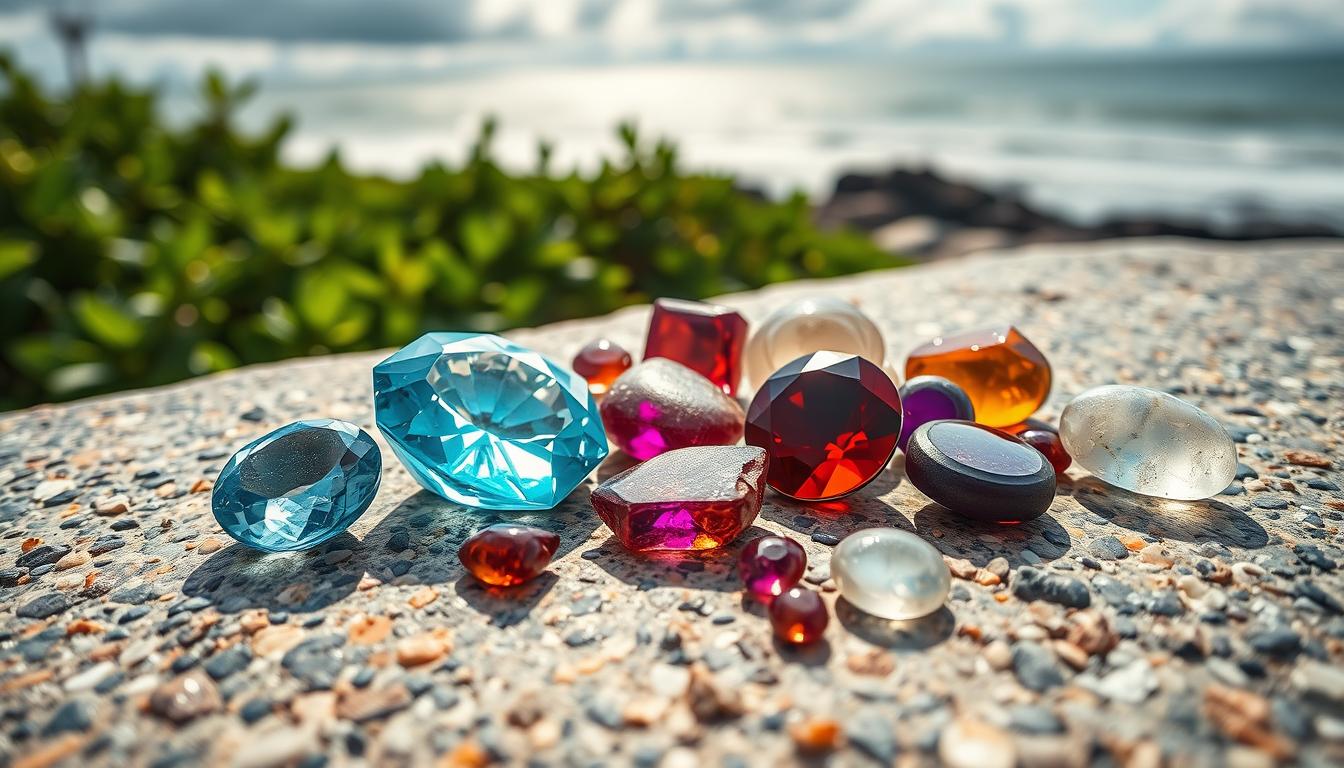
Common Gemstones Found In Rhode Island might surprise you with the variety of minerals hiding in the Ocean State’s compact geography. Despite being the smallest state, Rhode Island offers rockhounds several productive collecting areas and unique geological formations worth exploring.
The state’s rich industrial history and diverse bedrock create opportunities to find both common and uncommon specimens. From coastal beaches to old quarry sites, Rhode Island provides accessible locations for gemstone hunting without requiring extensive travel.
TL;DR
- Quartz varieties including smoky, rose, and clear crystals are found at over 12 documented locations statewide.
- Bowenite, Rhode Island’s unofficial state gem, occurs in massive deposits near Newport and can be carved into beautiful ornamental pieces.
- Historic Cranston quarries yield well-formed garnet crystals up to 2 inches in diameter along with magnetite specimens.
- Beach collecting along Block Island and mainland shores produces polished jasper, agate, and colorful pebbles year-round.
Common Gemstones Found In Rhode Island
Rhode Island’s geological diversity stems from its position within the Avalon Terrane, a complex region of metamorphic and igneous rocks. The state’s bedrock includes schists, gneisses, and granites that host various mineral deposits.
Most collecting occurs on private property with permission or at designated public areas. The compact size makes it easy to visit multiple locations in a single day trip.
Quartz Varieties
Quartz represents the most abundant and varied gemstone group in Rhode Island. Multiple localities produce excellent specimens in several attractive varieties.
Smoky Quartz
Dark, translucent smoky quartz crystals occur in pegmatites throughout the state. The best specimens come from granite quarries in Westerly and surrounding areas, where crystals up to 6 inches long have been recovered.
Rose Quartz
Pink rose quartz appears in massive form at several locations, particularly in the Scituate area. While crystal faces are rare, the material polishes beautifully and works well for cabochons and decorative pieces.
Clear Quartz
Colorless quartz crystals with excellent clarity form in cavities within metamorphic rocks. The Cranston area produces some of the state’s finest clear specimens, often with interesting inclusions or unusual crystal habits.
Bowenite
This pale green to yellowish serpentine mineral deserves special attention as Rhode Island’s unofficial state gemstone. Bowenite forms in metamorphic environments and creates dense, carvable material prized by artisans.
The primary deposits occur near Newport, where massive beds of this attractive stone have been quarried for over a century. Local collectors can find smaller specimens along coastal exposures and in construction excavations.
Best Time for Beach Collecting
Visit Rhode Island beaches after winter storms when wave action exposes fresh material. Early morning low tides provide the best conditions for finding polished gemstones.
Garnets
Rhode Island produces excellent garnet specimens, particularly the almandine variety. These deep red crystals form in metamorphic rocks and appear in several accessible locations.
The old quarries around Cranston yield the state’s finest garnet crystals, some reaching impressive sizes with good crystal faces. These specimens often associate with magnetite, creating attractive mineral combinations.
- Almandine – deep red crystals up to 2 inches diameter
- Grossular – lighter colored varieties in metamorphic zones
- Spessartine – orange garnets in granite pegmatites
Beryl Varieties
Several beryl varieties occur in Rhode Island’s granite pegmatites, though good specimens require patience to locate. The most common types include aquamarine and golden beryl.
Aquamarine
Light blue aquamarine crystals appear in pegmatite pockets, particularly in the western part of the state. Most specimens are small but display excellent color and clarity when cut properly.
Golden Beryl
Yellow to golden beryl occurs less frequently but produces attractive gems when faceted. The Westerly area has yielded some noteworthy specimens over the years.
Feldspars
Rhode Island’s granite formations contain various feldspar minerals that make interesting specimens and occasional gemstones. Moonstone represents the most desirable variety for collectors.
Orthoclase and microcline feldspars appear in large crystals within pegmatites. While most lack gem quality, some specimens display attractive colors or optical effects worth preserving.
Beach and Coastal Collecting
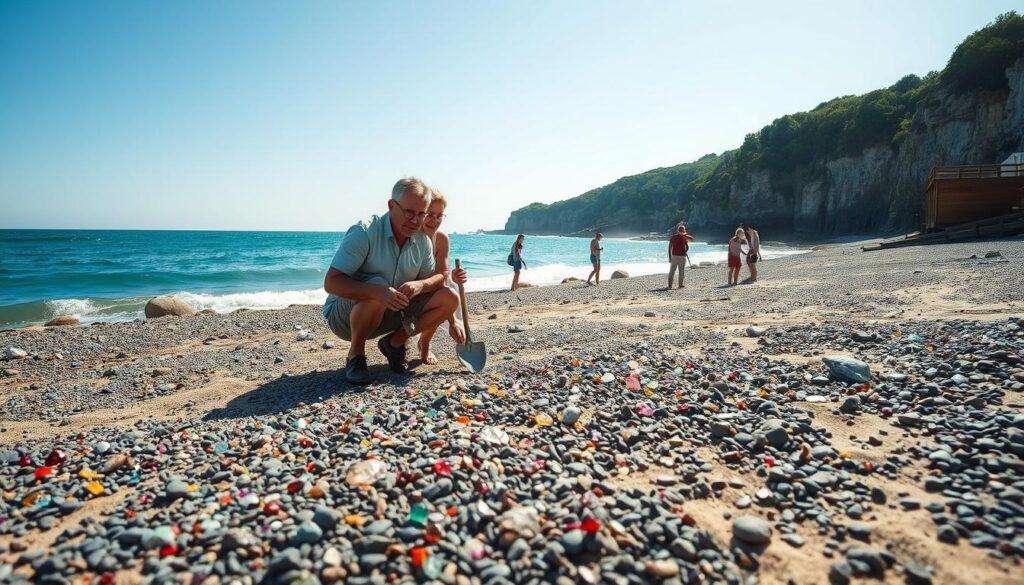
Rhode Island’s extensive coastline provides excellent opportunities for finding water-worn gemstones and interesting mineral specimens. The constant wave action naturally tumbles and polishes stones.
Block Island offers particularly productive beach collecting, with jasper, agate, and various quartz pebbles washing up regularly. The mainland beaches from Watch Hill to Newport also produce colorful specimens.
- Jasper – red, yellow, and brown varieties
- Agate – banded chalcedony in various colors
- Carnelian – translucent orange chalcedony
- Bloodstone – dark green jasper with red spots
Where to Look
Public collecting areas in Rhode Island include designated beaches, some state parks, and road cuts with proper safety precautions. Always obtain permission before collecting on private property.
Many of the state’s best mineral locations exist on private land, making landowner permission essential for serious collecting. Building relationships with local property owners often leads to productive long-term collecting arrangements.
- Research locations – Use geological maps and mineral guides to identify promising areas before traveling.
- Contact landowners – Always request permission and offer to share interesting finds with property owners.
- Join local clubs – Rhode Island mineral clubs organize group trips and share location information with members.
- Check construction sites – New excavations sometimes expose fresh mineral-bearing rock with contractor permission.
Tools and Techniques
Basic rockhounding equipment works well for most Rhode Island collecting situations. The state’s geology doesn’t require specialized tools, making it ideal for beginning collectors.
Standard rock hammers, chisels, and safety equipment handle most collecting scenarios. Beach collecting requires only containers and perhaps a small shovel for digging in sand or gravel.
Frequently Asked Questions
What is Rhode Island’s state gemstone?
Rhode Island doesn’t have an official state gemstone, but bowenite is widely considered the unofficial state gem due to its abundance and local significance.
Can I collect gemstones on Rhode Island beaches?
Yes, beach collecting is generally permitted on public beaches. Focus on areas below the high tide line and follow local regulations regarding collection limits.
Where can I find the best quartz crystals in Rhode Island?
The Cranston and Westerly areas have historically produced the finest quartz specimens, though most locations require landowner permission to access.
Are there any gem and mineral clubs in Rhode Island?
The Rhode Island Mineral Hunters and other local clubs organize collecting trips and educational programs for members interested in the state’s geology.
What safety precautions should I take when collecting in Rhode Island?
Always wear safety glasses and sturdy footwear, inform someone of your collecting plans, and avoid unstable quarry walls or coastal areas during storms.
Final Thoughts
Common Gemstones Found In Rhode Island offer collectors a surprising variety despite the state’s small size. From beach-polished jaspers to well-formed garnet crystals, the Ocean State provides accessible collecting opportunities for all skill levels.
Start your Rhode Island rockhounding adventure at public beaches to learn what the state offers, then connect with local clubs and landowners for access to the more productive inland locations.