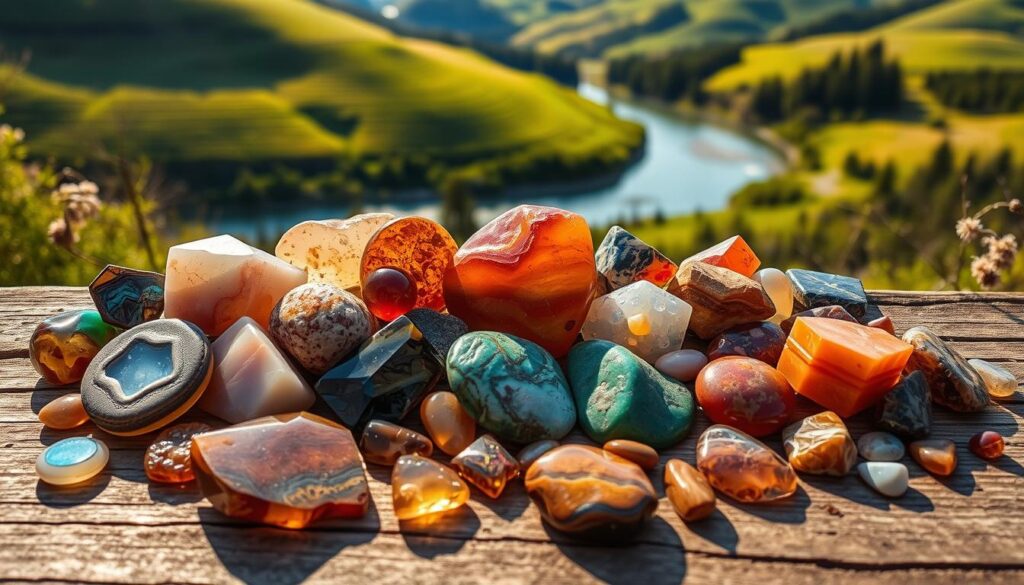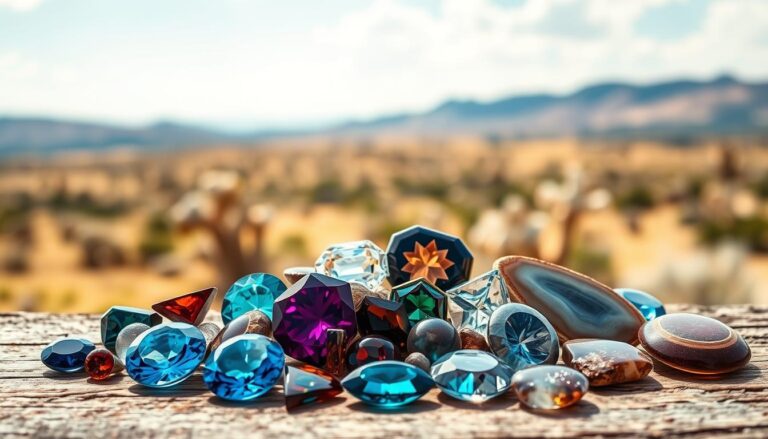
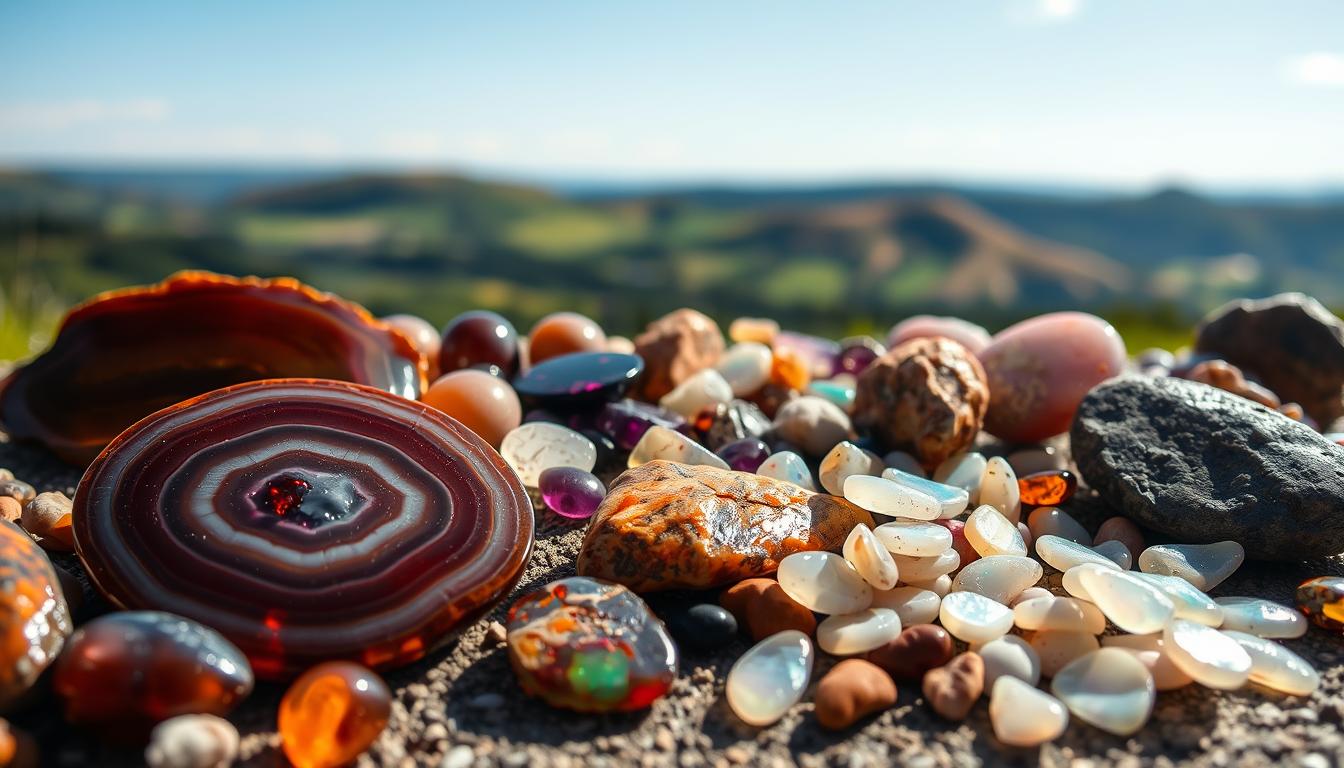
Oregon Gemstones offer some of the most diverse and beautiful mineral specimens in the United States. The state’s rich volcanic history and unique geological formations have created perfect conditions for gemstone formation over millions of years.
From the official state gemstone sunstone to the mysterious thundereggs hidden in volcanic rock, Oregon provides endless opportunities for rockhounds and collectors. The state’s varied landscape means you can find everything from colorful agates to rare fire opals across different regions, similar to the diverse gemstone varieties found in neighboring Washington.
TL;DR
- Oregon produces over 15 different types of gemstones including sunstone, thundereggs, agates, and jasper.
- Lake County contains the most productive sunstone mines with free public collecting areas open year-round.
- Richardson’s Rock Ranch charges $15 per person for thunderegg hunting with tools provided.
- Oregon’s High Lava Plains region covers 20,000 square miles and contains the majority of gemstone deposits.
Oregon Gemstones and Their Volcanic Origins
Oregon’s gemstone diversity comes directly from its volcanic past. The state sits on active volcanic zones that have been creating mineral deposits for millions of years, much like the volcanic formations that create Hawaii’s unique gemstone deposits.
The Cascade Range and High Lava Plains formed through repeated volcanic eruptions and lava flows. These geological events created the perfect conditions for gemstone formation by providing the heat, pressure, and mineral-rich solutions needed.
How Volcanic Activity Creates Gemstones
Volcanic processes create gemstones through several mechanisms. When lava cools slowly underground, it allows crystals like sunstone to form with their distinctive copper inclusions.
- Gas bubbles – Volcanic gases create cavities that later fill with silica to form agates and thundereggs.
- Rapid cooling – Quick lava cooling creates obsidian, a natural volcanic glass.
- Mineral solutions – Hot water carrying dissolved minerals creates jasper and petrified wood.
- Pressure changes – Underground pressure variations help form opal deposits.
Sunstone: Oregon’s Crown Jewel
Oregon sunstone stands out among the world’s feldspar gemstones because of its unique copper inclusions. These tiny copper platelets create a metallic glitter effect called schiller that makes each stone shimmer with movement.
The best sunstones show colors ranging from pale yellow to deep red. High-quality specimens with strong schiller and good clarity can sell for $50-300 per carat depending on size and color intensity.
Where to Find Oregon Sunstone
Lake County hosts the most productive sunstone deposits in Oregon. The Oregon Sunstone Public Collection Area allows free collecting with basic hand tools on designated lands.
- Rabbit Basin. The main public collecting area with clearly marked boundaries and parking.
- Dust Devil Mining. A fee dig site offering guided experiences and equipment rental.
- Spectrum Mine. Private mine that occasionally offers public collecting days.
Thundereggs and Agates
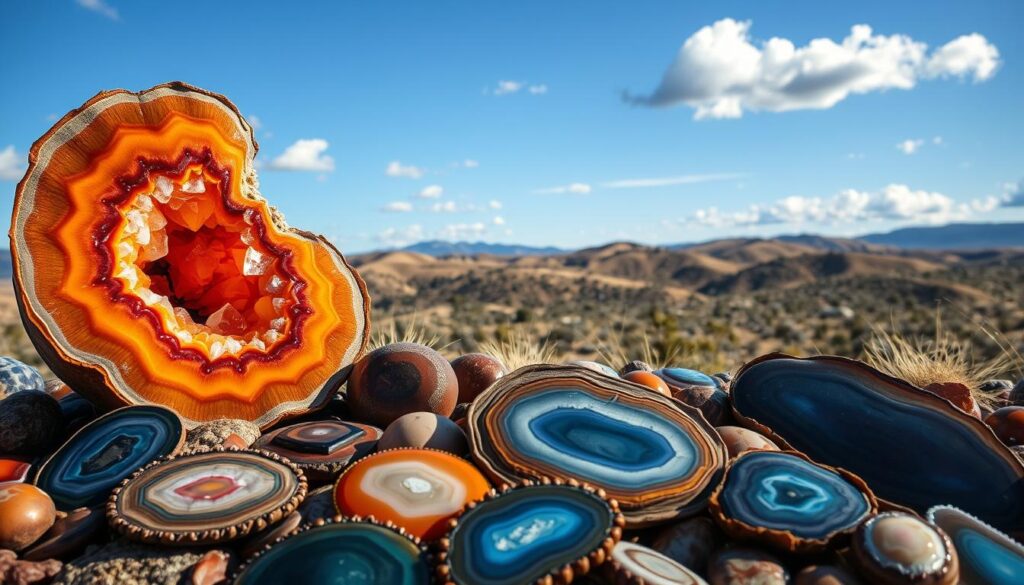
Thundereggs are Oregon’s most famous collectible gemstones after sunstone. These round nodules form in volcanic ash beds and can contain stunning agate centers with intricate patterns.
The exterior looks like plain rock, but cutting open a thunderegg reveals beautiful agate, jasper, or opal interiors. This element of surprise makes thunderegg hunting exciting for beginners and experienced collectors alike.
Central Oregon’s Thunderegg Country
The area around Prineville and Madras produces the finest thundereggs in Oregon. These deposits formed in rhyolite flows approximately 40 million years ago.
- Richardson’s Rock Ranch – Fee dig site with guaranteed finds and tools provided.
- Priday Ranch – Public collecting area with beautiful blue and white agates.
- White Fir Springs – Remote location known for large thundereggs with colorful centers.
Agate Varieties in Oregon
Oregon produces several distinct agate types beyond thunderegg centers. Each variety has unique characteristics that make it valuable to collectors.
- Plume agate – Features feathery inclusions that look like plants or moss.
- Flame agate – Shows red and orange patterns resembling fire.
- Moss agate – Contains green mineral inclusions creating landscape-like scenes.
- Fortification agate – Displays angular banded patterns in multiple colors.
Best Time for Thunderegg Hunting
Visit thunderegg sites in late spring through early fall when roads are accessible and weather is mild. Rain actually helps expose new specimens by washing away loose dirt.
Other Notable Oregon Gemstones
Beyond sunstone and thundereggs, Oregon produces many other valuable gemstones. Each type requires different collection methods and can be found in specific geological settings.
Jasper
Oregon jasper comes in dozens of varieties with unique colors and patterns. The most famous is Biggs jasper, known for its landscape-like scenes in brown and tan colors.
Picture jasper from the John Day region shows incredible detail in its patterns. Some specimens look like paintings of desert scenes or abstract art when polished.
Obsidian
Oregon obsidian formed when silica-rich lava cooled rapidly. The state produces several varieties including black obsidian, rainbow obsidian, and rare fire obsidian.
Glass Buttes in central Oregon offers the best obsidian collecting in the state. You can find large pieces suitable for knapping or lapidary work scattered across the volcanic landscape.
Fire Opal
Oregon fire opal displays brilliant orange and red colors without the play-of-color seen in precious opal. These gems form in volcanic environments where silica-rich water evaporates in rock cavities.
The best fire opal deposits are found in Lake and Harney counties. While not as valuable as Australian opal, quality Oregon fire opal can bring $20-100 per carat.
Planning Your Oregon Rockhounding Adventure
Successful gemstone hunting in Oregon requires proper planning and equipment. Different sites have varying access requirements and seasonal considerations.
Essential Rockhounding Equipment
Start with basic tools and upgrade as you gain experience. Quality tools make collecting more efficient and help preserve specimens, just as collectors need proper equipment when searching for Idaho’s diverse gemstone deposits.
- Rock hammer – 16-20 oz pick hammer for breaking rocks.
- Safety glasses – Eye protection from rock chips and dust.
- Work gloves – Leather gloves protect hands from sharp edges.
- Collection bags – Cloth bags prevent specimens from getting scratched.
- Hand lens – 10x magnification for identifying small details.
- Field notebook – Record locations and specimen details.
Best Collecting Seasons
Oregon’s collecting season runs from April through October in most areas. Higher elevation sites may remain snow-covered until May or June.
Summer offers the best weather but also brings crowds to popular sites. Spring and fall provide excellent collecting with fewer people and comfortable temperatures.
Identifying Your Oregon Gemstone Finds
Proper identification helps determine the value and significance of your finds. Learning basic gemstone properties makes field identification much easier.
Physical Properties to Check
Each gemstone has distinctive physical properties that aid identification. Start with visual inspection then test hardness and specific gravity if needed.
- Color and luster. Note the surface appearance and how light reflects from the specimen.
- Crystal structure. Look for natural crystal faces or cleavage planes.
- Hardness test. Use the Mohs scale to determine scratch resistance.
- Transparency. Check if light passes through the specimen clearly or partially.
Frequently Asked Questions
What is Oregon’s official state gemstone?
Oregon’s official state gemstone is sunstone, a feldspar mineral known for its copper inclusions that create a metallic glitter effect called schiller.
Where can I collect gemstones for free in Oregon?
The Oregon Sunstone Public Collection Area in Lake County offers free sunstone collecting, and Priday Ranch provides free agate hunting with proper permits.
What are thundereggs and how do I find them?
Thundereggs are round volcanic nodules that contain agate or jasper centers. Look for them in rhyolite beds at sites like Richardson’s Rock Ranch or White Fir Springs.
Do I need permits to collect gemstones in Oregon?
Some areas require permits or charge fees, while others allow free collecting. Always check local regulations before collecting on any property.
What tools do I need for Oregon rockhounding?
Basic tools include a rock hammer, safety glasses, work gloves, collection bags, and a hand lens for specimen identification.
When is the best time to hunt for gemstones in Oregon?
April through October provides the best collecting conditions, with spring and fall offering ideal weather and fewer crowds than summer months.
Final Thoughts
Oregon Gemstones represent some of America’s finest mineral specimens, from the brilliant copper-flecked sunstones to mysterious thundereggs hiding colorful agate centers. The state’s volcanic geology continues creating new deposits while making existing ones accessible to collectors.
Start your Oregon gemstone adventure with a visit to Lake County’s sunstone fields or central Oregon’s thunderegg country. Each trip builds your knowledge and adds unique specimens to your collection, whether you’re hunting for Oregon’s famous sunstones or exploring the diverse gemstone treasures found throughout the Rocky Mountain region.