Common Gemstones Found in Ohio offer rockhounds and geology fans a chance to explore the state’s rich mineral heritage. Ohio’s diverse geological history has created perfect conditions for gemstone formation across different regions.
The state’s complex past includes ancient seas, glacial activity, and sedimentary deposits that formed over millions of years. These processes left behind a variety of beautiful stones that collectors can find today.
TL;DR
- Flint Ridge State Memorial produces the highest quality flint specimens in North America.
- Ohio quartz varieties include clear, smoky, and amethyst found in geodes and cave formations.
- Caesar Creek State Park offers over 60 different mineral species including agate and jasper.
- Most Ohio gemstones form in limestone caves, stream beds, and glacial deposits throughout the state.
Common Gemstones Found in Ohio
Ohio’s geological diversity has produced numerous gemstone varieties that attract collectors from across the region. The state’s location at the intersection of several major geological formations creates ideal conditions for mineral formation.
Most gemstones in Ohio formed during periods when ancient seas covered the area or through later glacial activity. These processes concentrated minerals in specific locations that are now prime hunting grounds for rockhounds.
Quartz Varieties Throughout Ohio
Quartz represents the most abundant gemstone family found throughout Ohio. These crystals form in caves, geodes, and limestone deposits across multiple counties, similar to the extensive quartz deposits found in neighboring Pennsylvania.
Clear Quartz Specimens
Clear quartz appears in Ohio’s limestone caves and sedimentary formations. Collectors find the best specimens in geodes that formed millions of years ago when mineral-rich water filled hollow spaces in rock.
The largest clear quartz crystals come from southern Ohio counties where limestone deposits are most common. These specimens often display excellent clarity and can reach several inches in length.
Smoky Quartz Discoveries
Smoky quartz gets its distinctive gray to brown coloration from natural radiation exposure over long periods. Ohio’s smoky quartz typically forms in the same limestone environments as clear varieties.
The best smoky quartz specimens display even coloration and good transparency. Collectors value these stones for jewelry making and display purposes.
Amethyst Deposits
Amethyst represents the purple variety of quartz found in several Ohio locations. Iron impurities create the characteristic purple color that ranges from pale lavender to deep violet.
Ohio amethyst typically occurs in small clusters rather than large single crystals. The color often appears more intense near the crystal tips.
Flint – Ohio’s Historic Gemstone
Flint holds special significance as Ohio’s most historically important gemstone. Native Americans used Ohio flint for tools and weapons for thousands of years before European settlement.
Flint Ridge produces the world’s finest quality flint in colors ranging from blue-gray to rainbow hues. The multicolored varieties show bands of red, yellow, blue, and purple that create striking patterns.
- Rainbow Flint – Shows multiple color bands in single specimens.
- Blue Flint – Displays solid blue-gray coloration throughout.
- Banded Flint – Features alternating light and dark layers.
Other Notable Ohio Gemstones
Beyond quartz and flint, Ohio produces several other gemstone varieties that collectors seek. Each type forms under specific geological conditions found in different parts of the state.
Celestite Crystals
Celestite forms delicate blue crystals in Ohio’s limestone deposits. These soft crystals break easily but display beautiful sky-blue colors when fresh.
The best celestite specimens come from quarries in central Ohio where limestone mining exposes crystal-lined cavities. Handle these fragile crystals carefully to prevent damage.
Pyrite Specimens
Pyrite or “fool’s gold” appears throughout Ohio in various rock types. The metallic golden crystals often form perfect cubes or other geometric shapes.
Ohio pyrite typically occurs in coal deposits and shale formations. Fresh specimens show bright metallic luster that can tarnish when exposed to moisture.
Garnet Occurrences
Garnet appears less commonly in Ohio but collectors do find small specimens in stream gravels and glacial deposits. These deep red crystals typically measure less than half an inch across, similar to the garnet deposits found throughout Michigan’s Great Lakes region.
Most Ohio garnets show signs of water wear from transport in streams and rivers. Look for the characteristic twelve-sided crystal shapes when hunting.
Best Time to Hunt
Visit collecting sites after heavy rains when fresh material gets exposed. Spring and fall offer the most comfortable weather conditions for extended searches.
Top Gemstone Hunting Locations
Several Ohio locations offer excellent opportunities for gemstone collecting. Each site produces different types of stones based on local geology.
Flint Ridge State Memorial
Flint Ridge State Memorial represents Ohio’s premier flint collecting location with deposits that attracted Native Americans for centuries. The memorial preserves ancient quarry sites where indigenous peoples mined high-quality flint.
Collecting requires permits and follows specific rules to protect the historic site. Visitors can find flint specimens in designated areas during scheduled collecting events.
Caesar Creek State Park
Caesar Creek State Park offers diverse collecting opportunities in a scenic park setting. The spillway area exposes limestone formations that contain various minerals and fossils.
Popular finds include quartz crystals, agate nodules, and calcite formations. The park allows collecting in specific areas with proper permits.
Serpent Mound State Memorial
This historic site combines archaeological significance with geological interest. The area contains various minerals in exposed rock formations around the famous earthwork.
Collecting follows strict guidelines to preserve both cultural and natural resources. Focus on loose material rather than breaking rock formations.
Essential Tools and Techniques
Successful gemstone hunting requires proper equipment and knowledge of effective search methods. Start with basic tools and expand your kit as experience grows.
Basic Equipment List
- Rock Hammer – Choose a geological hammer with flat and pointed ends.
- Safety Glasses – Protect eyes from flying rock chips.
- Hand Lens – Use 10x magnification for detailed examination.
- Collection Bags – Separate different specimens during field trips.
- Field Notebook – Record location and details of finds.
Effective Search Methods
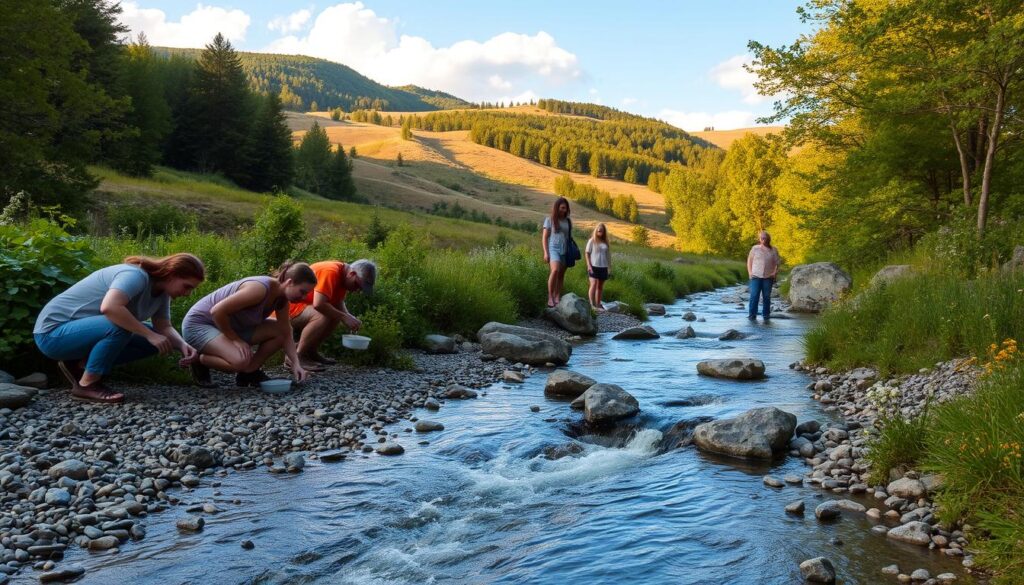
Look for gemstones in stream beds where water concentrates heavier minerals. Check gravel bars and areas where streams change direction for the best results.
Search limestone outcrops for cave formations that might contain quartz crystals. Use your hammer carefully to split rocks along natural fractures rather than forcing breaks.
- Stream Searching. Focus on gravel deposits and inside bends where current slows down.
- Cave Exploration. Look for crystal-lined cavities in limestone formations.
- Quarry Visits. Check with operators about collecting opportunities in active sites.
Gemstone Identification Methods
Learning to identify Ohio gemstones requires understanding key physical properties and using simple field tests. Start with obvious characteristics before moving to advanced testing.
Physical Properties to Check
Color provides the first identification clue but can vary within the same mineral species. Check hardness using common objects like coins or steel files to narrow possibilities.
Crystal shape offers reliable identification when specimens show well-formed faces. Look for characteristic patterns like quartz’s six-sided prisms or pyrite’s cubic forms.
- Hardness Scale – Compare unknown specimens to known materials using the Mohs hardness scale.
- Luster Types – Note metallic, glassy, or dull surface appearance.
- Transparency – Check if light passes through the specimen.
- Streak Test – Scratch specimen on unglazed ceramic to see powder color.
Simple Field Tests
The streak test works well for distinguishing similar-looking minerals. Scratch your specimen across unglazed ceramic to see the powder color it produces.
Test hardness by trying to scratch the specimen with common items. A penny tests for hardness 3, while a steel file tests for hardness 6 on the Mohs scale.
Uses and Value of Ohio Gemstones
Ohio gemstones serve multiple purposes from jewelry making to educational displays. Understanding potential uses helps collectors decide which specimens to keep.
Jewelry Applications
Clear quartz and amethyst work well for jewelry projects due to their hardness and beauty. Flint can be shaped into unique pendants that showcase its natural color patterns.
Smaller gemstones like garnets make excellent accent stones in rings or earrings. Consider having valuable specimens professionally cut to maximize their potential.
Display and Collection Ideas
Create educational displays that show geological processes by grouping specimens from the same location. Label each piece with collection site and date for future reference.
Consider donating exceptional specimens to local museums or schools where they can inspire others to appreciate geology. Many institutions welcome quality donations for educational programs.
Frequently Asked Questions
What are the most common gemstones found in Ohio?
Ohio’s most common gemstones include quartz varieties like clear, smoky, and amethyst, plus flint, celestite, pyrite, and calcite found throughout the state.
Where can I legally collect gemstones in Ohio?
Legal collecting sites include designated areas at Caesar Creek State Park, Flint Ridge State Memorial during permitted events, and private properties with owner permission.
What tools do I need to start gemstone hunting in Ohio?
Essential tools include a rock hammer, safety glasses, hand lens, collection bags, and field notebook for recording finds and locations.
How do I identify gemstones I find in Ohio?
Check physical properties like color, hardness, crystal shape, and luster, then use field tests like streak testing and hardness comparison with known materials.
Are Ohio gemstones valuable for jewelry making?
Yes, Ohio produces quality quartz varieties and unique flint specimens that work well in jewelry, though values vary based on size, quality, and rarity.
Final Thoughts
Common Gemstones Found in Ohio provide endless opportunities for collectors and geology enthusiasts to explore the state’s mineral heritage. From world-famous flint at Flint Ridge to beautiful quartz crystals throughout limestone regions, Ohio offers diverse collecting experiences similar to the rich mineral deposits found in nearby states like West Virginia and Kentucky.
Start your gemstone hunting adventure at established sites like Caesar Creek State Park and expand your knowledge through local rock and mineral clubs that share expertise and access to private collecting areas.