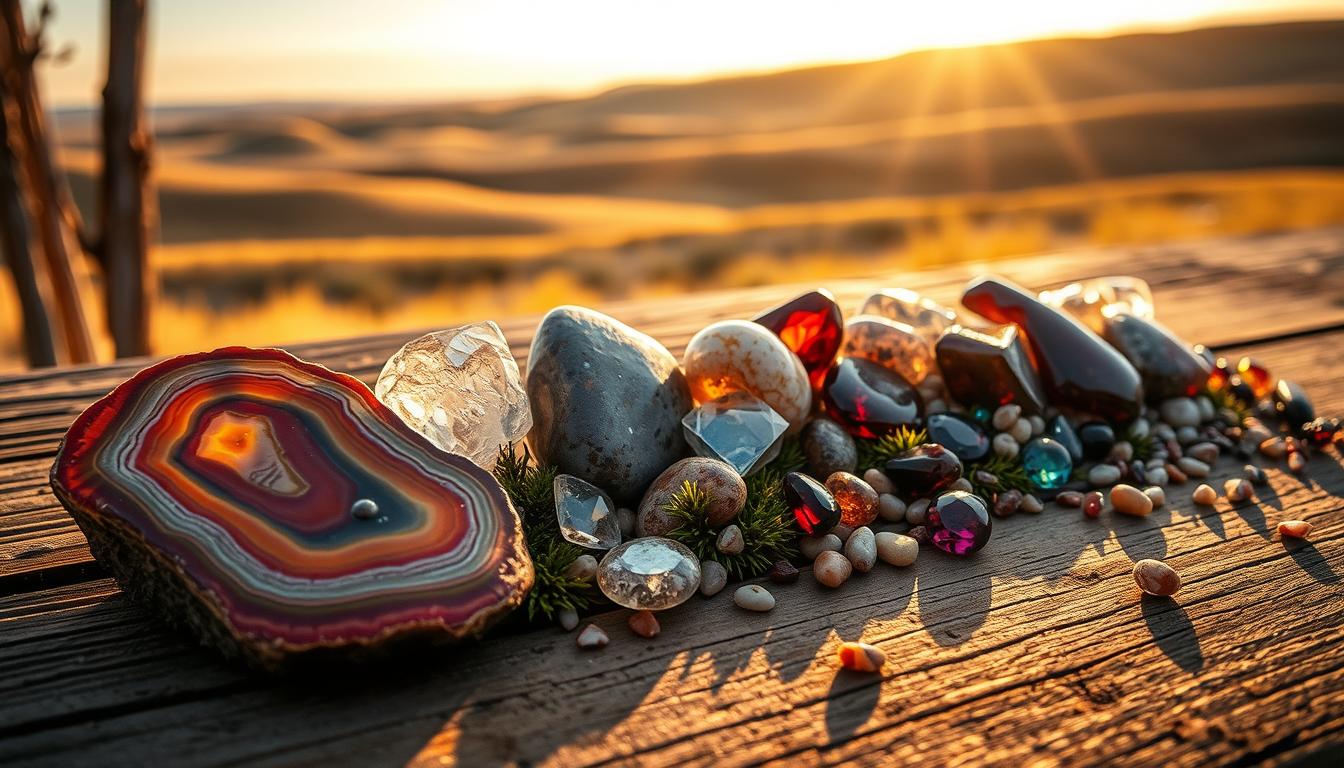
Gemstones in North Dakota offer incredible opportunities for rockhounds and collectors seeking unique mineral specimens. The state’s rich geological history, shaped by glacial activity and diverse rock formations, has created ideal conditions for finding agates, jasper, quartz crystals, and petrified wood.
From the rugged Western Badlands to the glacial deposits of eastern regions, North Dakota provides accessible hunting grounds for both beginners and experienced collectors. The variety of gemstones available makes it one of the Midwest’s premier rockhounding destinations.
TL;DR
- Lake Superior Agates are the most prized finds, often discovered in gravel pits and river deposits throughout the state.
- The Killdeer Mountains and Western Badlands contain rich deposits of agate and jasper in accessible rocky areas.
- Missouri River shorelines provide year-round hunting opportunities with constantly shifting gravel that exposes new specimens.
- Essential equipment includes a rock hammer, hand lens, collecting bags, and proper safety gear for successful hunting trips.
Gemstones in North Dakota: A Geological Overview
North Dakota’s gemstone diversity stems from its complex geological past spanning millions of years. The state’s position at the edge of ancient seas and its experience with multiple glacial periods created the perfect conditions for mineral formation and distribution.
Glacial activity played the most significant role in spreading gemstones across the landscape. As massive ice sheets advanced and retreated, they carried rocks and minerals from northern regions, depositing them in new locations throughout North Dakota.
Formation of Major Geological Features
The state’s landscape features several distinct geological zones that produce different types of gemstones. The western regions contain sedimentary rock formations rich in agates and jaspers, while eastern areas hold glacial deposits with diverse mineral specimens.
Key geological formations include the Pierre Shale, Hell Creek Formation, and extensive glacial till deposits. Each formation contributes unique minerals and gemstones to the state’s rockhounding potential.
Most Common Gemstones Found in North Dakota
North Dakota produces several types of gemstones that attract collectors from across the region. Understanding what to look for helps increase your chances of successful hunting trips.
Lake Superior Agates
These highly prized specimens feature distinctive banded patterns in red, orange, and white colors. Lake Superior Agates originated near the Great Lakes but were transported to North Dakota by glacial activity thousands of years ago, similar to the agates found in Minnesota’s deposits along Lake Superior.
The best specimens display clear banding with vibrant colors and minimal fracturing. They’re commonly found in gravel deposits, especially after spring floods or heavy rains expose new material.
Jasper Varieties
North Dakota jasper comes in multiple colors including red, yellow, brown, and green varieties. These opaque quartz specimens often display interesting patterns and make excellent display pieces when polished.
Red jasper is the most common type, colored by iron oxide inclusions. Yellow and brown varieties are also found, particularly in the western badlands regions.
Petrified Wood
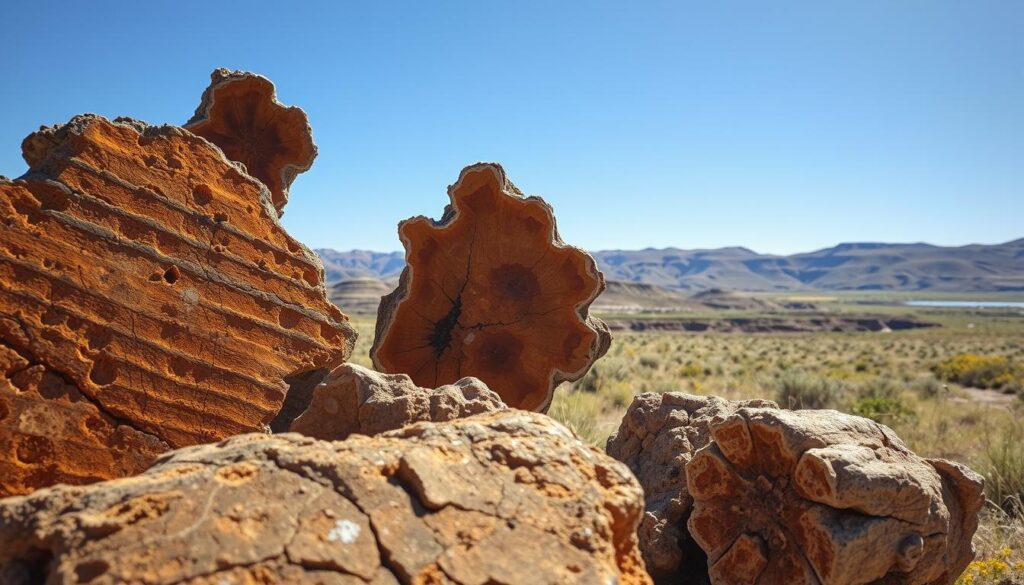
Ancient wood fossilized through mineral replacement creates some of North Dakota’s most beautiful specimens. The process preserves the original wood structure while replacing organic material with silica minerals.
Quality petrified wood specimens retain clear ring patterns and wood grain details. Colors range from browns and tans to more exotic reds, blues, and purples depending on the minerals involved in fossilization.
Quartz Crystal Varieties
Clear quartz crystals are common throughout the state, along with colored varieties like smoky quartz and occasional amethyst specimens. These crystals form in cavities within sedimentary and igneous rocks, much like the quartz varieties found in Montana’s diverse geological formations.
- Clear Quartz – Common in most formations, often found as small clusters or individual crystals.
- Smoky Quartz – Brown to black varieties caused by natural radiation exposure over time.
- Amethyst – Rare purple quartz specimens occasionally found in western regions.
- Chalcedony – Translucent varieties in white, blue, and gray colors.
Prime Hunting Locations
Successful gemstone hunting depends on knowing where to look and understanding seasonal access patterns. North Dakota offers numerous public areas where collecting is permitted with proper permissions.
Killdeer Mountains Region
The Killdeer Mountains provide some of the state’s best agate and jasper hunting opportunities. Rocky outcrops and eroded slopes expose fresh material regularly, especially after winter freeze-thaw cycles.
Spring hunting yields the best results as winter weather breaks apart rocks and exposes new specimens. Creek beds and gully bottoms concentrate heavier gemstones washed down from higher elevations.
Western Badlands Areas
The rugged badlands terrain offers diverse hunting opportunities in exposed sedimentary layers. These formations contain agates, jaspers, and occasional petrified wood specimens in accessible surface deposits, similar to the mineral-rich badlands formations found across Wyoming.
Look for areas where erosion has exposed fresh rock faces or where recent rainfall has washed surface materials. Private land permissions are often required, so always check ownership before hunting.
Missouri River Corridor
The Missouri River and its tributaries provide excellent year-round hunting along gravel bars and shoreline areas. Constant water action sorts and concentrates heavy materials including gemstones.
Lake Sakakawea shorelines offer similar opportunities with the added advantage of fluctuating water levels that expose new hunting areas seasonally. Low water periods in late summer often reveal the best collecting zones.
Eastern Glacial Deposits
Gravel pits and road cuts in eastern North Dakota expose glacial till deposits containing transported gemstones. These locations often require permission from landowners but can produce exceptional specimens.
Commercial gravel operations sometimes allow collecting with advance permission. The variety of materials in glacial deposits means you might find specimens from hundreds of miles away.
Prime Hunting Times
Visit hunting locations after spring snowmelt or heavy summer rains when fresh material gets exposed. Early morning light helps identify specimens more easily than harsh midday sun.
Essential Equipment and Techniques
Proper equipment makes gemstone hunting more productive and enjoyable while protecting both you and the specimens you find. Basic tools cover most hunting situations without excessive expense.
Must-Have Tools
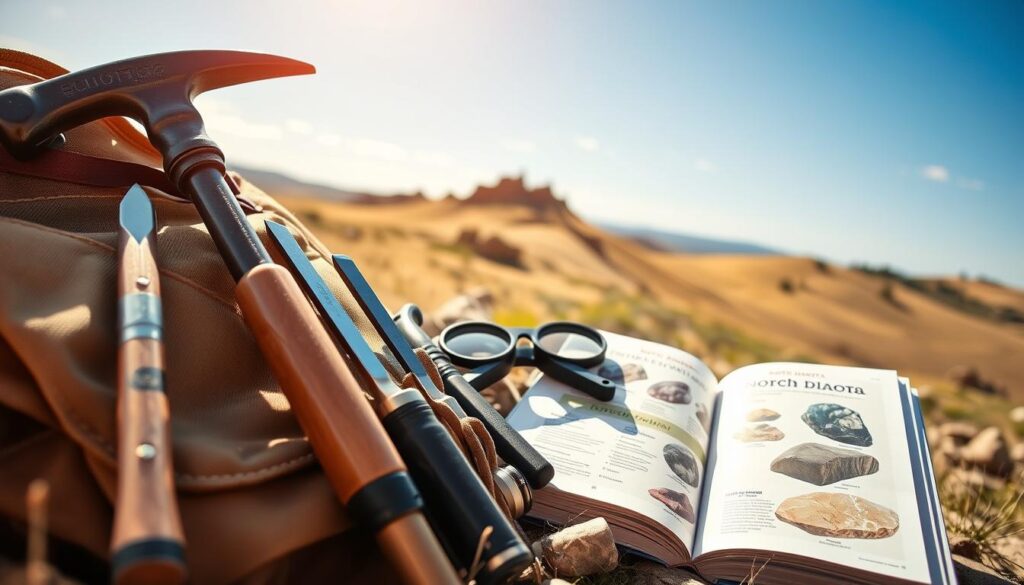
- Rock Hammer. A geology pick with a flat striking face and pointed pick end for breaking rocks and prying specimens loose.
- Hand Lens. 10x magnification helps identify small details and confirm specimen quality in the field.
- Collection Containers. Sturdy bags or buckets with padding to protect specimens during transport.
- Safety Equipment. Eye protection and work gloves prevent injuries from sharp rock fragments.
Field Identification Tips
Learning to identify promising specimens in rough form takes practice but follows consistent patterns. Look for translucency, unusual colors, or crystal faces that distinguish gemstones from common rocks.
Agates often appear waxy or translucent even in rough form, while jaspers display opaque colors with smooth textures. Quartz crystals show characteristic six-sided forms even when embedded in host rock.
Collection Ethics and Permissions
Always obtain proper permissions before collecting on private land and follow leave-no-trace principles in public areas. Take only what you can use and avoid damaging formations for future collectors, similar to the ethical guidelines followed by collectors in neighboring South Dakota’s gemstone hunting areas.
Some areas require permits or have seasonal restrictions to protect wildlife or geological features. Contact local authorities or rock clubs for current regulations and access information.
Processing Your Finds
Raw gemstones require cleaning and often cutting or polishing to reveal their full beauty. Basic processing techniques can transform rough specimens into attractive display pieces.
Initial Cleaning
Start with gentle cleaning using water and soft brushes to remove dirt and loose rock fragments. Avoid harsh chemicals or aggressive scrubbing that might damage delicate specimens.
Ultrasonic cleaners work well for sturdy specimens like agates and jaspers but avoid using them on fractured or soft materials that might break apart.
Cutting and Polishing Options
Rock tumbling provides an easy introduction to gemstone polishing using graduated grits over several weeks. Flat lap grinding and polishing create cabochons and display faces for better specimens, techniques widely used by collectors in Colorado’s diverse mineral collecting community.
Many rock clubs offer access to lapidary equipment and instruction for members. This provides an affordable way to learn techniques before investing in personal equipment.
Frequently Asked Questions
What are the most valuable gemstones found in North Dakota?
Lake Superior Agates with clear banding and vibrant colors are the most sought-after specimens. High-quality petrified wood and rare amethyst crystals also command premium prices among collectors.
Do I need permits to collect gemstones in North Dakota?
Public land collecting often requires permits or has restrictions, while private land always requires landowner permission. Check with North Dakota Parks and Recreation and always respect posted signs and boundaries.
When is the best time to hunt for gemstones in North Dakota?
Spring after snowmelt and following heavy rains provide the best hunting conditions when fresh material gets exposed. Early morning light helps identify specimens more easily.
How can I tell if a rock contains gemstones?
Look for translucency, unusual colors, crystal faces, or banded patterns that distinguish gemstones from common rocks. A hand lens helps examine details and confirm specimen quality.
Where can I get my finds identified and appraised?
Local rock and mineral clubs, universities with geology departments, and certified gemologists can help identify specimens. Many clubs hold monthly meetings with identification sessions for members.
Final Thoughts
Gemstones in North Dakota provide endless opportunities for discovery and learning about the state’s fascinating geological history. Whether you’re searching for Lake Superior Agates along the Missouri River or exploring the badlands for jasper specimens, each hunting trip offers potential for unique finds.
Start with easily accessible public areas and connect with local rock clubs to learn from experienced collectors. The combination of diverse geology and helpful collecting community makes North Dakota an ideal place to develop your rockhounding skills.