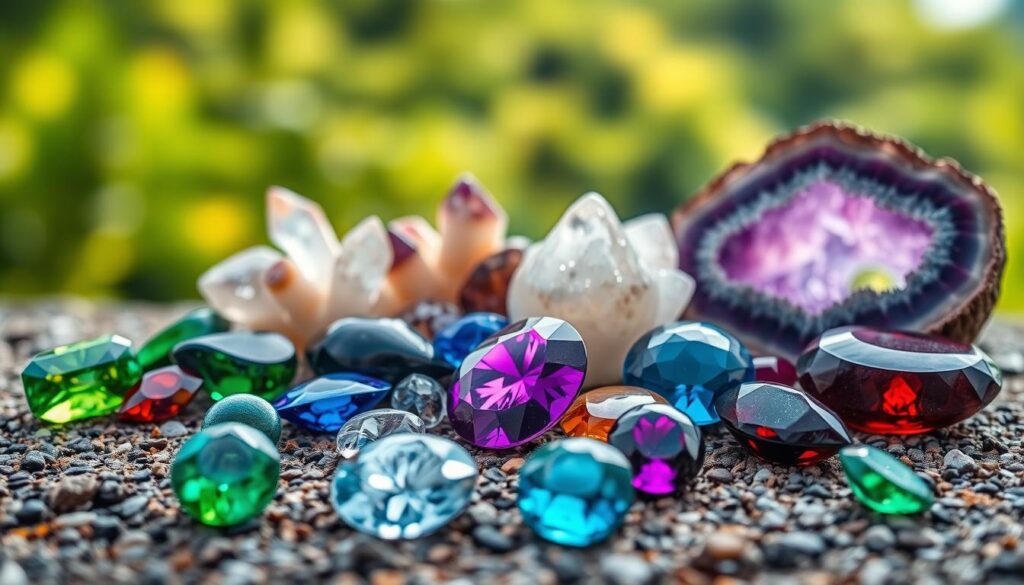
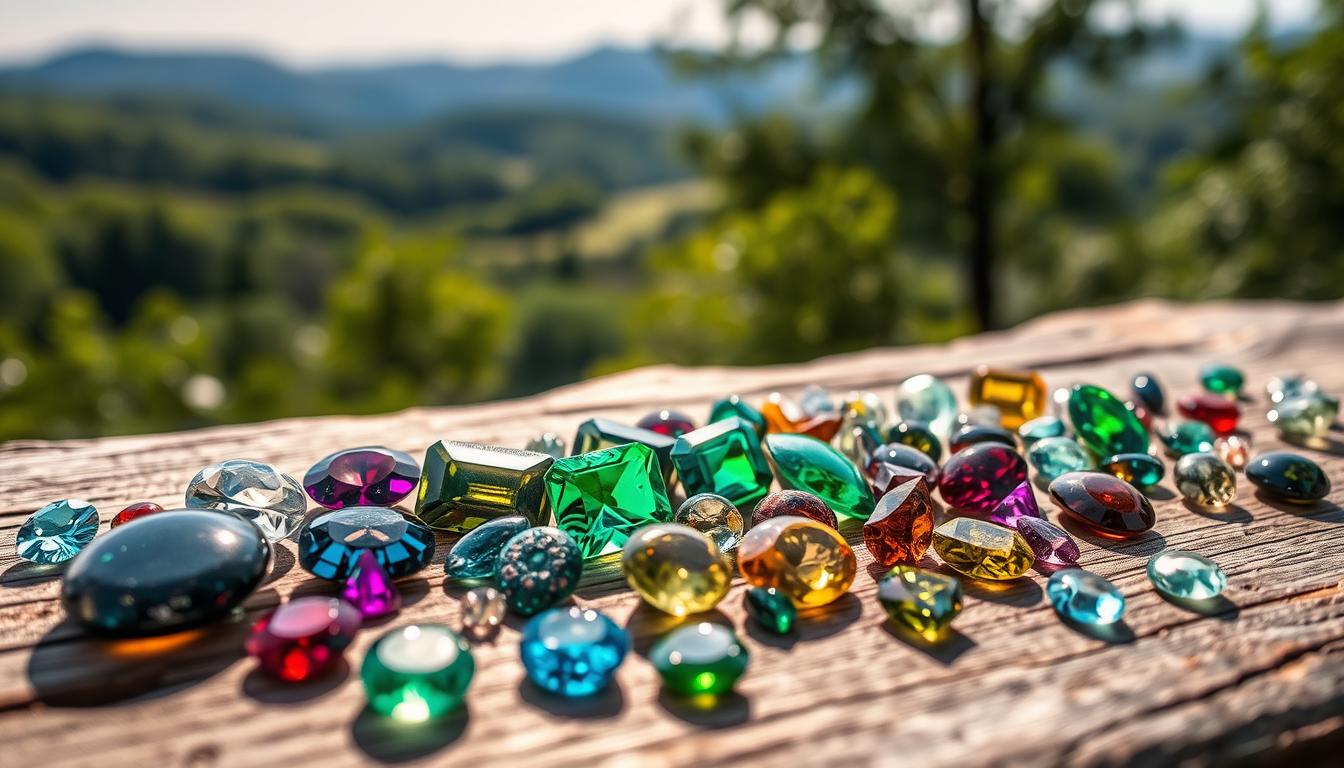
North Carolina Gemstones offer some of the most exciting rockhounding opportunities in the United States. The state’s rich geological history has created perfect conditions for finding everything from emeralds to rare hiddenite crystals.
Whether you’re a seasoned gem hunter or just starting out, North Carolina’s mountains and valleys hold treasures waiting to be discovered. The Blue Ridge region alone contains over 300 different types of minerals and gemstones.
TL;DR
- North Carolina is home to over 300 different minerals including emeralds, rubies, sapphires, and the rare hiddenite crystal.
- Emerald Hollow Mine in Hiddenite is the only emerald mine in North America open to the public for digging.
- Spring and fall offer the best weather conditions for gemstone hunting, with temperatures between 60-80°F.
- Public lands like Pisgah National Forest allow free rockhounding with basic hand tools and no permits required.
North Carolina Gemstones You Can Find
The state’s unique position at the intersection of ancient mountain ranges creates perfect conditions for gemstone formation. Volcanic activity and tectonic shifts over millions of years concentrated these precious minerals in accessible locations.
Quartz Varieties
Quartz represents the most abundant gemstone family in North Carolina. You’ll find several beautiful varieties across the state’s mountain regions, similar to the diverse quartz deposits found in nearby Virginia’s geological formations.
- Amethyst – Purple quartz crystals found in the western counties, often in clusters.
- Smoky Quartz – Dark gray to black crystals, particularly common in pegmatite formations.
- Rose Quartz – Pink variety prized for jewelry, found in large masses near Spruce Pine.
- Clear Quartz – Transparent crystals that can reach impressive sizes in cavity formations.
Precious Gemstones
North Carolina produces some of America’s finest precious stones. The state’s beryl deposits yield stunning emeralds, while corundum formations produce rubies and sapphires.
- Emeralds – Green beryl crystals found primarily in Alexander and Mitchell counties.
- Rubies – Red corundum specimens, though most are industrial grade rather than gem quality.
- Sapphires – Blue and other colored corundum varieties, found in stream gravels.
- Aquamarine – Blue-green beryl crystals that produce beautiful cut gems, though not as abundant as in Colorado’s famous aquamarine deposits.
Unique North Carolina Stones
The state claims two gemstones found nowhere else in significant quantities. These rare finds make North Carolina special among rockhounding destinations.
- Hiddenite – Green spodumene crystals discovered only in Alexander County.
- Carolina Ruby – Actually red garnet, but historically marketed as ruby.
Best Locations for Finding Gemstones
North Carolina offers both commercial mines where you pay to dig and public lands where you can hunt for free. Each location type provides different advantages for gem hunters.
Commercial Gemstone Mines
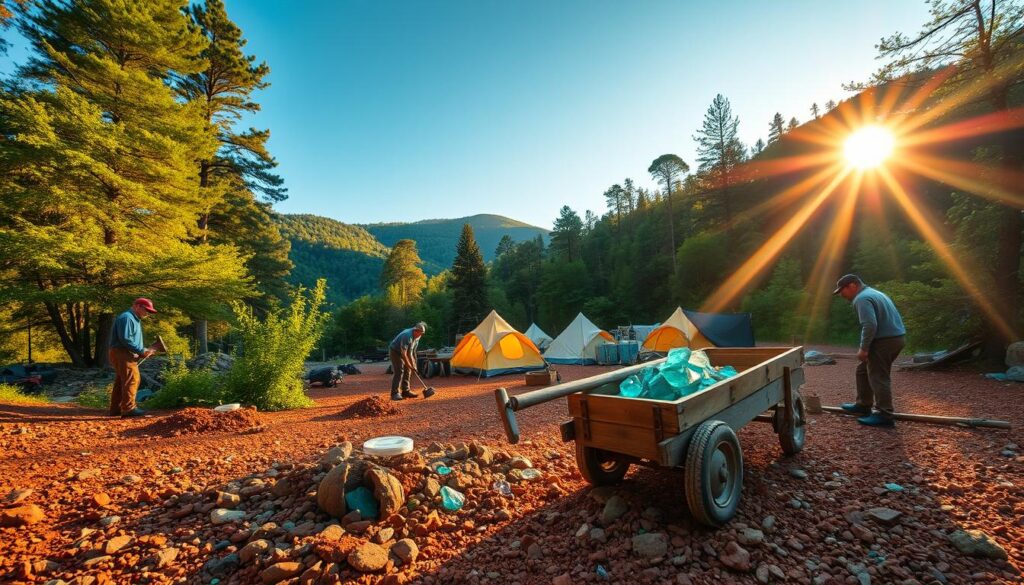
Pay-to-dig operations provide the highest success rates for finding quality gemstones. These mines concentrate gemstone-bearing material and provide tools and guidance.
- Emerald Hollow Mine – The only emerald mine in North America open for public digging.
- Hiddenite Gems Mine – Famous for hiddenite crystals and other rare minerals.
- Gem Mountain – Family-friendly operation with guaranteed finds from salted material.
- Cherokee Ruby and Sapphire Mine – Stream-based mining for corundum gems.
Public Rockhounding Areas
National forests and state parks allow free collecting with hand tools only. These locations require more skill but offer authentic discovery experiences.
- Pisgah National Forest – Vast area with multiple mineral zones and stream beds.
- Uwharrie National Forest – Known for quartz crystals and occasional gold finds.
- Nantahala National Forest – Remote areas with garnets and mica specimens.
- Blue Ridge Parkway – Limited collecting allowed in designated pull-off areas.
Best Time to Hunt
Visit during spring and fall when temperatures stay comfortable for outdoor digging. Heavy rains expose fresh material, making the days following storms particularly productive.
Gemstone Identification Tips
Successful gem hunting requires knowing how to identify your finds in the field. Understanding basic gemstone properties helps separate valuable stones from common rocks.
Physical Properties to Check
Each gemstone exhibits specific characteristics that aid in identification. Testing these properties helps confirm your finds.
- Hardness. Use a steel file or glass to test scratch resistance – quartz scratches glass while calcite doesn’t.
- Crystal shape. Many gems form in predictable crystal systems that aid identification.
- Color and streak. Note the surface color and the powder color when scratched on ceramic.
- Luster. Observe whether the surface appears glassy, metallic, or dull when clean.
Common Gemstone Formations
Understanding where gems form helps you focus your search efforts. Different geological environments produce specific types of gemstones, much like the diverse formations that create Georgia’s impressive mineral variety.
- Pegmatites – Coarse granite formations containing beryl, quartz, and mica.
- Stream gravels – Water-worn gems concentrated by erosion and transport.
- Metamorphic zones – Heat and pressure create garnets, staurolite, and kyanite.
- Hydrothermal veins – Hot water solutions deposit quartz and sulfide minerals.
Essential Equipment for Gem Hunting
Having the right tools makes gem hunting more productive and enjoyable. Basic equipment handles most collecting situations you’ll encounter.
Digging and Collection Tools
- Small shovel or trenching tool – For digging in soil and loose material.
- Rock hammer – Essential for breaking rocks and extracting crystals.
- Cold chisel and punch – Precise tools for splitting rocks along natural breaks.
- Collection bags – Separate containers prevent specimens from damaging each other.
Identification Equipment
- Hand lens (10x magnification) – Reveals crystal faces and internal features.
- Streak plate – Unglazed ceramic tile for testing mineral streak color.
- Magnet – Identifies magnetic minerals like magnetite and pyrrhotite.
- Field guide – Reference book with photos and identification charts.
Mining Regulations and Ethics
Following proper collecting ethics ensures these locations remain available for future generations. Understanding regulations prevents legal issues during your hunts.
Public Land Rules
National forests allow collecting for personal use only with specific restrictions. Commercial collecting requires special permits that most recreational hunters cannot obtain.
- Hand tools only – No motorized equipment or explosives permitted.
- Personal use limit – Collect reasonable amounts for hobby purposes.
- Surface collecting preferred – Minimize digging and restore disturbed areas.
- Respect closures – Some areas close seasonally to protect wildlife or plants.
Private Property Guidelines
Always obtain permission before collecting on private land. Many landowners welcome respectful rockhounds who follow basic courtesy rules.
- Ask permission first. Contact landowners before entering private property.
- Respect boundaries. Stay within agreed areas and honor any restrictions.
- Leave gates as found. Close gates that were closed, leave open gates open.
- Fill holes. Restore any digging sites to their original condition.
Frequently Asked Questions
What is the state gemstone of North Carolina?
The emerald is North Carolina’s official state gemstone, designated in 1973 due to the state’s significant emerald deposits.
Can beginners find valuable gemstones in North Carolina?
Yes, beginners often find quality gems at commercial mines where gemstone-bearing material is concentrated for easier discovery.
Do I need permits to collect gemstones on public land?
No permits are required for personal collecting with hand tools on most public lands, but check specific forest regulations before visiting.
What’s the best season for gemstone hunting in North Carolina?
Spring and fall offer the most comfortable weather conditions, while recent rains expose fresh material regardless of season.
Are North Carolina gemstones valuable enough to sell?
Quality specimens can have significant value, particularly emeralds and hiddenite, though most finds are better kept as collection pieces.
How deep do I need to dig to find gemstones?
Most gemstones are found within a few feet of the surface, especially in stream beds and weathered rock formations.
Final Thoughts
North Carolina Gemstones represent some of America’s finest mineral specimens, offering exciting opportunities for collectors of all skill levels. The state’s combination of accessible locations and diverse geology makes it a premier destination for rockhounds.
Start with a commercial mine to learn identification skills, then explore public lands for authentic discovery experiences. Remember to respect the environment and follow all regulations to preserve these amazing locations for future gem hunters. Whether you’re planning to explore North Carolina’s unique deposits or considering other southeastern states like South Carolina’s diverse mineral collecting opportunities, proper preparation and ethical collecting practices will enhance your rockhounding adventures. For more detailed geological information about mineral formation and identification, consult authoritative geological resources to enhance your collecting expertise.