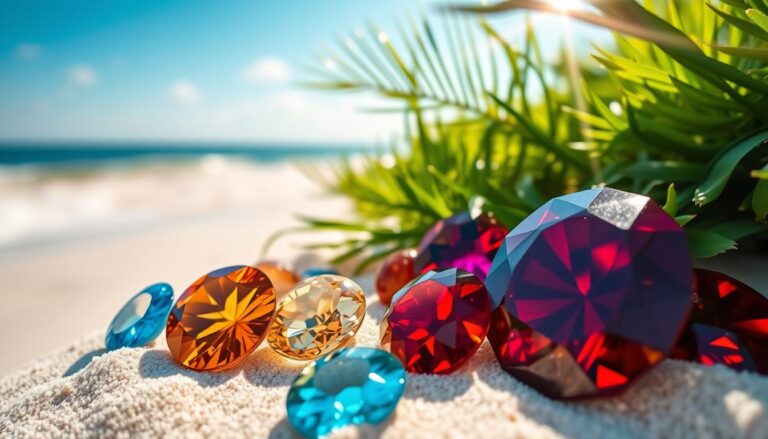
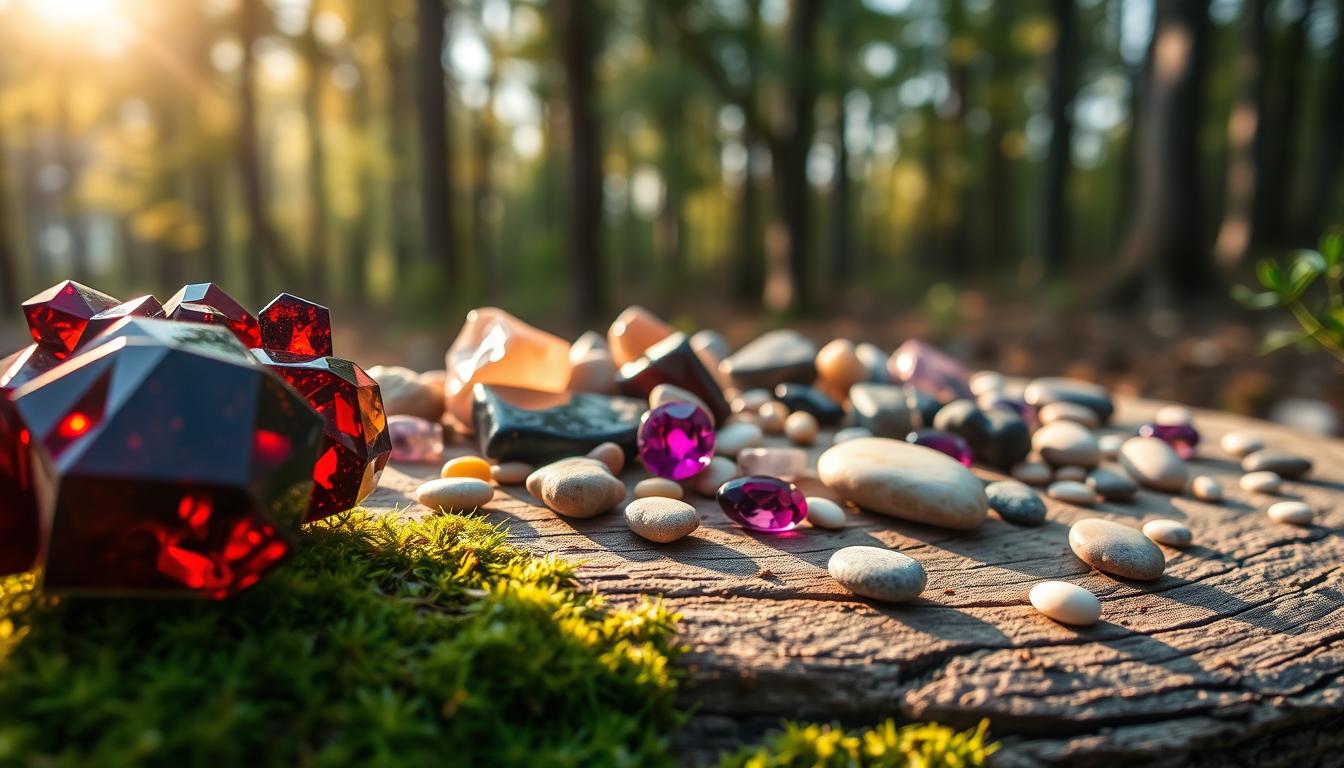
New York Gemstones offer an incredible window into the state’s rich geological past. The Empire State houses an amazing variety of precious stones, from the famous Herkimer Diamonds to colorful garnets and rare tourmalines. Whether you’re a seasoned collector or just starting your gem hunting journey, New York’s diverse landscape provides countless opportunities to discover natural treasures.
The state’s complex geological history spans millions of years, creating perfect conditions for gemstone formation. Ancient tectonic activity, glacial movements, and mineral-rich deposits have combined to produce some of North America’s most sought-after specimens.
TL;DR
- New York contains over 15 different gemstone varieties including quartz, garnet, tourmaline, and beryl specimens.
- Herkimer County produces the world’s clearest quartz crystals, known as Herkimer Diamonds, found in 500-million-year-old dolomite.
- Gore Mountain Garnet Mine offers public digging opportunities with garnets up to 3 inches in diameter.
- Spring and fall provide the best weather conditions for gem hunting, with temperatures between 50-70°F ideal for field work.
New York Gemstones: A Geological Paradise
New York’s geological diversity creates perfect conditions for gemstone formation across multiple regions. The state’s bedrock includes ancient metamorphic formations, mineral-rich pegmatites, and sedimentary deposits that have been shaped by millions of years of geological processes.
The Adirondack Mountains contain some of the oldest rocks in North America, dating back over one billion years. These ancient formations house garnet deposits, tourmaline crystals, and various quartz specimens that attract collectors from around the world.
Major Gemstone Regions
- Adirondack Mountains – Home to world-class garnet deposits and metamorphic minerals.
- Hudson Valley – Known for tourmaline pegmatites and unique mineral formations.
- Mohawk Valley – Features Herkimer Diamond sites and quartz crystal formations.
- St. Lawrence Region – Contains diverse mineral specimens and rare gemstone varieties.
Most Common Gemstones Found in New York
New York’s gemstone diversity reflects its complex geological history. The state produces both common and rare specimens that range from everyday collecting pieces to museum-quality gems.
Quartz Varieties
Quartz represents the most abundant gemstone family in New York, appearing in multiple forms across different regions. Each variety offers unique characteristics and collecting opportunities for gem hunters.
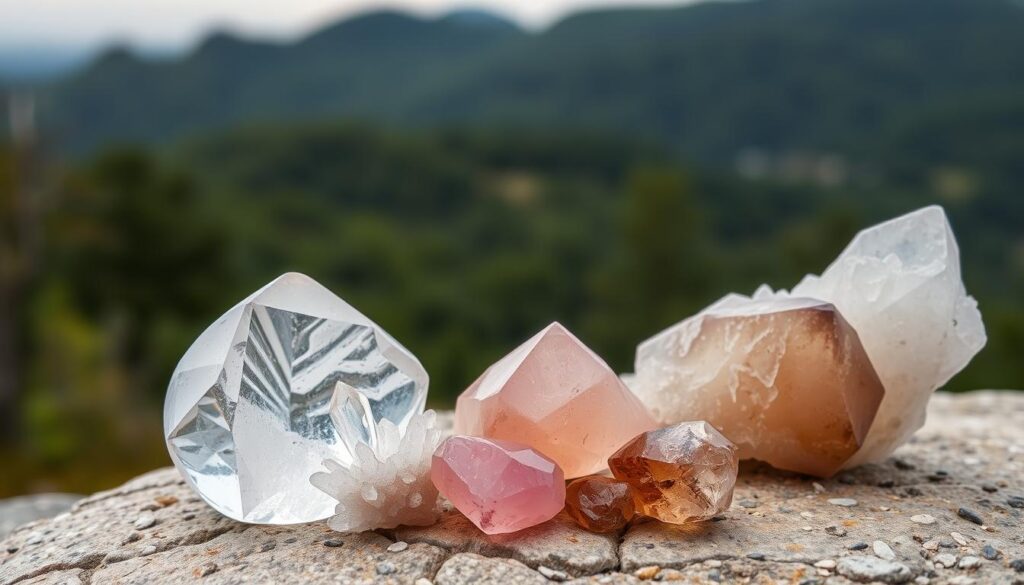
- Herkimer Diamonds – Double-terminated quartz crystals with exceptional clarity found in dolomite cavities.
- Smoky Quartz – Brown to black crystals formed through natural radiation exposure in granite pegmatites.
- Clear Quartz – Colorless crystals prized for their transparency and hexagonal crystal form.
- Amethyst – Purple quartz specimens found in geodes and crystal-lined cavities.
Garnet Specimens
New York produces some of North America’s finest garnet crystals, particularly in the Adirondack region. These deep red gems form in high-grade metamorphic rocks under intense heat and pressure conditions, similar to the garnet formations found in North Carolina and Maine.
- Almandine Garnet – Iron-aluminum garnet with deep red coloration.
- Pyrope Garnet – Magnesium-aluminum variety with bright red hues.
- Spessartine Garnet – Orange to red manganese-aluminum garnet found in pegmatites.
Garnet Identification Tip
Look for 12-sided crystal faces and a glassy shine when identifying garnets in the field. Fresh garnet crystals often display perfect dodecahedral shapes that distinguish them from other red minerals.
Rare and Valuable New York Gemstones
Beyond common varieties, New York hosts several rare gemstone species that command high prices among collectors. These specimens require specific geological conditions and often occur in limited quantities.
Tourmaline Crystals
Tourmaline forms in pegmatite veins throughout the Hudson Valley region, creating colorful crystals that range from pink to green to blue. The state’s tourmaline deposits produce both gem-quality stones and interesting collector specimens.
Beryl Family Gems
New York’s pegmatites occasionally yield beryl crystals, including aquamarine and occasional emerald specimens. These hexagonal crystals form in late-stage pegmatite pockets where beryllium-rich solutions concentrate, much like the aquamarine finds documented in Colorado.
- Aquamarine – Blue to blue-green beryl found in granite pegmatites.
- Golden Beryl – Yellow beryl variety occurring in feldspar-rich pegmatites.
- Morganite – Pink beryl crystals found in lithium-bearing pegmatites.
Other Notable Specimens
New York produces various other gemstone species that add diversity to the state’s mineral wealth. These include magnetite crystals, pyrite specimens, and occasional finds of rarer species.
Top Gemstone Hunting Locations
New York offers numerous locations where gem hunters can search for natural specimens. Both public and private sites provide opportunities to find quality gemstones with proper preparation and permission.
Herkimer County Diamond Mines
Several commercial operations in Herkimer County allow public collecting of the famous Herkimer Diamonds. These sites provide tools, guidance, and guaranteed finds for visitors of all experience levels.
Gore Mountain Garnet Mine
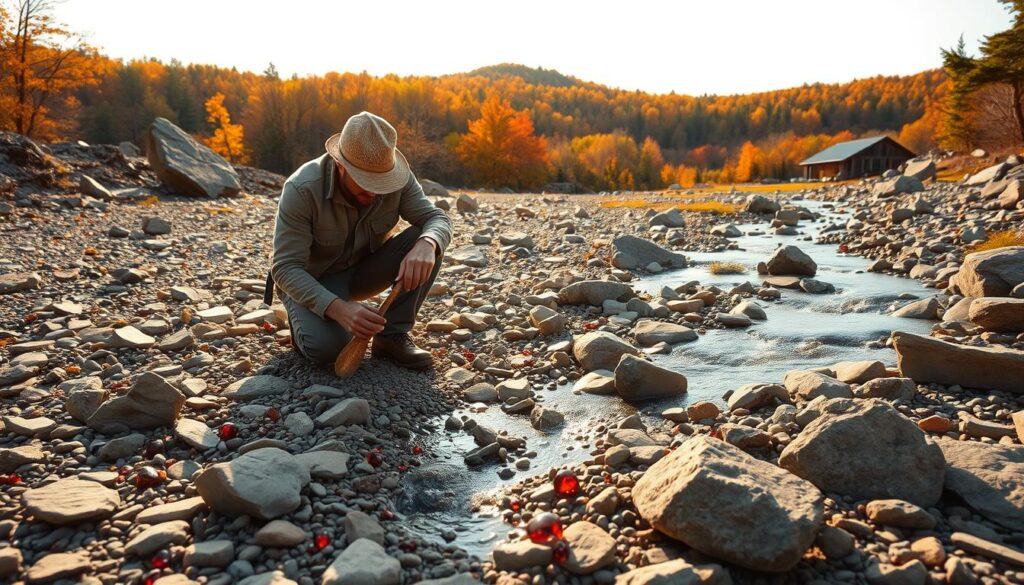
This historic garnet operation offers public digging opportunities during specific seasons. Visitors can explore the open pit mine and collect garnet crystals ranging from small specimens to palm-sized examples.
Adirondack Public Lands
State forests and public lands throughout the Adirondacks provide free collecting opportunities for various mineral specimens. Always check current regulations and obtain required permits before collecting.
| Location | Primary Gemstones | Access Type | Best Season |
|---|---|---|---|
| Herkimer County Mines | Herkimer Diamonds | Fee-based sites | April – October |
| Gore Mountain | Garnet crystals | Seasonal tours | May – September |
| Hudson Valley Pegmatites | Tourmaline, beryl | Private permission | May – October |
| Adirondack Forests | Various minerals | Public lands | June – September |
Essential Gem Hunting Equipment
Successful gem hunting requires proper tools and safety equipment. Basic geology tools help identify and extract specimens while safety gear protects hunters in rough terrain.
Basic Tool Kit
- Geologist’s hammer. Essential for breaking rocks and exposing crystal pockets.
- Hand lens (10x magnification). Allows detailed examination of crystal faces and mineral characteristics.
- Safety glasses and gloves. Protects eyes and hands from rock chips and sharp edges.
- Collection bags and newspaper. Safely stores and wraps delicate specimens during transport.
- GPS device or smartphone. Records exact locations of successful finds for future reference.
Identification Resources
Field guides specific to New York minerals help identify specimens on-site. Regional geology maps show rock types and formations most likely to contain gemstones.
Best Times and Conditions for Gem Hunting
Weather and seasonal conditions significantly affect gem hunting success in New York. Planning trips during optimal times increases chances of finding quality specimens.
Seasonal Considerations
Spring and fall offer the best conditions for outdoor gem hunting activities. Mild temperatures, lower humidity, and reduced insect activity make these seasons ideal for extended field work.
- Spring (April – May) – Snowmelt exposes fresh rock surfaces and washes away debris.
- Summer (June – August) – Longer daylight hours but higher temperatures and insects.
- Fall (September – October) – Comfortable temperatures and clear visibility through bare trees.
- Winter (November – March) – Limited access due to snow and frozen ground conditions.
Weather Conditions
Recent rainfall can wash away soil and expose fresh mineral specimens in creek beds and road cuts. However, avoid hunting during active storms or immediately after heavy rains when conditions become dangerous.
Legal and Ethical Collecting Practices
Responsible gem hunting requires understanding legal requirements and ethical collecting practices. Following proper procedures protects both collectors and natural resources for future generations.
Land Access Permissions
Always obtain proper permission before collecting on any property. Public lands often require permits or have specific restrictions on collecting activities.
- Public Lands – Check with New York State Parks for current collecting regulations and permit requirements.
- Private Property – Obtain written permission from landowners before entering or collecting specimens.
- Commercial Sites – Pay required fees and follow all safety rules at fee-based collecting locations.
Environmental Responsibility
Practice Leave No Trace principles during all collecting activities. Fill any holes created during digging and avoid damaging vegetation or disturbing wildlife habitats.
Frequently Asked Questions
What are the most valuable gemstones found in New York?
Herkimer Diamonds and high-quality garnet crystals represent the most valuable New York gemstones. Museum-quality Herkimer Diamonds can sell for hundreds of dollars per specimen.
Do I need special permits to collect gemstones in New York?
Most public lands require permits for mineral collecting, while private property requires landowner permission. Check with local authorities before collecting on any property.
Where can beginners start gem hunting in New York?
Commercial Herkimer Diamond mines offer the best beginner experience with guaranteed finds and on-site guidance. These fee-based sites provide tools and expert advice for new collectors.
What time of year is best for finding gemstones in New York?
Spring and fall provide optimal conditions with mild temperatures and good visibility. April through May and September through October offer the most comfortable collecting weather.
How can I identify genuine gemstones from common rocks?
Learn basic crystal shapes, hardness testing, and color characteristics for common New York gemstones. A 10x hand lens helps examine crystal faces and internal structures that distinguish gems from ordinary rocks.
Final Thoughts
New York Gemstones offer endless opportunities for collectors, researchers, and outdoor enthusiasts to explore the state’s rich geological heritage. From world-famous Herkimer Diamonds to colorful garnet crystals, the Empire State produces specimens that rival those found anywhere in North America.
Start your gem hunting journey at established commercial sites where success is nearly guaranteed, then expand to public lands as your skills develop. For collectors interested in exploring similar geological formations, consider researching the gemstone opportunities in nearby states like Vermont and Pennsylvania, which offer their own unique mineral treasures. Remember that responsible collecting practices ensure these natural treasures remain available for future generations to discover and enjoy.