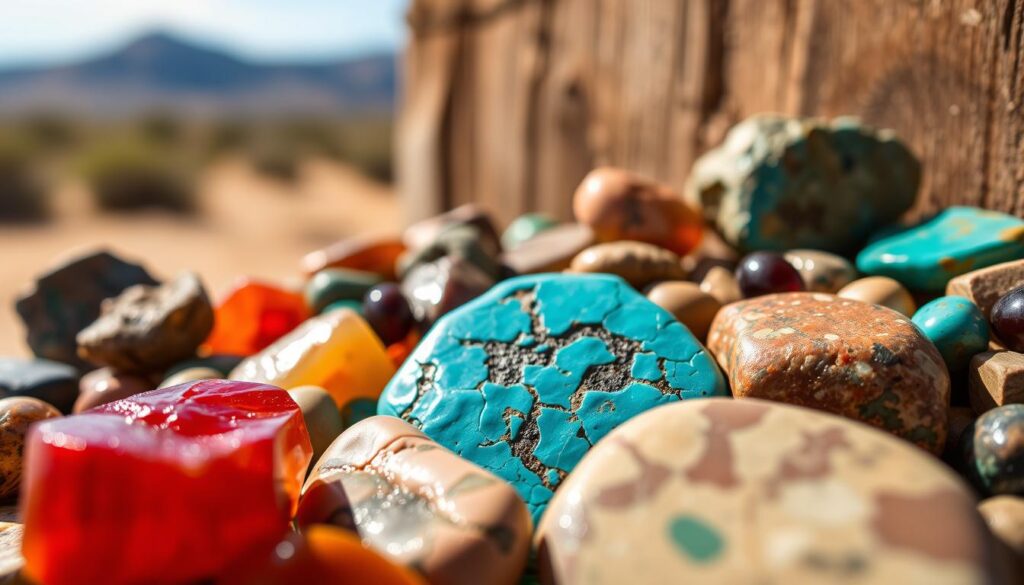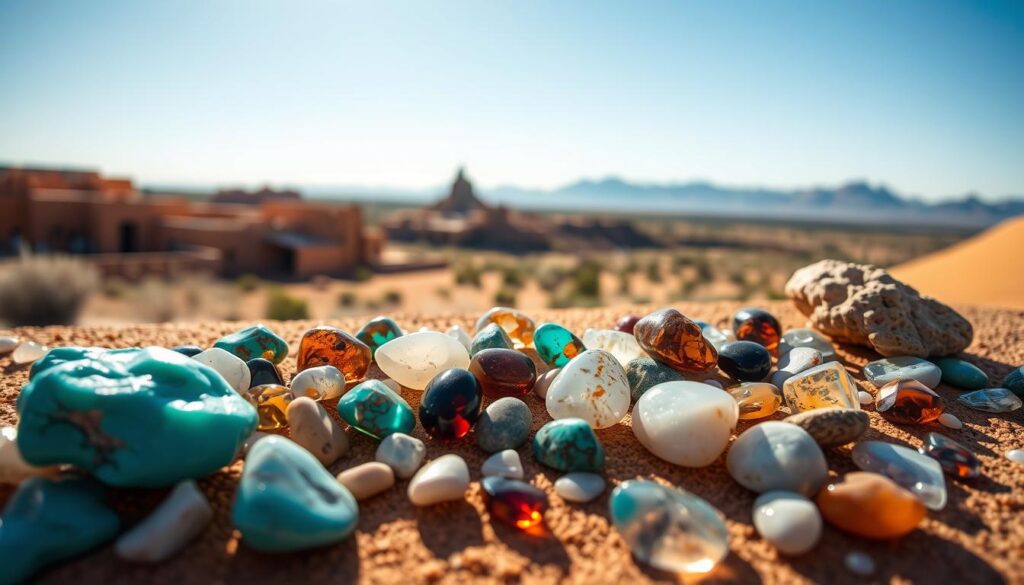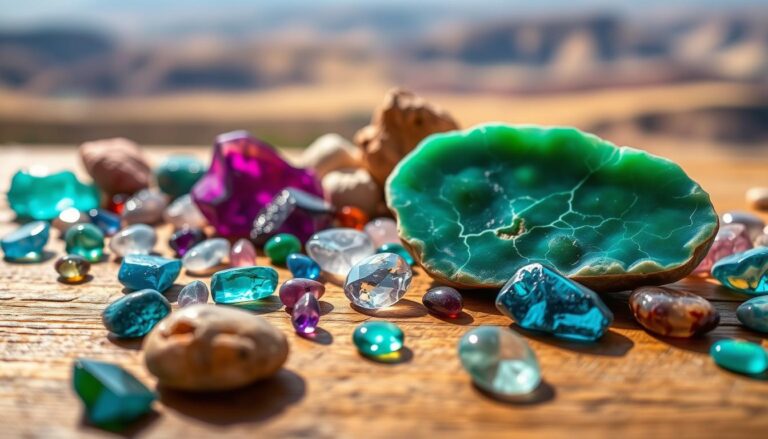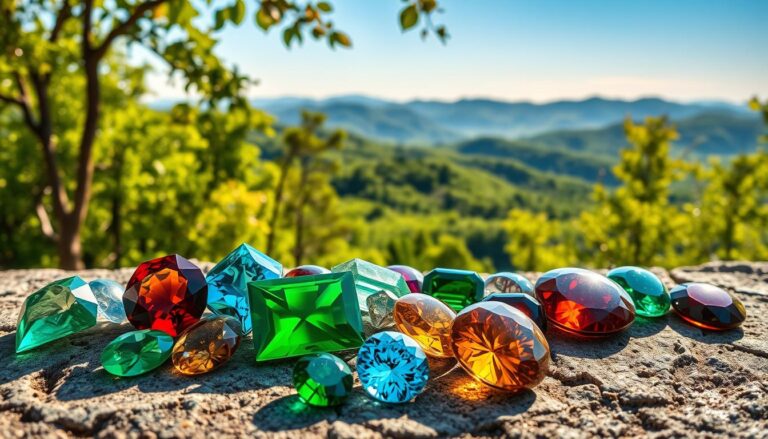
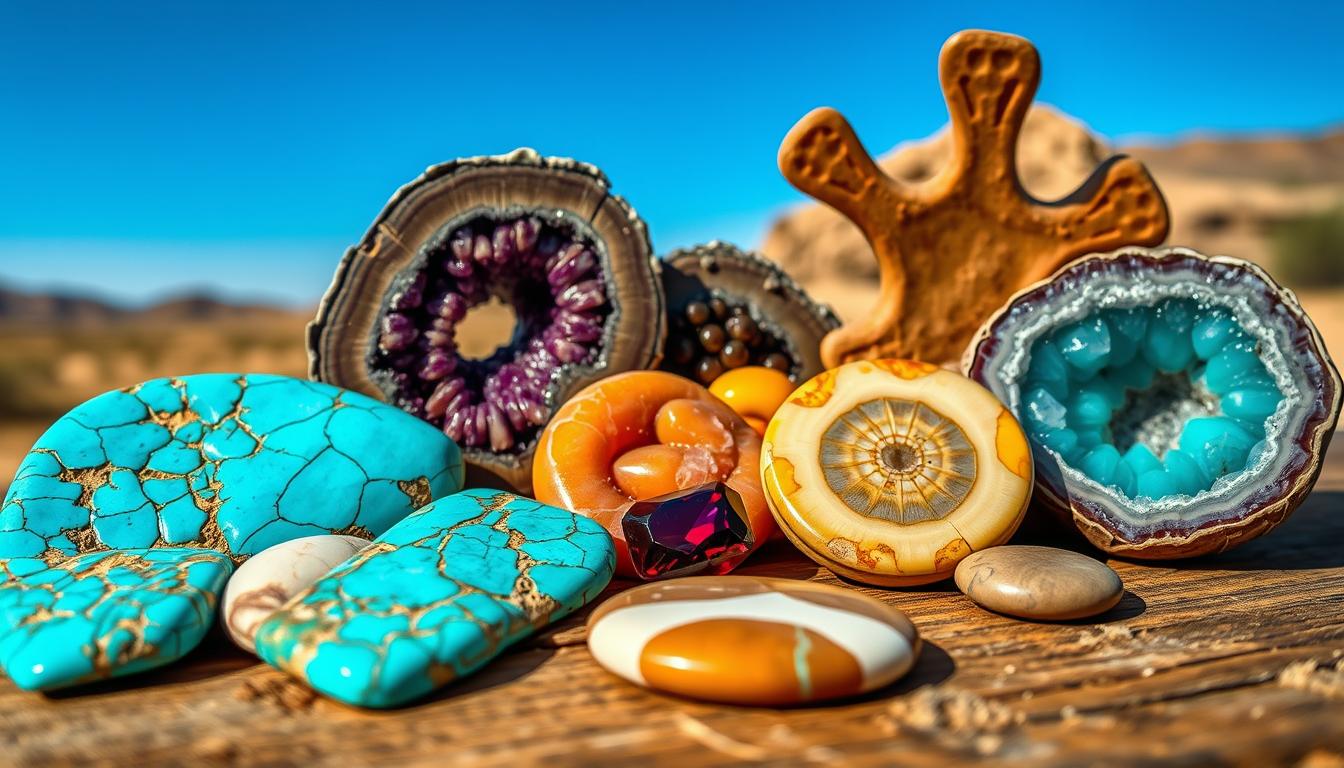
New Mexico Gemstones represent one of the most diverse and accessible gemstone collections in the American Southwest. The state’s rich geological heritage offers collectors everything from world-famous turquoise to rare minerals found nowhere else on Earth.
Millions of years of volcanic activity and tectonic shifts created the perfect conditions for gemstone formation across New Mexico’s varied landscape. Today, amateur collectors and professional rockhounds can explore dozens of public sites and fee dig areas throughout the state.
TL;DR
- Over 15 different gemstone varieties are commonly found across New Mexico’s public collection sites.
- Rockhound State Park in Deming allows unlimited collecting of agate, jasper, and geodes for a small entry fee.
- The Cerrillos Hills district has produced turquoise for over 1,000 years and remains active for collectors.
- Most public lands require no permits, but private property always needs landowner permission before collecting.
New Mexico Gemstones: A Geological Treasure Map
The state’s gemstone diversity stems from its complex geological history spanning over 500 million years. Volcanic eruptions, mountain building, and mineral-rich groundwater combined to create ideal conditions for gemstone formation.
Each region of New Mexico tells a different geological story through its gemstone deposits. The northern mountains contain different minerals than the southern deserts, giving collectors multiple environments to explore.
Turquoise: The Crown Jewel
Turquoise remains New Mexico’s most famous gemstone, with deposits scattered across the state. The Cerrillos Hills alone have produced turquoise for over a millennium, first mined by Pueblo peoples and later by Spanish colonists.
Modern collectors can still find turquoise specimens in many locations, though the highest-quality stones often come from established mining claims. The distinctive blue-green color varies by location, with some areas producing sky blue stones while others yield deeper green varieties.
Quartz Varieties Throughout the State
New Mexico hosts an impressive array of quartz family gemstones. Amethyst appears in several mountain regions, while smoky quartz and clear crystal specimens can be found in many areas, similar to the diverse Colorado gemstone deposits found in neighboring states.
- Amethyst – Purple quartz found in the northern mountains and some central locations.
- Citrine – Yellow to orange quartz, less common but present in specific areas.
- Smoky Quartz – Gray to black transparent quartz found in multiple regions.
- Rose Quartz – Pink variety occasionally found in pegmatite deposits.
Prime Collecting Locations
New Mexico offers collectors both public access sites and fee dig operations. Each location has its own geological signature and typical gemstone finds.
Rockhound State Park
Located near Deming, this state park specifically caters to gemstone collectors. The park allows visitors to collect agate, jasper, geodes, and other specimens from designated areas.
The park provides maps showing the best collecting areas and maintains restrooms and picnic facilities. Most visitors find something worthwhile within a few hours of searching.
Cerrillos Hills Historic District
This area south of Santa Fe contains the most famous turquoise deposits in North America. While active mining claims cover some areas, collectors can still find specimens in public areas and old tailings piles.
The hills also contain lead, zinc, and silver minerals alongside the turquoise. Always respect posted boundaries and mining claims when exploring this historic area.
Harding Mine Area
Near Dixon in northern New Mexico, the Harding Mine region is famous for rare beryllium minerals. While the main mine requires permission to visit, the surrounding area offers collecting opportunities for various specimens.
The area produces beryl, tourmaline, and other rare minerals prized by serious collectors. This location requires more advanced identification skills due to the variety of minerals present.
Best Times to Hunt
Visit collecting sites after winter storms or spring snowmelt when fresh material gets exposed. Early morning light also makes spotting gemstones much easier.
Essential Gemstone Varieties
Beyond the famous stones, New Mexico produces many other gemstone varieties worth seeking. Each has its own characteristics and typical locations.
Peridot
This bright green gemstone appears in some volcanic areas of New Mexico. Peridot forms in basaltic rocks and can sometimes be found in ant hills where the insects bring small crystals to the surface, much like the Arizona peridot deposits that make the neighboring state famous for this gem.
Most New Mexico peridot occurs as small crystals, but occasionally larger specimens turn up. The color ranges from yellow-green to deep olive green.
Garnet
Several garnet varieties occur across New Mexico, from deep red almandine to orange spessartine. Garnets often appear in metamorphic rocks and can be quite abundant in certain areas.
Look for garnets in creek beds and areas where metamorphic rocks have weathered. The crystals often survive transport better than their host rocks.
Lesser-Known Treasures
New Mexico also produces fluorite in various colors, opal in some areas, and distinctive jasper varieties. These stones may not be as famous as turquoise but offer unique beauty and collecting opportunities.
- Fluorite – Purple, green, and clear specimens found in several locations.
- Opal – Common opal in white and other colors, occasionally precious opal.
- Jasper – Red, yellow, and multicolored varieties throughout the state.
- Agate – Banded varieties common in many areas, especially near Deming.
Collecting Guidelines and Ethics
Successful gemstone collecting in New Mexico requires understanding both legal requirements and ethical collecting practices. Most problems arise from misunderstanding land ownership or collection rules.
Public vs Private Land
Always verify land ownership before collecting. Public lands generally allow reasonable collecting for personal use, while private property requires explicit permission from landowners.
National parks prohibit all collecting, while national forests and BLM lands typically allow small-scale personal collecting. State lands have varying rules that change periodically.
Required Tools and Safety
Basic collecting requires only simple tools, but having the right equipment makes trips more productive and safe. Desert areas especially require proper preparation.
- Rock hammer – Essential for breaking rocks and extracting specimens safely.
- Safety glasses – Protect eyes when hammering rocks or digging.
- Hand lens – 10x magnification helps identify small crystals and minerals.
- Collection bags – Separate different specimens and prevent damage.
- GPS device – Mark successful locations for future visits.
Identification and Documentation
Keeping records of your finds helps build knowledge and provides information for future trips. Photograph specimens in place before collecting when possible.
Many New Mexico gemstones require careful identification since similar-looking minerals can occur together. Consider joining local gem and mineral clubs for identification help and location information.
Frequently Asked Questions
What are the most common gemstones found in New Mexico?
Turquoise, amethyst, peridot, garnet, agate, and jasper are the most commonly found gemstones throughout New Mexico’s public collecting areas.
Do I need permits to collect gemstones in New Mexico?
Most public lands allow personal collecting without permits, but always check current regulations since rules can change.
Where is the best place for beginners to start collecting?
Rockhound State Park near Deming offers the best beginner experience with designated collecting areas and helpful park staff.
Can I sell gemstones I find on public land?
Personal collecting for hobby purposes is generally allowed, but commercial collecting typically requires permits and may be restricted.
What time of year is best for gemstone hunting?
Spring and fall offer the best weather conditions, while winter storms often expose new material for spring collectors.
Final Thoughts
New Mexico Gemstones offer collectors an unmatched diversity of specimens from one of America’s most geologically rich states. Whether you seek the famous turquoise of the Cerrillos Hills or lesser-known treasures like fluorite and opal, New Mexico delivers opportunities for every skill level, much like other gem-rich southwestern states including Texas and Utah.
Start with public areas like Rockhound State Park to build your skills and knowledge, then gradually explore more challenging locations as your experience grows.