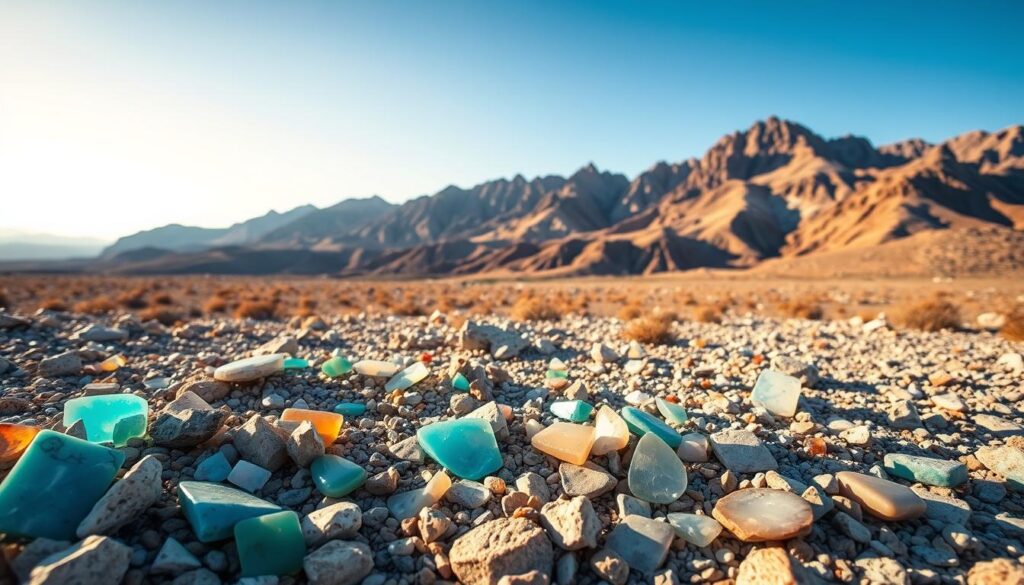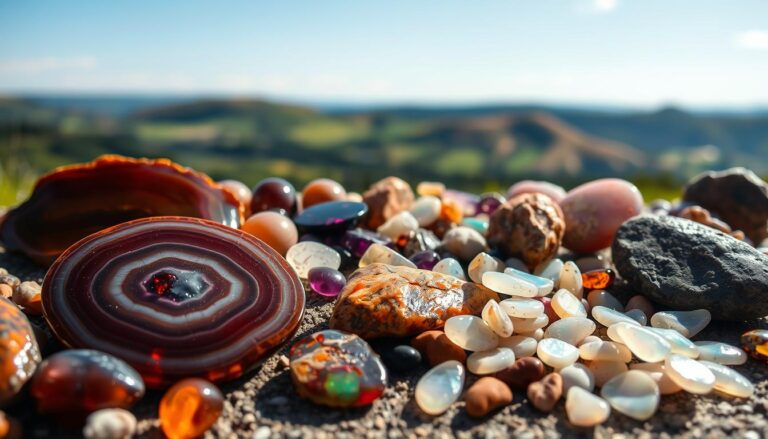
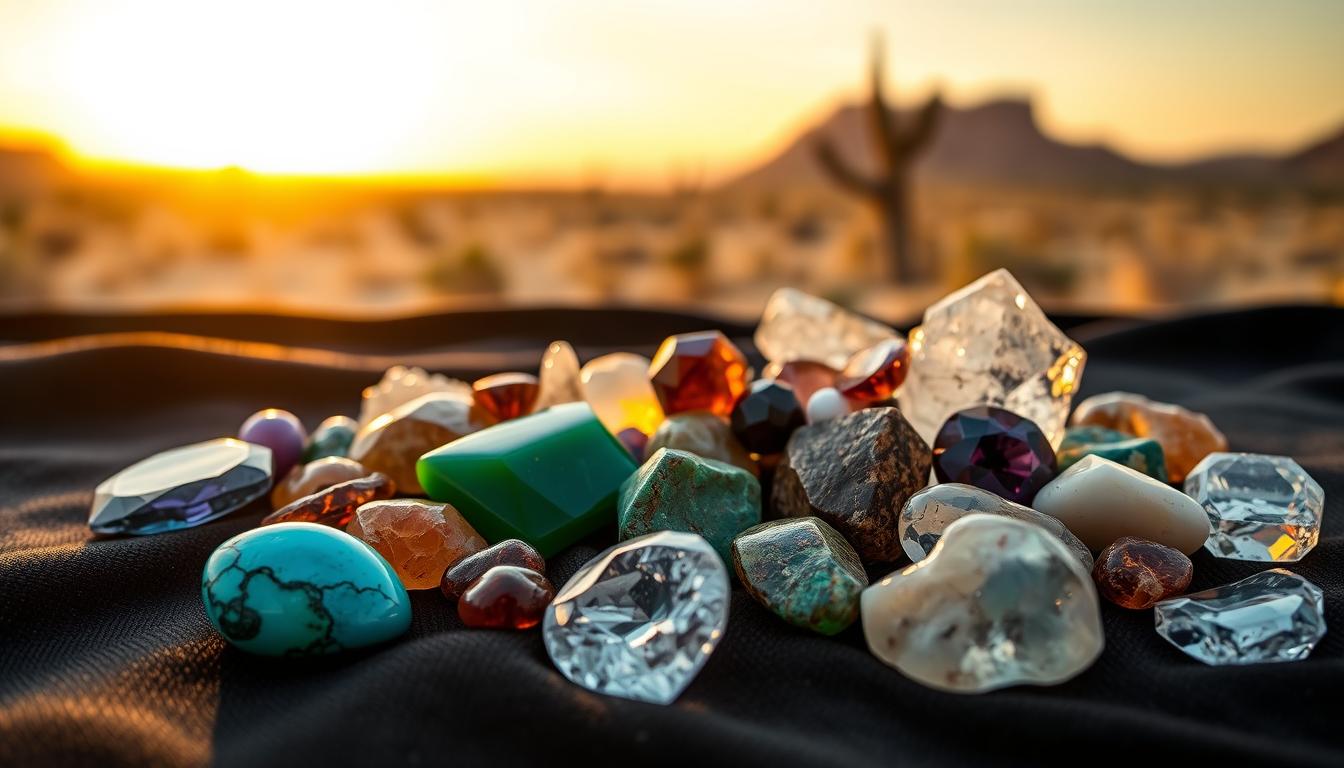
Nevada Gemstone Deposits offer incredible opportunities for collectors and rock hunters across the Silver State. The state’s rich geological history has created diverse mineral formations that contain some of America’s most sought-after gemstones. From the famous turquoise mines of the south to the world-renowned opal fields of Virgin Valley, Nevada continues to attract gem enthusiasts from around the globe.
The state’s unique position at the intersection of ancient volcanic activity and tectonic movements has produced exceptional gemstone varieties. Nevada ranks among the top gemstone-producing states, with active mining operations and countless opportunities for recreational collecting. Whether you’re searching for Nevada’s signature turquoise or hoping to discover rare black opals, this desert landscape holds treasures waiting to be found.
TL;DR
- Virgin Valley produces 95% of the world’s precious black opal, making it Nevada’s most valuable gemstone location.
- Nevada contains over 200 active turquoise mines, with Royston and Pilot Mountain producing the highest quality stones.
- Spring and fall offer the best collecting conditions with temperatures between 60-80°F and minimal rainfall.
- BLM lands allow personal collecting of up to 25 pounds of common gemstones without permits or fees.
Nevada Gemstone Deposits: Formation and Distribution
Nevada’s gemstone deposits formed through millions of years of volcanic activity and mineral-rich hydrothermal processes. The Basin and Range geological province created the perfect conditions for concentrating valuable minerals in accessible surface deposits. These ancient processes deposited gemstones in predictable patterns that modern collectors can still follow today.
The state’s gemstone distribution follows distinct geographical patterns based on underlying geology. Northern Nevada specializes in opals and agates, while central regions produce exceptional turquoise and quartz varieties. Southern Nevada offers unique desert gemstones including jasper, peridot, and specialized quartz formations similar to those found in neighboring Arizona’s diverse gemstone deposits.
Primary Gemstone Types
- Turquoise – Found in over 200 locations statewide, ranging from sky blue to green varieties.
- Precious Opal – Concentrated in Virgin Valley with world-class black and crystal opals.
- Quartz Varieties – Including amethyst, citrine, smoky quartz, and clear crystals.
- Jasper and Agate – Abundant throughout the state in countless color combinations.
- Garnet – Particularly almandine garnets in schist and granite formations.
Top Nevada Gemstone Locations
Virgin Valley stands as Nevada’s crown jewel for gemstone collecting, producing opals that rival Australia’s finest specimens. The area’s unique geology creates opals with exceptional play-of-color and clarity that command premium prices worldwide. Public collecting areas and private fee dig sites make this region accessible to collectors of all experience levels.
The Royston Turquoise District represents another world-class Nevada location, producing turquoise with distinctive bronze matrix patterns. This area has supplied turquoise to Native American artisans for over 1,000 years and continues active mining today. Several mines offer guided tours and collecting opportunities for visitors.
Northern Nevada Sites
- Virgin Valley – Rainbow Ridge Opal Mine, Royal Peacock Opal Mine, and Bonanza Opal Mine.
- Denio Area – Purple common opal and fire opal in easily accessible surface deposits.
- McDermitt – Exceptional fire opal and precious opal in rhyolite formations.
Central Nevada Locations
- Royston District – Multiple turquoise mines including Oscar Wehrend Mine.
- Battle Mountain – Copper-bearing turquoise with unique color variations.
- Austin Area – Quartz crystals, turquoise, and silver-bearing minerals.
Southern Nevada Areas
- Searchlight – Turquoise, jasper, and volcanic glass collecting.
- Nelson District – Historic mining area with turquoise and secondary copper minerals.
- Goodsprings – Lead-zinc district with fluorite and secondary minerals.
Best Collecting Strategy
Start your Nevada gemstone hunting at Virgin Valley for opals, then visit Royston for turquoise. These two locations offer the highest probability of finding quality specimens worth keeping.
Seasonal Collecting Considerations
Nevada’s desert climate creates distinct seasonal advantages for gemstone collecting throughout the year. Spring months from March through May provide ideal conditions with moderate temperatures and occasional rainfall that can expose new specimens. Fall collecting from September through November offers similar benefits with stable weather patterns and excellent visibility.
Summer collecting requires early morning starts and plenty of water, but offers advantages like easy road access and dry ground conditions. Winter collecting can be productive in southern Nevada, though northern locations may become inaccessible due to snow and ice. These seasonal patterns are similar to those experienced by collectors in Colorado’s high-altitude gemstone locations.
- Plan for weather extremes. Nevada temperatures can swing 40 degrees between day and night.
- Bring extra water. Desert conditions dehydrate collectors faster than expected.
- Check road conditions. Many collecting areas require high-clearance vehicles.
- Start early. Best collecting happens in the first few hours after sunrise.
Equipment and Techniques
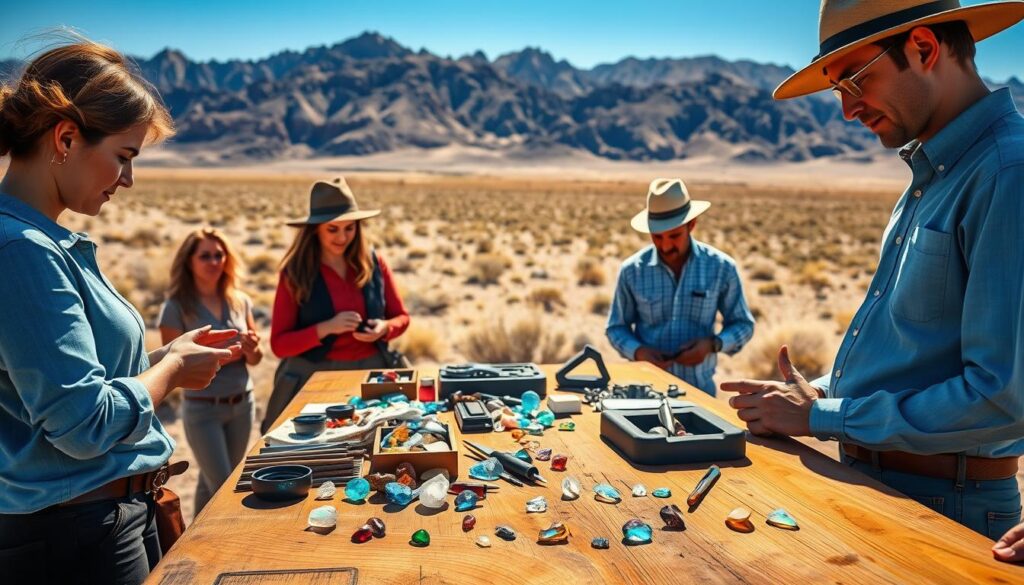
Successful Nevada gemstone collecting requires specific tools designed for desert conditions and hard rock formations. A quality rock hammer, cold chisels, and safety glasses form the basic toolkit for most locations. Hand lenses help identify gemstone quality in the field, while GPS devices ensure you can return to productive spots.
Different gemstone types require specialized techniques for successful collecting. Opal collecting demands careful extraction to prevent crazing and cracking of delicate specimens. Turquoise often requires matrix rock removal using diamond-blade saws for proper preparation, techniques that are equally valuable when collecting New Mexico’s famous turquoise deposits.
Essential Field Equipment
- Rock Hammer – 16-20 oz pick-end hammer for most Nevada formations.
- Cold Chisels – Various sizes for detailed extraction work.
- Safety Gear – Eye protection, gloves, and sturdy boots are mandatory.
- Collection Containers – Padded boxes and newspaper for specimen protection.
- Water and Shade – Essential for desert collecting safety.
Legal Collecting Guidelines
Nevada gemstone collecting operates under specific federal and state regulations that collectors must understand before heading into the field. Bureau of Land Management lands allow recreational collecting of common gemstones for personal use without permits, but restrict quantities to 25 pounds per person per day. National Parks and designated wilderness areas prohibit all collecting activities.
Private land collecting requires written permission from landowners, and many Nevada gemstone locations operate as fee dig sites with specific rules and regulations. Mining claims on public land are private property where collecting is prohibited without owner permission. These regulations are similar to those found in other western states like Utah’s gemstone collecting areas.
Collecting Restrictions
- BLM Lands – 25-pound daily limit, personal use only, no commercial collecting.
- State Parks – Generally prohibited except in designated areas.
- Private Land – Written permission required, respect all posted signs.
- Mining Claims – Private property, no trespassing without permission.
Frequently Asked Questions
What are the most valuable gemstones found in Nevada?
Virgin Valley black opals are Nevada’s most valuable gemstones, with top specimens selling for thousands per carat. High-grade Royston turquoise and rare red fire opals also command premium prices.
Can I collect gemstones without permission on public land?
Yes, BLM lands allow recreational collecting of common gemstones up to 25 pounds per day for personal use. Always check current regulations and avoid posted mining claims.
When is the best time to hunt for opals in Virgin Valley?
Late spring through early fall offers the best conditions for opal hunting in Virgin Valley. Avoid winter months when access roads may be impassable due to snow.
Do I need special equipment for Nevada gemstone collecting?
Basic rock collecting tools work for most Nevada locations, but bring extra water, sun protection, and sturdy boots for desert conditions. GPS devices help navigate remote areas safely.
Are there guided gemstone tours available in Nevada?
Yes, several Virgin Valley mines offer guided tours and fee-dig experiences. Many rock shops also organize group collecting trips to productive areas throughout the state.
What should I do if I find a large or valuable specimen?
Document the location with photos and GPS coordinates, then consult with local rock shops or gemstone dealers for identification and valuation advice before extraction.
Final Thoughts
Nevada Gemstone Deposits represent some of America’s finest collecting opportunities for both novice and experienced rock hunters. The state’s combination of world-class opal fields, extensive turquoise deposits, and diverse quartz formations creates unlimited exploration possibilities. With proper preparation and respect for regulations, Nevada offers gemstone adventures that can last a lifetime.
Start planning your Nevada gemstone expedition by researching specific locations that match your interests and experience level. The Silver State’s geological treasures await discovery by those willing to explore its vast and rewarding landscape, much like the opportunities found in neighboring California’s diverse gemstone regions.