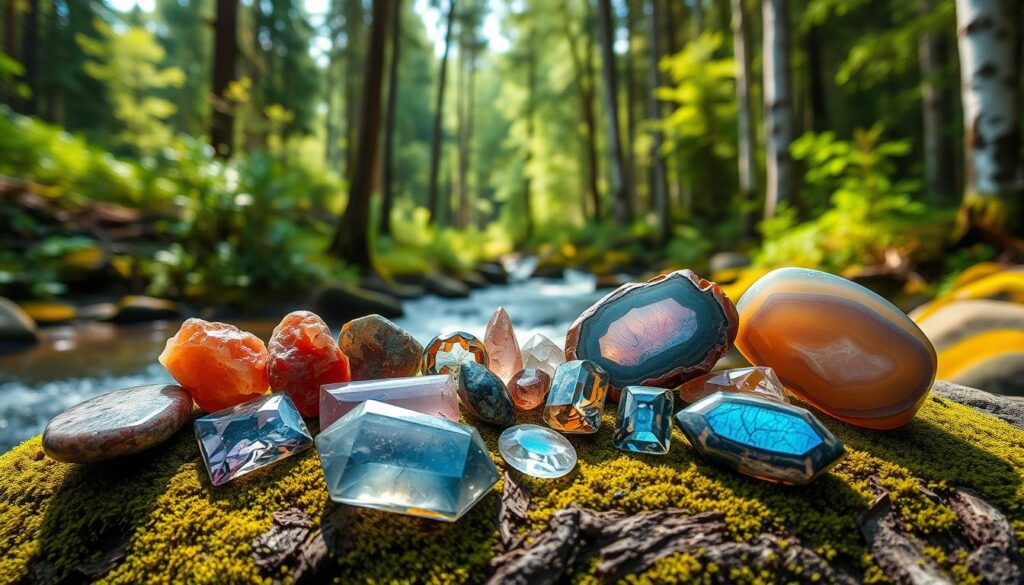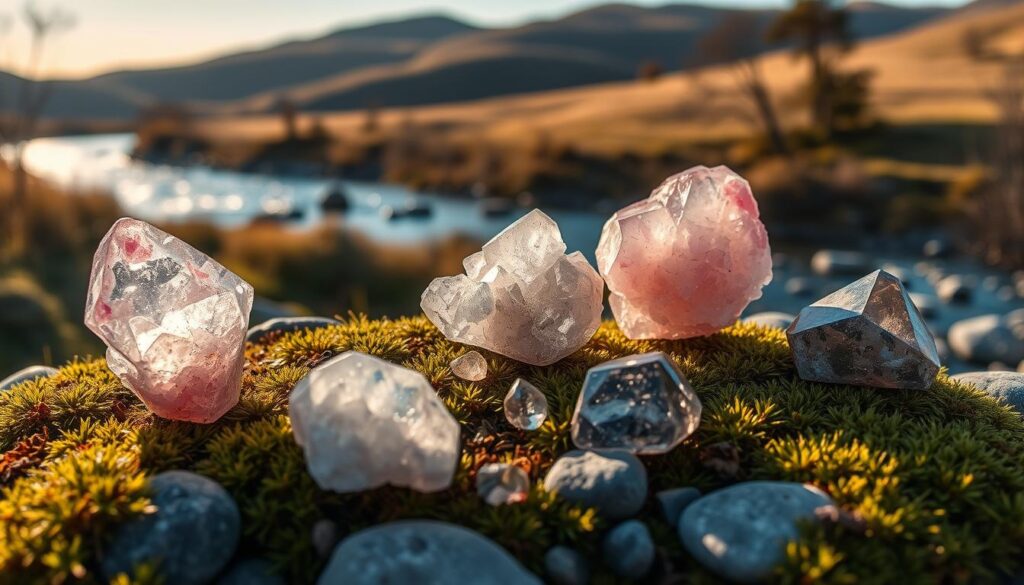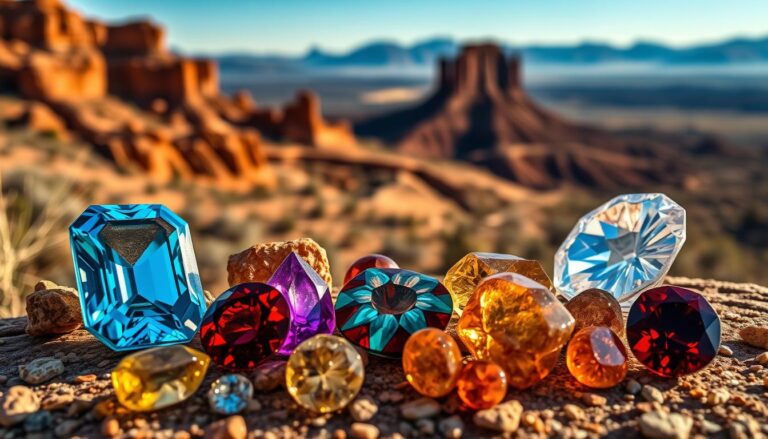
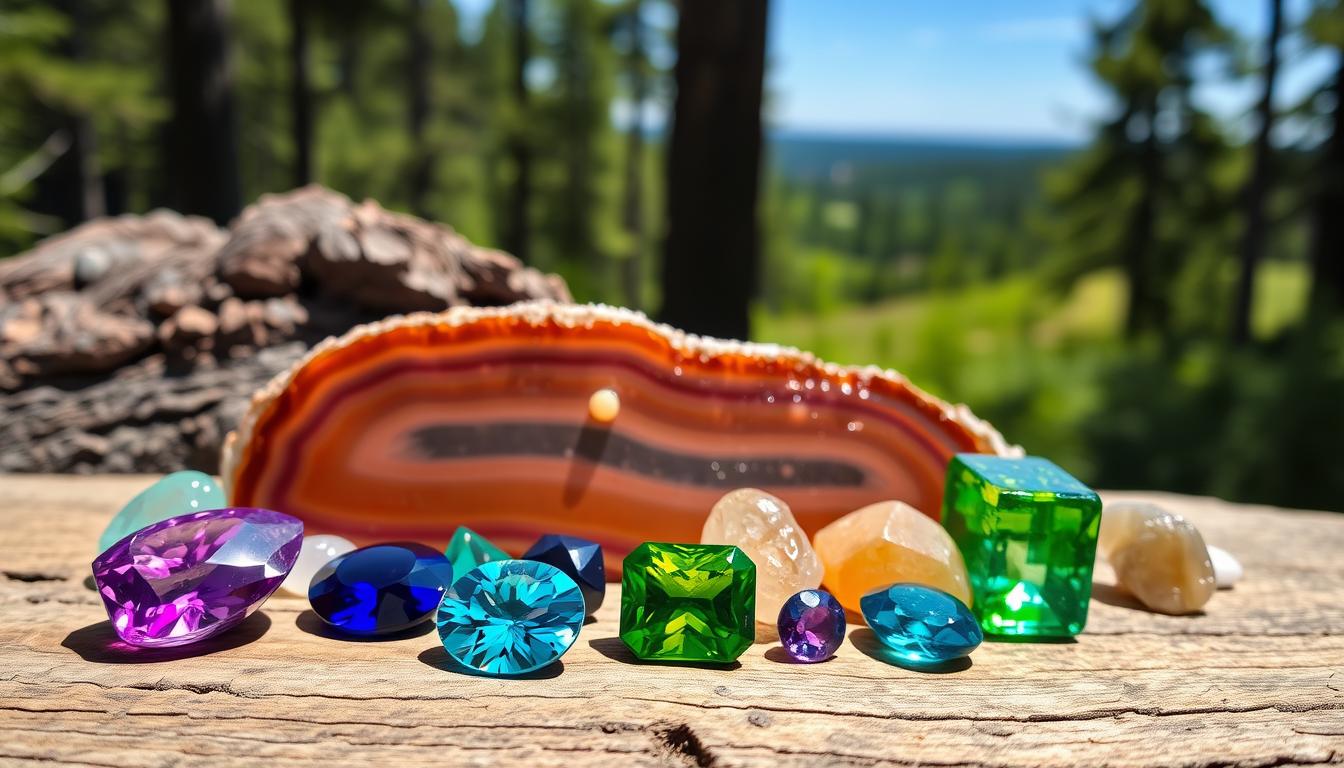
Gemstones In Minnesota offer rockhounds and collectors an incredible variety of treasures hidden within the state’s diverse geological landscape. From the iconic Lake Superior Agate to rare thomsonite deposits along the North Shore, Minnesota’s rich mineral heritage spans over a billion years of geological activity.
The state’s unique position along ancient volcanic rifts and glacial pathways has created perfect conditions for gemstone formation and distribution. Minnesota’s rivers, lakeshores, and rocky outcrops hold countless opportunities for discovering beautiful minerals that tell the story of North America’s geological past.
TL;DR
- Lake Superior Agate became Minnesota’s official state gemstone in 1969 and forms distinctive red, orange, and white banding patterns.
- The North Shore contains over 15 different types of zeolite minerals including rare thomsonite found primarily near Grand Marais.
- Minnesota rivers yield agates year-round, with the best finds occurring after spring floods expose new gravel deposits.
- Quartz varieties including amethyst, smoky quartz, and rose quartz can be found in pegmatite formations throughout central and northern Minnesota.
Gemstones In Minnesota: A Collector’s Paradise
Minnesota’s gemstone diversity stems from its location within the ancient Midcontinent Rift System, where volcanic activity over one billion years ago created the foundation for today’s mineral deposits. The state’s subsequent glacial history distributed these gems across rivers, lakeshores, and gravel deposits throughout the region.
The geological processes that formed these deposits continue to expose new gemstones through natural erosion and weathering. This ongoing process means that dedicated collectors can find fresh specimens even in well-known locations after storms or seasonal changes.
Minnesota’s Geological Foundation
The Midcontinent Rift System created the geological backbone that makes Minnesota such a productive gemstone hunting destination. Volcanic eruptions deposited silica-rich materials that would later form agates, while cooling magma created cavities where zeolite minerals could crystallize over millions of years.
Glacial activity during the Pleistocene epoch transported and concentrated these gemstones into accessible deposits. The advancing and retreating ice sheets carved out river valleys and lake basins while redistributing mineral-rich gravels across the landscape.
Formation Processes
Understanding how Minnesota’s gemstones formed helps collectors know where to search and what to expect. Most agates developed in gas bubbles within ancient lava flows, where silica-rich groundwater slowly deposited concentric bands of chalcedony over thousands of years.
- Volcanic Origins – Lava flows created cavities where agates and zeolites formed through hydrothermal processes.
- Glacial Distribution – Ice sheets transported gemstones from their source rocks and concentrated them in river gravels.
- Erosional Exposure – Ongoing weathering continues to free gemstones from host rocks and make them available for collection.
Lake Superior Agate: The State’s Crown Jewel
The Lake Superior Agate represents Minnesota’s most famous and recognizable gemstone, displaying characteristic iron-stained bands in shades of red, orange, yellow, and white. These agates formed approximately 1.1 billion years ago during intense volcanic activity along what is now Lake Superior’s basin.
Collectors prize Lake Superior Agates for their durability, beauty, and the stories their banding patterns tell about ancient environmental conditions. The iron content that creates their distinctive colors came from groundwater that percolated through iron-rich rock formations during the agate’s formation.
Identification Features
Authentic Lake Superior Agates display several key characteristics that distinguish them from agates found in other regions. The most reliable identifying features include their distinctive color palette and banding patterns that reflect the unique chemistry of their formation environment.
- Color Bands – Concentric rings of red, orange, yellow, and white created by iron oxide deposits.
- Translucency – Quality specimens allow light to pass through, creating an inner glow when backlit.
- Hardness – Rating of 7 on the Mohs scale makes them durable and suitable for polishing.
- Size Range – From tiny pebbles less than an inch across to rare specimens over 12 inches in diameter.
Quartz Varieties Across Minnesota
Quartz represents one of the most abundant and varied mineral groups found throughout Minnesota’s geological formations. The state’s pegmatite intrusions, metamorphic zones, and hydrothermal deposits have produced numerous quartz varieties that attract collectors from across the region, similar to the diverse quartz specimens found in neighboring Michigan.
Each quartz variety tells a different story about the conditions present during its formation, from the deep purple of amethyst created by natural radiation to the smoky gray of quartz exposed to radioactive minerals over geological time.
Amethyst Deposits
Minnesota’s amethyst occurs primarily in pegmatite formations throughout the central and northern regions of the state. These purple quartz crystals form when trace amounts of iron are incorporated into the crystal structure and subsequently altered by natural radiation.
The healing properties and metaphysical significance of amethyst have made it highly sought after by collectors who appreciate both its beauty and purported spiritual benefits.
Smoky Quartz Locations
Smoky quartz develops its characteristic gray to brown coloration through exposure to natural radiation over millions of years. Minnesota’s smoky quartz specimens often occur alongside other minerals in pegmatite formations and metamorphic rock outcrops.
- Northern Formations – Arrowhead region pegmatites contain some of the state’s finest smoky quartz specimens.
- Central Outcrops – Metamorphic zones near granite intrusions yield smoky quartz in various sizes.
- River Gravels – Erosion has distributed smoky quartz fragments throughout Minnesota’s river systems.
Rose Quartz and Clear Varieties
Rose quartz gets its delicate pink color from microscopic inclusions of various minerals, while clear quartz represents the pure form of crystalline silica. Both varieties occur in Minnesota’s pegmatite formations, though rose quartz remains relatively uncommon compared to other quartz types.
Seasonal Collecting Strategy
Visit known quartz locations after spring snowmelt when frost action has loosened specimens from host rocks. Early morning searches often yield the best results before other collectors arrive.
North Shore Zeolite Minerals
The North Shore of Lake Superior hosts one of North America’s most significant zeolite mineral localities, where over a dozen different species have been identified in basaltic lava flows. These minerals formed as hot, mineral-rich solutions circulated through cooling volcanic rocks, depositing crystals in cavities and fractures.
Thomsonite stands out as the most prized of Minnesota’s zeolite minerals, displaying distinctive radial crystal patterns and occurring in colors ranging from white to pink to green. Advanced collectors often spend years learning to identify the subtle differences between various zeolite species.
Thomsonite Characteristics
Thomsonite typically forms spherical or hemispherical masses with radiating crystal patterns that create distinctive “eye” formations when viewed in cross-section. The mineral’s relatively soft nature makes it challenging to collect intact specimens without proper techniques and tools.
- Visual Identification. Look for spherical masses with radiating patterns visible on broken surfaces or natural exposures.
- Location Assessment. Focus searches on basaltic shorelines where wave action has exposed fresh rock surfaces.
- Careful Extraction. Use appropriate tools to avoid damaging delicate crystal formations during collection.
Prime Collecting Locations
Minnesota’s gemstone collecting opportunities span from the rugged North Shore to the gentle rivers of the agricultural south, each region offering unique specimens and collecting experiences. Understanding the geological context of each area helps collectors focus their efforts and increase their success rates.
Public access varies significantly between locations, with some areas requiring permits or having seasonal restrictions. Successful collectors research access requirements and respect private property boundaries while pursuing their hobby.
North Shore Hotspots
The stretch of Lake Superior shoreline from Duluth to the Canadian border contains Minnesota’s most concentrated gemstone collecting opportunities. Minnesota State Parks and public beaches provide legal access to world-class mineral specimens.
- Grand Marais Area – Known for thomsonite, agate, and other zeolite minerals in basaltic formations.
- Two Harbors Region – Produces agates, quartz varieties, and occasional rare mineral specimens.
- Split Rock Lighthouse – Public access to productive agate-bearing gravels and exposed bedrock.
- Gooseberry Falls – River mouth deposits concentrate agates and other water-worn gemstones.
River and Stream Deposits
Minnesota’s river systems have concentrated gemstones through millions of years of erosion and transport, creating accessible deposits throughout the state. The best rockhounding locations often coincide with major river systems that have exposed and redistributed geological formations.
Spring flooding typically exposes new gravel bars and redistributes gemstone-bearing materials, making post-flood periods particularly productive for collectors. Rivers also provide year-round access when lake shores may be frozen or inaccessible.
Collecting Techniques and Equipment
Successful gemstone hunting in Minnesota requires appropriate tools, timing, and techniques adapted to the state’s diverse geological environments. The difference between casual beach combing and serious collecting lies in understanding how geological processes concentrate gemstones and using that knowledge to guide search strategies.
Weather conditions significantly impact collecting success, with certain seasons and conditions exposing fresh material or making existing deposits more accessible. Experienced collectors track weather patterns and plan collecting trips around optimal conditions, much like rockhounds exploring Wisconsin’s diverse geological formations.
Essential Field Equipment
Quality tools make the difference between damaged specimens and museum-worthy finds, particularly when dealing with delicate minerals like thomsonite or fragile crystal formations. Investment in proper equipment pays dividends in both specimen quality and collecting efficiency.
- Rock Hammers – Choose appropriate weight and head design for breaking host rock without damaging specimens.
- Chisels and Pry Bars – Essential for extracting specimens from tight spaces without applying excessive force.
- Hand Lenses – 10x magnification helps identify minerals and assess specimen quality in the field.
- Sample Bags – Individual containers prevent specimen damage during transport and aid in record keeping.
- GPS Units – Record exact locations of productive sites for future reference and research.
Seasonal Considerations
Minnesota’s four-season climate creates distinct collecting opportunities throughout the year, with each season offering advantages for different types of gemstone hunting. Understanding these patterns helps collectors plan trips for maximum productivity and safety.
- Spring Collecting. Snowmelt and flooding expose fresh deposits while frost action loosens specimens from bedrock.
- Summer Access. Warm weather provides comfortable conditions and full access to remote locations.
- Fall Opportunities. Lower water levels expose normally submerged areas while fewer crowds mean less competition.
- Winter Challenges. Frozen conditions limit access but may expose specimens in areas normally covered by vegetation.
Identification and Valuation
Accurate identification of Minnesota gemstones requires understanding the distinctive characteristics that separate valuable specimens from common rocks. The state’s geological diversity means that similar-looking materials can have vastly different values and collecting significance.
Professional evaluation becomes important for exceptional specimens, particularly rare thomsonite formations or unusually large agates that might warrant documentation or scientific study. Learning to recognize valuable characteristics helps collectors focus their efforts on worthwhile specimens.
Field Testing Methods
Simple field tests can help distinguish valuable gemstones from worthless look-alikes without damaging potential specimens. These techniques rely on physical properties like hardness, specific gravity, and crystal habits that remain consistent regardless of weathering or surface condition.
Streak tests, hardness checks, and crystal form observation provide reliable identification data that experienced collectors use to make rapid field assessments. The USGS mineral identification resources provide authoritative information for confirming field identifications of Minnesota gemstones.
Frequently Asked Questions
Frequently Asked Questions
What makes Lake Superior Agates different from other agates?
Lake Superior Agates display distinctive iron-stained banding in red, orange, and yellow colors that formed during specific volcanic conditions 1.1 billion years ago. Their unique chemistry and formation environment create patterns not found in agates from other regions, including the diverse agate varieties found in Montana.
Where can I legally collect gemstones in Minnesota?
Public beaches, state parks, and designated collecting areas along Lake Superior offer legal access for gemstone hunting. Always check current regulations and obtain required permits before collecting on public lands.
What’s the best time of year for gemstone hunting in Minnesota?
Spring and fall provide optimal conditions with moderate weather and seasonal processes that expose fresh specimens. Spring snowmelt and fall storm activity often reveal new collecting opportunities.
How do I identify thomsonite in the field?
Look for spherical masses with radiating crystal patterns visible on broken surfaces, typically found in basaltic rocks along the North Shore. Thomsonite often displays distinctive “eye” patterns when viewed in cross-section.
Are Minnesota gemstones valuable for collectors?
High-quality Lake Superior Agates and rare thomsonite specimens command significant prices among collectors. Value depends on size, pattern quality, and rarity, with exceptional pieces selling for hundreds or thousands of dollars.
Final Thoughts
Gemstones In Minnesota represent some of North America’s most distinctive and collectible mineral specimens, formed through unique geological processes spanning over a billion years. The state’s combination of volcanic origins, glacial distribution, and ongoing erosion creates continuous opportunities for new discoveries.
Whether you’re drawn to the classic beauty of Lake Superior Agates or the rare complexity of North Shore zeolites, Minnesota’s geological treasures reward patient collectors with specimens that tell the story of our continent’s deep past. Start with easily accessible locations and gradually develop the skills and knowledge needed to find truly exceptional specimens, similar to what collectors experience when exploring North Dakota’s hidden geological treasures.