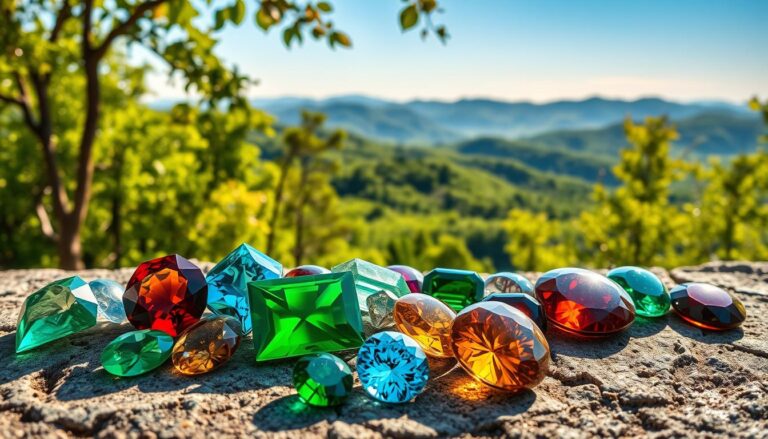

Gemstones In Kentucky offer rockhounds and collectors an incredible variety of minerals to discover across the state’s diverse geological landscape. From the vibrant purple fluorite that serves as Kentucky’s official state mineral to the stunning banded patterns of agate found in stream beds, this state delivers exceptional opportunities for mineral enthusiasts.
Kentucky’s rich geological history spans millions of years, creating perfect conditions for gemstone formation in limestone caves, sandstone deposits, and ancient rock formations. The state’s unique position in the Appalachian region combined with extensive mining activity has exposed numerous mineral deposits that continue to yield beautiful specimens today.
TL;DR
- Kentucky produces over 50 different types of gemstones and minerals, with fluorite being the official state mineral since 1998.
- The Illinois-Kentucky fluorspar district in western Kentucky contains some of the world’s finest fluorite specimens in purple, blue, and yellow varieties.
- Freshwater pearls from Kentucky’s rivers can reach values of $500-2,000 per pearl depending on size and quality.
- The best gemstone hunting seasons are spring and fall when recent rains expose new specimens in creek beds and quarries.
Gemstones In Kentucky: A Geological Overview
Kentucky sits on some of the most mineral-rich geology in North America. The state’s foundation consists primarily of Paleozoic sedimentary rocks, including limestone, dolostone, and sandstone formations that date back 250 to 500 million years.
These ancient rock layers created ideal conditions for gemstone formation through hydrothermal processes, weathering, and metamorphism over geological time. The result is an impressive collection of both common and rare minerals scattered throughout Kentucky’s 40,409 square miles.
Primary Rock Types and Mineral Formation
Kentucky’s gemstone deposits form in three main geological settings. Limestone caves provide perfect environments for crystal growth, while sandstone formations host quartz varieties and agates.
Dolostone layers often contain lead-zinc deposits that produce colorful secondary minerals like pyromorphite and hemimorphite.
- Limestone caves – Host fluorite, calcite, and celestine crystals
- Sandstone formations – Contain quartz varieties, agate, and jasper
- Dolostone deposits – Produce rare lead and zinc minerals
- River gravels – Yield agates, jasper, and freshwater pearls
Kentucky’s Most Valuable Gemstones
While Kentucky produces dozens of mineral species, several gemstones stand out for their beauty, rarity, and collector value. Fluorite leads the list as both the state mineral and one of the world’s finest examples of this calcium fluoride crystal.
The Illinois-Kentucky fluorspar district has produced museum-quality specimens that sell for thousands of dollars to collectors worldwide.
Fluorite: Kentucky’s Crown Jewel
Kentucky fluorite occurs in stunning purple, blue, yellow, and colorless varieties. The Ben E. Clement Mineral Museum in Marion displays some of the world’s finest examples, including specimens over 12 inches across.
Premium Kentucky fluorite specimens with perfect cubic crystals and intense color can command $50-500 per pound from collectors. The historic mining areas around Cave-in-Rock and Rosiclare produced the majority of these exceptional pieces.
Freshwater Pearls
Kentucky’s rivers and streams produce natural freshwater pearls from native mussel species. The Green River system and Kentucky River drainage have yielded pearls ranging from small seed pearls to baroque specimens over one inch in diameter.
Natural Kentucky pearls display colors from white and cream to pink, purple, and bronze tones. Quality baroque pearls from Kentucky waters typically sell for $100-500, while round pearls of good luster can reach $1,000-2,000.
Common Gemstones and Where to Find Them
Kentucky’s most abundant gemstones include quartz varieties, agate, calcite, and various jasper types. These minerals occur throughout the state but concentrate in specific geological areas that offer the best collecting opportunities, similar to the diverse gemstone formations found in neighboring West Virginia.
Understanding where different gemstone types form helps collectors focus their efforts in the most productive locations.
Quartz Varieties
Kentucky produces clear quartz, smoky quartz, and occasional amethyst specimens. Clear quartz crystals up to several inches long occur in sandstone cavities and limestone caves throughout the state.
Smoky quartz, colored by natural radiation, appears most commonly in eastern Kentucky’s coal mining regions. Amethyst discoveries remain rare but have been reported from cave systems in central Kentucky.
- Clear quartz. Found in limestone caves and sandstone formations statewide.
- Smoky quartz. Most common in eastern Kentucky coal mining areas.
- Amethyst. Rare finds in central Kentucky cave systems.
Agate and Jasper
Kentucky agates display beautiful banding in red, brown, white, and gray colors. Stream gravels in western and central Kentucky yield the best agate specimens, particularly after spring floods expose fresh material.
Jasper occurs in similar locations but shows more solid coloration rather than banding. Red jasper is most common, followed by yellow and brown varieties.
Best Agate Hunting Strategy
Check gravel bars along major rivers after heavy rains when fresh stones are exposed. Look for translucent stones with visible banding patterns.
Prime Gemstone Hunting Locations
Kentucky offers gemstone collectors both public and private collecting opportunities across the state. Western Kentucky’s fluorspar district remains the premier destination for serious mineral collectors seeking rare specimens.
Central Kentucky’s limestone cave regions provide excellent crystal hunting, while eastern Kentucky’s mining areas offer unique coal-associated minerals that contrast with the diverse formations found in nearby Tennessee’s gemstone sites.
Western Kentucky Fluorspar District
The area around Marion, Cave-in-Rock, and Rosiclare contains the richest mineral deposits in Kentucky. Active and abandoned mines in this region have produced world-class fluorite, galena, sphalerite, and calcite specimens.
The Ben E. Clement Mineral Museum in Marion provides maps and information about local collecting sites. Several private mines offer fee-based collecting for serious mineral hunters.
Central Kentucky Cave Country
The limestone cave regions around Mammoth Cave and Bowling Green offer excellent crystal collecting opportunities. Many caves contain calcite formations, while surface limestone exposures yield fossil specimens and occasional fluorite crystals.
Always obtain proper permissions before entering private cave systems, as many are protected for conservation reasons.
Eastern Kentucky Coal Fields
Coal mining operations in eastern Kentucky expose unique mineral specimens associated with coal deposits. Pyrite crystals, marcasite, and coal balls containing plant fossils occur in mining spoils and active quarries.
Check with individual mining companies for permission to collect, as most operations restrict public access for safety reasons.
Collecting Rules and Regulations
Kentucky gemstone collecting requires understanding of state laws, property rights, and safety regulations. Most public lands prohibit mineral collecting, while private lands require explicit permission from landowners.
Commercial collecting sites offer the safest and most legal option for finding quality gemstones in Kentucky, though the regulations differ from those in other southeastern states like North Carolina’s emerald mining areas.
Legal Considerations
Kentucky state parks and federal lands generally prohibit rock and mineral collecting except for educational purposes with special permits. Private property requires written permission from landowners.
Always respect “No Trespassing” signs and obtain proper permissions before collecting. Liability insurance is recommended when visiting active mining operations.
Essential Collecting Equipment
Successful gemstone hunting requires proper tools and safety equipment. Basic collecting kits should include geology picks, hand lenses, collection bags, and safety glasses.
More serious collectors invest in UV lights for fluorescent minerals, streak plates for mineral identification, and hardness testing kits.
- Geology pick – For breaking rocks and extracting specimens
- Hand lens (10x) – Essential for identifying small crystals
- UV light – Reveals fluorescent properties in minerals
- Safety equipment – Hard hat, safety glasses, steel-toed boots
Frequently Asked Questions
What is Kentucky’s official state mineral?
Fluorite became Kentucky’s official state mineral in 1998, recognizing the state’s world-class fluorite deposits in the Illinois-Kentucky fluorspar district.
Where can I legally collect gemstones in Kentucky?
Legal collecting requires permission on private land or visiting commercial fee-dig sites. Most public lands prohibit mineral collecting without special permits.
What are the most valuable gemstones found in Kentucky?
Premium fluorite specimens, natural freshwater pearls, and rare minerals like pyromorphite command the highest prices from collectors.
When is the best time to hunt for gemstones in Kentucky?
Spring and fall offer ideal conditions when recent rains expose new specimens in creek beds and quarries without extreme weather.
Do I need special permits to collect gemstones in Kentucky?
No special state permits are required for private property collecting with landowner permission, but federal and state parks have restrictions.
Final Thoughts
Gemstones In Kentucky represent some of the finest mineral specimens found anywhere in North America. From museum-quality fluorite crystals to rare freshwater pearls, the state offers collectors exceptional opportunities to discover natural treasures that rival those found in other Appalachian states like Virginia’s diverse mineral deposits.
Start your Kentucky gemstone adventure by visiting established collecting sites and learning proper identification techniques before exploring on your own.