Indiana Gemstones offer rockhounds an amazing chance to discover beautiful minerals right in the Midwest. The Hoosier State might surprise you with its rich variety of quartz, calcite, fluorite, and stunning geodes waiting to be found.
Indiana’s geological history spans millions of years, creating perfect conditions for gemstone formation. From ancient limestone deposits to mineral-rich creek beds, the state provides excellent hunting grounds for both beginners and experienced collectors.
TL;DR
- Indiana contains over 15 different types of gemstones including clear quartz, smoky quartz, calcite, and fluorite.
- Monroe County and Brown County in southern Indiana offer the richest gemstone deposits in the state.
- Geodes containing calcite and dolomite crystals can be found in creek beds throughout central Indiana.
- The best rockhounding season runs from late spring through early fall when water levels are lower.
Indiana Gemstones and Their Formation
Indiana’s gemstone deposits formed over millions of years through unique geological processes. The state’s bedrock consists mainly of limestone and sandstone from ancient sea floors, which created ideal conditions for mineral formation.
Most Indiana gemstones developed when mineral-rich groundwater seeped through rock cavities and slowly deposited crystals over time. This process created the beautiful geodes and crystal formations that make Indiana famous among rockhounds.
Geological Timeline
The Mississippian period left Indiana with extensive limestone formations that house many of today’s gemstone deposits. During this time, ancient seas covered the region and deposited layers of sediment that would later become mineral-rich rock formations.
The Salem Limestone formation in central Indiana plays a particularly important role in gemstone creation. This formation contains numerous cavities where beautiful crystals developed over thousands of years.
Most Common Indiana Gemstones
Indiana produces several types of gemstones that attract collectors from across the Midwest. Each variety has its own unique characteristics and preferred locations throughout the state.
Quartz Varieties
Clear Quartz – The most abundant gemstone in Indiana, prized for its perfect clarity and crystal formation. You’ll find clear quartz in almost every county, especially in areas with exposed sandstone.
Smoky Quartz – Features a distinctive gray to brown coloration caused by natural radiation exposure. Smoky quartz often appears alongside clear quartz in the same rock formations.
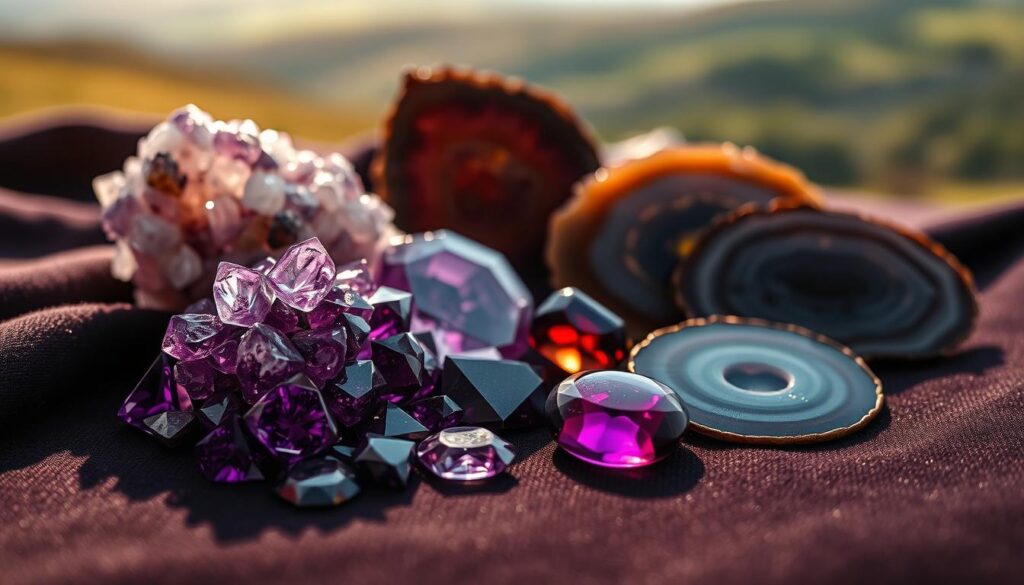
Amethyst – Indiana’s purple quartz varieties range from pale lavender to deep violet. While less common than clear quartz, amethyst can be found in several southern Indiana locations.
Geodes and Crystal Formations
Indiana geodes rank among the most sought-after finds for rockhounds visiting the state. These hollow rocks contain stunning crystal formations that developed over thousands of years.
- Calcite Geodes – Feature white to clear crystals with perfect geometric formations inside spherical rock shells.
- Dolomite Geodes – Similar to calcite but with a slightly different crystal structure and often cream-colored appearance.
- Mixed Crystal Geodes – Contain multiple mineral types including quartz, calcite, and sometimes fluorite in the same cavity.
Other Notable Minerals
Fluorite – Appears in beautiful purple, green, and clear varieties throughout Indiana. This mineral forms perfect cubic crystals that are highly prized by collectors.
Pyrite – Known as “fool’s gold” for its metallic luster, pyrite appears in coal deposits and sedimentary rock formations across the state.
Marcasite – Another iron sulfide mineral similar to pyrite but with different crystal structures and often more intricate formations.
Best Locations for Finding Indiana Gemstones
Certain areas of Indiana offer much better gemstone hunting opportunities than others. Understanding where to look saves time and increases your chances of finding quality specimens.
Southern Indiana Hotspots
Monroe County – Home to some of Indiana’s richest gemstone deposits, particularly around Bloomington. The area’s limestone quarries and creek beds produce excellent quartz specimens and geodes.
Brown County – Salt Creek and its tributaries offer outstanding rockhounding opportunities. You’ll find agate, quartz varieties, and occasional geodes in the creek gravels.
Lawrence County – The Bedford area contains numerous limestone formations with cavities that often hold calcite and fluorite crystals.
Central Indiana Locations
Morgan County – Features exposed rock cuts along major highways where collectors find quartz and calcite specimens. The White River also produces smooth river rocks and occasional gemstones.
Parke County – Rolling hills and stream valleys provide access to various rock formations. Sugar Creek offers particularly good hunting for water-worn gemstones.
Creek Hunting Strategy
Search creek beds after spring floods when high water moves new material downstream. Look for areas where the current slows down, as heavier gemstones settle in these spots naturally.
Public Access Areas
Several state parks and public lands allow gemstone collecting with proper permits. Always check current regulations before collecting, as rules can change seasonally.
- McCormick’s Creek State Park – Offers guided rockhounding programs and has designated collecting areas.
- Turkey Run State Park – Stream beds contain various minerals and small gemstones, particularly after heavy rains.
- Shades State Park – Features exposed rock formations and creek access for mineral hunting.
Rockhounding Tools and Techniques
Success in finding Indiana gemstones depends on having the right equipment and knowing proven search techniques. Proper preparation makes the difference between a frustrating day and an exciting discovery.
Essential Equipment
- Rock Hammer – Choose a 16-ounce hammer with a flat striking surface and pointed pick end for breaking rocks and extracting specimens.
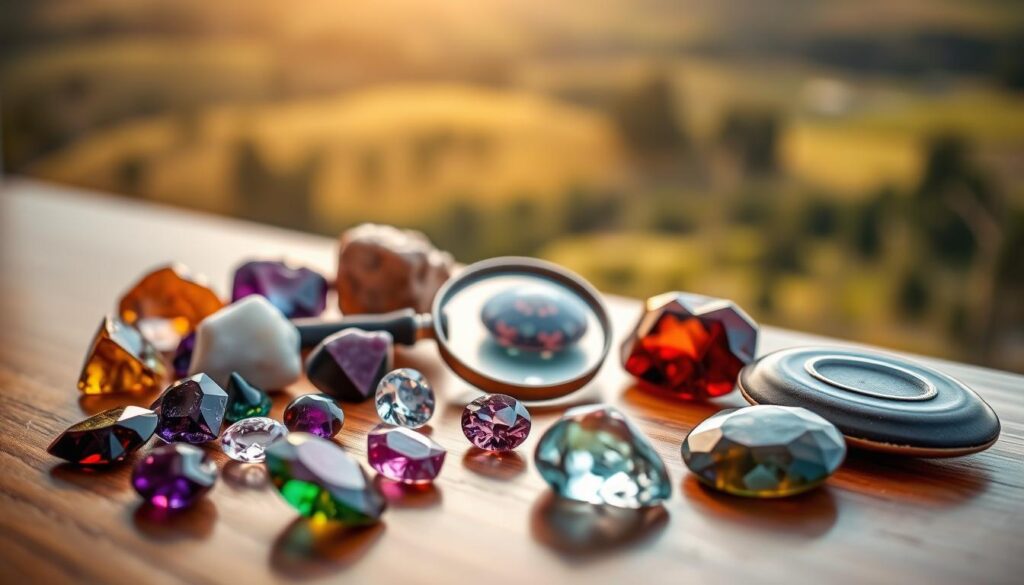
- Hand Lens – A 10x magnification lens helps identify minerals and examine crystal structures in detail.
- Collection Bags – Use canvas bags or old pillowcases to separate different specimens and prevent damage during transport.
- Safety Equipment – Always wear safety glasses and work gloves when breaking rocks or handling sharp specimens.
Proven Search Methods
Focus your efforts on areas where geological processes naturally concentrate minerals. Creek beds, road cuts, and quarry edges often provide the best hunting opportunities, similar to successful techniques used for finding Ohio’s mineral treasures.
Look for changes in rock color or texture that might indicate mineral deposits. Quartz veins often appear as white or clear lines running through darker host rock.
Seasonal Considerations
Spring offers the best rockhounding conditions in Indiana when winter frost has broken up rock formations and spring rains have washed creek beds clean. Late fall also provides good hunting after leaves have fallen and stream levels drop.
Summer collecting works well but requires more effort to access some locations due to heavy vegetation. Winter collecting is possible but limited by frozen ground and snow cover.
Identifying and Evaluating Your Finds
Learning to properly identify Indiana gemstones helps you understand what you’ve found and determine whether specimens have collectible or commercial value, much like the identification process used for Michigan’s collector gems.
Key Identification Features
Color provides the first clue to gemstone identity, but don’t rely on color alone since many minerals appear in multiple hues. Crystal shape and hardness offer more reliable identification markers.
Use a simple scratch test to estimate hardness – quartz will scratch glass while calcite will not. This quick test helps separate the two most common Indiana gemstones.
Quality Assessment
- Clarity – Clear, flawless specimens command higher value than cloudy or included pieces.
- Crystal Formation – Well-formed crystals with distinct faces are more valuable than massive or broken specimens.
- Size – Larger specimens generally have more value, but perfect small crystals often outvalue imperfect large ones.
- Rarity – Common minerals like quartz have value mainly for their beauty, while rare finds like quality fluorite can be quite valuable.
Documentation and Storage
Keep detailed records of where and when you found each specimen. This information adds scientific and personal value to your collection over time.
Store specimens separately to prevent damage from harder minerals scratching softer ones. Use small boxes with padding for delicate crystal formations, applying storage methods similar to those used by Illinois gemstone collectors.
Frequently Asked Questions
What are the most valuable gemstones found in Indiana?
High-quality fluorite specimens and perfect quartz crystals tend to have the highest collector value. Large, clear geodes with well-formed internal crystals also command good prices among collectors.
Do I need permission to collect gemstones in Indiana?
Always get permission before collecting on private property. State parks and public lands have specific rules about collecting, so check current regulations before your visit.
When is the best time of year to hunt for gemstones in Indiana?
Late spring through early fall offers the best conditions when water levels are low and weather permits comfortable outdoor searching. Spring freshets often expose new specimens in creek beds.
How can I tell if a rock contains gemstones?
Look for unusual weight, crystal faces poking through the surface, or different colors and textures within the rock. Many Indiana geodes appear as ordinary round rocks until broken open.
Are there any rockhound clubs in Indiana?
Several active clubs throughout Indiana organize field trips, educational programs, and shows. Check with local universities or search online for clubs in your area.
Final Thoughts
Indiana Gemstones provide endless opportunities for rockhounds to discover beautiful minerals without traveling far from home. From stunning geodes to perfect quartz crystals, the Hoosier State rewards patient collectors with impressive finds.
Start your Indiana gemstone adventure by visiting one of the proven locations this weekend. Bring proper tools, get necessary permissions, and prepare to be amazed by what Indiana’s rocks can reveal. Whether you’re interested in exploring neighboring states like Kentucky’s natural treasures or Wisconsin’s hidden gems, the Midwest offers incredible rockhounding opportunities for collectors of all skill levels.