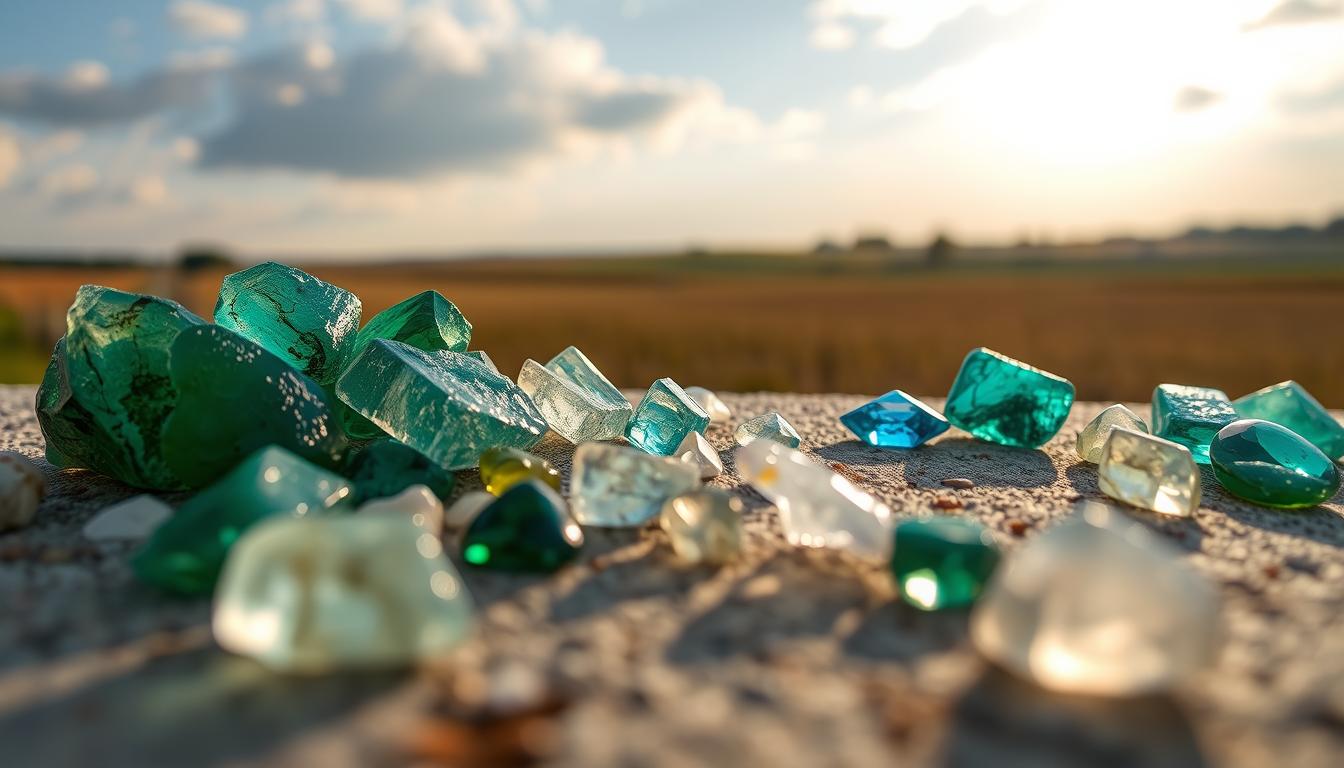
Common Gemstones Found in Illinois offer rock hounds and mineral collectors amazing opportunities to discover natural treasures right in their backyard. The Prairie State’s rich geological history has created perfect conditions for forming beautiful specimens that range from the state’s famous fluorite to stunning quartz varieties.
Illinois sits on top of ancient sea floors and has experienced millions of years of geological activity that deposited diverse minerals throughout the region. Whether you’re searching southern Illinois mines or exploring creek beds, you’ll find gemstones that showcase the state’s fascinating geological story.
TL;DR
- Fluorite is Illinois’ official state mineral and can be found in over 15 different colors in southern Illinois mines.
- The Southern Illinois Fluorite District contains more than 200 documented fluorite mines spanning 7 counties.
- Illinois geodes typically measure 2-12 inches in diameter and contain crystals of quartz, calcite, and dolomite.
- Public collecting is allowed at specific locations including some quarries and designated areas with landowner permission.
Common Gemstones Found in Illinois
Illinois hosts an impressive variety of gemstones thanks to its position within the Illinois Basin and centuries of geological processes. The state’s mineral wealth stems from ancient seas that once covered the region, leaving behind limestone, dolomite, and sandstone formations rich in crystalline treasures.
The most significant gemstone discoveries occur in sedimentary rocks and hydrothermal deposits throughout central and southern Illinois. These formations created ideal conditions for crystal growth over millions of years, similar to the geological processes that created Missouri’s diverse mineral deposits.
Fluorite – The State’s Crown Jewel
Fluorite earned its title as Illinois’ state mineral for good reason. The Southern Illinois Fluorite District produces some of the world’s finest fluorite specimens in colors ranging from deep purple and green to clear, yellow, and blue varieties.
This calcium fluoride mineral forms perfect cubic crystals that collectors prize for their clarity and vibrant colors. Many specimens show multiple color zones within a single crystal, creating stunning display pieces.
- Purple fluorite – the most common variety found near Rosiclare and Cave-in-Rock
- Green fluorite – often found alongside galena deposits in Hardin County
- Blue fluorite – rare specimens occasionally discovered in Pope County mines
- Clear fluorite – highly prized by collectors for its optical clarity
Quartz Varieties
Quartz appears throughout Illinois in multiple forms, making it one of the most accessible gemstones for beginning collectors. The state produces both macrocrystalline and cryptocrystalline varieties in various geological settings.
Most Illinois quartz forms within geodes or as cavity fillings in limestone and dolomite formations. Collectors often find well-formed crystals ranging from thumbnail size to several inches long, much like the beautiful quartz specimens found throughout Ohio’s sedimentary formations.
- Clear quartz – forms perfect hexagonal crystals inside geodes
- Smoky quartz – develops its gray to brown coloration from natural radiation exposure
- Amethyst – rare purple variety occasionally found in southern counties
- Chalcedony – microcrystalline variety found as agate and jasper
Calcite and Dolomite
These calcium carbonate minerals appear abundantly throughout Illinois limestone formations. Calcite forms in over 300 different crystal habits, providing collectors with diverse specimens from simple rhombs to complex scalenohedrons.
Dolomite closely resembles calcite but contains magnesium in its crystal structure. Both minerals often display beautiful crystal faces and can show fluorescence under ultraviolet light.
- Collect specimens carefully. These minerals have perfect cleavage and break easily along crystal planes.
- Test with dilute acid. Calcite bubbles vigorously while dolomite reacts slowly with hydrochloric acid.
- Look for twinned crystals. Both minerals commonly form contact and penetration twins.
Prime Collecting Locations
Illinois offers numerous public and private locations where collectors can search for gemstones legally and safely. Each area provides unique geological conditions that favor different mineral species.
Always secure proper permission before collecting on private property and follow all posted rules at public sites. Respect for landowners and environmental protection ensures these locations remain available for future collectors.
Southern Illinois Fluorite District
This world-famous mining district spans seven counties in southern Illinois and contains over 200 documented fluorite mines. The area produced millions of pounds of fluorite ore during peak mining operations from 1900 to 1995.
Several mines now offer public collecting opportunities on scheduled dig days. The Minerva Mine near Cave-in-Rock and sites near Rosiclare provide excellent collecting experiences for families and serious collectors alike.
Hamilton and Hardin Counties
These adjacent counties contain numerous abandoned quarries and road cuts that expose mineral-bearing formations. Collectors frequently discover fluorite, calcite, galena, and sphalerite specimens in these locations.
Cave-in-Rock State Park provides safe access to geological formations along the Ohio River. The area’s limestone bluffs contain cavities filled with fluorite and calcite crystals.
Geode Collecting Areas
Illinois produces beautiful geodes primarily in the western counties near the Iowa border. These hollow rock formations contain crystals of quartz, calcite, pyrite, and occasionally rare minerals like kaolinite and goethite.
Stream beds and farm fields in Hancock, Henderson, and McDonough counties yield geodes after heavy rains expose them. Many landowners allow collecting with permission, and some farms operate as commercial geode sites, offering similar opportunities to Iowa’s famous geode hunting locations.
Best Time to Search
Visit collecting sites after spring rains when fresh material gets exposed on hillsides and in stream beds. Early morning light helps identify crystal faces and mineral colors more easily.
Identification and Collection Tips
Successful gemstone identification requires understanding basic mineral properties and having the right tools for field work. Illinois minerals show characteristic features that help distinguish between similar-looking species.
Start with simple tests like hardness, crystal shape, and color before moving to more advanced identification techniques. Building a reference collection of known specimens helps train your eye to recognize new finds, especially when exploring areas with geological similarities to neighboring Indiana’s diverse mineral deposits.
Essential Field Equipment
- Rock hammer – 16-20 oz weight works best for breaking sedimentary rocks
- Hand lens – 10x magnification reveals crystal details and inclusions
- Streak plate – unglazed porcelain tile tests mineral streak colors
- Hardness picks – test mineral hardness against known standards
- Collection bags – separate specimens by location and mineral type
- Safety glasses – protect eyes when breaking rocks
Key Identification Properties
Illinois gemstones display specific physical properties that aid in accurate identification. Learn these characteristics to distinguish between similar minerals found in the same locations.
Crystal habit describes how minerals naturally form and provides important identification clues. Fluorite forms cubes, calcite creates rhombs, and quartz develops hexagonal prisms.
- Test hardness systematically. Use fingernail (2.5), copper penny (3.5), and steel nail (5.5) as reference points.
- Observe cleavage patterns. Perfect cleavage means minerals break cleanly along crystal faces.
- Check for fluorescence. Many Illinois minerals glow under ultraviolet light.
- Note specific gravity. Heavy minerals like galena feel noticeably dense compared to quartz.
Legal Collecting Guidelines
Responsible collecting ensures that Illinois gemstone sites remain accessible and productive for everyone. Understanding property rights and environmental regulations protects both collectors and landowners.
State parks generally prohibit mineral collecting except for designated educational programs. Private property requires explicit landowner permission, while some commercial sites charge admission fees for collecting privileges, similar to policies found in Michigan’s popular rockhounding areas.
Permission and Access
- Private land – always obtain written permission before collecting
- Public quarries – contact operators about visitor policies and safety requirements
- Road cuts – stay within public right-of-way boundaries
- State property – check specific regulations for each location
Environmental Responsibility
Practice Leave No Trace principles when collecting gemstones. Fill holes after digging, pack out all trash, and avoid damaging vegetation or disturbing wildlife habitats.
Take only what you can properly clean, study, and display. Excessive collecting depletes sites and reduces opportunities for future enthusiasts to enjoy these natural treasures.
Frequently Asked Questions
What is the most valuable gemstone found in Illinois?
High-quality fluorite specimens, particularly those showing multiple colors or perfect crystal faces, command the highest prices among Illinois gemstones. Rare blue fluorite can sell for hundreds of dollars per specimen.
Can I find diamonds in Illinois?
No diamonds have been discovered in Illinois’ natural geological formations. The state’s sedimentary rocks and low-grade metamorphic conditions did not create the high-pressure environment needed for diamond formation.
Where can beginners start collecting gemstones in Illinois?
Start at commercial geode sites in western Illinois or attend organized mineral club field trips. These supervised experiences teach proper collecting techniques and site-specific safety requirements.
Are there any gemstone clubs in Illinois?
Illinois hosts numerous gem and mineral societies including the Chicago Rocks and Minerals Society, Kishwaukee Geological Society, and Southern Illinois Earth Science Club. These groups organize field trips and educational programs.
What safety precautions should I take while collecting?
Always wear safety glasses when breaking rocks, use proper lifting techniques for heavy specimens, and inform someone of your collecting location and expected return time. Avoid unstable rock faces and abandoned mine openings.
Final Thoughts
Common Gemstones Found in Illinois provide endless opportunities for discovery and learning about the state’s geological heritage. From world-class fluorite specimens to beautiful geode crystals, Illinois offers treasures for collectors of all experience levels.
Start exploring local sites this weekend and connect with other enthusiasts through mineral clubs and collecting events. The Prairie State’s gemstone legacy continues to reward those who take time to search its ancient formations.