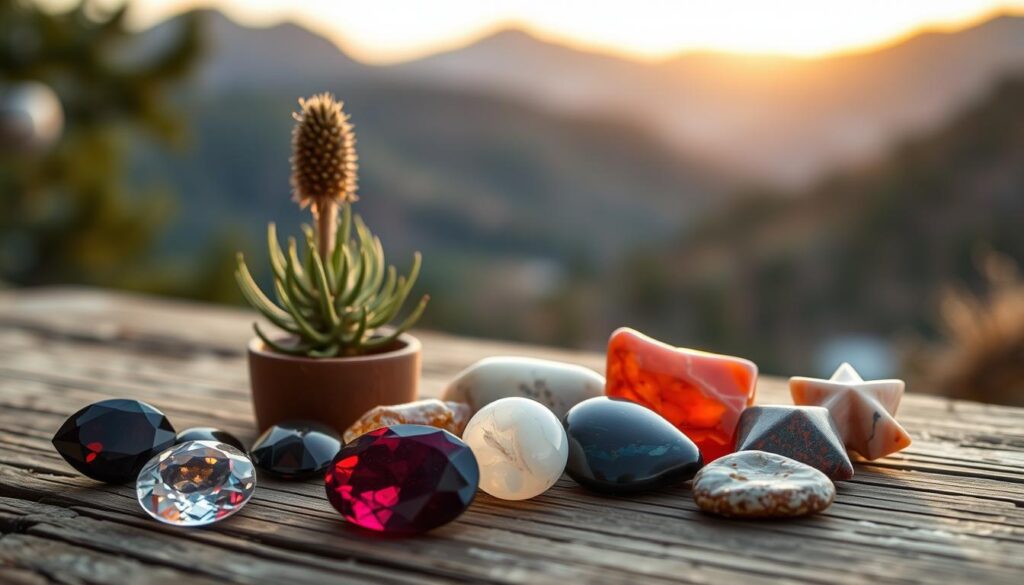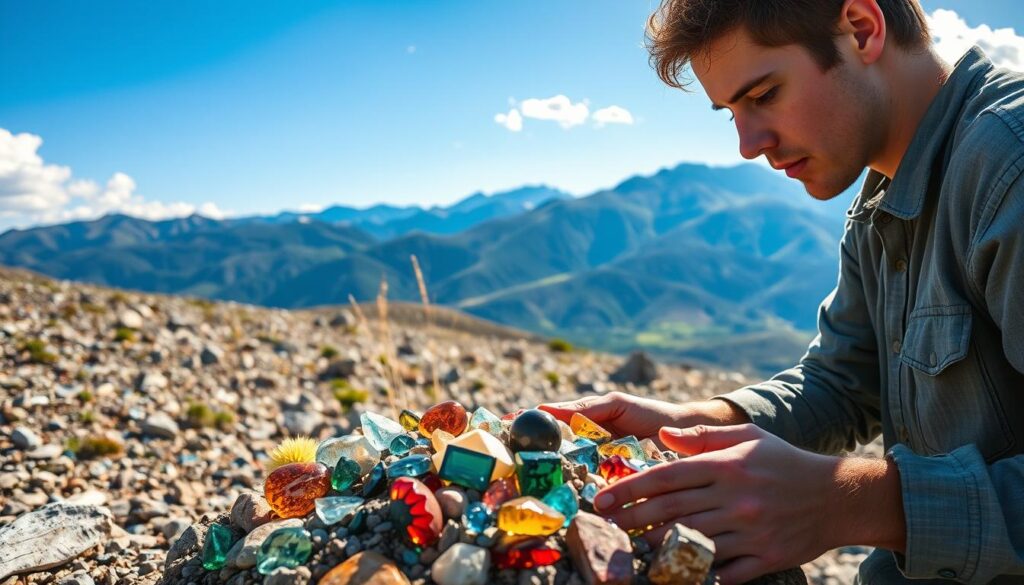
Idaho’s Precious Gemstones tell the story of millions of years of geological activity that shaped this remarkable state. Known as “The Gem State,” Idaho offers some of the most diverse and valuable gemstone deposits in the United States. From star garnets to opals, the state’s unique geological formations create perfect conditions for gemstone formation.
Rockhounds and collectors flock to Idaho because of its accessible gemstone sites and the variety of precious stones waiting to be discovered. The state’s complex geological history, involving volcanic activity, tectonic shifts, and erosion, has created an underground treasure trove that continues to reward those willing to search for it.
TL;DR
- Star garnet is Idaho’s official state gemstone, found primarily at Emerald Creek Garnet Area in northern Idaho.
- Over 240 different mineral species have been documented in Idaho, making it one of the most geologically diverse states.
- The Owyhee County opal fields produce some of the finest precious opals in North America.
- Most public lands in Idaho allow casual gemstone collecting without permits for personal use up to 25 pounds per day.
Idaho’s Precious Gemstones and Their Origins
The state’s nickname “The Gem State” comes from its incredible geological diversity that spans over 2.5 billion years. Idaho’s gemstone deposits formed through various geological processes including volcanic activity, metamorphism, and hydrothermal alteration. These processes created the perfect conditions for precious stones to develop in multiple locations across the state.
Idaho’s position along the western edge of the North American continent exposed it to significant tectonic activity. This geological turmoil, combined with extensive volcanic activity, created the mineral-rich environment that produces the state’s famous gemstones today.
Star Garnet – Idaho’s Crown Jewel
Idaho’s star garnet stands out as the most famous of the state’s gemstones and serves as the official state gem. These unique garnets display a distinctive four-ray or six-ray star pattern when properly cut and polished. The star effect, called asterism, occurs due to tiny needle-like inclusions of rutile within the garnet crystal.
Only two places in the world produce gem-quality star garnets in significant quantities – Idaho and India. This makes Idaho’s deposits incredibly valuable and sought after by collectors worldwide.
Emerald Creek Garnet Area
The Emerald Creek Garnet Area in northern Idaho represents the world’s only location where the public can search for star garnets. Located in the St. Joe National Forest, this site allows visitors to dig for garnets in designated areas. The site operates seasonally from late spring through early fall, weather permitting.
Visitors can find garnets ranging from small chips to large specimens several inches across. While not all garnets found here display the star effect, the thrill of discovery attracts thousands of visitors each year.
Quartz Varieties Across Idaho
Idaho produces exceptional examples of various quartz gemstones that appeal to both collectors and jewelry makers. The state’s quartz deposits formed in different geological environments, creating distinct varieties with unique characteristics. For collectors interested in quartz varieties found in similar geological settings, Montana’s gemstone deposits offer comparable treasures including sapphires and garnets.
Amethyst Deposits
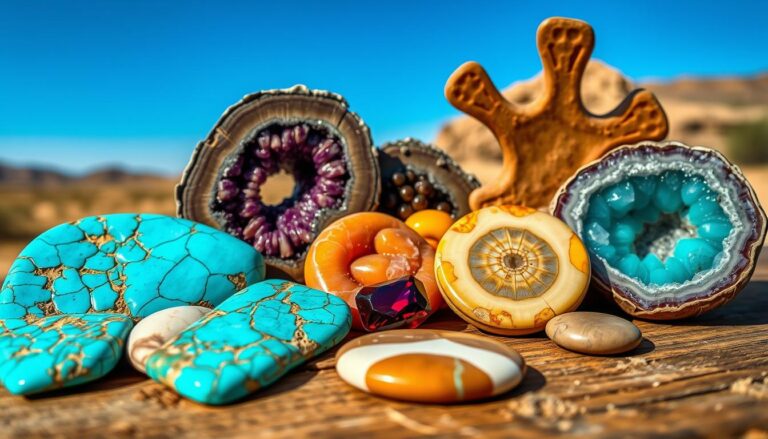
Idaho’s amethyst occurs in shades ranging from pale lavender to deep royal purple. The best specimens come from volcanic rock formations in central and southern Idaho. These amethyst deposits often occur in geodes or as crystal clusters in cavities within basalt flows.
Smoky Quartz and Rock Crystal
Smoky quartz, ranging from light gray to nearly black, appears throughout Idaho’s mountainous regions. Rock crystal, the clear variety of quartz, often occurs alongside smoky quartz in the same formations. Both varieties can produce museum-quality specimens with exceptional clarity and size.
Opal Fields of Owyhee County
Southern Idaho’s Owyhee County contains some of North America’s most productive opal fields. These deposits produce both common opal and the more valuable precious opal that displays brilliant flashes of color called play-of-color.
The opal formed in volcanic rocks millions of years ago when silica-rich water filled cavities and cracks in the host rock. As the water evaporated, it left behind layers of microscopic silica spheres that create the opal’s distinctive appearance.
Types of Idaho Opal
- Precious opal – displays brilliant flashes of color when moved in light.
- Common opal – lacks play-of-color but comes in beautiful solid colors.
- Wood opal – forms when opal replaces organic material in petrified wood.
- Moss opal – contains dendritic inclusions that resemble plant material.
Other Notable Gemstones
Beyond the famous star garnets and opals, Idaho produces numerous other gemstones that attract collectors and lapidary enthusiasts.
Jasper and Agate
Idaho’s jasper comes in an amazing array of colors and patterns, from the famous Bruneau jasper with its scenic landscapes to solid-colored varieties in reds, yellows, and browns. Agate deposits throughout the state produce specimens with intricate banding patterns and fortification designs. Similar agate varieties can be found in Oregon’s volcanic regions, where collectors also discover thundereggs and sunstone.
Topaz and Beryl
Less common but highly prized, topaz and beryl occur in specific locations throughout Idaho. These gemstones typically form in pegmatite veins and require more specialized knowledge to locate successfully. Utah’s topaz deposits offer another excellent destination for collectors seeking these precious stones.
Best Time to Hunt Gems
Visit gemstone sites after spring snowmelt but before summer heat becomes intense – typically late May through early July. This timing provides the best access to remote locations while offering comfortable weather for extended searches.
Prime Gemstone Hunting Locations
Idaho’s gemstone locations span the entire state, from the panhandle region in the north to the high desert areas in the south. Each region offers different types of gemstones based on the local geology.
Northern Idaho Sites
- Coeur d’Alene District – known for garnets and various quartz specimens.
- Moscow Mountain – produces excellent quartz crystals and jasper.
- Priest Lake Area – offers opportunities for finding garnets and other minerals.
Central Idaho Locations
- Sawtooth Mountains – famous for clear quartz crystals and smoky quartz.
- Boise County – produces garnets, quartz, and occasional gold specimens.
- Valley County – known for jasper, agate, and petrified wood.
Southern Idaho Destinations
- Owyhee County – the premier location for opal hunting in Idaho.
- Twin Falls Area – offers agate, jasper, and petrified wood.
- Cassia County – produces beautiful obsidian and volcanic glass specimens.
Legal Considerations and Land Access
Understanding land ownership and regulations is essential for successful and legal gemstone hunting in Idaho. The rules vary significantly between public and private lands.
Public Land Regulations
Most federal public lands in Idaho allow casual gemstone collecting for personal use without special permits. However, you’re typically limited to 25 pounds of material per day and cannot use motorized equipment for extraction.
Always check with the local land management agency before collecting, as some areas may have specific restrictions or seasonal closures to protect wildlife or cultural resources.
Private Land Access
Many of Idaho’s best gemstone locations are on private property. Always obtain written permission from landowners before entering private land. Respect all property boundaries and follow any conditions set by the landowner.
Essential Equipment for Gemstone Hunting
Having the right tools makes gemstone hunting more productive and enjoyable. The specific equipment you need depends on the type of gemstones you’re seeking and the terrain you’ll be exploring.
Basic Tools
- Rock hammer. Choose a geology pick with a flat striking surface and pointed end for breaking rocks.
- Hand lens or magnifying glass. A 10x magnification lens helps identify small gemstones and examine crystal structure.
- Collection containers. Bring sturdy bags or containers to safely transport your finds.
- GPS device or smartphone. Mark productive locations for future visits.
Advanced Equipment
- Sifting screens – help separate gemstones from soil and gravel.
- UV light – some minerals fluoresce under ultraviolet light.
- Metal detector – useful for finding specimens in mineralized areas.
- Camera – document your finds and the locations where you found them.
Processing and Caring for Your Finds
Once you’ve collected gemstones, proper handling and processing preserve their beauty and value. The approach varies depending on the type of material you’ve found.
Initial Cleaning
Clean your specimens gently using soft brushes and mild soap solution. Avoid harsh chemicals or abrasives that could damage delicate surfaces. Some specimens benefit from ultrasonic cleaning, while others require only gentle hand washing.
Identification and Documentation
Keep detailed records of where and when you found each specimen. This information adds to their value and helps you return to productive locations. Consider having valuable or unusual specimens professionally identified. For inspiration on documenting your finds, explore how collectors catalog Wyoming’s jade and agate discoveries.
Frequently Asked Questions
What makes Idaho’s star garnets unique compared to other garnets?
Idaho’s star garnets display a distinctive four-ray or six-ray star pattern when properly cut, caused by needle-like rutile inclusions. Only Idaho and India produce gem-quality star garnets commercially.
Can I sell gemstones I find on public land in Idaho?
Yes, you can sell gemstones collected legally from public lands for personal use. However, commercial collecting typically requires special permits and may be prohibited in some areas.
What’s the best way to learn gemstone identification in the field?
Join local rockhound clubs, attend gem and mineral shows, and practice with known specimens. Field guides specific to Idaho minerals are invaluable for learning identification techniques.
Are there guided gemstone hunting tours available in Idaho?
Yes, several outfitters offer guided gemstone hunting experiences, particularly at locations like Emerald Creek. These tours provide equipment, expertise, and access to productive areas.
How do I know if I’ve found a valuable gemstone?
Look for good color, clarity, and size without obvious flaws. Have potentially valuable specimens evaluated by a certified gemologist or experienced dealer for accurate assessment.
Final Thoughts
Idaho’s Precious Gemstones represent one of the most accessible and rewarding rockhounding experiences in North America. The state’s geological diversity ensures that both beginners and experienced collectors can find specimens that match their interests and skill levels.
Whether you’re searching for the famous star garnets at Emerald Creek or exploring the opal fields of Owyhee County, Idaho’s gemstone treasures await your discovery. Start planning your gemstone hunting adventure today and experience firsthand why Idaho truly deserves its nickname as “The Gem State.”