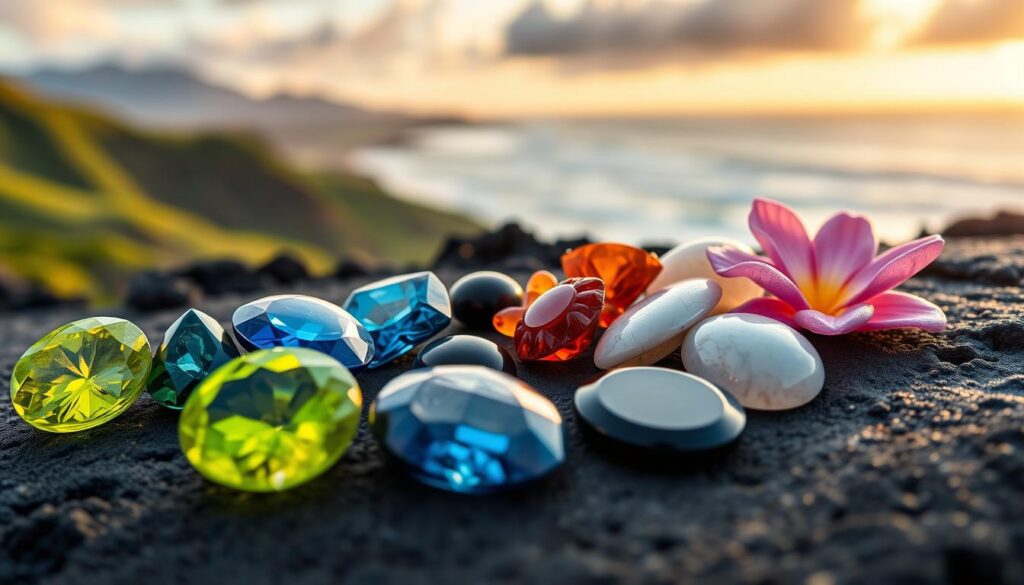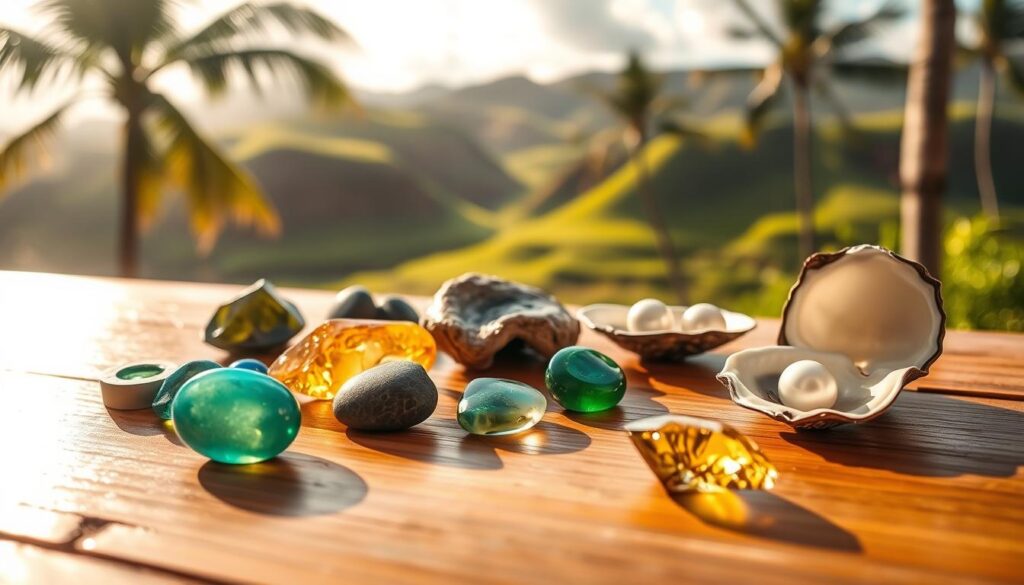
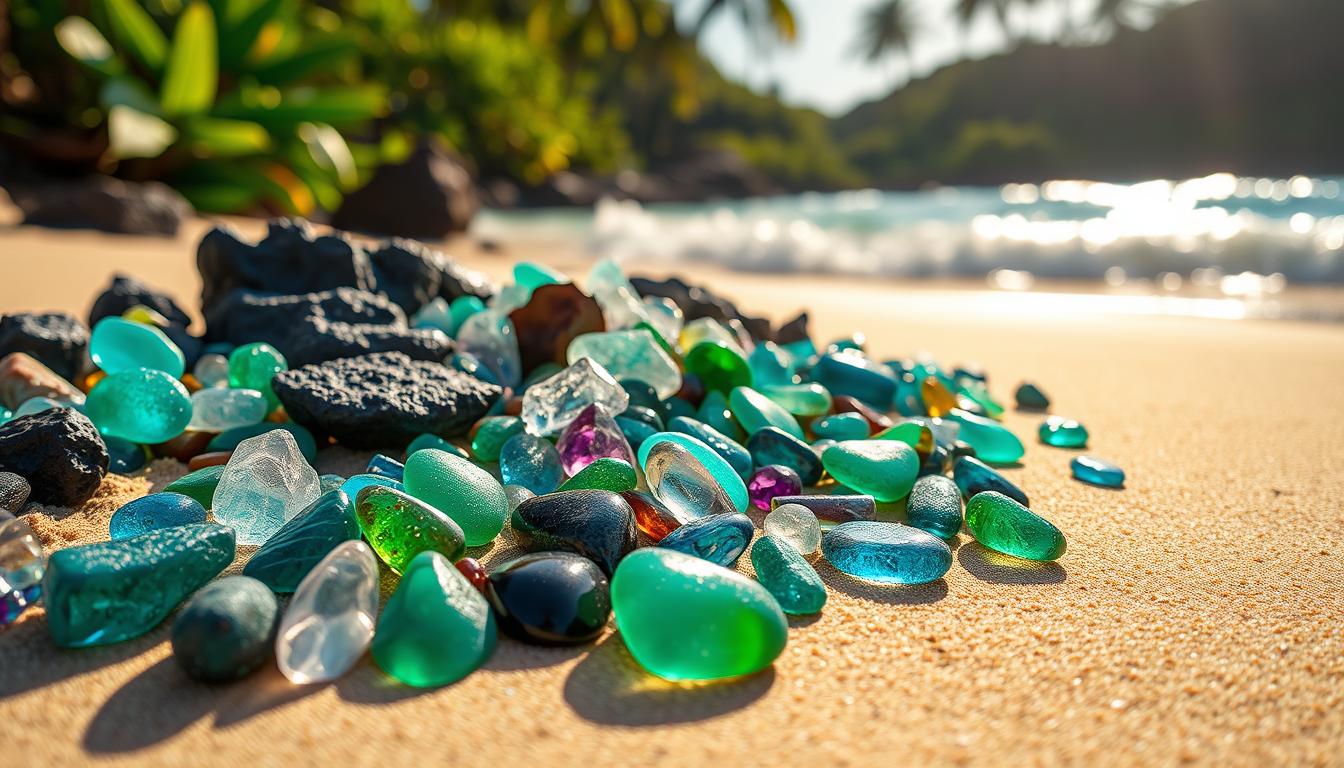
Gemstones In Hawaii offer a unique window into the islands’ volcanic past and geological wonders. The Hawaiian Islands are home to some of the world’s most distinctive gemstones, formed through millions of years of volcanic activity and geological processes. From the famous green sand beaches filled with peridot to the rare black coral found in deep waters, Hawaii’s gemstone collection tells the story of fire, pressure, and time.
The islands’ position over a volcanic hotspot has created perfect conditions for gemstone formation. Hawaii’s unique geological environment produces gemstones you won’t find anywhere else on Earth, making it a must-visit destination for collectors and geology enthusiasts alike.
TL;DR
- Papakōlea Green Sand Beach contains olivine (peridot) crystals formed by volcanic activity over thousands of years.
- Black coral, Hawaii’s official state gem, grows in waters deeper than 165 feet around the islands.
- Hawaii Volcanoes National Park offers access to obsidian, basalt, and other volcanic gemstones.
- Collection restrictions apply in national parks and protected areas – always check local regulations before hunting.
Gemstones In Hawaii: Volcanic Origins
Hawaii’s gemstone story begins deep beneath the Pacific Ocean, where volcanic hotspots have been creating the islands for over 70 million years. The intense heat and pressure from volcanic activity create ideal conditions for gemstone formation. As magma rises to the surface and cools, it forms different types of volcanic rock that contain various minerals and crystals.
The Pacific Plate’s movement over the Hawaiian hotspot has created a chain of islands, each with its own unique geological signature. This ongoing process continues to shape the islands and create new gemstone deposits as volcanic activity persists on the Big Island.
How Volcanic Processes Create Gemstones
Volcanic gemstone formation happens through several key processes that make Hawaii’s gems unique. The high temperatures in volcanic environments – often exceeding 2,000 degrees Fahrenheit – allow minerals to crystallize in ways impossible under normal surface conditions.
- Rapid cooling – Creates obsidian and volcanic glass with sharp edges
- Slow crystallization – Forms larger crystals like olivine and pyroxene
- Gas bubble formation – Creates cavities where secondary minerals grow
- Chemical reactions – Produces unique mineral combinations found only in volcanic environments
Hawaii’s Most Famous Gemstones
Olivine (Peridot) – The Green Treasure
Olivine stands out as Hawaii’s most iconic gemstone, creating the famous green sand beaches that attract visitors from around the world. This bright green mineral forms directly in basaltic lava and gets scattered along coastlines when waves break down volcanic rock. Papakōlea Beach on the Big Island offers the best opportunity to see olivine in its natural setting.
The olivine found in Hawaii ranges from pale yellow-green to deep olive green, with the most prized specimens showing a rich, vibrant color. Unlike peridot from other locations, Hawaiian olivine often contains unique inclusions that tell the story of its volcanic birth.
Black Coral – Hawaii’s Official State Gem
Black coral earned its place as Hawaii’s official state gem through its beauty and rarity. Despite its name, black coral is actually an animal – a type of deep-sea coral that grows in Hawaii’s offshore waters at depths greater than 165 feet. The coral’s skeleton, when polished, reveals stunning patterns and a lustrous black surface perfect for jewelry.
Harvesting black coral requires special permits and diving expertise, making authentic pieces valuable and regulated. The slow-growing nature of black coral – some specimens are hundreds of years old – adds to its significance as a precious Hawaiian treasure.
Obsidian and Volcanic Glass
Hawaii’s volcanic activity produces various forms of obsidian and natural glass through rapid lava cooling. When lava hits seawater or cools extremely quickly, it forms smooth, glass-like surfaces with sharp edges. These volcanic glasses range from jet black to brown and sometimes contain interesting patterns or inclusions.
Pele’s hair – thin strands of volcanic glass named after the Hawaiian fire goddess – forms when lava fountains create delicate glass fibers that float on wind currents. These fragile formations can be found around active volcanic areas but should only be observed, not collected.
Safety First When Gemstone Hunting
Always wear closed-toe shoes and bring plenty of water when exploring volcanic areas for gemstones. Sharp volcanic rock and intense sun exposure can make gemstone hunting dangerous without proper preparation.
Lesser-Known Hawaiian Gemstones
Zeolites and Secondary Minerals
Zeolites form in Hawaii when volcanic glass reacts with seawater over long periods, creating beautiful crystal clusters in cavities within basalt flows. These minerals often display perfect crystal formations and come in various colors including white, pink, and pale green. Common zeolites found in Hawaii include stilbite, heulandite, and chabazite.
These secondary minerals grow slowly in gas bubbles and cracks within cooled lava flows, sometimes creating stunning mineral displays that rival specimens from famous worldwide locations.
Quartz Varieties and Crystalline Formations
While not as common as volcanic minerals, quartz does occur in Hawaii’s more evolved volcanic rocks and metamorphic zones. Clear quartz, smoky quartz, and rarely amethyst can be found in areas where volcanic activity has been less recent and other geological processes have had time to work. Similar quartz formations can be found in states with diverse geological environments, such as Colorado’s aquamarine and quartz deposits.
These quartz specimens often contain unique inclusions of volcanic minerals, creating one-of-a-kind pieces that reflect Hawaii’s complex geological history.
Best Locations for Finding Hawaiian Gemstones
Green Sand Beaches
Papakōlea Beach on the Big Island remains the most famous location for finding olivine gemstones in their natural environment. The beach’s distinctive green color comes from countless olivine crystals mixed with black volcanic sand. While collecting is restricted, visitors can observe and photograph these natural gemstone deposits.
Mahana Beach offers another location where volcanic minerals concentrate along the shoreline, though access requires a challenging hike across rough terrain.
Volcanic National Park Areas
Hawaii Volcanoes National Park provides excellent opportunities to observe gemstone formation in action, though collection within park boundaries is prohibited. The park’s diverse volcanic landscapes showcase different types of mineral formation and offer educational programs about Hawaiian geology, much like how Arizona’s volcanic regions provide insights into diverse mineral formation processes.
Areas outside the park, particularly along older lava flows and coastal regions, may offer collecting opportunities with proper research and permission from landowners.
Authorized Collecting Areas
Several locations on private land allow gemstone collecting with proper permission or payment of fees. These areas often provide better access to quality specimens and clear guidelines about what can be collected. Local rock shops and geological societies can provide information about current collecting opportunities.
- Private quarries – Sometimes allow collecting for a fee
- Construction sites – May have temporary collecting opportunities
- Beach areas – Outside protected zones may allow small-scale collecting
- Ranch lands – Some owners permit collecting with permission
Purchasing and Collecting Hawaiian Gemstones
Reputable Sources for Hawaiian Gems
When buying Hawaiian gemstones, work with established dealers who can verify authenticity and legal collection. Honolulu’s gem and mineral shows offer opportunities to meet local collectors and dealers, while established rock shops provide year-round access to quality specimens similar to those found in other western states like Oregon’s diverse sunstone and thunderegg collecting community.
Look for dealers who can provide information about where and how their specimens were collected, especially for regulated materials like black coral.
Legal Considerations and Regulations
Hawaii has strict regulations about gemstone collecting, particularly in protected areas and for certain materials. Hawaii’s Department of Land and Natural Resources provides guidance on collecting regulations, while black coral harvesting requires special permits and diving certifications. Always research local laws and obtain necessary permissions before collecting anywhere in Hawaii, as regulations can be as complex as those found in other heavily regulated states like California with its diverse mineral districts.
Taking volcanic rock from certain areas is considered culturally inappropriate and may be illegal – respect local customs and regulations when exploring Hawaii’s geological treasures.
Frequently Asked Questions
What is the most common gemstone found in Hawaii?
Olivine (peridot) is the most common gemstone in Hawaii, found mainly in the green sand beaches and volcanic areas throughout the islands.
Can I legally collect gemstones from Hawaiian beaches?
Collecting regulations vary by location – national and state parks prohibit all collecting, while some private and public areas may allow limited collecting with proper permission.
Where can I buy authentic Hawaiian black coral?
Authentic Hawaiian black coral is available through licensed dealers and established jewelry stores that can provide proper documentation of legal harvesting.
Are Hawaiian gemstones different from those found elsewhere?
Yes, Hawaii’s unique volcanic environment creates gemstones with distinctive characteristics, including specific mineral inclusions and formation patterns not found in other locations.
What safety precautions should I take when gemstone hunting in Hawaii?
Wear sturdy footwear, bring sun protection and water, inform others of your plans, and avoid unstable volcanic areas or rough ocean conditions.
Final Thoughts
Gemstones In Hawaii represent millions of years of volcanic activity and geological processes that continue shaping these remarkable islands today. Whether you’re hunting for olivine on green sand beaches or purchasing black coral from licensed dealers, Hawaiian gemstones offer a tangible connection to the Earth’s most powerful creative forces, much like how collectors explore the unique geological environments of Utah’s topaz and red beryl deposits.
Respect local regulations and cultural traditions while exploring Hawaii’s geological treasures – these precious stones tell the ongoing story of volcanic islands born from fire and shaped by time.