Florida offers exciting opportunities for rock and gemstone enthusiasts. The state’s unique geological history, shaped by ancient seas and limestone formations, creates perfect conditions for finding beautiful gems and minerals.
From agatized coral along riverbanks to calcite crystals in limestone caves, Florida’s gemstone hunting scene draws collectors from across the country. The combination of accessible locations and diverse geological formations makes it an ideal destination for both beginners and experienced rockhounds.
TL;DR
- Peace River and Suwannee River are the top locations, producing agatized coral and calcite specimens daily.
- Florida’s state stone is agatized coral, formed when ancient coral reefs were replaced with silica over millions of years.
- The best hunting happens after storms and during dry seasons when water levels drop and expose new material.
- You need landowner permission for private property and must check regulations for state parks before collecting.
Gemstones In Florida
Florida’s limestone bedrock creates the perfect environment for gemstone formation. This foundation, called the Florida Platform, formed over millions of years as sea levels rose and fell.
The state’s history as a shallow marine environment means most gemstones form through replacement processes. Ancient coral reefs, shells, and organic material get replaced with harder minerals like silica and calcite, creating the beautiful specimens collectors find today.
How Limestone Influences Gem Formation
The limestone bedrock acts like a natural laboratory for gemstone creation. When mineral-rich water flows through limestone, it dissolves some areas while depositing new minerals in others.
This process creates cavities that fill with crystals and allows for the replacement of organic material with more durable minerals. The result is gems like agatized coral that keep their original shapes but gain the hardness of quartz.
Most Common Florida Gemstones
Several gemstones appear regularly in Florida’s rivers, beaches, and limestone formations. Each type forms through different geological processes but all benefit from the state’s unique marine history.
Agatized Coral
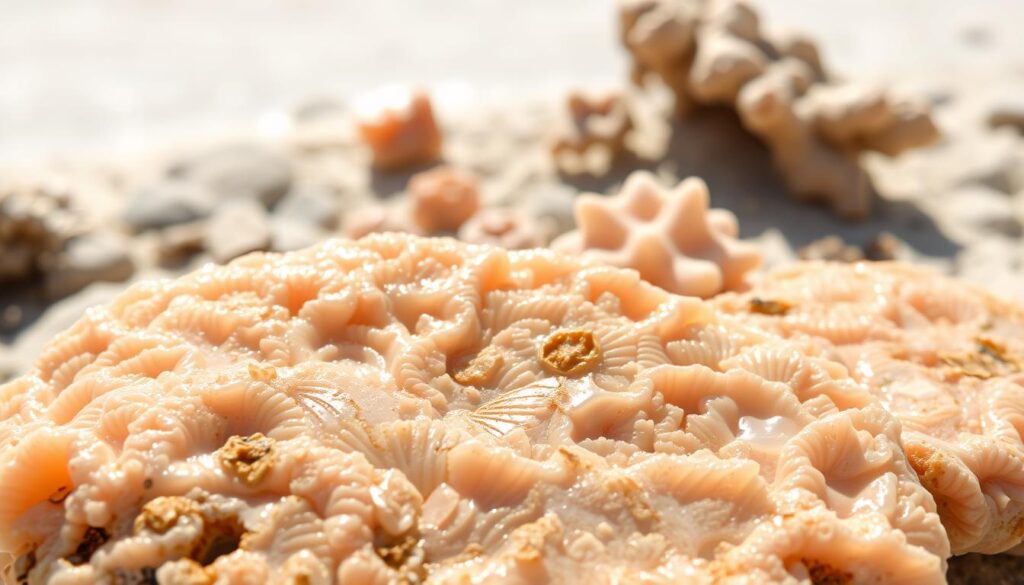
Agatized coral stands out as Florida’s official state stone and most recognizable gemstone. This material forms when silica-rich water replaces ancient coral reefs, preserving the coral’s cellular structure while creating agate’s hardness.
You’ll find agatized coral in river gravels, especially along the Peace River and Suwannee River systems. The specimens show beautiful patterns that mirror the original coral’s growth structure, often displaying bands of white, gray, and brown.
Calcite Formations
Calcite appears throughout Florida in various forms, from clear crystals to massive limestone deposits. This calcium carbonate mineral forms in caves, limestone quarries, and along riverbanks where mineral-rich water evaporates.
Florida calcite often shows perfect crystal faces and can be completely transparent or milky white. Some specimens display interesting inclusions or color variations caused by trace minerals in the formation environment.
Quartz Varieties
Several quartz types occur in Florida, with citrine and smoky quartz being the most common. These gems typically appear in gravel deposits and sand formations throughout the state.
Citrine shows bright yellow to orange colors, while smoky quartz ranges from light gray to deep brown. Both varieties form excellent specimens for collectors and often appear alongside other gemstones in river gravels.
- Citrine – bright yellow quartz found in river gravels and sand deposits.
- Smoky Quartz – gray to brown quartz crystals, often well-formed.
- Clear Quartz – colorless crystals that sometimes contain interesting inclusions.
Petrified Wood
Petrified wood specimens in Florida show how organic material transforms into gemstone through mineral replacement. The original wood structure remains visible while the material gains the hardness and beauty of stone.
Florida’s petrified wood often displays excellent preservation of bark texture and growth rings. Colors range from brown and tan to more exotic reds and yellows, depending on the minerals involved in the replacement process.
Best Times to Hunt
Visit Florida’s gemstone locations after heavy rains or storms when water levels drop. This exposes fresh material and washes smaller gems into accessible areas along riverbanks.
Semi-Precious Stone Varieties
Beyond the common gemstones, Florida produces several semi-precious varieties that serious collectors seek. These stones often require more specific geological conditions and appear less frequently.
Florida Agate Types
Florida produces several distinct agate varieties beyond the famous agatized coral. Each type forms under slightly different conditions but all show the characteristic banding that makes agate so appealing.
- Fortification Agate – shows concentric bands that resemble fortress walls.
- Moss Agate – contains green or brown inclusions that look like plant material.
- Plume Agate – displays feather-like patterns within the stone.
Jasper and Chert
Jasper and chert appear in Florida’s limestone regions, often showing bright colors and interesting patterns. These cryptocrystalline quartz varieties form when silica replaces limestone or fills cavities in the bedrock.
Florida jasper comes in red, yellow, and brown colors, while chert typically appears in gray, black, or tan. Both materials take excellent polishes and make attractive specimens for collectors.
Rare Finds
Amber occasionally washes up on Florida beaches, especially after storms. This fossilized tree resin sometimes contains insect inclusions and represents Florida’s ancient forest environments.
Turquoise appears rarely in Florida but creates excitement when found. This copper-aluminum phosphate mineral typically shows the characteristic blue-green color that makes it so desirable, similar to the turquoise deposits found in Arizona.
Prime Hunting Locations
Florida offers numerous public and private locations where gemstone hunters can search legally. Rivers provide the most productive hunting, while beaches offer different opportunities.
Peace River System
The Peace River ranks as Florida’s top gemstone hunting destination. This river system cuts through limestone formations, exposing and concentrating gemstones in accessible gravel bars.
Popular access points include Arcadia, Bartow, and Fort Meade areas where public access allows collectors to search river gravels. The best hunting happens in shallow areas where you can easily sift through gravel deposits.
Suwannee River
The Suwannee River offers excellent opportunities for finding agatized coral and calcite crystals. This river’s path through north Florida’s limestone terrain creates perfect conditions for gemstone concentration.
Several public parks along the Suwannee provide legal access for gemstone hunting. White Springs and other state parks allow collecting in designated areas with proper permits.
Other River Systems
The Withlacoochee River and Econlockhatchee River also produce quality gemstones. These smaller systems often receive less hunting pressure, potentially offering better finds for persistent collectors.
| Location | Primary Gemstones | Access Type |
|---|---|---|
| Peace River | Agatized coral, calcite, quartz | Public parks and private fees |
| Suwannee River | Agatized coral, calcite | State parks with permits |
| Withlacoochee River | Jasper, chert, agate | Public access points |
| Atlantic Coast | Amber, quartz, shells | Public beaches |
Beach Hunting
Florida’s extensive coastline provides opportunities for beach collecting, especially after storms. The Atlantic coast beaches often produce amber and interesting mineral specimens washed from offshore deposits.
Gulf coast beaches tend to produce more shells and coral specimens but occasionally yield gemstone materials. The best hunting happens at low tide after storm systems pass through the area.
Essential Collecting Equipment
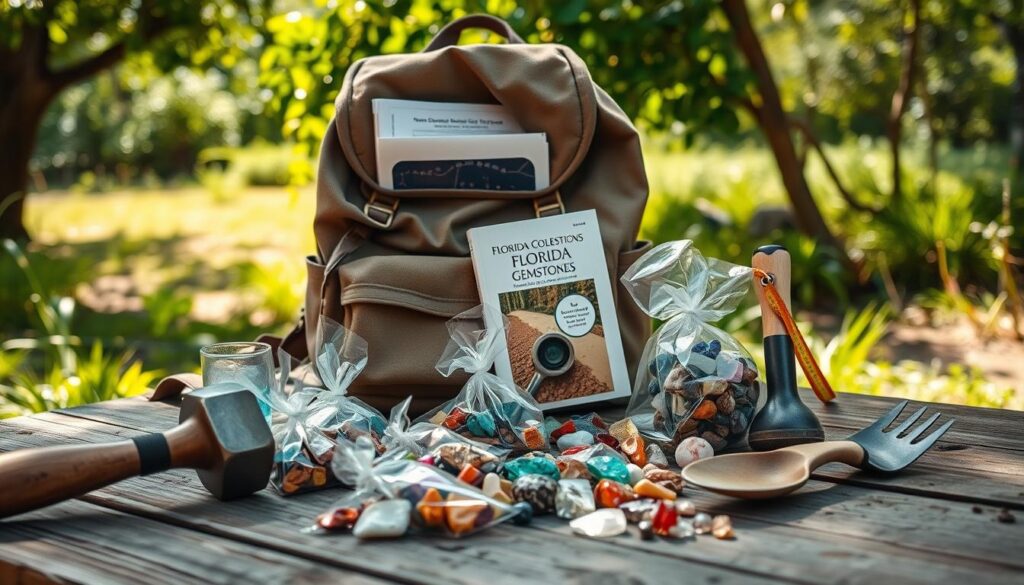
Successful gemstone hunting requires basic tools and equipment suited to Florida’s conditions. Most hunting involves sifting through river gravels or searching beach materials, so your gear should handle wet conditions.
Basic Tool Kit
A sturdy sieve or classifier makes the essential foundation of your toolkit. Choose screens with different mesh sizes to separate materials effectively and speed up the hunting process.
- 1/4-inch screen – removes large rocks and debris quickly.
- 1/8-inch screen – catches medium-sized gemstones and fossils.
- Small hand screen – final sorting for tiny gems and crystals.
- Small shovel – fills buckets and moves gravel efficiently.
- Collection containers – keeps finds organized and protected.
Identification Tools
A good hand lens helps identify potential gemstones in the field. A 10x magnification lens shows enough detail to distinguish real gems from similar-looking rocks.
Bring reference materials like field guides specific to Florida minerals. Photos and descriptions help confirm identification and prevent collecting worthless materials.
Legal Requirements and Ethics
Understanding Florida’s collecting laws protects you from legal problems and helps preserve gemstone sites for future hunters. Rules vary significantly between public and private lands.
Public Land Regulations
State parks typically prohibit all collecting to preserve natural resources for education and enjoyment. Some parks offer designated collecting areas with proper permits, but you must check specific park regulations before visiting.
National forests and wildlife management areas have their own rules about collecting. Contact the managing agency directly to learn current regulations and permit requirements.
Private Property Access
Private landowners control collecting rights on their property. Many Florida rivers flow through private land, requiring permission even to access the water.
Some landowners charge fees for collecting access, while others provide free permission for respectful collectors. Always ask permission and respect property boundaries to maintain good relationships with landowners.
Responsible Collecting
Ethical collecting means taking only what you need and leaving areas better than you found them. Fill in holes, pack out trash, and avoid damaging vegetation or wildlife habitat.
Share location information carefully to prevent overcrowding at productive sites. Teaching proper techniques to new collectors helps maintain access and site quality for everyone.
Frequently Asked Questions
What is the best time of year for gemstone hunting in Florida?
The dry season from November through April offers the best conditions, with lower water levels exposing more river gravel. After summer storms, new material often washes into accessible areas.
Do I need special permits to collect gemstones in Florida?
State parks require permits for any collecting, while private property needs landowner permission. Public rivers often allow collecting without permits, but check local regulations first.
How can I tell if I’ve found real agatized coral?
Real agatized coral shows the cellular structure of original coral but feels as hard as quartz. It often displays banding patterns and weighs more than regular coral due to silica replacement.
Are there any dangerous animals to watch for while gemstone hunting?
Florida rivers may contain alligators and venomous snakes, so stay alert and make noise while walking. Also watch for fire ants around disturbed soil areas.
What should I do if I find a really valuable gemstone?
Have valuable finds properly identified by a qualified gemologist before assuming high worth. Keep detailed records of where and when you found specimens for provenance documentation.
Final Thoughts
Gemstones In Florida offer endless opportunities for collectors willing to explore the state’s unique geological landscape. From agatized coral in river systems to calcite crystals in limestone formations, Florida’s diverse geology creates hunting opportunities for every skill level.
Start with established locations like the Peace River or Suwannee River to learn basic techniques, then branch out to explore lesser-known areas. Remember that successful gemstone hunting combines knowledge, patience, and respect for both the environment and property rights. If you’re looking to expand your collecting beyond Florida, consider exploring opportunities in neighboring states like Alabama, Georgia, or South Carolina.