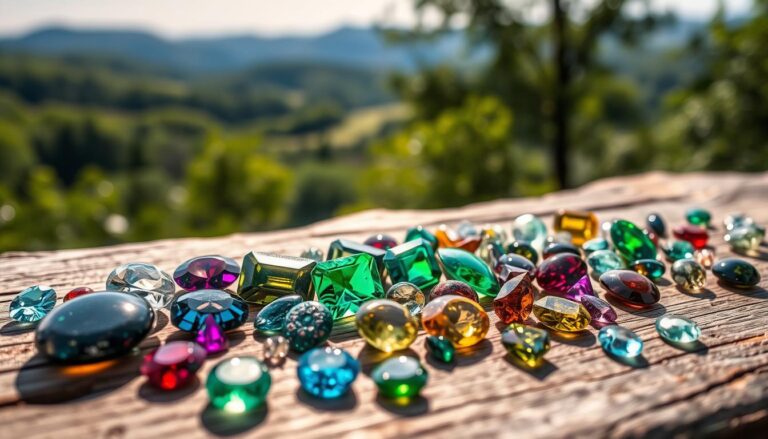
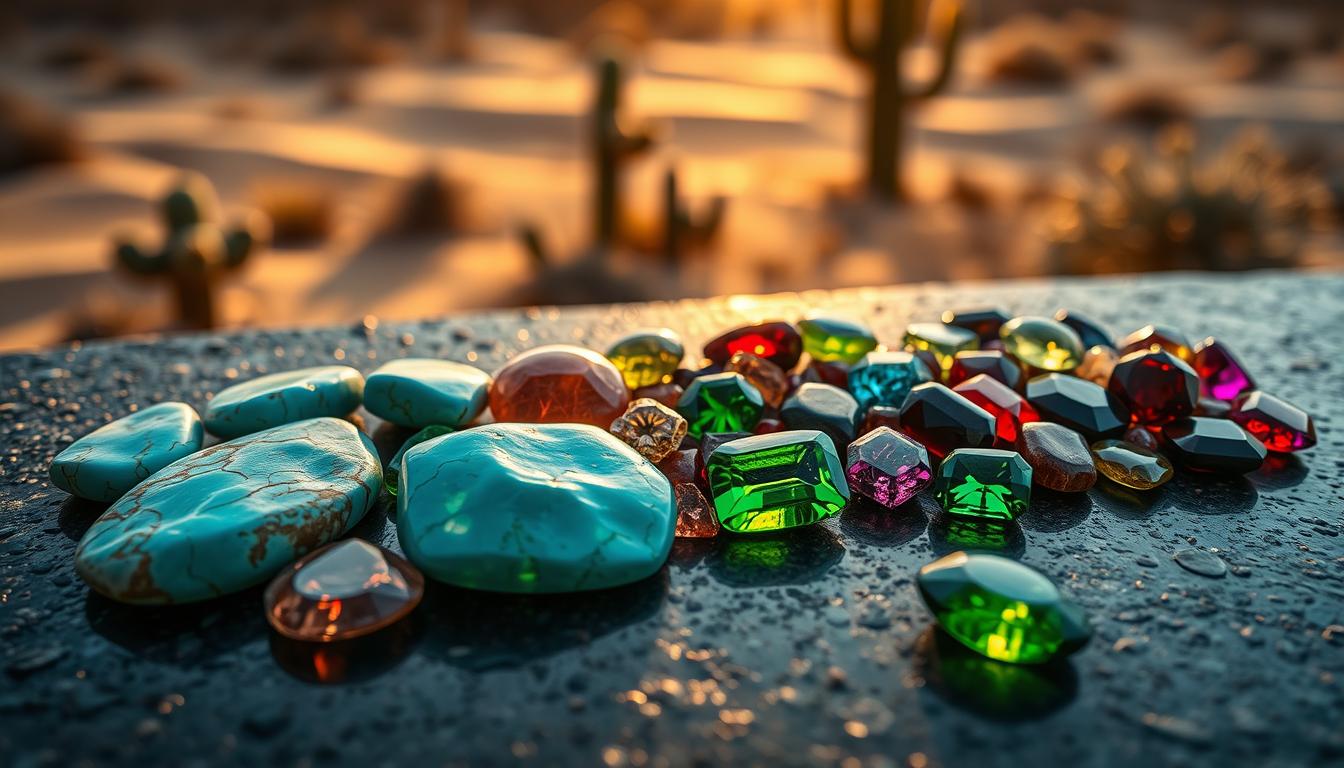
Arizona Gemstones offer some of the most impressive mineral finds in the United States. This southwestern state sits on a geological treasure map created by millions of years of volcanic activity, tectonic shifts, and mineral-rich water systems.
From the famous turquoise mines of Morenci to the peridot deposits of San Carlos Apache Reservation, Arizona delivers world-class gems that attract collectors from around the globe. The state’s dry climate and exposed rock formations make it perfect for both beginner and experienced rockhounds.
TL;DR
- Arizona produces over 75% of America’s turquoise, with mines like Morenci and Kingman leading production.
- The San Carlos Apache Reservation contains the world’s largest known peridot deposit in basaltic rock.
- Four Peaks Amethyst Mine produces gem-quality purple quartz valued at $50-200 per carat.
- Most public lands in Arizona allow gemstone collecting with basic hand tools and no permits required.
Arizona Gemstones Formation and Geology
Arizona’s gemstone wealth comes from its position at the intersection of multiple geological provinces. The Colorado Plateau, Basin and Range Province, and Mexican Highland regions each contribute different mineral environments.
Volcanic activity over millions of years brought deep-earth minerals to the surface while creating the cavities where many gems crystallized. Copper-rich solutions flowing through fractured rocks created the turquoise deposits Arizona is famous for.
Major Gemstone Types and Locations
The state’s diverse geology produces an impressive range of collectible stones:
- Turquoise – Found in copper mining areas like Morenci, Kingman, and Bisbee
- Peridot – Concentrated in the San Carlos Apache Reservation basalt flows
- Amethyst – High-quality crystals from Four Peaks and other mountain locations
- Fire Agate – Unique specimens from the Sonoran Desert regions
- Apache Tears – Obsidian nodules found throughout volcanic areas
Top Arizona Gemstone Hunting Locations
Arizona offers hundreds of productive collecting sites across its varied landscapes. Each location has specific gems and minerals based on the local geology.
Morenci Turquoise District
The Morenci mine produces some of the world’s finest turquoise with distinctive pyrite matrix patterns. This open-pit copper mine has yielded turquoise for over a century, with specimens showing incredible blue colors and metallic veining.
Access requires permission from the mining company, but specimens occasionally appear at local rock shops and gem shows. Morenci turquoise commands premium prices due to its quality and limited availability.
San Carlos Apache Reservation
The reservation contains massive peridot deposits formed when volcanic eruptions brought mantle rock to the surface. Apache families have collected these olive-green gems for generations, both for personal use and commercial sales.
Visitors can purchase collecting permits and dig for their own peridot specimens. The reservation produces gem-quality stones ranging from small chips to museum-grade crystals over 50 carats.
Four Peaks Wilderness Area
This rugged mountain range northeast of Phoenix hosts Arizona’s premier amethyst deposits. The gems form in pegmatite veins and granite cavities at elevations over 6,000 feet.
Hiking to the collecting areas requires good physical condition and proper equipment. The reward is access to some of America’s finest amethyst crystals in deep purple colors.
Best Times for Arizona Gemstone Hunting
Plan trips between October and April when temperatures are comfortable and flash flood risks are lowest. Early morning starts help you avoid afternoon heat in desert locations.
Essential Equipment for Arizona Gem Hunting
Success in Arizona’s challenging terrain requires the right tools and preparation. The state’s rocky ground and intense sun demand quality equipment.
Basic Rockhound Kit
- Rock hammer. A 16-ounce geological pick works best for most Arizona rock types.
- Hand lens. 10x magnification helps identify small crystals and mineral features.
- Collection bags. Cloth bags prevent damage during transport and protect specimens.
- GPS device. Essential for navigation in remote desert areas without cell service.
- Safety gear. Include first aid supplies, extra water, and sun protection.
Advanced Collecting Tools
Experienced collectors often upgrade to specialized equipment for better results. Rock saws allow on-site trimming of large specimens while UV lights reveal fluorescent minerals.
Metal detectors can locate buried specimens washed from outcrops by flash floods. Testing kits help confirm gemstone identity when visual features aren’t conclusive. For a complete list of recommended gear, check out our essential rockhounding tools guide.
Legal Guidelines for Gemstone Collecting
Arizona has specific rules governing where and how you can collect gemstones. Understanding these regulations prevents legal problems and protects collecting opportunities for everyone.
Public Land Access
Most Bureau of Land Management and Forest Service areas allow recreational collecting with hand tools. You can take up to 25 pounds of common rocks and minerals per day for personal use.
National parks and monuments prohibit all collecting while state parks have individual policies. Always check current regulations before visiting any location.
Private Property Considerations
Many of Arizona’s best gemstone locations sit on private land or active mining claims. Always obtain written permission before entering private property.
Some ranchers and mining companies offer fee-based collecting opportunities. These arrangements often provide access to areas with exceptional specimens not found on public land.
Identifying Arizona Gemstones
Arizona’s diverse geology produces gems that can be challenging to identify in their rough state. Learning key identification features helps you recognize valuable finds.
Common Gemstone Characteristics
- Turquoise – Blue to green colors, waxy luster, often with host rock matrix
- Peridot – Olive green color, glassy luster, found in dark volcanic rock
- Amethyst – Purple quartz crystals, six-sided prisms, transparent to translucent
- Fire Agate – Orange to red fire-like flashes in clear chalcedony
- Garnet – Red to orange crystals, often 12-sided, high hardness
Field Testing Methods
Simple tests help confirm gemstone identity without damaging specimens. Hardness testing using common materials reveals mineral identity when combined with color and crystal form observations.
Streak tests show the color of a mineral’s powder when scratched on unglazed ceramic. This technique works especially well for identifying copper minerals like azurite and malachite. For detailed guidance on specimen evaluation, our article on determining rock value provides essential tips.
Frequently Asked Questions
What are the most valuable Arizona gemstones?
High-grade turquoise from Sleeping Beauty and Kingman mines brings $100-500 per carat. Gem-quality peridot and Four Peaks amethyst also command premium prices from collectors.
Can I collect gemstones in Arizona state parks?
Most Arizona state parks prohibit rock and mineral collecting. Check with individual park offices for current policies before planning collecting trips.
Do I need special permits for gemstone hunting in Arizona?
Public lands generally allow collecting with hand tools without permits. Private property requires landowner permission, and some locations need special use permits.
When is the best time to hunt for gems in Arizona?
October through April offers the most comfortable weather for outdoor collecting. Summer temperatures often exceed 110°F in desert areas, making collecting dangerous.
Where can I get Arizona gemstones identified professionally?
Local rock shops, university geology departments, and certified gemologists can identify specimens. Many rock clubs also have experienced members who help with identification.
Final Thoughts
Arizona Gemstones represent some of the most diverse and beautiful mineral specimens found anywhere in North America. The state’s unique geological history created perfect conditions for world-class turquoise, peridot, amethyst, and dozens of other collectible minerals.
Whether you’re a weekend rockhound or serious collector, Arizona’s vast landscapes offer endless opportunities for discovery. Start with easily accessible public lands and gradually work up to more challenging remote locations as your skills develop. To avoid common pitfalls while collecting, be sure to review our guide on rockhounding mistakes beginners should avoid.