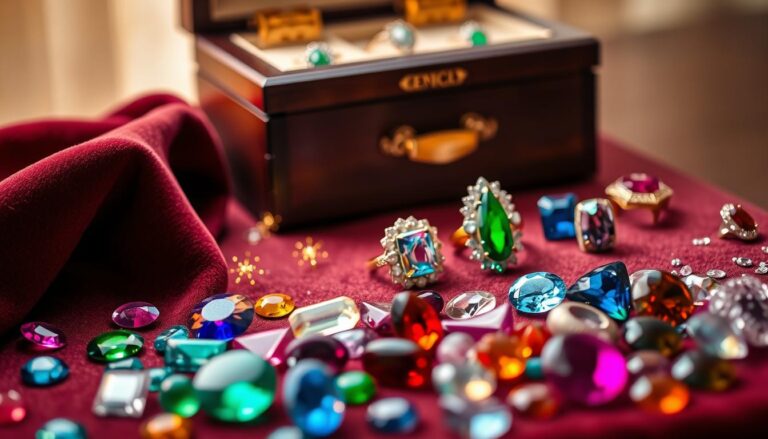
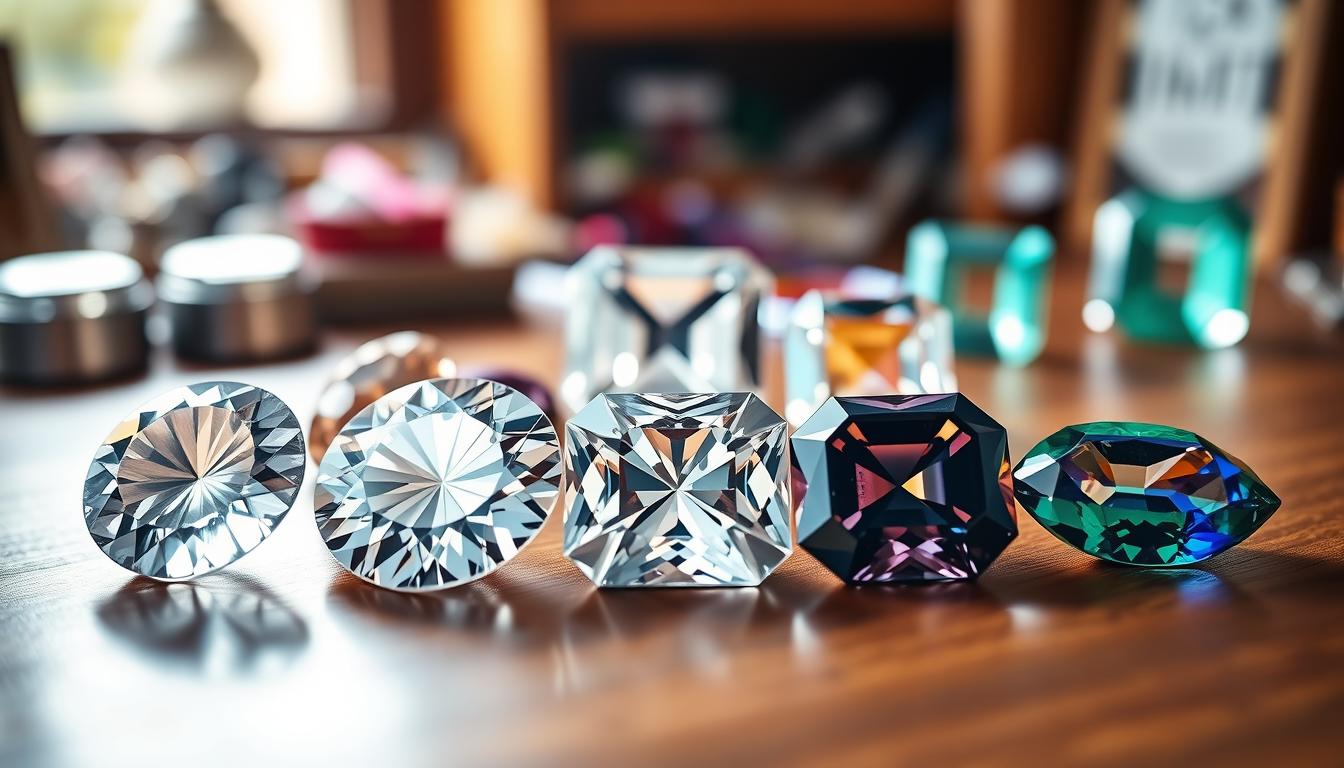
Gemstone cuts are more than just shaping techniques – they’re the key to unlocking a stone’s true potential. Each cut transforms rough minerals into brilliant treasures that capture and reflect light in unique ways. The right cut can make an ordinary stone extraordinary, while a poor cut can diminish even the finest gem.
Understanding different cutting styles helps collectors make smarter choices and build more valuable collections. Whether you’re drawn to classic brilliant cuts or innovative fantasy shapes, knowing how each style affects a stone’s appearance and worth is essential for anyone starting their gemstone collecting journey.
TL;DR
- Round brilliant cuts feature 58 facets arranged to maximize light return and sparkle.
- Premium cuts can increase a gemstone’s value by 20-30% compared to commercial cuts.
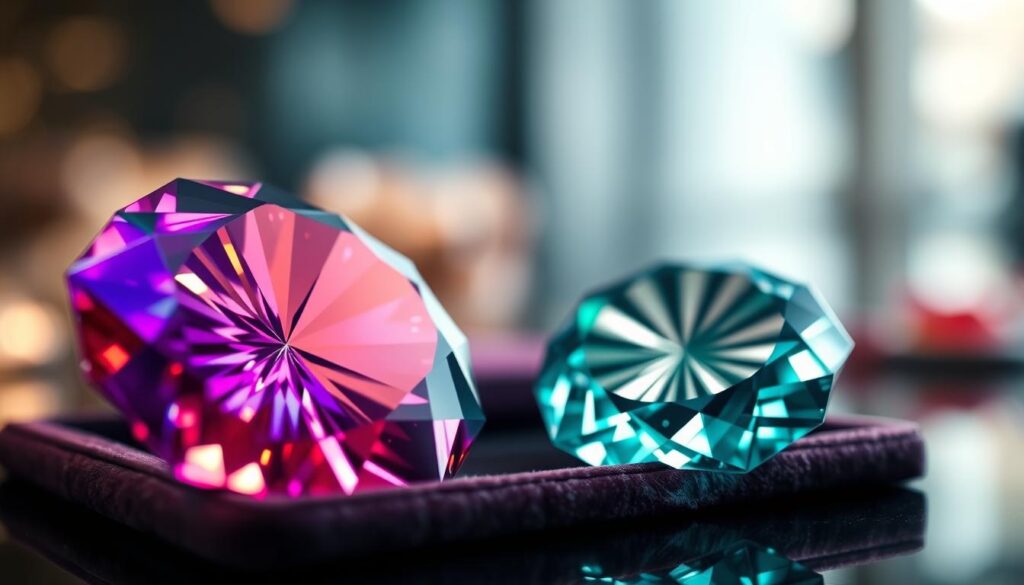
- Fantasy cuts use concave faceting techniques that create optical complexity not possible with flat surfaces.
- Marquise cuts make stones appear up to 15% larger than round stones of the same carat weight.
Gemstone Cuts for Collectors
The cut determines how light travels through a gemstone, affecting its brilliance, fire, and scintillation. Collectors need to understand these optical properties because they directly impact both beauty and market value.
Different cuts emphasize different qualities in stones. Some maximize brilliance while others enhance color or hide inclusions naturally present in the rough material. Understanding how gemstone quality is graded helps collectors appreciate the importance of cut alongside the other quality factors.
The Evolution of Cutting Techniques
Ancient craftsmen used simple tools to shape gems into basic forms like cabochons. These early cuts relied on polishing rather than precise faceting to reveal beauty.
Modern technology revolutionized the field with computer-aided design and precision machinery. Today’s cutters can calculate exact angles and create complex patterns that were impossible centuries ago.
Traditional vs Modern Approaches
Traditional cutting prioritized preserving carat weight from rough stones. Modern cutting focuses on optimizing light performance, even if it means sacrificing some weight for better optical results.
- Traditional methods – emphasized size retention and basic symmetry
- Modern precision cutting – uses computer modeling to maximize brilliance
- Hybrid approaches – combine traditional craftsmanship with technological precision
Faceted Cuts and Light Performance
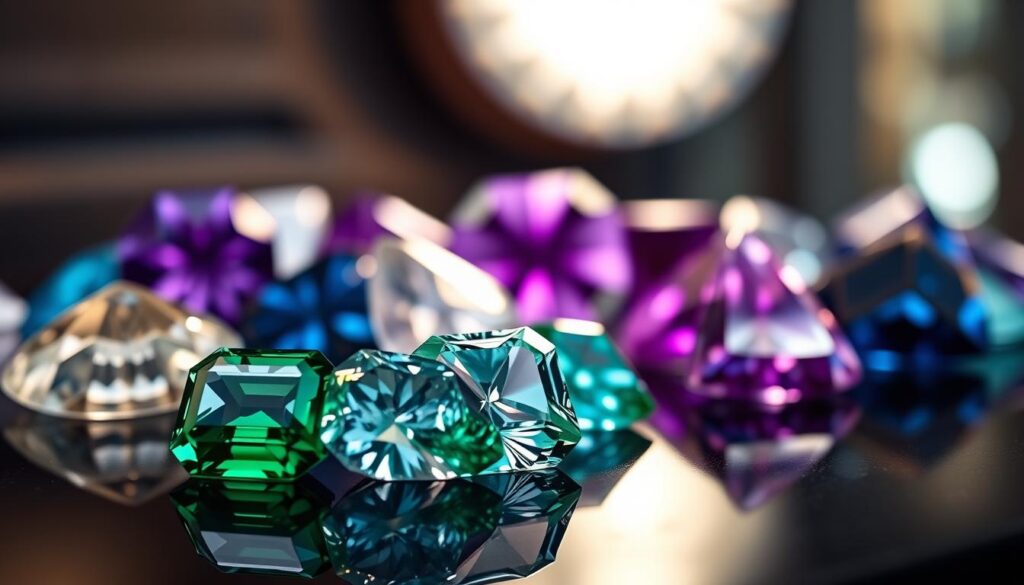
Faceted cuts use flat surfaces arranged at specific angles to control light paths. The quality of these facets determines how much light returns to the viewer’s eye as white light or dispersed colors.
Critical angle calculations ensure light reflects internally rather than leaking out the sides. Master cutters adjust pavilion angles to achieve total internal reflection for maximum brilliance.
The Science Behind Sparkle
Three optical phenomena create a faceted gem’s appeal. Brilliance refers to white light reflection, fire describes spectral color dispersion, and scintillation creates the twinkling effect as stones move.
- Calculate critical angles. Determine the refractive index and adjust facet angles accordingly.
- Plan facet arrangement. Map out crown and pavilion facets for optimal light return.
- Execute precise cutting. Use calibrated equipment to achieve planned angles within tight tolerances.
Collector’s Tip
Always examine stones under different lighting conditions. A well-cut gem should maintain its appeal in both natural daylight and indoor lighting.
Popular Cuts Every Collector Should Know
The round brilliant remains the standard for measuring cutting quality across all gem types. Its 58-facet arrangement – 33 on the crown and 25 on the pavilion – provides a benchmark for brilliance and fire.
Round Brilliant Cut
This cut works well for most gemstone types because its proportions accommodate different refractive indices. The mathematical precision required makes it an excellent test of a cutter’s skill.
Variations include the Old European cut with its smaller table and higher crown, offering vintage charm with slightly less brilliance than modern standards.
Step Cuts and Their Appeal
Emerald and asscher cuts use step faceting that creates hall-of-mirrors effects. These cuts emphasize clarity and color over brilliance, making them ideal for high-quality rough material.
- Emerald cut – rectangular with cropped corners and parallel step facets
- Asscher cut – square version with similar faceting patterns
- Baguette cut – long rectangular shape used for accent stones
Specialty and Designer Cuts
Fantasy cuts push beyond traditional boundaries using innovative techniques. These styles often require specialized equipment and advanced skills that few cutters possess.
Marquise and Fancy Shapes
The marquise cut’s elongated form with pointed ends maximizes apparent size while creating an elegant silhouette. Its boat-like shape requires careful symmetry to avoid the bow-tie effect that can diminish brilliance.
Heart and pear cuts combine curved and straight edges, demanding precise execution to maintain balanced proportions. These romantic shapes work particularly well in pendants and earrings.
Concave and Multi-Level Cutting
Concave faceting uses curved surfaces instead of flat planes, creating optical effects impossible with traditional methods. This technique requires specialized equipment and significantly more cutting time.
Multi-level cuts incorporate different facet sizes and angles within the same stone. These complex designs can create star patterns, optical illusions, or unique light displays.
Evaluating Cut Quality
Professional assessment requires both technical knowledge and proper tools. A 10x loupe reveals basic proportions and symmetry, while gemscopes provide detailed views of internal reflections.
Light performance testing shows how well a cut utilizes available illumination. Use different light sources – LED, halogen, and natural daylight – to evaluate performance across conditions. Learning how to identify gemstones without special tools can also help collectors develop their eye for quality.
Key Quality Indicators
Symmetry affects how evenly light distributes across the stone. Poorly aligned facets create dark areas or uneven brightness that reduce overall appeal.
- Polish quality – smooth facet surfaces without scratches or pits
- Proportion accuracy – table and depth percentages within optimal ranges
- Facet alignment – precise meeting points between adjacent facets
- Girdle condition – even thickness without chips or irregularities
Frequently Asked Questions
What makes a premium cut worth the extra cost?
Premium cuts maximize light return through precise angles and superior polish quality. They often show 20-30% more brilliance than commercial cuts of the same rough material.
How do I know if a fancy cut is well-executed?
Look for symmetrical outlines, even light distribution, and consistent facet sizes. Avoid stones with obvious dark areas or uneven brightness patterns.
Should I prioritize cut quality over carat weight?
A well-cut smaller stone often appears more brilliant and valuable than a poorly cut larger one. Cut quality has the greatest impact on a gem’s visual appeal.
Are fantasy cuts more fragile than traditional cuts?
Complex cuts with thin sections or sharp points require more careful handling. However, proper setting design can protect vulnerable areas without compromising appearance.
Final Thoughts
Gemstone cuts for collectors offer endless possibilities for building diverse and interesting collections. Each cutting style brings unique optical properties and aesthetic appeal that can enhance any gathering of fine stones.
Start by learning the fundamentals of light performance and quality evaluation. This knowledge will guide your choices and help you recognize exceptional workmanship when you encounter it. Consider examining stones through professional tools like those available from GIA’s educational resources to develop your evaluation skills, and don’t forget to properly store and protect your gemstones to maintain their brilliant cuts for years to come.