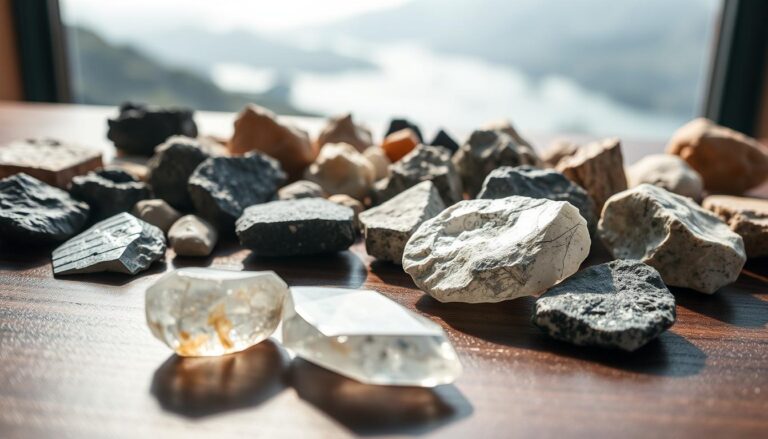
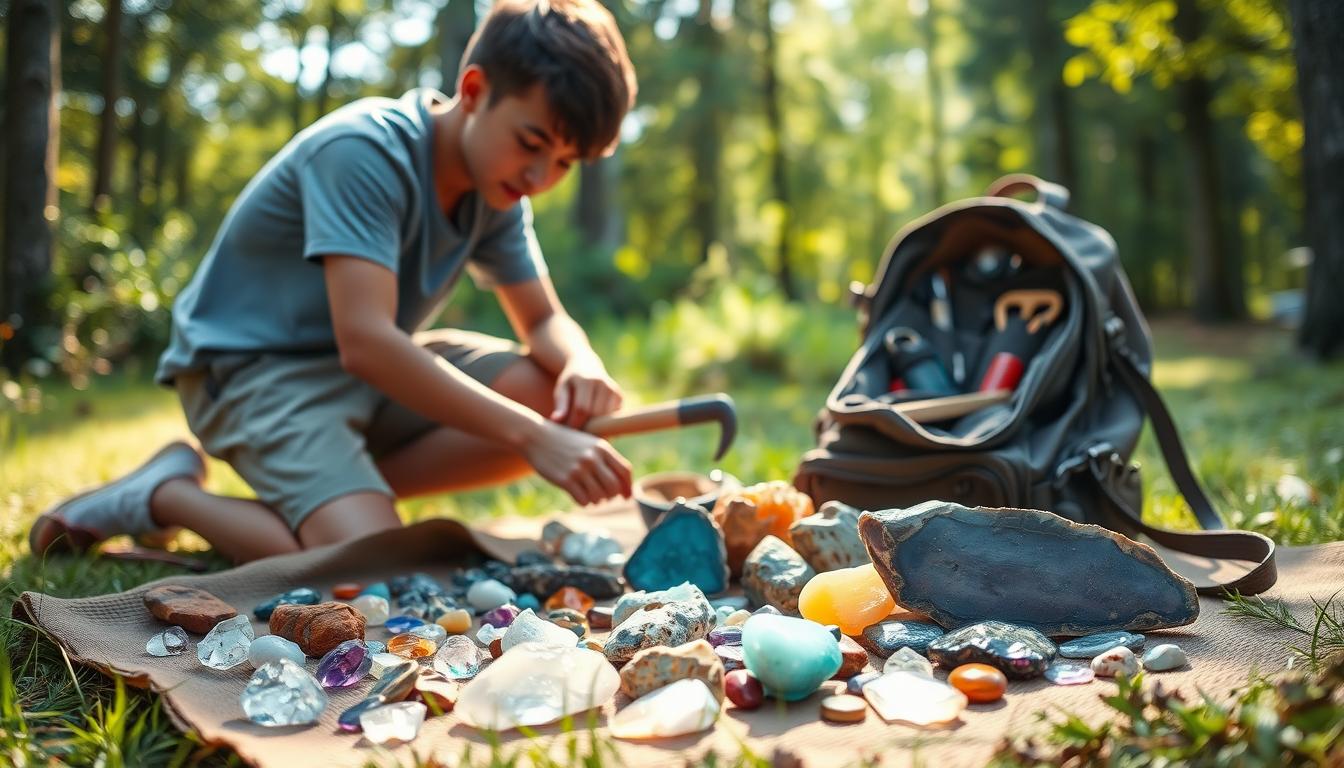
Rock Collecting For Beginners opens up a fascinating world of natural treasures waiting to be discovered. Whether you’re drawn to the sparkle of quartz crystals or the rich history embedded in sedimentary layers, starting your first collection can feel overwhelming without proper guidance.
The good news is that rock collecting requires minimal investment and can be enjoyed anywhere from your backyard to dedicated collecting sites. With the right knowledge about what to look for and where to find specimens, you’ll quickly build confidence in identifying and collecting rocks that catch your eye.
TL;DR
- Start with 5 common rock types: quartz, granite, limestone, sandstone, and basalt for easy identification.
- Essential tools cost under $50 – rock hammer, safety glasses, collection bag, and field guide.
- Local parks and stream beds offer 70% of beginner-friendly specimens within 20 miles of most homes.
- Join a local geology club to access private collecting sites and expert guidance from experienced collectors.
Rock Collecting For Beginners: Your First Steps
Getting started with rock collecting requires understanding the three main rock categories that form the foundation of any collection. Igneous rocks like granite and basalt form from cooled magma, sedimentary rocks like limestone develop from compressed materials over time, and metamorphic rocks like marble result from heat and pressure transforming existing rocks.
Your first collecting trips should focus on easily identifiable specimens that help you learn basic characteristics. Look for rocks with distinct colors, crystal formations, or unique textures that make identification straightforward as you build your knowledge base.
Essential Equipment for New Collectors
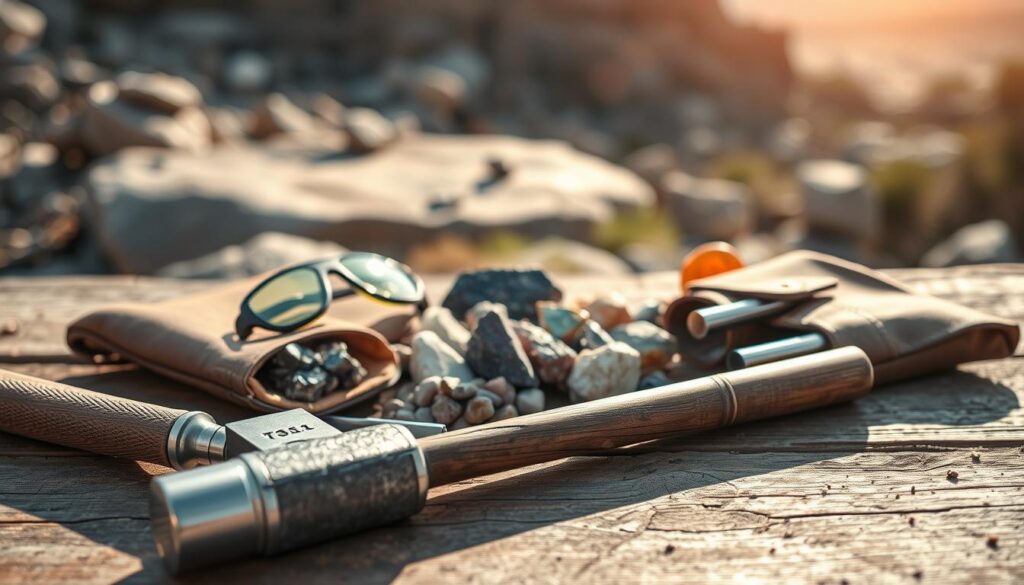
Every beginner needs a basic toolkit that ensures safe and successful collecting experiences. Safety glasses protect your eyes from flying rock chips, while a geological hammer helps extract specimens from larger formations.
- Rock hammer – Choose a 16-ounce hammer with a flat striking surface and pointed pick end.
- Safety glasses – Wraparound style provides the best protection from debris.
- Collection bag – Canvas or leather bag with multiple compartments keeps specimens separated.
- Field notebook – Record location, date, and observations for each find.
- Hand lens – 10x magnification reveals crystal structure and mineral details.
Best Beginner Rock Types to Collect
Focus your early collecting efforts on rock types that are abundant, easy to identify, and showcase different geological processes. These foundational specimens teach you to recognize key characteristics while building a diverse collection.
Quartz and Its Varieties
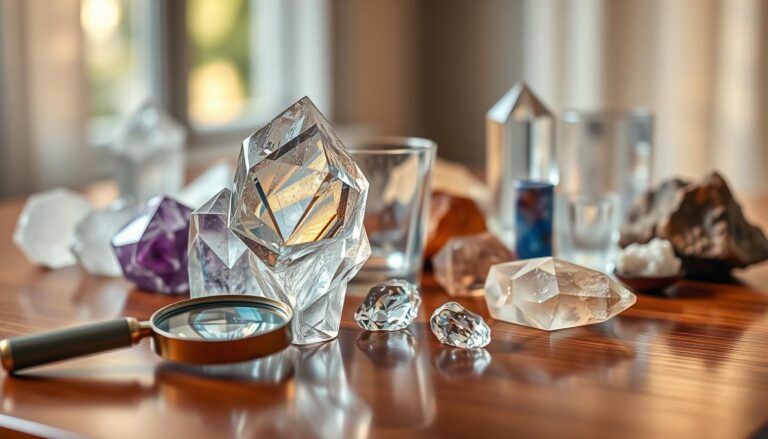
Quartz represents the most beginner-friendly mineral family with varieties found in every geographic region. Clear quartz, amethyst, rose quartz, and smoky quartz each display the same basic crystal structure with different colors caused by trace minerals.
Amethyst’s purple coloration comes from iron impurities, while rose quartz gets its pink hue from microscopic inclusions of other minerals. If you’re interested in finding these beautiful crystals, check out our guide on where to find quartz crystals in nature for detailed location information and collecting tips.
Common Igneous Rocks
Granite and basalt represent the two main categories of igneous rocks and appear in most regions across the country. Granite’s coarse-grained texture results from slow cooling deep underground, while basalt’s fine grain structure forms from rapid surface cooling.
Obsidian offers another excellent igneous example with its glass-like appearance created by extremely rapid cooling. Pumice demonstrates how gas bubbles in cooling lava create lightweight, porous rock structures.
Start Local First
Spend your first month collecting within 10 miles of home to learn your area’s geology. This builds identification skills before traveling to distant locations.
Sedimentary Rock Examples
Limestone and sandstone provide excellent introductions to sedimentary rock formation processes. Limestone often contains visible fossils that tell stories of ancient marine environments, while sandstone’s individual grains reveal the weathering and transport history.
Shale demonstrates how fine clay particles compress into thin, flat layers over millions of years. Conglomerate rocks show how pebbles and larger fragments cement together to create composite formations.
Where to Find Your First Specimens
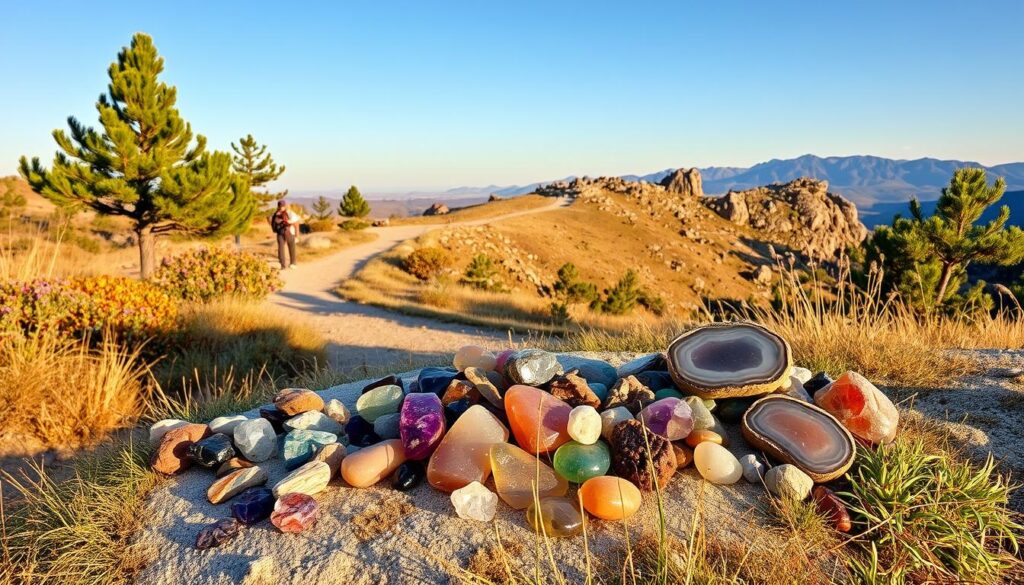
Successful rock collecting starts with knowing where different rock types naturally occur in accessible locations. Stream beds, road cuts, and construction sites often expose fresh rock faces that make collecting easier for beginners.
Public Collecting Areas
Many state and national parks allow rock collecting in designated areas with proper permits. Contact park offices before visiting to understand current regulations and obtain any required collecting permits.
- Research regulations. Call ahead to confirm collecting policies and any seasonal restrictions.
- Obtain permits. Many locations require free permits available at visitor centers.
- Respect limits. Follow quantity restrictions and designated collecting zones.
- Leave no trace. Fill holes and avoid damaging vegetation or wildlife habitat.
Private Property Opportunities
Farmers and landowners often grant permission to collect on their property when approached respectfully. Construction sites, quarries, and mine dumps can offer exceptional specimens with proper authorization from property owners.
Always obtain written permission before collecting on private land and follow any specific guidelines provided by the property owner. Building relationships with local landowners can provide access to prime collecting locations for years to come.
Proper Storage and Display Methods
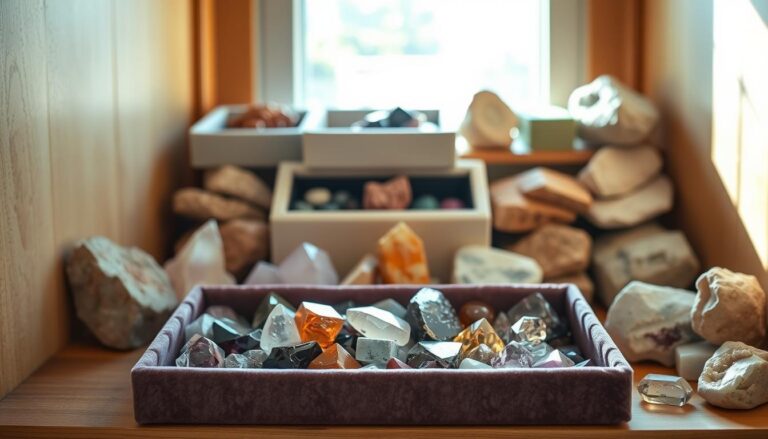
Protecting your growing collection requires proper storage techniques that prevent damage while allowing easy access for study and display. Avoid storing specimens in damp basements or areas with temperature fluctuations that can cause expansion and cracking.
Label each specimen immediately after collection with location, date, and identifying characteristics. This information becomes invaluable as your collection grows and helps you remember specific details about each find.
Display Case Options
Glass-front display cases protect specimens from dust while allowing full visibility of your favorite pieces. Adjustable shelves accommodate rocks of different sizes, and LED lighting highlights crystal formations and color variations.
- Wall-mounted cases – Save floor space while creating attractive displays.
- Desktop displays – Perfect for small collections or featured specimens.
- Storage drawers – Keep bulk specimens organized and easily accessible.
- Outdoor displays – Weather-resistant cases for larger or more durable specimens.
Building Knowledge Through Community
Local rock and mineral clubs provide invaluable resources for beginning collectors through group field trips, expert guidance, and specimen exchanges. Experienced members share decades of knowledge about regional geology and the best collecting locations.
Monthly meetings feature guest speakers, identification workshops, and opportunities to examine exceptional specimens from other collections. Many clubs maintain libraries of geological references and field guides available to members, which can help you avoid common rockhounding mistakes that every beginner should avoid.
Frequently Asked Questions
What rocks should beginners collect first?
Start with quartz varieties, granite, limestone, and sandstone since they’re common, easy to identify, and found in most regions.
How much do basic rock collecting tools cost?
Essential tools including a rock hammer, safety glasses, collection bag, and field guide typically cost $40-60 total.
Can I collect rocks in national parks?
Most national parks prohibit rock collecting, but some state parks and national forests allow it with proper permits.
How do I identify rocks I find?
Use field guides, observe color and crystal structure, test hardness, and consult local geology clubs for expert identification help.
Where can beginners find good collecting spots?
Stream beds, road cuts, construction sites, and designated park areas offer excellent opportunities for new collectors.
How should I store my rock collection?
Keep specimens in dry areas with stable temperatures, use protective padding, and label each piece with collection details.
Final Thoughts
Rock Collecting For Beginners becomes an rewarding lifelong pursuit when you start with proper knowledge and realistic expectations. Focus on learning to identify common local specimens before expanding to exotic varieties or distant collecting locations.
Begin your collection this weekend by exploring nearby parks or stream beds with essential rockhounding tools and a field guide.