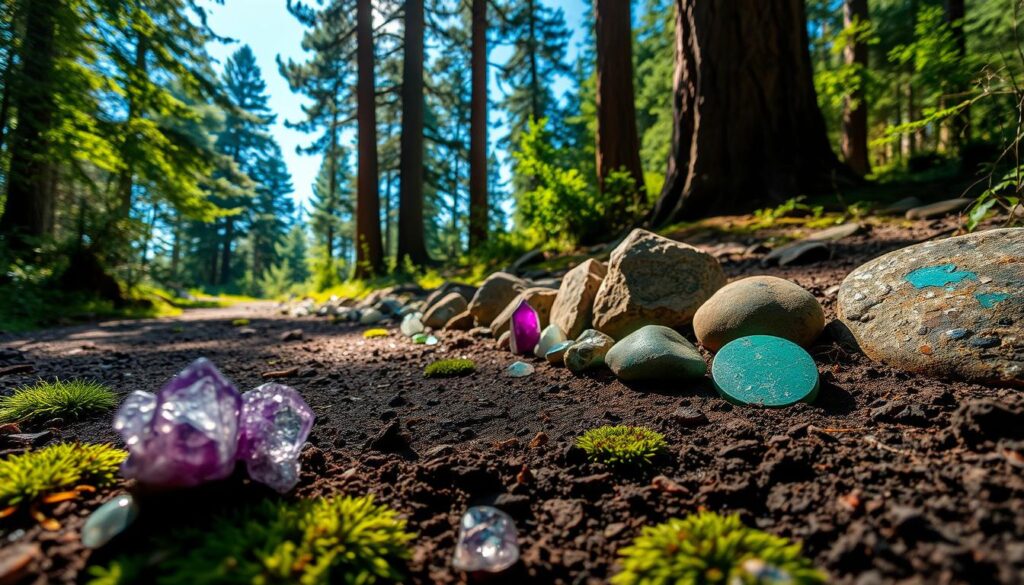
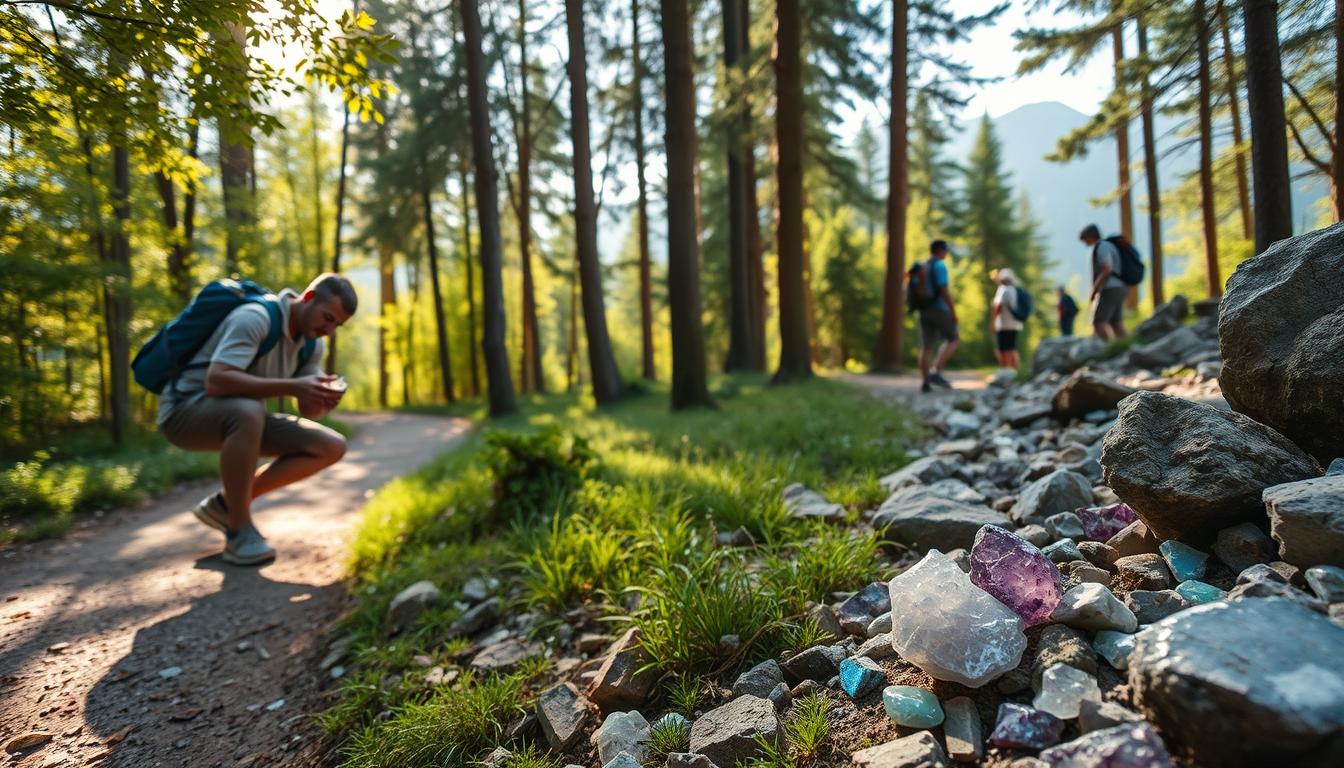
Mineral hunting combines outdoor adventure with geological discovery, letting hikers uncover hidden treasures while exploring nature’s trails. This rewarding activity turns every hike into a potential treasure hunt where common rocks reveal beautiful crystals and rare specimens.
Whether you’re a seasoned hiker looking to add excitement to your adventures or a beginner curious about the rocks beneath your feet, mineral hunting offers endless opportunities for discovery. From shiny quartz crystals to colorful garnets, hiking trails across the country hold geological wonders waiting to be found.
TL;DR
- Quartz varieties like amethyst and smoky quartz appear in 95% of hiking locations across mountainous regions.
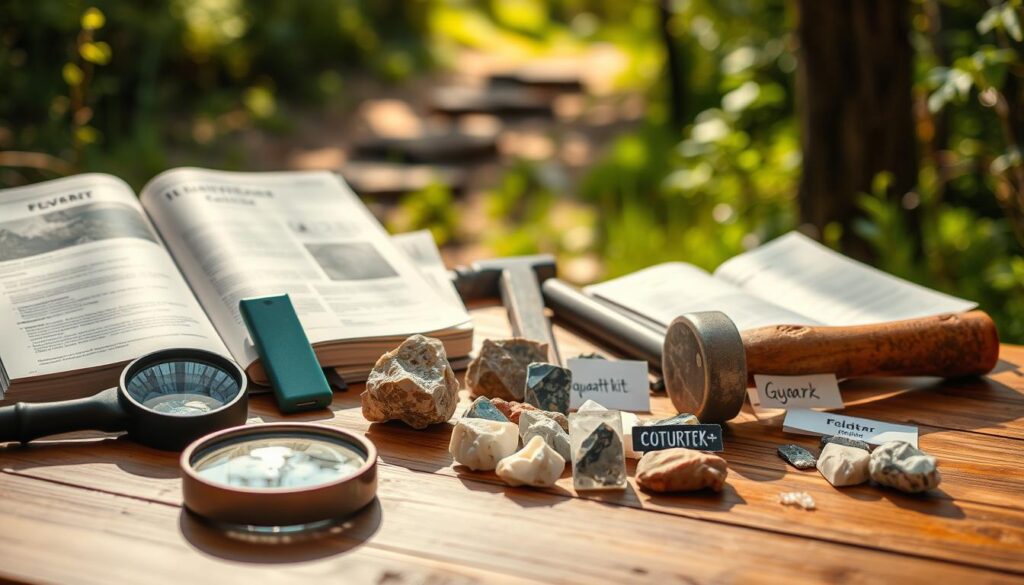
- A basic field kit with hand lens, rock hammer, and streak plate costs under $50 and identifies most trail minerals.
- Western mountain ranges in California and Colorado yield gold, garnets, and tourmaline in accessible hiking areas.
- The Mohs hardness test using a steel file (hardness 6.5) quickly separates quartz from softer minerals like calcite.
Mineral Hunting While Hiking
Hiking trails naturally expose rock formations and mineral deposits that would otherwise remain hidden underground. Weather, erosion, and geological activity bring these treasures to the surface where observant hikers can spot them.
The best mineral hunters develop a keen eye for unusual rocks, colorful crystals, and metallic gleams that stand out from ordinary trail stones. This skill improves with practice as you learn to recognize the geological signs that indicate mineral-rich areas.
Why Hikers Excel at Finding Minerals
Experienced hikers already possess many skills that translate perfectly to mineral hunting. They’re comfortable spending hours outdoors, know how to read terrain, and have developed patience for careful observation.
Hikers also cover more ground than traditional rockhounds, accessing remote locations where minerals remain undisturbed. This mobility advantage often leads to discovering specimens that casual collectors miss.
Essential Minerals Found on Hiking Trails
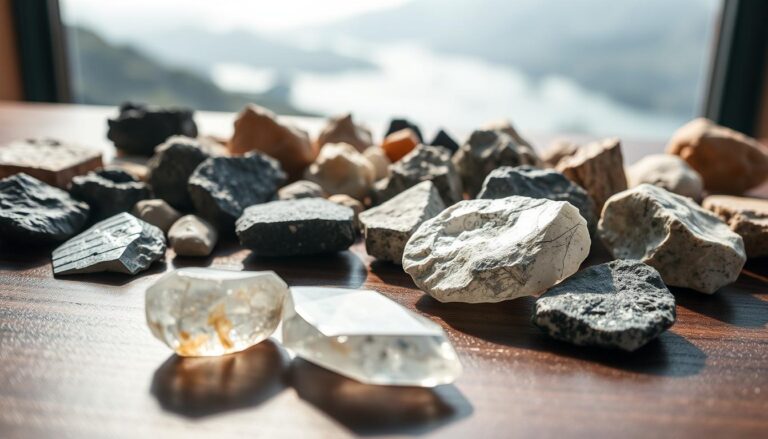
Most hiking trails contain predictable mineral types based on the underlying geology. Learning to identify these common specimens builds confidence before moving on to rarer finds, and understanding easy rocks to identify provides an excellent foundation for mineral hunting success.
Quartz Family Minerals
Quartz appears in more hiking locations than any other mineral family. Its durability means quartz crystals survive weathering that destroys softer minerals, making them abundant in stream beds and exposed outcrops.
- Clear quartz – transparent crystals found in igneous and metamorphic rock formations
- Smoky quartz – brown to black variety created by natural radiation exposure
- Rose quartz – pink crystals common in pegmatite deposits
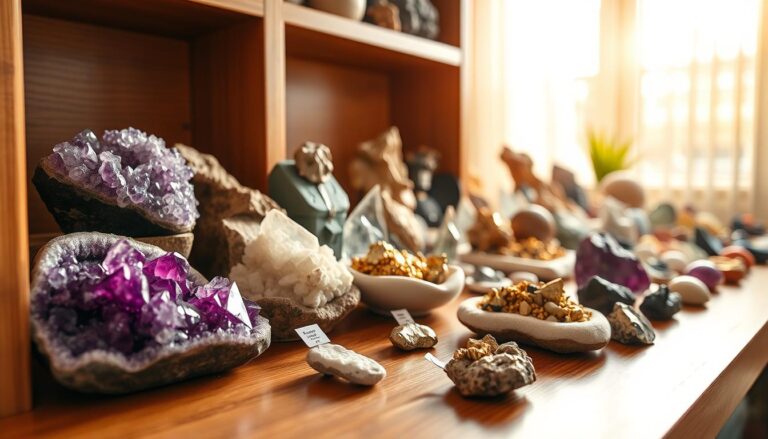
- Amethyst – purple variety prized for its color and crystal formation
- Citrine – yellow to orange quartz found in heated geological zones
Feldspar and Mica Groups
Feldspar minerals make up 60% of the Earth’s crust, making them extremely common on hiking trails. They often display attractive colors and well-formed crystal faces that make identification easier.
Mica appears as shiny, flaky minerals that split into thin sheets. Their metallic luster catches sunlight, making them easy to spot along trail surfaces.
- Orthoclase feldspar – pink to white crystals with rectangular shapes
- Plagioclase feldspar – gray to white with striped patterns
- Muscovite mica – clear to silvery sheets that split easily
- Biotite mica – dark brown to black flaky crystals
Quick Mineral Identification Tip
Test hardness by trying to scratch the mineral with a steel knife blade (hardness 5.5). Quartz won’t scratch while calcite and softer minerals will show scratch marks.
Prime Locations for Trail Mineral Hunting
Certain geological regions consistently produce better mineral specimens due to their formation history and rock types. Understanding these patterns helps focus your hunting efforts on the most productive areas, and knowing the states with the best rockhounding opportunities can guide your hiking destination choices.
Western Mountain Regions
The western United States offers some of the country’s best mineral hunting opportunities. Volcanic activity, mountain building, and hydrothermal processes created diverse mineral deposits accessible via hiking trails.
California’s Sierra Nevada range produces gold, garnets, and tourmaline in areas accessible by day hikes. Colorado’s Rocky Mountains contain amazonite, topaz, and phenakite specimens along established trail systems.
- California Sierra Nevada – gold, quartz crystals, and garnet
- Colorado Rockies – amazonite, topaz, and beryl varieties
- Montana ranges – sapphires, garnets, and agate
- Arizona desert trails – turquoise, chrysocolla, and peridot
Eastern Hiking Destinations
Eastern regions offer different but equally rewarding mineral hunting experiences. Ancient geological formations and pegmatite intrusions create pockets of rare minerals along hiking routes.
The Appalachian Trail system crosses multiple mineral-rich states, providing access to mica schists, quartz veins, and garnets. New England’s pegmatite deposits yield beryl, tourmaline, and rare earth minerals.
- Maine pegmatites – tourmaline, beryl, and rare phosphates
- North Carolina mountains – rubies, sapphires, and emeralds
- New York Adirondacks – garnets, magnetite, and graphite
- Pennsylvania quarries – celestite, strontianite, and fluorite
Field Equipment for Mineral Identification
Successful mineral hunting requires specific tools that help identify specimens accurately in the field. A well-equipped hiker can determine mineral identity without laboratory analysis using simple field tests, and having the proper rockhounding tools every beginner should own makes the difference between successful hunting and missed opportunities.
Basic Tool Kit
Start with essential tools that fit easily in a hiking backpack. These items handle 90% of field identification needs without adding excessive weight to your pack.
- Hand lens (10x magnification). Reveals crystal structure, luster, and fine details invisible to naked eyes.
- Rock hammer with pick. Breaks specimens cleanly and chips samples for testing.
- Streak plate. Unglazed ceramic tile that shows mineral powder color when scratched.
- Steel knife blade. Tests hardness at 5.5 on the Mohs scale for quick identification.
- Magnet. Identifies magnetic minerals like magnetite and pyrrhotite.
Advanced Field Tests
More sophisticated tests provide definitive identification when basic methods prove inconclusive. These techniques work best when you have specific minerals in mind based on location and appearance.
- Hardness testing – systematic scratching against materials of known hardness
- Specific gravity estimation – hefting specimens to judge density
- Crystal system observation – noting geometric relationships in well-formed crystals
- Chemical spot tests – using safe reagents to confirm mineral chemistry
Geological Formation Patterns
Understanding how different geological processes create mineral deposits helps predict where to find specific specimens. Each formation type produces characteristic mineral assemblages that experienced hunters recognize.
Igneous Rock Minerals
Volcanic and plutonic rocks form through cooling magma, creating large crystals in slow-cooling environments and small crystals in rapid-cooling situations. These rocks often contain the most spectacular mineral specimens.
Pegmatites represent the final stage of igneous crystallization, concentrating rare elements into large, perfect crystals. These formations produce the most valuable and unusual minerals along hiking trails.
Metamorphic Mineral Zones
Heat and pressure transform existing rocks into new minerals through metamorphism. This process creates characteristic mineral assemblages that indicate the temperature and pressure conditions during formation.
Garnet, staurolite, and kyanite form at progressively higher temperatures, allowing geologists to map metamorphic zones. Hikers can use these indicator minerals to predict what other species might occur nearby.
Seasonal Considerations for Mineral Hunting
Weather and seasonal changes affect mineral hunting success by exposing new specimens and making others harder to find. Smart hikers time their expeditions to maximize discovery opportunities.
Spring snowmelt and heavy rains wash sediment away from mineral deposits, revealing fresh specimens. Fall offers comfortable temperatures and clear trail access before winter weather limits high-elevation hunting.
Weather Impact on Specimen Quality
Freeze-thaw cycles crack rocks and expose mineral veins that remain hidden during stable weather. Recent storms often uncover new specimens while burying others under debris.
Dry conditions make fluorescent minerals more visible under UV light, while wet surfaces enhance mineral colors and luster. Both conditions offer unique advantages for different hunting strategies.
Frequently Asked Questions
What are the most common minerals found on hiking trails?
Quartz varieties, feldspar, and mica appear most frequently on hiking trails due to their abundance in Earth’s crust and resistance to weathering.
How can I identify minerals without expensive equipment?
Use simple hardness tests with a steel knife, observe crystal shape and luster, and test streak color on unglazed ceramic for basic identification.
Which regions offer the best mineral hunting opportunities?
Western mountain ranges like California’s Sierra Nevada and Colorado’s Rockies provide excellent specimens, along with eastern pegmatite regions in Maine and North Carolina.
Is it legal to collect minerals on hiking trails?
Mineral collecting rules vary by location – it’s prohibited in National Parks but allowed in many National Forests and state lands with proper permits.
What tools do I need to start mineral hunting while hiking?
A basic kit includes a 10x hand lens, small rock hammer, streak plate, steel knife for hardness testing, and collecting bags.
How do I know if a rock contains valuable minerals?
Look for unusual colors, crystal formations, metallic luster, or geometric shapes that differ from common country rock in the area, and learn how to tell if a rock is valuable to maximize your hunting success.
Final Thoughts
Mineral hunting while hiking opens up a fascinating world where every trail becomes a potential treasure hunt filled with geological discoveries. The combination of physical adventure and scientific exploration appeals to hikers seeking to deepen their connection with the natural world.
Start with common minerals like quartz and feldspar to build identification skills, then gradually expand to rarer specimens as your expertise grows. Remember to always follow collecting regulations and practice Leave No Trace principles to preserve these natural treasures for future generations, and consider learning how to clean rocks and crystals safely to properly care for your discoveries.
—
##