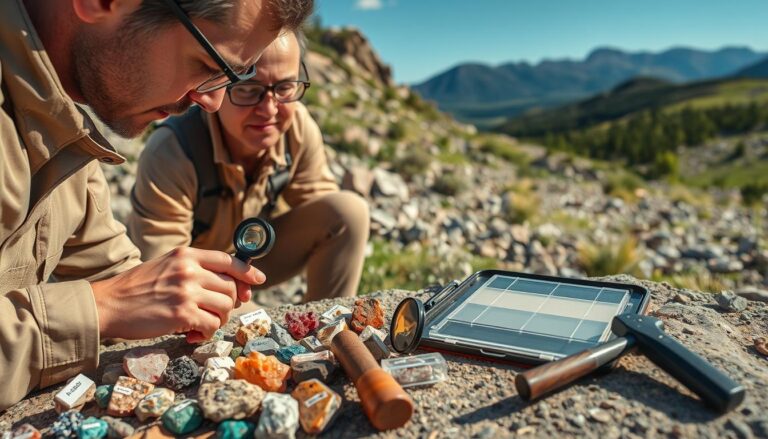
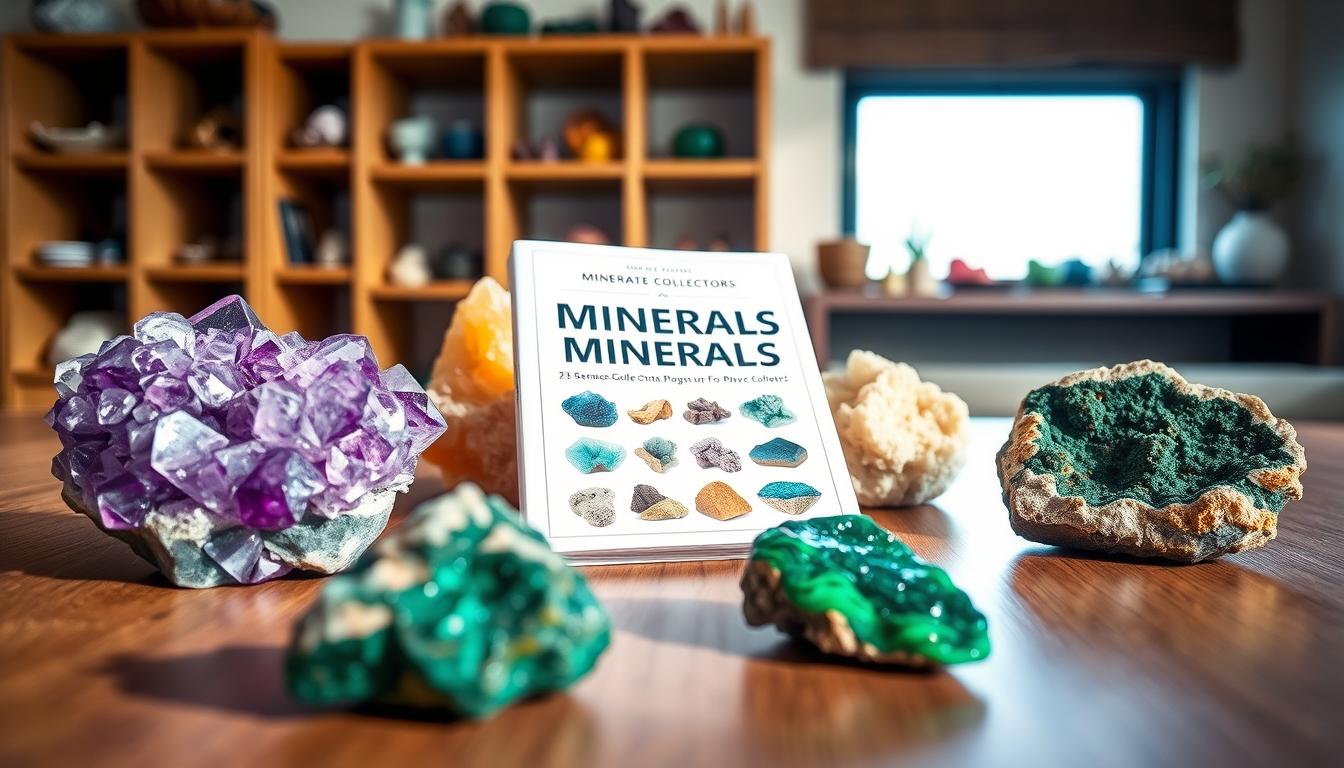
Minerals for beginners offer an exciting entry point into the fascinating world of geology and natural history. Starting a mineral collection provides hands-on learning about Earth’s processes while building a beautiful display of nature’s artistry.
The key to successful mineral collecting lies in choosing specimens that are affordable, durable, and visually appealing. New collectors should focus on common minerals that teach fundamental identification skills without requiring a major financial investment.
TL;DR
- Start with quartz varieties like amethyst and citrine, which cost $5-20 for small specimens.
- Calcite and fluorite offer excellent learning opportunities at $10-50 per specimen.
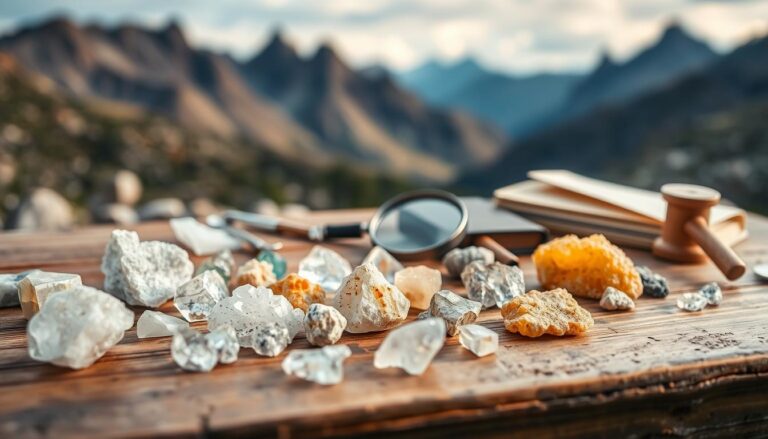
- Basic equipment includes a rock hammer, hand lens, and field guide costing under $100 total.
- Join local mineral clubs to learn identification skills and find collecting locations.
Essential Minerals for Beginners
New mineral collectors should prioritize specimens that combine educational value with visual appeal. The best starter minerals teach fundamental concepts while remaining budget-friendly and easy to store.
Focus on minerals that demonstrate key properties like hardness, crystal structure, and color variation. These characteristics form the foundation for identifying more complex specimens as your skills develop.
Quartz Varieties
Quartz stands out as the perfect beginner mineral due to its abundance and variety. This mineral family offers multiple options at reasonable prices while teaching important identification skills.
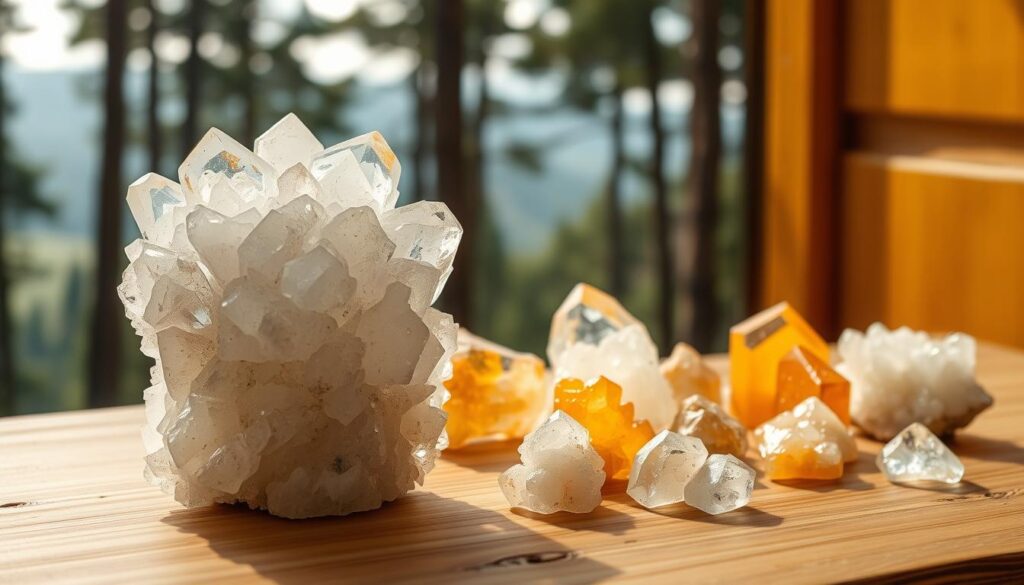
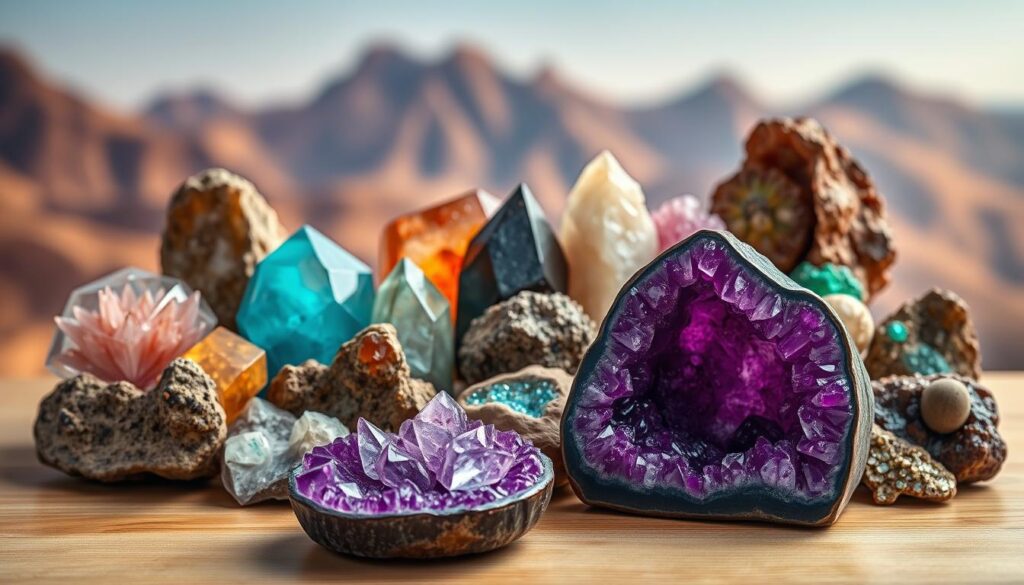
Amethyst provides an excellent introduction to crystal collecting with its purple color and six-sided crystals. Small specimens cost $5-15, making them accessible for any budget.
Citrine demonstrates how heat can alter mineral appearance, showing yellow to orange colors. Most citrine on the market comes from heat-treated amethyst, making it widely available.
Rose quartz teaches collectors about massive crystal forms versus individual crystals. Its pink color comes from trace amounts of titanium or manganese.
Calcite Specimens
Calcite offers incredible diversity in crystal forms and colors, making it ideal for learning crystal systems. This common mineral demonstrates perfect cleavage and reacts with dilute acid.
Iceland spar, a clear calcite variety, shows double refraction where objects appear doubled when viewed through the crystal. This optical property makes calcite both educational and fascinating.
Colorful and Affordable Options
Building an attractive collection doesn’t require expensive specimens. Many colorful minerals offer visual impact while teaching important geological concepts.
Pyrite
Pyrite earns its nickname “Fool’s Gold” from its metallic luster and brassy color. This iron sulfide mineral demonstrates metallic luster and cubic crystal structure at prices ranging from $5-25.
Perfect pyrite cubes teach crystal geometry while showing how minerals form under specific conditions. The mineral also oxidizes over time, demonstrating chemical weathering processes.
Malachite and Azurite
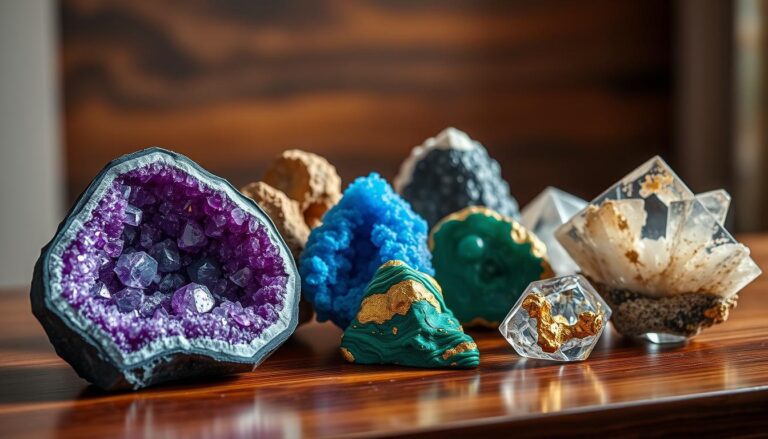
These copper minerals often occur together, showing how different minerals form from the same chemical elements. Malachite displays bright green bands while azurite shows deep blue colors.
Small specimens cost $10-30 and demonstrate how copper weathers in different environments. Both minerals showcase botryoidal (bubble-like) crystal forms.
Fluorite
Fluorite crystals come in purple, green, blue, and clear varieties, often showing multiple colors in single specimens. This mineral defines hardness level 4 on the Mohs scale.
Many fluorite specimens fluoresce under ultraviolet light, adding another dimension to your collection. Prices range from $15-50 for quality specimens.
Common Minerals with Special Properties
Some everyday minerals display fascinating characteristics that make collecting more engaging. These specimens teach specific geological concepts through hands-on observation.
Magnetite
Magnetite demonstrates natural magnetism by attracting iron objects and deflecting compass needles. This iron oxide mineral forms in igneous and metamorphic rocks.
Testing magnetite’s magnetic properties provides immediate identification confirmation. Specimens cost $10-40 depending on size and magnetic strength.
Selenite
Selenite gypsum forms long, clear crystals that demonstrate perfect cleavage and low hardness. You can scratch selenite with your fingernail, showing its softness.
This mineral teaches crystal habit and cleavage while remaining very affordable at $5-20 per specimen. Handle selenite carefully as it breaks easily along cleavage planes.
- Hardness test – Use Mohs scale from 1-10 to identify minerals by scratch resistance.
- Streak test – Rub minerals on unglazed ceramic to see their powder color.
- Luster observation – Classify how light reflects off mineral surfaces.
- Crystal form – Study geometric shapes and crystal systems.
Building Your Collection on a Budget
Smart collecting strategies help beginners build impressive collections without overspending. Focus on learning opportunities rather than rare specimens when starting out.
Local collecting sites offer free specimens while teaching field identification skills. Many areas have public collecting locations where beginners can find quality minerals.
- Visit local clubs. Meet experienced collectors who share knowledge and collecting locations.
- Attend mineral shows. Compare prices and specimen quality from multiple dealers.
- Start with common minerals. Learn identification skills before investing in rare specimens.
- Trade duplicates. Exchange specimens with other collectors to diversify your collection.
Budget-Friendly Starting Kit
Begin with a $50 budget for your first 10 specimens, focusing on different mineral families. This approach teaches variety while keeping costs manageable.
Storage and Display Solutions
Proper storage protects your investment while making specimens easy to study. Simple solutions work well for beginning collections.
Egg crates lined with tissue paper create individual compartments for small specimens. Label each mineral with its name, location, and date collected for future reference.
- Shadow boxes – Display specimens while protecting from dust and handling.
- Divided containers – Keep minerals organized and prevent damage from contact.
- Index cards – Record specimen information and learning notes.
- Magnifying glass – Examine crystal details and identify features.
Learning Resources and Identification
Developing identification skills requires practice with known specimens before tackling unknown finds. Start with clearly labeled minerals from reputable dealers.
Field guides provide essential reference information for identifying minerals by their physical properties. Digital resources offer interactive identification tools and high-quality photographs.
Basic Testing Equipment
Simple tools help identify minerals through standardized tests. A basic kit costs under $30 and handles most identification needs.
- Streak plate – Unglazed ceramic tile for streak testing ($3-5).
- Steel nail – Tests hardness around level 5.5 on Mohs scale.
- Glass plate – Provides hardness reference at level 5.5.
- Magnet – Identifies magnetic minerals like magnetite.
Frequently Asked Questions
What minerals should beginners avoid collecting?
Avoid fragile minerals like halite or gypsum varieties that dissolve in water or break easily. Also skip expensive or rare minerals until you develop identification skills.
How much should I spend on my first mineral collection?
Start with $50-100 for 10-15 specimens covering different mineral families. This budget allows quality specimens while learning identification basics.
Where can I find free minerals to collect?
Check local quarries, road cuts, beaches, and public collecting sites. Many areas offer free collecting with landowner permission or designated public access.
Do I need special tools to start collecting minerals?
Basic tools include a rock hammer, safety glasses, and hand lens costing under $50 total. A field guide and small containers complete the starter kit.
How do I clean minerals without damaging them?
Use soft brushes and mild soap for most minerals, avoiding harsh chemicals. Test cleaning methods on small areas first, as some minerals dissolve in water.
Final Thoughts
Minerals for beginners open doors to understanding Earth’s geological processes while building an educational collection. Starting with common, affordable specimens provides the foundation for lifelong learning and appreciation.
Focus on specimens that teach fundamental concepts rather than impressive displays when beginning your collection. The knowledge gained from studying basic minerals will guide future collecting decisions and enhance your enjoyment of this rewarding hobby. Consider joining the Mineralogical Society of America to connect with fellow collectors and access educational resources.