Rockhounding Mistakes can turn an exciting treasure hunt into a frustrating or even dangerous experience. Learning to identify and avoid these common errors will help you enjoy this rewarding hobby while staying safe and legal.
Many beginners jump into rock collecting without proper preparation, leading to damaged specimens, safety hazards, or legal troubles. Understanding these pitfalls before your first trip saves time, money, and potential headaches down the road.
TL;DR
- Always get written permission before collecting on private land to avoid trespassing charges.
- Bring safety glasses and gloves – 70% of rockhounding injuries happen to hands and eyes.
- Research site geology beforehand using USGS maps to know what minerals to expect.
- Take only what you need – many areas limit collecting to 25 pounds per person per day.
Rockhounding Mistakes Every Beginner Should Know
Starting your rockhounding journey without knowing common mistakes is like heading into the wilderness without a map. These errors can range from minor inconveniences to serious safety hazards or legal problems.
The most frequent mistakes include inadequate site research, missing safety equipment, poor specimen identification, and ignoring local regulations. Each category contains specific errors that can ruin your collecting experience or put you at risk.
Location Research Failures
Poor location research tops the list of rockhounding mistakes that create problems before you even start digging. Many beginners rely on outdated information or skip research entirely, leading to wasted trips and potential legal issues.
Skipping Site Investigation
Failing to research collection sites thoroughly causes multiple problems. You might arrive at a location that no longer allows collecting, face unexpected hazards, or miss the best collecting spots entirely.
- Geological surveys – Check USGS maps and state geological survey websites for mineral locations and site conditions.
- Local rock clubs – Contact area clubs for current site information and access requirements.
- Online forums – Read recent trip reports from other collectors to learn about current conditions.
- Weather patterns – Research seasonal access limitations and weather-related hazards.
Ignoring Permission Requirements
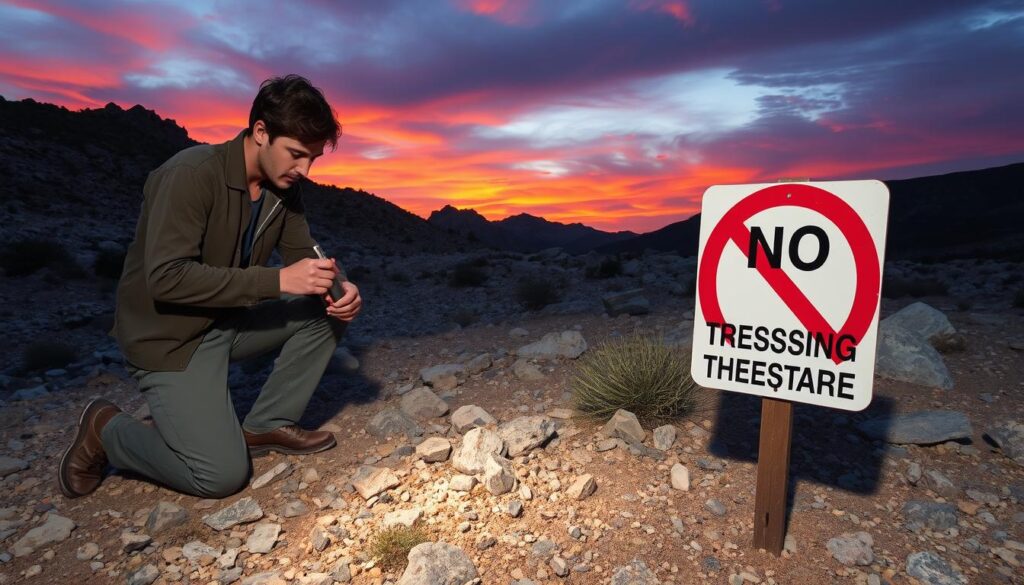
Trespassing represents one of the most serious rockhounding mistakes with legal consequences. Private landowners can press charges, and public lands often have specific collecting rules that change frequently.
- Identify land ownership. Use county recorder websites or apps like OnX Hunt to determine who owns the property.
- Contact landowners directly. Ask for written permission and clarify any restrictions on collecting areas or quantities.
- Check public land regulations. National forests, BLM lands, and state parks each have different rules about rock collecting.
- Verify current permits. Some areas require collecting permits that cost $5-25 annually.
Research Tip
Download the FreeRoam app to identify public lands where collecting is typically allowed. Always double-check current regulations before visiting any site.
Equipment and Safety Oversights
Equipment mistakes create safety hazards and limit your collecting success. Many beginners either bring too little gear or choose inappropriate tools for their target specimens.
Missing Essential Tools
Arriving at a great collecting site without proper tools ranks among the most frustrating rockhounding mistakes. Basic equipment makes the difference between successful collecting and going home empty-handed.
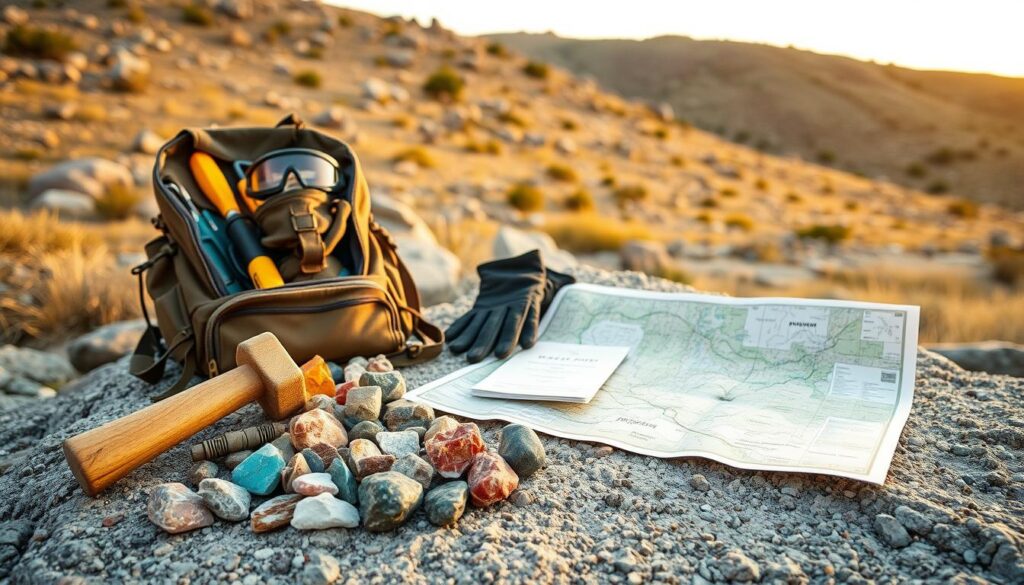
- Rock hammer – Choose a 16-24 oz hammer with a flat striking surface and chisel end.
- Hand lens – 10x magnification helps identify minerals and crystal structures in the field.
- Chisels and pry bars – Various sizes for extracting specimens without damage.
- Collection containers – Padded boxes or egg crates prevent specimens from breaking during transport.
- GPS device – Mark successful collecting spots for return visits.
Safety Equipment Neglect
Safety gear protects against the most common rockhounding injuries. Eye protection and hand protection prevent 80% of collecting-related accidents according to geological society safety reports.
- Safety glasses – Essential when breaking rocks or working in areas with loose debris.
- Work gloves – Leather gloves protect against sharp edges and thorns.
- First aid kit – Include bandages, antiseptic, and pain relievers for minor injuries.
- Sun protection – Hat, sunscreen, and long sleeves prevent heat-related problems.
- Emergency communication – Cell phone, satellite messenger, or two-way radio for remote areas.
Specimen Identification and Collection Errors
Misidentifying rocks and minerals leads to disappointment and missed opportunities. Poor extraction techniques can damage valuable specimens or harm the collecting environment.
Common Identification Mistakes
Many rocks and minerals share similar appearances, especially to untrained eyes. Learning to distinguish between common look-alikes prevents confusion and helps you focus on truly valuable finds.
- Pyrite vs gold – Test hardness and streak color to separate fool’s gold from the real thing.
- Quartz vs calcite – Check reaction to vinegar – calcite fizzes while quartz does not.
- Magnetite vs hematite – Use a magnet to distinguish between these iron oxides.
- Feldspar vs quartz – Look for crystal faces and check hardness with a steel file.
Poor Extraction Techniques
Hasty or improper extraction damages specimens and disturbs collecting sites unnecessarily. Good technique preserves specimen quality and maintains site access for future collectors.
- Photograph before extracting. Document the specimen’s natural position and surrounding matrix.
- Work slowly and carefully. Rush jobs often result in broken crystals or damaged specimens.
- Use appropriate force. Start with light taps and increase pressure gradually.
- Preserve matrix material. Leave specimens attached to host rock when possible for better display value.
Legal and Ethical Violations
Legal mistakes can result in fines, confiscated collections, or criminal charges. Ethical violations damage the hobby’s reputation and reduce access for all collectors.
Overcollecting Problems
Taking excessive amounts violates land use agreements and depletes sites for other collectors. Most public lands limit collecting to personal use quantities, typically 25 pounds per person per day.
Collecting in Prohibited Areas
National parks, wilderness areas, and archaeological sites prohibit rock collecting entirely. State parks may allow limited collecting with permits, but rules vary significantly by location.
- National parks – No collecting allowed except designated areas with special permits.
- Wilderness areas – Generally no motorized access or commercial collecting.
- Private property – Always requires landowner permission regardless of access roads.
- Archaeological sites – Federal laws protect artifacts and associated materials.
Environmental Impact Mistakes
Thoughtless collecting practices damage natural environments and create negative relationships with land managers. Following Leave No Trace principles protects access for future rockhounds.
Site Damage and Cleanup
Excessive digging, abandoned holes, and scattered debris create safety hazards and environmental damage. Fill holes after collecting and pack out all trash including food waste and empty containers.
Frequently Asked Questions
What safety equipment do I absolutely need for rockhounding?
Safety glasses and work gloves are essential minimum equipment. Add a first aid kit, sun protection, and emergency communication device for remote locations.
How do I get permission to collect on private land?
Contact landowners directly through county records or property management companies. Request written permission and clarify any restrictions on collecting areas or quantities.
What happens if I collect rocks illegally?
Penalties range from warnings to fines up to $10,000 and possible jail time for serious violations. Confiscated collections are rarely returned regardless of their value.
How much can I legally collect from public lands?
Most federal lands allow 25 pounds per person per day for personal use. Commercial collecting requires special permits and has different restrictions.
Should I clean specimens immediately after collecting?
No, wait until you get home to clean specimens properly. Field cleaning can damage delicate crystals or remove important matrix material.
Final Thoughts
Rockhounding Mistakes are completely avoidable with proper preparation and respect for safety, legal, and ethical guidelines. Taking time to research locations, gather appropriate equipment, and understand local regulations sets you up for successful collecting adventures.
Start with easily accessible public areas that allow collecting, and gradually build your skills and knowledge before tackling more challenging locations. The rockhounding community welcomes newcomers who show respect for the hobby’s traditions and environmental responsibilities.