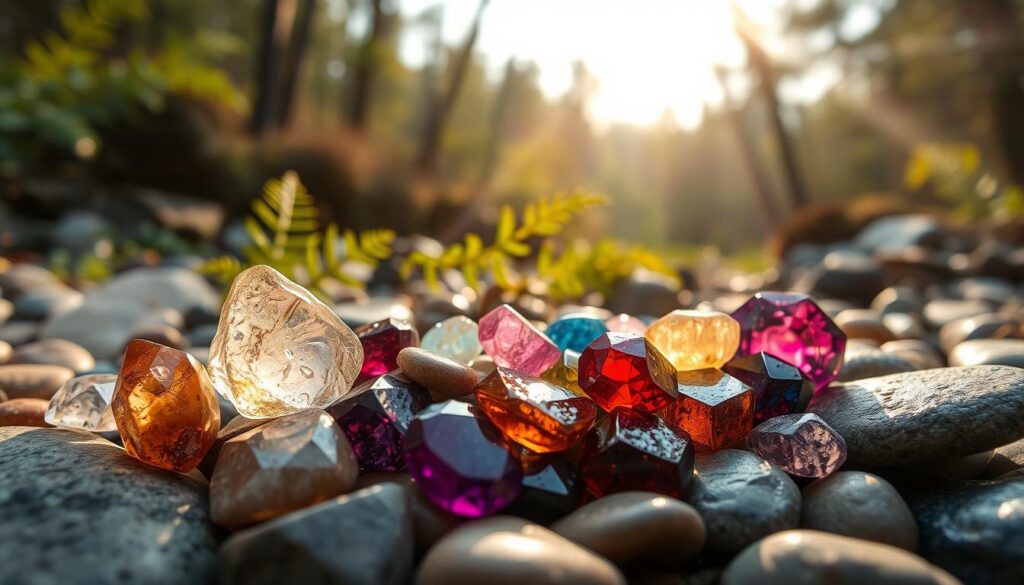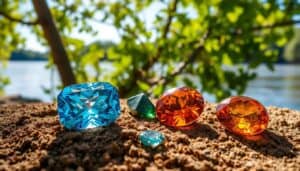
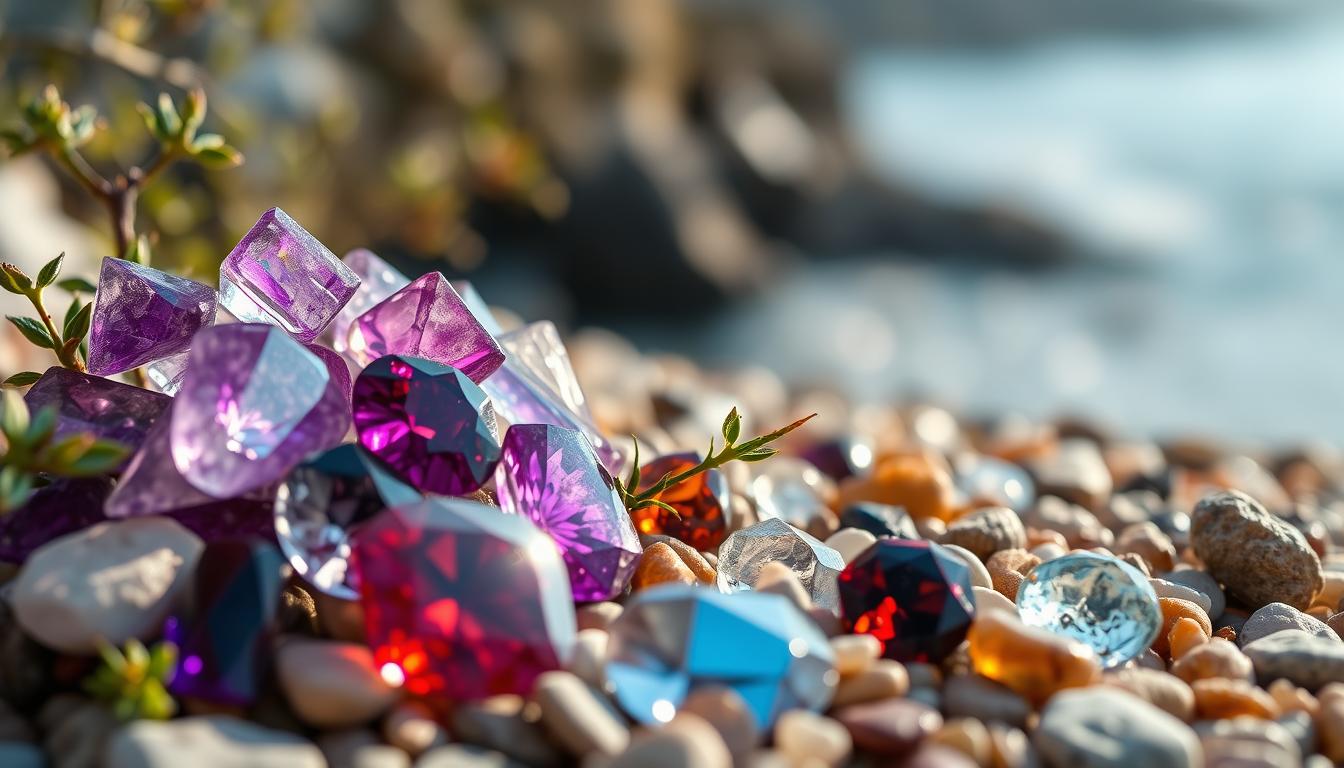
Delaware Gemstones offer treasure hunters a rich variety of minerals to discover across the state’s diverse landscapes. The First State’s unique geological formations create perfect conditions for finding everything from common quartz crystals to rare tourmaline specimens.
The Delaware Geological Survey confirms that the Piedmont region holds exceptional geological wealth. This area contains metamorphic and igneous rocks that house numerous minerals, with sillimanite serving as the official state mineral.
TL;DR
- Delaware’s Piedmont region contains over 15 different mineral types including quartz, garnet, and the state mineral sillimanite.
- Brandywine Creek Area produces high-quality quartz crystals that collectors prize for their clarity and size.
- Iron Hill deposits yield iron ore alongside quartz specimens, making it a dual-purpose collecting site.
- Coastal beaches reveal agate and jasper after storms when wave action exposes new specimens.
Delaware Gemstones and Their Locations
The state’s geological diversity spans from ancient Piedmont formations to younger Coastal Plain deposits. Each region offers distinct collecting opportunities for different types of minerals and gemstones.
Understanding Delaware’s geological zones helps collectors target their search efforts more effectively. The contrast between metamorphic rocks in the north and sedimentary formations in the south creates varied mineral assemblages throughout the state, similar to the geological diversity found in Maryland’s rockhounding locations.
Piedmont Region Treasures
The Piedmont Region contains Delaware’s oldest and most complex geological formations. This area formed through intense heat and pressure over millions of years, creating ideal conditions for metamorphic minerals.
- Sillimanite – Forms fibrous or prismatic crystals in shades of white, gray, and brown
- Garnet – Appears as deep red almandine crystals in schist and gneiss formations
- Mica minerals – Biotite and muscovite create silvery, flaky specimens with perfect cleavage
- Quartz varieties – Clear, smoky, and occasionally amethyst crystals form in pegmatite veins
Coastal Plain Formations
The Coastal Plain features younger sedimentary rocks deposited over millions of years. These formations contain different mineral assemblages compared to the Piedmont region.
Beach collecting along Delaware’s coast can yield interesting specimens, especially after storms when wave action exposes new materials. The constant movement of sand and pebbles brings fresh specimens to the surface regularly.
Prime Collecting Locations
Delaware offers several excellent locations for gemstone hunting, each with unique geological characteristics. These sites provide opportunities for both novice and experienced collectors to find quality specimens.
Brandywine Creek Area
The Brandywine Creek Area ranks as one of Delaware’s premier rockhounding destinations. Stream beds and exposed banks reveal various minerals weathered from surrounding bedrock formations.
This location produces excellent quartz specimens along with mica and feldspar minerals. The creek’s flowing water naturally concentrates heavier minerals in certain areas, making collecting more productive.
Iron Hill
Iron Hill offers unique collecting opportunities in an area known for historical iron mining operations. The site contains exposed bedrock and old mine dumps that yield interesting mineral specimens.
Collectors often find iron ore minerals alongside quartz crystals and mica specimens. The area’s mining history makes it particularly interesting for those studying Delaware’s industrial mineral heritage.
Newark and Wilmington Areas
The regions around Newark and Wilmington provide access to both Piedmont and Coastal Plain geology. This geological transition zone creates opportunities to find minerals from both formations in relatively close proximity.
Construction sites and road cuts in these areas sometimes expose fresh bedrock containing collectible minerals. Always obtain proper permission before collecting on private property or active work sites.
Best Collecting Times
Visit collecting sites after heavy rains when fresh material gets exposed and cleaned. Early morning hours often provide the best lighting for spotting specimens.
Gemstone Identification in the Field
Proper identification requires systematic observation of physical properties. Delaware’s geological diversity means collectors encounter many different mineral types that can appear similar at first glance.
Key Physical Properties
Focus on these observable characteristics when identifying Delaware gemstones in the field. Each property provides important clues about a specimen’s identity.
- Hardness testing. Use the Mohs scale to determine scratch resistance – quartz scratches glass while calcite doesn’t.
- Crystal form observation. Look for characteristic shapes like garnet’s dodecahedral crystals or mica’s tabular habit.
- Color assessment. Note color under different lighting conditions since some minerals show color variations.
- Luster examination. Determine if the specimen shows metallic, glassy, or other luster types.
Common Field Tests
Simple field tests help distinguish between similar-looking minerals. These methods require minimal equipment and provide reliable identification clues.
- Streak test – Scratch the mineral on unglazed ceramic to see its powder color
- Magnet test – Check for magnetic attraction in iron-bearing minerals
- Cleavage examination – Observe how the mineral breaks along natural planes
- Density comparison – Feel the weight relative to size for density estimates
Rare Delaware Mineral Finds
While common minerals dominate Delaware’s geological formations, several rare specimens occasionally surface. These finds create excitement among collectors and contribute to the state’s mineral diversity.
Amazonite Discoveries
Amazonite represents one of Delaware’s rarer feldspar varieties with distinctive blue-green coloration. This mineral forms in pegmatite veins under specific geological conditions found in limited locations.
Most amazonite specimens from Delaware show pale to moderate blue-green hues. The mineral’s attractive color makes it popular for jewelry applications when quality permits, though Colorado’s amazonite deposits are more well-known for producing gem-quality specimens.
Tourmaline Occurrences
Tourmaline appears sporadically in Delaware’s metamorphic formations. The mineral’s complex chemistry allows for various colors including pink, green, and black varieties.
These specimens typically occur as elongated crystals with triangular cross-sections. Delaware tourmaline rarely reaches gem quality but provides interesting mineral specimens for collectors, unlike the world-class tourmaline found in Maine’s pegmatite deposits.
Legal Guidelines for Collectors
Understanding legal requirements prevents problems and ensures responsible collecting practices. Delaware’s regulations protect both private property rights and environmental resources.
Public Land Regulations
Delaware State Parks and public lands allow limited collecting for personal use in most cases. However, specific restrictions may apply to protected areas or sensitive habitats.
Contact park authorities before collecting to understand current regulations. Some locations prohibit collecting entirely while others allow small quantities for educational purposes.
Private Property Access
Always obtain written permission before collecting on private land. Property owners may grant access but typically expect collectors to follow specific guidelines and restrictions.
Respect all property boundaries and restore any disturbed areas to their original condition. Building positive relationships with landowners helps maintain access for future collecting opportunities, especially when exploring areas with geological similarities to Pennsylvania’s diverse mineral regions.
Frequently Asked Questions
What gemstones can I find in Delaware?
Common finds include quartz varieties, garnet, sillimanite, and mica minerals. Rare specimens like amazonite and tourmaline occasionally surface in specific geological formations.
Where are the best rockhounding locations in Delaware?
Brandywine Creek Area, Iron Hill, and coastal beaches offer excellent collecting opportunities. The Newark and Wilmington regions also provide access to diverse mineral formations.
Do I need permits to collect gemstones in Delaware?
Most public lands allow personal collecting without permits, but some protected areas have restrictions. Always check current regulations and obtain landowner permission for private property.
What is Delaware’s state mineral?
Sillimanite serves as Delaware’s official state mineral. This metamorphic mineral forms fibrous or prismatic crystals commonly found in the Piedmont region’s schist and gneiss formations.
When is the best time to search for gemstones in Delaware?
After heavy rains when fresh material gets exposed and cleaned. Spring and fall provide comfortable weather conditions for extended field collecting sessions.
Final Thoughts
Delaware Gemstones provide exciting opportunities for collectors to explore the state’s rich geological heritage. From common quartz crystals to rare tourmaline specimens, the First State offers diverse collecting experiences across its varied landscapes.
Start your collecting journey at easily accessible locations like Brandywine Creek, then expand to other sites as your experience grows. Always follow legal guidelines and practice responsible collecting to preserve these geological treasures for future generations, and consider exploring nearby New Jersey’s gemstone locations for additional rockhounding adventures.