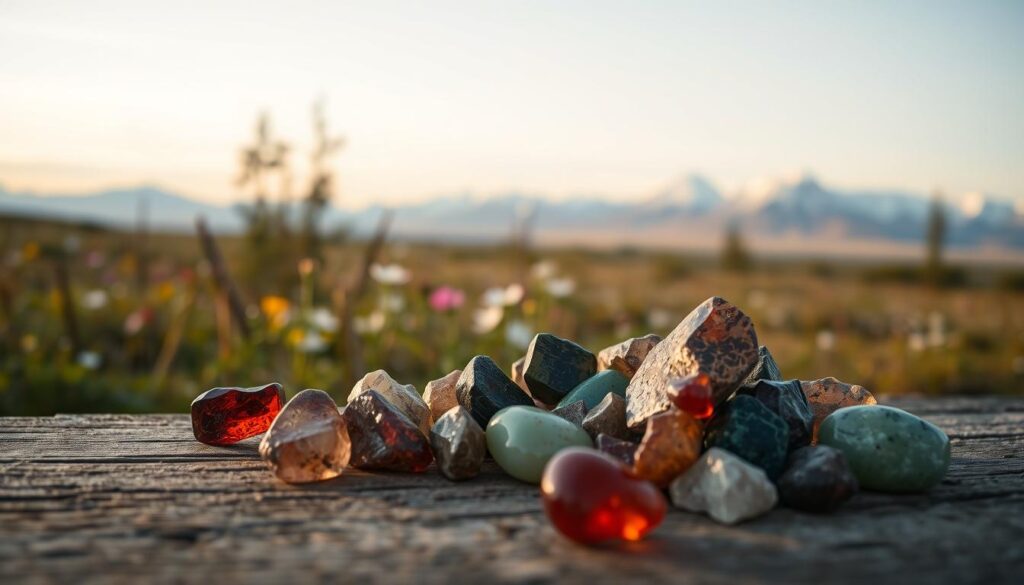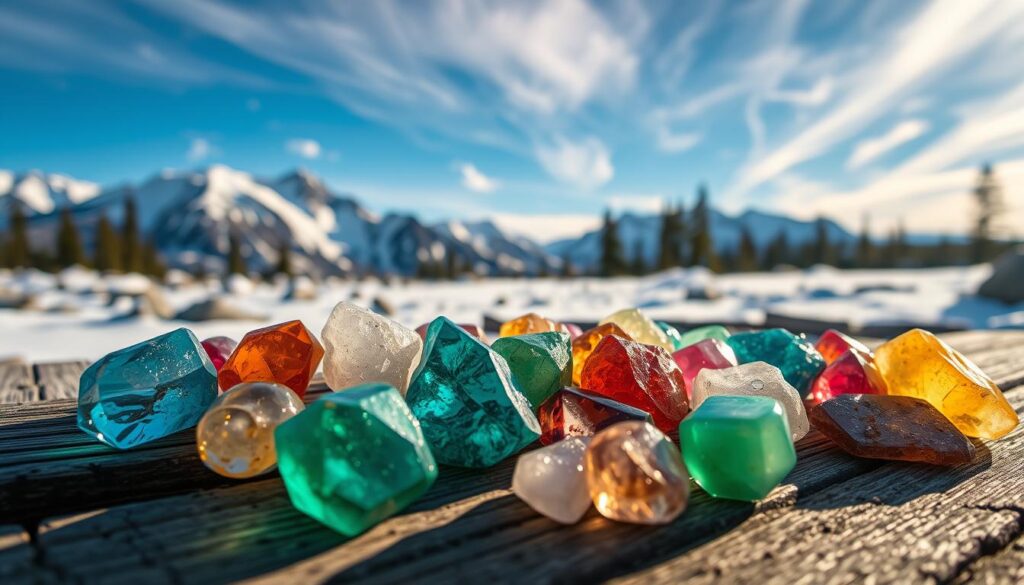
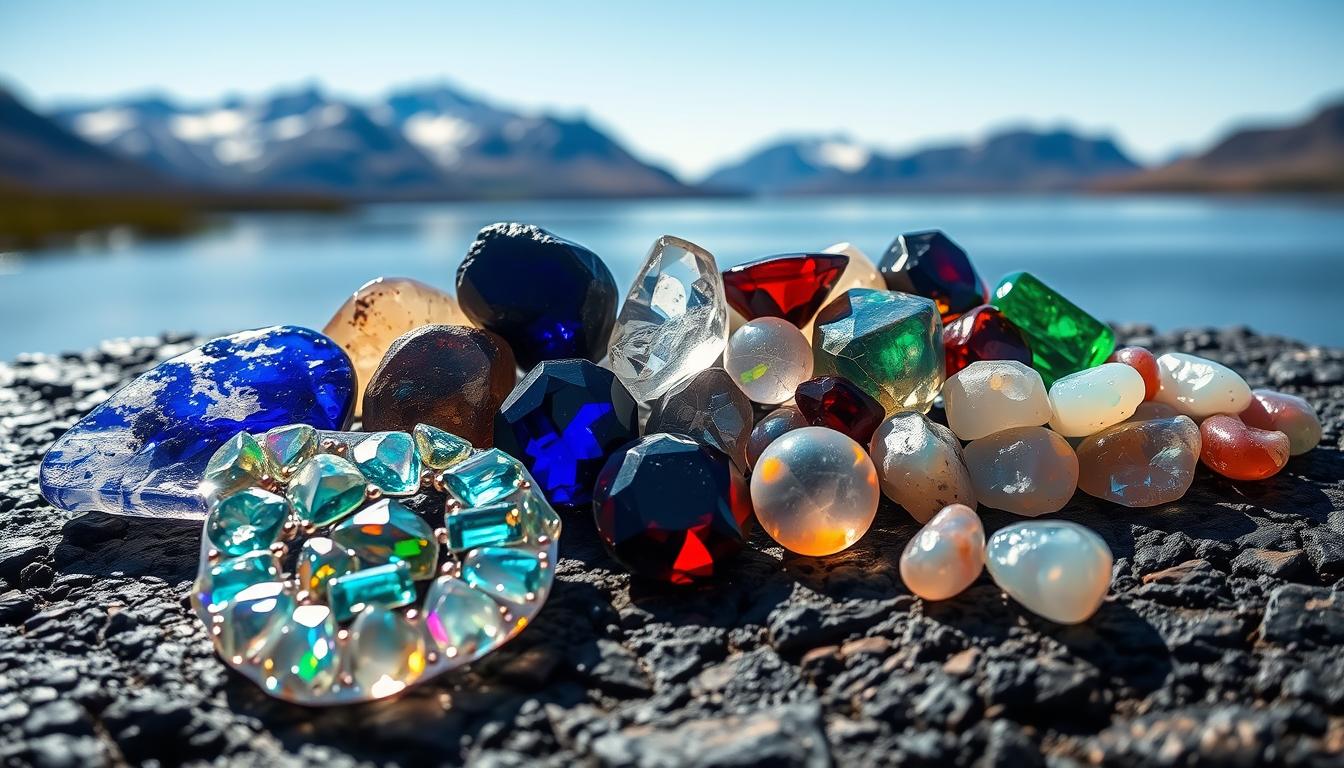
Alaska Gemstones offer some of the most diverse and valuable mineral treasures found anywhere in North America. The state’s unique geological landscape has created perfect conditions for forming a wide range of precious stones over millions of years.
From the famous jade deposits of the Seward Peninsula to the garnet-rich areas around Wrangell, Alaska’s vast wilderness holds countless opportunities for gemstone enthusiasts. The Last Frontier’s complex geology and rich mining history make it a top destination for both amateur collectors and serious prospectors.
TL;DR
- Alaska produces over 90% of America’s jade, with the Seward Peninsula containing the largest deposits.
- Garnet Ledge near Wrangell allows visitors to collect up to 5 gallons of garnets per day for free.
- Summer months from June to August provide the best weather conditions for gemstone hunting across the state.
- The Chugach Mountains contain over 15 different types of minerals including quartz, tourmaline, and beryl.
Alaska Gemstones: A Geological Treasure Trove
Alaska’s gemstone wealth stems from its position along active tectonic plate boundaries and its history of volcanic activity. These forces created the high-pressure, high-temperature conditions needed for gemstone formation.
The state’s official gemstone, jade, forms through the metamorphosis of existing rock under extreme pressure. Alaska’s jade deposits rank among the world’s finest, producing stones with the deep green color and smooth texture prized by collectors worldwide.
Most Common Gemstones Found Throughout Alaska
Alaska’s diverse geology produces several types of gemstones across different regions. Each area offers unique collecting opportunities based on local rock formations and mineral deposits.
Jade and Nephrite
Jade dominates Alaska’s gemstone scene, particularly nephrite jade found on the Seward Peninsula. This tough, fine-grained stone has been valued by Alaska Native peoples for thousands of years for tools and ceremonial objects.
The Kobuk Valley contains some of the purest jade deposits in North America. Commercial mining operations here supply jade to markets across Asia, where it commands premium prices for its quality and color.
Quartz Varieties
Alaska produces several quartz types, each with distinct characteristics and locations. These crystals form in cooling magma chambers and hydrothermal veins throughout the state’s mountain ranges, and understanding where to find quartz crystals in nature can help collectors locate the best specimens.
- Smoky Quartz – Found in granite formations with brown to black coloration from natural radiation exposure.
- Rock Crystal – Clear, colorless quartz prized for its clarity and industrial applications.
- Citrine – Yellow to orange quartz formed by heat treatment of amethyst or natural iron content.
- Amethyst – Purple quartz found in smaller quantities in volcanic rock formations.
Garnets
The Wrangell area produces abundant garnets in schist and gneiss rock formations. These deep red stones form during metamorphic processes when existing rocks undergo heat and pressure changes.
Garnet Ledge near Wrangell offers public collecting opportunities where visitors can gather these semi-precious stones. The site provides easy access to quality specimens without requiring specialized equipment or permits.
Lesser-Known Alaska Gemstone Discoveries
Beyond the well-known jade and quartz deposits, Alaska harbors many other gemstone varieties. These stones occur in smaller quantities but offer exciting possibilities for dedicated collectors.
Tourmaline and Beryl
Pegmatite formations in Alaska’s interior contain tourmaline and beryl crystals. These gems form when mineral-rich fluids cool slowly in underground cavities, allowing large, well-formed crystals to develop.
Tourmaline appears in various colors depending on trace elements present during formation. Beryl includes several varieties, with aquamarine being the most commonly found in Alaska’s deposits.
Gold-Bearing Quartz
Alaska’s gold mining history connects closely with quartz veins containing precious metal inclusions. Areas around Fairbanks, Tok, and McCarthy produce quartz specimens with visible gold flakes and nuggets.
These specimens combine the beauty of crystal formations with the value of gold content. Collectors prize pieces showing clear quartz matrix with bright gold veins or clusters, and learning how to tell if a rock is valuable or just a rock helps identify the most worthwhile finds.
Best Collecting Strategy
Focus your search on stream beds and exposed rock faces where erosion has already done the hard work of breaking down host rocks. Look for color changes in rocks that might indicate mineral zones.
Prime Gemstone Hunting Locations
Several areas across Alaska offer excellent opportunities for gemstone collecting. Each location provides different types of stones and varying levels of access for visitors, making Alaska one of the states with the best rockhounding opportunities.
Seward Peninsula Jade Country
The Seward Peninsula contains Alaska’s most productive jade mining areas. Jade Mountain and surrounding valleys produce both nephrite jade and serpentine in various shades of green.
Access requires careful planning due to remote locations and seasonal weather conditions. Many areas require air transportation or long overland trips to reach the best collecting sites.
Wrangell Garnet Areas
The Wrangell region offers the most accessible garnet collecting in Alaska. Garnet Ledge provides a developed site where families can collect garnets with minimal equipment.
The area produces garnets in sizes ranging from small crystals suitable for jewelry to large specimens perfect for display collections. Most stones show the classic deep red color associated with almandine garnets.
Chugach Mountains
This mountain range near Anchorage contains diverse mineral deposits in accessible locations. Day trips from the city can reach areas with quartz, tourmaline, and other gemstone varieties.
Rock formations here include both igneous and metamorphic types, creating conditions for multiple gemstone types. Stream beds often concentrate weathered gemstone material for easier collection.
Planning Your Alaska Gemstone Adventure
Successful gemstone hunting in Alaska requires proper preparation and understanding of local conditions. The state’s remote locations and harsh weather demand careful planning for safety and success.
Best Seasons for Collecting
Summer months from June through August provide optimal conditions for most gemstone hunting activities. Snow-free ground and longer daylight hours allow access to remote areas and better visibility for spotting specimens.
Fall collecting can be productive but requires preparation for changing weather conditions. Spring collecting faces challenges from snowmelt, muddy conditions, and limited access to high-elevation sites.
Essential Equipment
Alaska’s rugged terrain and remote locations require specialized equipment for safe and successful collecting trips. Having the right rockhounding tools every beginner should own ensures you’re prepared for the unique challenges of Alaska’s wilderness collecting environment.
- Safety Gear. GPS device, emergency communication, first aid kit, and bear deterrent for wilderness areas.
- Collecting Tools. Rock hammer, chisels, hand lens, sample bags, and field notebook for recording finds.
- Camping Equipment. Weather-resistant tent, sleeping system, and cooking gear for multi-day expeditions.
Legal Requirements
Alaska’s gemstone collecting involves various land ownership types, each with different rules and requirements. Understanding these regulations prevents legal issues and protects collecting opportunities.
Public lands managed by different agencies have varying collection policies. Private lands require landowner permission, while some areas prohibit collecting entirely to protect sensitive resources or cultural sites. Check with the Bureau of Land Management Alaska for current regulations on federal lands.
Frequently Asked Questions
What is Alaska’s official state gemstone?
Jade became Alaska’s official state gem in 1968, recognizing the importance of nephrite jade deposits found throughout the state, particularly on the Seward Peninsula.
Can I collect gemstones on public land in Alaska?
Most public lands allow small-scale collecting for personal use, but regulations vary by agency and location. Always check with land managers before collecting and follow posted restrictions.
Where can I find garnets in Alaska?
Garnet Ledge near Wrangell offers the best public access for garnet collecting, allowing visitors to collect up to 5 gallons per day for personal use.
What tools do I need for gemstone hunting in Alaska?
Essential tools include a rock hammer, chisels, hand lens, sample bags, GPS device, and safety equipment appropriate for Alaska’s wilderness conditions.
When is the best time to hunt for gemstones in Alaska?
Summer months from June to August provide the best weather and access conditions, with snow-free ground and extended daylight hours for collecting activities.
Final Thoughts
Alaska Gemstones represent some of North America’s finest mineral specimens, from world-class jade to beautiful garnets and diverse quartz varieties. The state’s unique geology and accessible collecting areas make it a premier destination for gemstone enthusiasts of all skill levels.
Whether you’re planning a family trip to Garnet Ledge or an expedition to remote jade country, Alaska’s gemstone treasures offer unforgettable experiences and valuable additions to any collection. Remember to properly store your rocks and crystals without damage once you return home to preserve these Alaskan treasures for years to come.