
Arkansas is famous for its rich geological landscape that has made it a perfect place for gemstone formation. The state is known for its variety of gemstones, from diamonds to quartz crystals that attract collectors worldwide.
The diverse terrain shaped by ancient volcanic activity and tectonic movements created ideal conditions for mineral deposits. Arkansas stands out as one of the few places in North America where visitors can hunt for diamonds and keep what they find.
TL;DR
- Crater of Diamonds State Park covers 911 acres with a 37.5-acre diamond search field where visitors keep what they find.
- The Uncle Sam diamond found in Arkansas weighed 40.23 carats, making it one of the largest diamonds discovered in North America.
- Mount Ida produces some of the world’s clearest quartz crystals, with specimens reaching over 500 pounds.
- Arkansas hosts over 15 different gemstone varieties including amethyst, garnet, peridot, and turquoise across multiple geological regions.
Arkansas Gemstones and Their Geological Origins
The Ouachita Mountains form the backbone of Arkansas’s gemstone-rich landscape. These ancient formations contain silica-rich solutions that crystallized over millions of years to create the state’s famous quartz deposits.
Tectonic activity and mineral-rich groundwater flow shaped Arkansas’s diverse geological regions. The result is a complex network of deposits that produces everything from clear rock crystal to deep purple amethyst.
Formation of Arkansas Mineral Deposits
Arkansas’s gemstone deposits formed through several geological processes over millions of years. Volcanic activity created the diamond-bearing kimberlite pipes, while hydrothermal processes formed the extensive quartz crystal deposits.
The state’s unique position at the intersection of multiple geological provinces created diverse mineral environments. This explains why Arkansas quartz crystal hunting remains popular among collectors seeking high-quality specimens.
Diamonds: The Crown Jewels of Arkansas
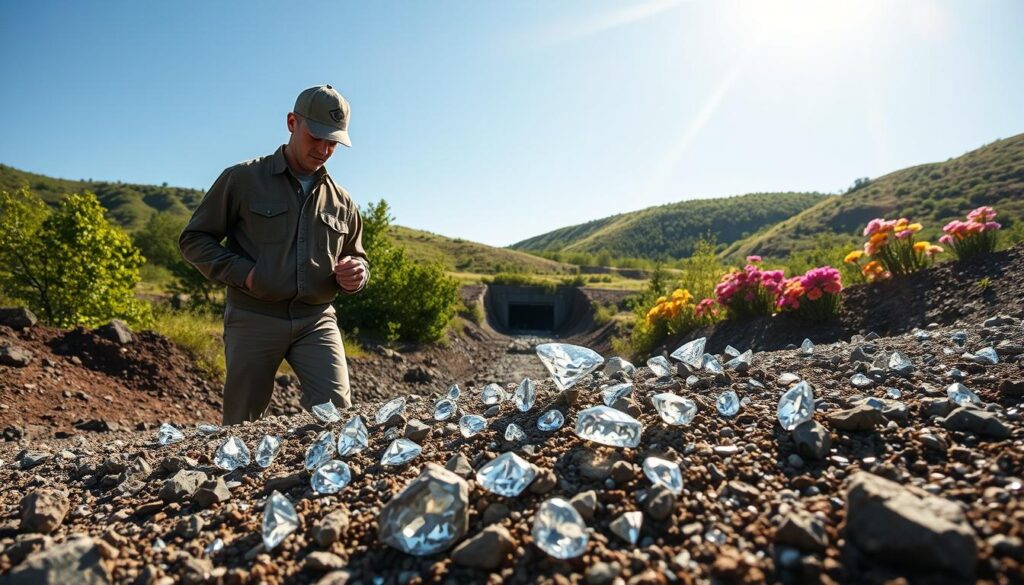
Arkansas produces the only diamonds found naturally in the United States outside of small deposits in other states. The Crater of Diamonds State Park represents the eroded surface of an ancient volcanic pipe that brought diamonds from deep within the Earth.
This 911-acre park contains a 37.5-acre search area where visitors can dig for diamonds and other gemstones. The volcanic eruption that created this site occurred about 100 million years ago during the Cretaceous period.
Notable Diamond Discoveries
The park has produced thousands of diamonds since it opened to the public. The most famous find was the Uncle Sam diamond at 40.23 carats, discovered in 1924 by W.O. Basham.
- Strawn-Wagner Diamond – A flawless 3.03-carat white diamond considered perfect by gemological standards.
- Amarillo Starlight – A 16.37-carat white diamond found by a Texas visitor in 1975.
- Star of Shreveport – An 8.82-carat white diamond discovered in 1981.
- Kahn Canary – A 4.25-carat canary diamond found by George Stepp in 1977.
Diamond Hunting Techniques
Successful diamond hunting requires patience and the right approach. Most diamonds at Crater of Diamonds are found on the surface after rain washes away loose soil.
- Surface hunting. Walk slowly across the search area looking for shiny, crystal-like stones after rainfall.
- Wet sifting. Use water and screens to separate heavy materials from lighter soil and gravel.
- Dry sifting. Screen soil through different mesh sizes to concentrate potential diamond-bearing material.
Quartz Varieties and Crystal Formations
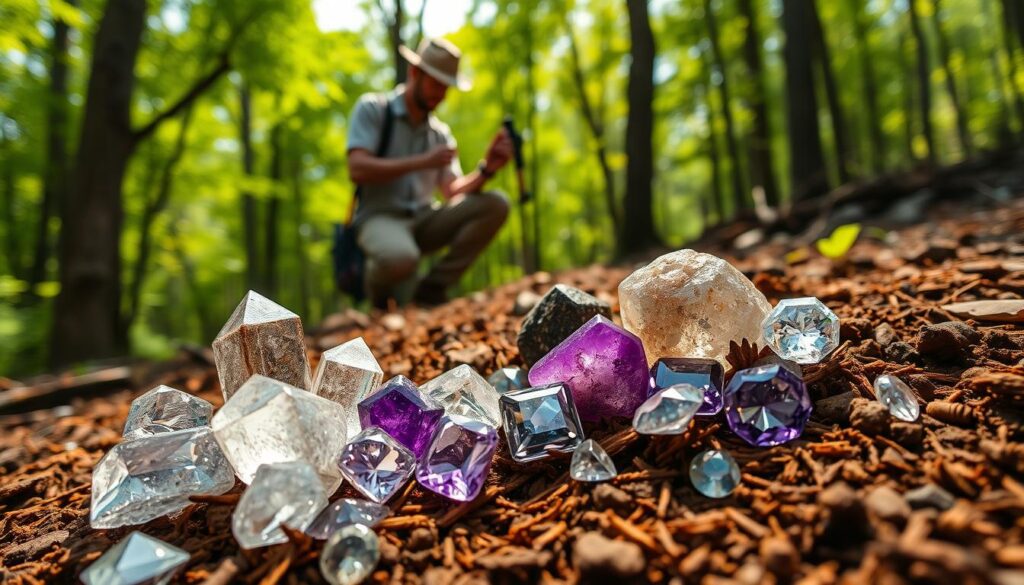
Arkansas produces some of the world’s finest quartz crystals, particularly around Mount Ida and the Ouachita Mountains. These crystals form in cavities within sedimentary rocks where silica-rich solutions slowly crystallize over thousands of years.
The state’s quartz deposits include several distinct varieties prized by collectors and mineral dealers worldwide. Each type forms under specific conditions that create unique colors and crystal habits.
Rock Crystal and Clear Quartz
Clear quartz or rock crystal represents the purest form of quartz found in Arkansas. These transparent crystals can reach enormous sizes, with some specimens weighing hundreds of pounds.
The clarity and size of Arkansas rock crystal made it valuable for optical and electronic applications before synthetic alternatives became available. Today these crystals remain popular for decorative and metaphysical uses.
Amethyst and Colored Varieties
Purple amethyst occurs throughout Arkansas, though it’s less common than clear quartz. The purple color comes from trace amounts of iron and aluminum within the crystal structure.
Smoky quartz, colored by natural radiation, appears in shades from light gray to nearly black. Phantom quartz contains ghostly internal structures that formed during interrupted growth periods.
Best Time for Gemstone Hunting
Visit Arkansas gemstone sites after heavy rainfall when freshly exposed stones are easier to spot. Early morning light helps identify crystal faces and color variations in potential finds.
Other Gemstones Found in Arkansas
Beyond diamonds and quartz, Arkansas produces numerous other gemstone varieties across different geological regions. The Ouachita Mountains contain garnet deposits similar to those found in North Carolina’s gemstone-rich regions, while other areas yield peridot, turquoise, and various forms of chalcedony.
These secondary gemstones often occur in association with the more famous diamond and quartz deposits. Many visitors discover unexpected treasures while searching for the state’s headline attractions.
Garnet and Peridot Deposits
Arkansas garnets typically appear as deep red to brownish-red crystals within metamorphic rocks. These garnets served industrial purposes as abrasives before synthetic alternatives became available.
Peridot occurs in smaller quantities, usually as olive-green crystals in basic igneous rocks. While not as abundant as in Arizona’s famous peridot deposits, Arkansas peridot specimens can show excellent clarity and color.
Turquoise and Wavellite
Arkansas turquoise appears in various shades of blue and green throughout the state. Though not as famous as Southwestern turquoise, these specimens often display attractive colors and patterns.
Wavellite forms distinctive radiating crystal clusters that create ball-like specimens. This phosphate mineral appears in several Arkansas locations and attracts collectors seeking unusual crystal habits.
Prime Gemstone Hunting Locations
Arkansas offers numerous locations where both amateur and experienced collectors can search for gemstones. Public sites provide legal access to proven gemstone-bearing areas, while private fee dig operations offer guided experiences.
The Mount Ida area represents the heart of Arkansas’s quartz crystal country. Multiple private mines and public areas around this small town provide access to world-class crystal deposits.
Crater of Diamonds State Park
This park remains Arkansas’s most famous gemstone hunting destination. The 37.5-acre search area provides the only public diamond hunting opportunity in North America where visitors keep their finds.
Beyond diamonds, the park produces numerous other gemstones including amethyst, garnet, jasper, agate, and various quartz varieties. The site’s volcanic origin created conditions for diverse mineral formation.
Ouachita Mountains Region
The Ouachita Mountains stretch across western Arkansas and contain numerous gemstone deposits. This region produces exceptional quartz crystals, novaculite, and various secondary minerals.
Many private properties in this area offer fee dig opportunities, while some public lands allow collecting with proper permits. The rockhounding Ouachita Mountains experience attracts visitors from across the country.
Mount Ida Crystal Mines
Mount Ida serves as the quartz crystal capital of Arkansas with multiple commercial mines offering public access. These operations provide equipment, guidance, and guaranteed finds for visitors.
- Ron Coleman Mining – Offers surface collecting and underground mine tours with high success rates.
- Wegner Quartz Crystal Mines – Features multiple dig sites with different crystal types and sizes.
- Jim Coleman Crystals – Provides family-friendly collecting with tools and instruction included.
Collecting Equipment and Techniques
Successful gemstone hunting in Arkansas requires appropriate tools and techniques for different types of deposits. Surface collecting needs different equipment than hard rock mining or alluvial searching.
Most Arkansas gemstone sites allow basic hand tools, though some restrict certain equipment types. Check site rules before bringing specialized gear like metal detectors or powered tools.
Essential Collecting Tools
Basic gemstone hunting requires relatively simple equipment that most collectors can easily obtain and transport. Quality tools make the difference between frustrating searches and productive collecting trips.
- Rock hammer. A 16-24 ounce hammer with a flat face and pick end for breaking rocks and extracting crystals.
- Hand lens. 10x magnification helps identify gemstone characteristics and quality in the field.
- Collection bags. Cloth or canvas bags protect specimens better than plastic containers.
- Safety equipment. Safety glasses, gloves, and sturdy boots prevent injuries during collecting.
Advanced Collection Methods
Experienced collectors often use specialized techniques for specific gemstone types. Wet sifting works well for diamonds and heavy minerals, while careful excavation preserves large crystal specimens.
Some Arkansas sites permit metal detectors for locating buried specimens, though this varies by location. Always verify equipment restrictions before visiting any collecting site.
Regulations and Ethical Collecting
Arkansas gemstone collecting operates under various regulations depending on land ownership and local rules. Public lands often require permits, while private fee dig sites set their own policies.
Ethical collecting practices preserve sites for future visitors and maintain positive relationships with property owners. Following established guidelines helps ensure continued public access to Arkansas’s gemstone deposits.
Public Land Regulations
National forests and state parks in Arkansas have specific rules governing mineral collecting. Some areas prohibit collecting entirely, while others allow limited hand collecting with permits.
The U.S. Forest Service manages much of the Ouachita National Forest where some collecting occurs. Obtain current regulations from district offices before collecting on federal lands.
Private Property Access
Many of Arkansas’s best gemstone sites sit on private property where owners charge fees for access. These commercial operations often provide better collecting opportunities than public sites.
Private sites typically offer equipment rental, guidance, and guaranteed finds for visitors. Fees vary by site and services provided, ranging from basic access to full-service experiences.
Frequently Asked Questions
What are the most common gemstones found in Arkansas?
Arkansas produces quartz crystals, diamonds, garnets, peridot, turquoise, amethyst, agate, and jasper. Quartz varieties represent the most abundant gemstones throughout the state.
Can visitors keep diamonds they find at Crater of Diamonds State Park?
Yes, visitors keep all diamonds and gemstones they find at Crater of Diamonds State Park. The park operates under a “finders keepers” policy for all discoveries.
When is the best time to hunt for gemstones in Arkansas?
Spring and fall offer the most comfortable weather for gemstone hunting. Visit after rainfall when fresh stones appear on the surface and are easier to spot.
Do I need permits to collect gemstones in Arkansas?
Permit requirements vary by location – private fee dig sites set their own rules while public lands may require collecting permits. Always check current regulations before collecting.
What tools do I need for gemstone hunting in Arkansas?
Basic tools include a rock hammer, hand lens, collecting bags, safety glasses, and gloves. Some sites provide equipment rental for specialized tools like screens and sifting equipment.
How large do Arkansas quartz crystals grow?
Arkansas quartz crystals can reach exceptional sizes with some specimens weighing over 500 pounds. Most collectible crystals range from thumbnail size to several pounds.
Are there guided gemstone hunting tours in Arkansas?
Yes, many private mines offer guided tours and collecting experiences. These services include equipment, instruction, and guaranteed finds for visitors of all experience levels.
Final Thoughts
Arkansas Gemstones offer exceptional collecting opportunities in one of America’s most geologically diverse states. The combination of public access sites and private fee dig operations provides options for every type of collector.
Start your Arkansas gemstone adventure at Crater of Diamonds State Park or the Mount Ida crystal mines and discover why collectors worldwide prize specimens from the Natural State. Similar quality gemstone collecting experiences can be found in neighboring states like Texas and Oklahoma, making the region a gemstone hunter’s paradise.
—
##