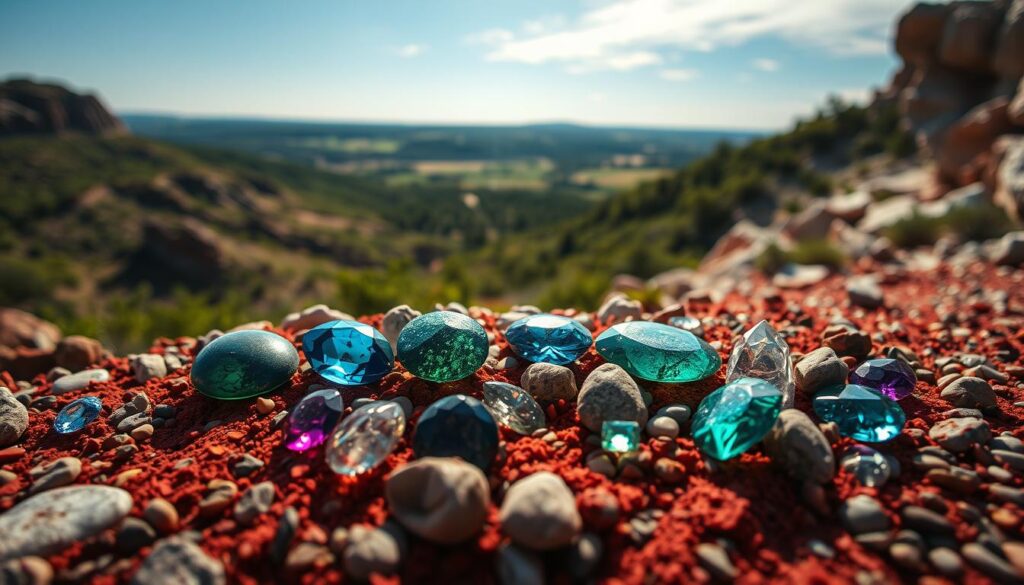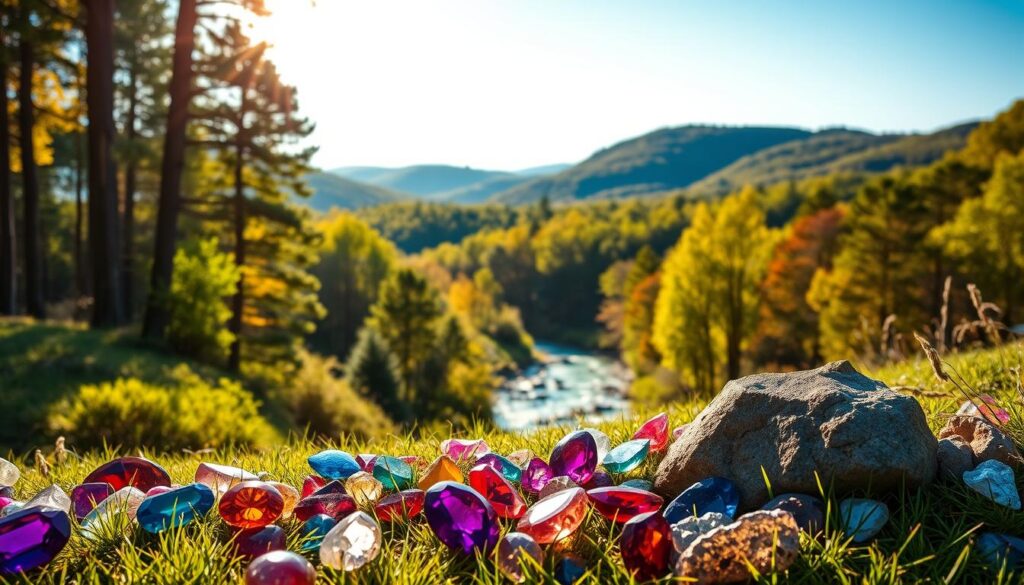
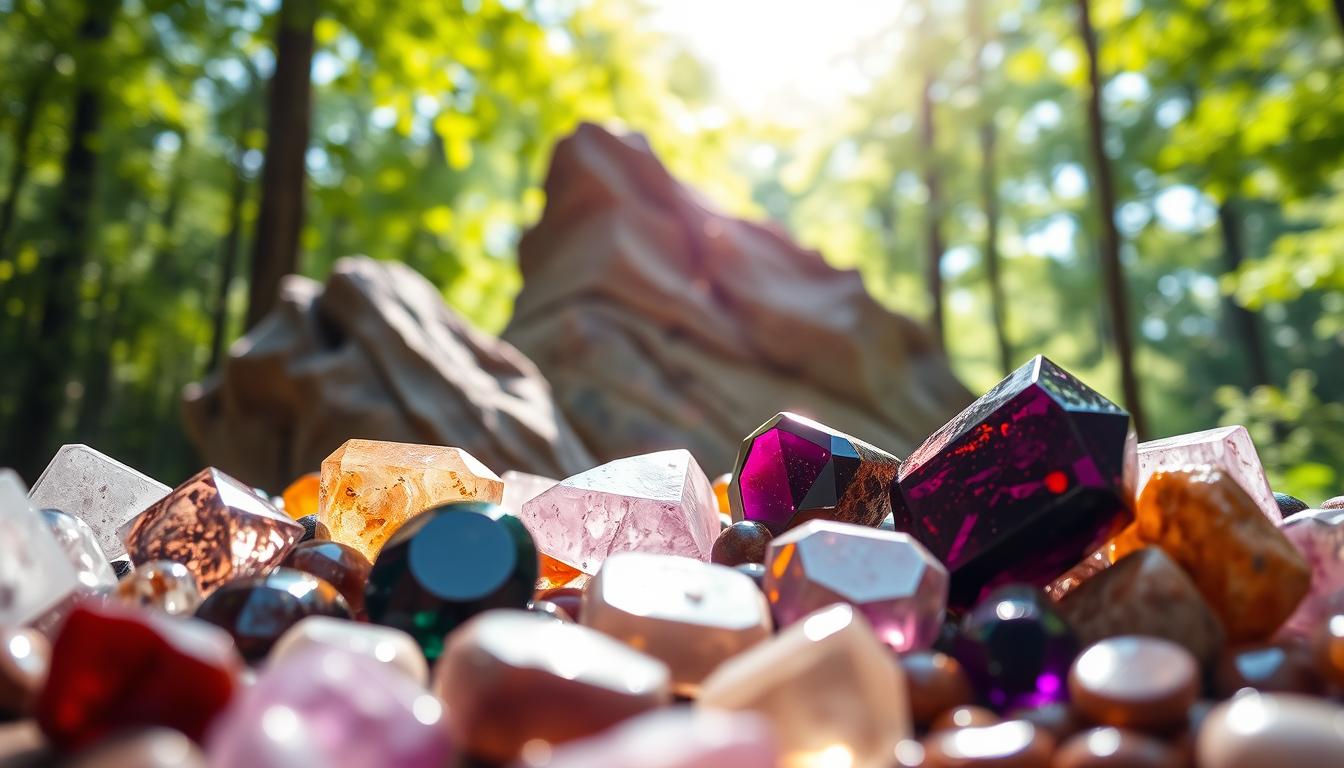
Common Gemstones Found In Alabama offer rockhounds and collectors amazing opportunities to discover natural treasures. Alabama’s diverse geological formations span from the Appalachian Mountains to the Coastal Plain, creating perfect conditions for gemstone formation.
The state’s mix of igneous, metamorphic, and sedimentary rocks hosts varieties like quartz, agate, jasper, beryl, and tourmaline. Whether you’re a seasoned collector or just starting out, Alabama’s rich mineral deposits provide countless chances to find beautiful specimens.
TL;DR
- Alabama contains over 15 different types of gemstones including quartz, agate, beryl, and tourmaline.
- Cleburne and Clay Counties in northern Alabama are the top hotspots for finding quality specimens.
- Spring and fall provide the best hunting conditions when rainfall exposes fresh gemstones in creek beds.
- Public access areas like national forests allow collectors to hunt legally without permits on most sites.
Common Gemstones Found In Alabama
Alabama’s geological diversity creates ideal conditions for numerous gemstone varieties. The state’s position across multiple geological provinces means collectors can find both common and rare specimens, similar to the rich deposits found in neighboring Georgia’s gemstone locations.
Quartz dominates Alabama’s gemstone landscape, appearing in clear, smoky, rose, and amethyst forms. These varieties form in pegmatites, veins, and weathered granite throughout the state.
Quartz Varieties
Smoky quartz stands out as Alabama’s most prized quartz variety, displaying rich brown to black colors. Clear quartz crystals often reach impressive sizes, especially in the northern counties.
- Clear Quartz – Found in large crystals up to 6 inches long in pegmatite pockets
- Smoky Quartz – Ranges from light brown to deep black, highly valued by collectors
- Rose Quartz – Pink varieties occur in massive formations rather than crystal form
- Amethyst – Purple quartz appears rarely but creates exciting finds
Agate and Jasper Formations
Agate and jasper form in Alabama’s sedimentary regions, particularly along creek beds and weathered limestone areas. These stones display stunning patterns and colors that make each specimen unique.
Moss agate shows green dendritic inclusions that look like tiny landscapes. Banded agates feature alternating color layers created by silica-rich groundwater over millions of years.
Prime Gemstone Hunting Locations
Northern Alabama offers the richest gemstone hunting opportunities, with Cleburne and Clay Counties leading the way. These areas sit within the Appalachian geological province where ancient mountain-building processes concentrated minerals, much like the productive regions found in North Carolina’s gemstone areas.
Cleburne County Hotspots
Terrapin Creek provides excellent hunting for quartz crystals and agate specimens. The creek cuts through pegmatite veins, exposing fresh material after every rainfall.
- Access the creek near Highway 9. Park safely and walk downstream to find the best collecting areas.
- Check gravel bars after storms. Heavy rains wash new specimens from upstream deposits.
- Bring a small shovel. Dig into gravel deposits where heavier gemstones settle.
Clay County Opportunities
Chulafinnee Creek flows through prime beryl and tourmaline territory. The creek’s headwaters cut through pegmatite dikes that host these valuable gemstones.
Local collectors report finding green beryl crystals up to 2 inches long in this area. Tourmaline occurs as black crystals embedded in quartz and feldspar.
Creek Hunting Success Tip
Hunt creek beds 24-48 hours after heavy rains when fresh specimens wash out of banks. Look for the sparkle of quartz faces catching sunlight in gravel bars.
Central and Southern Alabama Finds
Coosa and Tallapoosa Counties in central Alabama offer different geological environments that produce unique specimens. The area’s metamorphic rocks host garnet, mica, and occasional beryl finds.
Coosa County Locations
The Coosa River system exposes Paleozoic rocks that contain various mineral specimens. Collectors find jasper, agate, and quartz along riverbanks and tributary streams.
- Weogufka Creek – Known for colorful jasper and agate nodules
- Hatchet Creek – Produces clear quartz crystals and occasional garnets
- Tributary streams – Small creeks often yield the best concentrated specimens
Coastal Plain Discoveries
Southern Alabama’s Coastal Plain geology differs significantly from northern regions but still produces interesting finds. Chalcedony, fossil wood, and unique sedimentary specimens occur in this area, sharing geological similarities with Florida’s coastal gemstone deposits.
The region’s gentler topography means fewer exposed outcrops, but creek beds and road cuts provide access to mineral deposits. Collectors often find petrified wood and chalcedony nodules in these locations.
Geological Formation Process
Alabama’s gemstones formed through various geological processes over hundreds of millions of years. Understanding these processes helps collectors know where to look and what to expect.
Pegmatite Formation
Pegmatites create Alabama’s most valuable gemstone deposits, forming when granite magma crystallizes slowly underground. This slow cooling allows large crystals to grow, producing the state’s best beryl and tourmaline specimens.
These pegmatite bodies appear as light-colored veins cutting through darker country rock. They often contain pockets filled with perfect crystals that collectors prize highly.
Hydrothermal Processes
Hot, mineral-rich fluids moving through rock fractures created many of Alabama’s quartz deposits. These hydrothermal solutions deposited silica in veins and cavities, forming the clear and smoky quartz crystals collectors find today.
| Formation Type | Gemstones Produced | Typical Locations |
|---|---|---|
| Pegmatite | Beryl, Tourmaline, Large Quartz | Mountain regions, granite intrusions |
| Hydrothermal Veins | Quartz varieties, Chalcedony | Fault zones, fractured bedrock |
| Sedimentary | Agate, Jasper, Petrified Wood | Creek beds, weathered limestone |
Collecting Equipment and Techniques
Successful gemstone hunting requires basic equipment and knowledge of where to look. Most Alabama locations allow collecting with simple hand tools, making the hobby accessible to everyone.
Essential Tools
A rock hammer helps break specimens from matrix rock, while a hand lens reveals details that identify gemstones. Field guides specific to Alabama minerals help with on-site identification.
- Rock Hammer – Choose a 16-ounce hammer with a flat head and pick point
- Hand Lens – 10x magnification shows crystal structure and inclusions
- Collection Bags – Separate specimens to prevent damage during transport
- Field Notebook – Record locations and details for future reference
Safety and Legal Considerations
Most Alabama state and national forest areas allow collecting for personal use without permits. Always respect private property and ask permission before collecting on private land.
Wear safety glasses when breaking rocks, as quartz fragments can be sharp. Creek hunting requires sturdy boots with good traction on wet rocks.
Gemstone Identification Guide
Learning to identify Alabama’s common gemstones helps collectors know what they’ve found and estimate value. Each gemstone has distinctive properties that aid identification.
Physical Properties to Check
Hardness, color, crystal form, and luster provide key identification clues. Quartz scratches glass easily due to its hardness of 7, while softer minerals like calcite scratch with a knife.
| Gemstone | Hardness | Common Colors | Crystal System |
|---|---|---|---|
| Quartz | 7 | Clear, smoky, rose, purple | Hexagonal |
| Beryl | 7.5-8 | Green, blue, yellow, pink | Hexagonal |
| Tourmaline | 7-7.5 | Black, green, pink, multi-colored | Trigonal |
| Agate | 6.5-7 | Various, often banded | Trigonal |
Advanced Identification Tips
Beryl crystals show distinct six-sided cross-sections and glassy luster. Tourmaline crystals often display triangular cross-sections and may show different colors at each end.
Agate and jasper belong to the quartz family but appear massive rather than crystalline. Their waxy luster and frequent banding help distinguish them from other minerals.
Frequently Asked Questions
What time of year is best for gemstone hunting in Alabama?
Spring and fall offer ideal conditions with moderate temperatures and increased rainfall that exposes fresh specimens in creek beds.
Do I need permission to collect gemstones in Alabama?
Most state and national forest lands allow personal collecting without permits, but always check current regulations and respect private property.
What is the most valuable gemstone found in Alabama?
High-quality beryl specimens, especially emerald-green varieties, command the highest prices among Alabama gemstones.
Where can I get my Alabama gemstones identified?
Local rock and mineral clubs, university geology departments, and gem and mineral shops offer identification services.
Are there guided gemstone hunting tours in Alabama?
Several local outfitters offer guided trips to prime collecting locations, especially helpful for beginners learning identification skills.
Final Thoughts
Common Gemstones Found In Alabama provide endless opportunities for collectors to discover natural treasures across the state’s diverse geological landscape. From northern pegmatites to southern creek beds, each region offers unique specimens waiting to be found, creating hunting experiences comparable to those found in Tennessee’s mineral-rich areas.
Start your collecting journey at one of the proven locations mentioned above and build your skills through hands-on experience in Alabama’s gemstone-rich terrain.