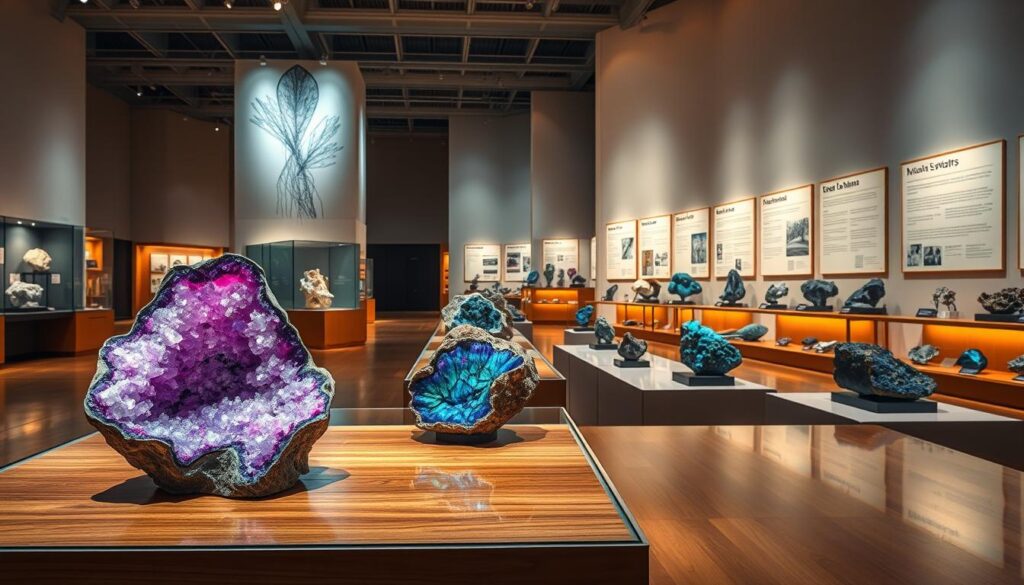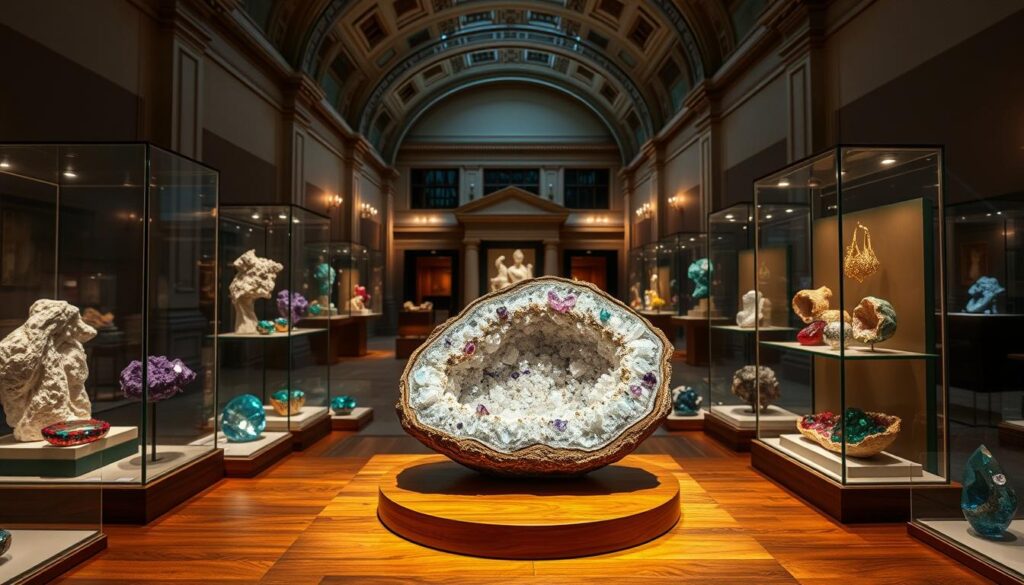
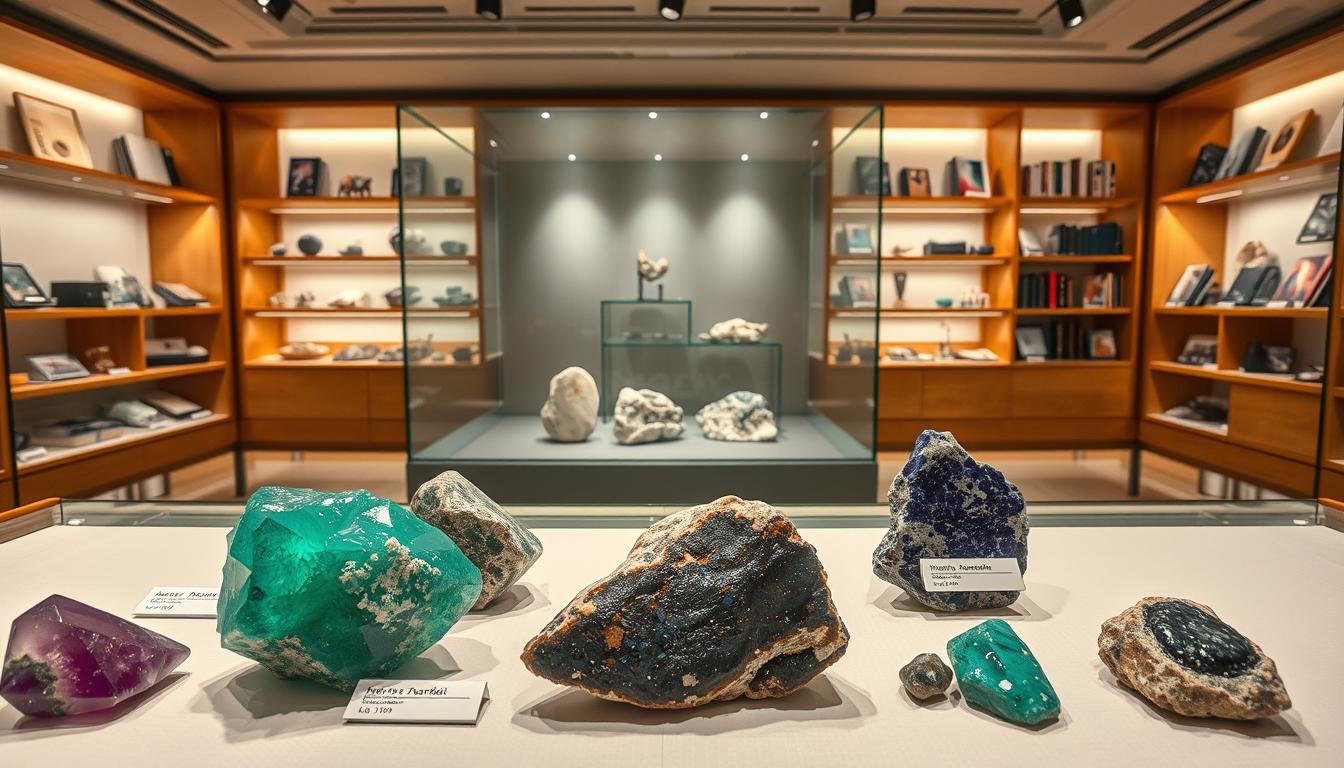
How Museums Classify Rare Stones involves a systematic approach that combines scientific analysis, historical documentation, and expert evaluation. Museums around the world use standardized methods to categorize and preserve these geological treasures for both research and public education.
The classification process requires specialized knowledge of mineralogy, gemology, and cultural significance. Understanding these methods helps visitors appreciate the careful work that goes into creating museum displays and maintaining accurate records of rare mineral specimens.
TL;DR
- Museums use the Dana Classification System with over 5,000 mineral categories based on chemical composition and crystal structure.
- X-ray diffraction analysis can identify mineral composition with 99.9% accuracy in laboratory settings.
- The Mohs hardness scale from 1-10 provides the primary physical classification method for stone durability.
- Provenance documentation requires at least 3 independent sources to verify a specimen’s origin and authenticity.
How Museums Classify Rare Stones
Museums follow established scientific protocols when classifying rare stones and minerals. The process begins with visual inspection and moves through increasingly sophisticated testing methods to determine exact composition and origin.
Professional mineralogists examine each specimen under controlled conditions. They document physical characteristics, measure dimensions, and photograph samples from multiple angles to create comprehensive records.
Physical Property Assessment
The initial classification focuses on observable physical properties that help narrow down possible identifications. These characteristics provide the foundation for more detailed analysis.
- Color and Luster – Natural coloration and surface reflection patterns under standard lighting conditions.
- Crystal Structure – Shape and geometric patterns that reveal internal atomic arrangement.
- Hardness Testing – Resistance to scratching using the standardized Mohs scale.
- Specific Gravity – Density measurements compared to water for identification purposes.
- Cleavage Patterns – How the mineral breaks along natural planes of weakness.
Chemical Analysis Methods
Modern museums rely on advanced laboratory techniques to determine exact chemical composition. These methods provide definitive identification that visual inspection alone cannot achieve.
X-ray fluorescence spectroscopy reveals elemental composition without damaging the specimen. This non-destructive approach makes it ideal for valuable museum pieces that must remain intact for display and future research.
Laboratory Testing Procedures
- Sample Preparation. Clean the specimen and document its current condition with detailed photography.
- Non-Destructive Analysis. Use X-ray diffraction and spectroscopy to identify crystal structure and chemical elements.
- Microscopic Examination. Study thin sections under polarized light to observe internal features.
- Comparative Analysis. Compare results against established mineral databases and reference collections.
Classification Systems
Museums worldwide use the Dana Classification System as their primary organizational method. This system groups minerals based on chemical composition and crystal structure rather than appearance alone.
The system divides minerals into major classes including native elements, sulfides, oxides, halides, carbonates, sulfates, phosphates, and silicates. Each class contains numerous subgroups that reflect increasingly specific chemical relationships.
Documentation Standards
Proper classification requires extensive documentation that meets international museum standards. Every specimen receives a unique catalog number and detailed record of its properties and origin.
- Acquisition Records – Source, date obtained, and purchase or donation details.
- Scientific Data – Complete chemical analysis and physical property measurements.
- Provenance Information – Geographic origin and geological context when known.
- Conservation Notes – Current condition and any previous restoration work.
- Display History – Previous exhibitions and loan agreements.
Museum Visit Tip
Look for specimen labels that include the Dana classification number – this tells you exactly how scientists categorize that particular mineral. The number system helps you understand relationships between different stones in the collection.
Verification and Authentication
Museums must verify the authenticity of rare stones before adding them to collections. This process involves multiple experts and cross-referencing with established databases of known specimens.
Synthetic and treated stones require special notation in museum records. Modern enhancement techniques can alter natural properties, making proper identification essential for accurate classification and educational value.
Expert Consultation Process
Complex specimens often require input from multiple specialists. Geologists, gemologists, and mineralogists work together to reach consensus on proper classification and significance.
International networks of museum professionals share expertise and resources. This collaboration ensures consistent standards and helps identify specimens that might challenge existing classification systems, including unusual mineral formations that push the boundaries of current understanding.
Digital Cataloging Systems
Modern museums use digital databases to store and organize classification information. These systems allow researchers worldwide to access specimen data and contribute to ongoing scientific understanding.
Digital records include high-resolution photographs, spectral analysis data, and detailed measurements. This information supports research projects and helps authenticate similar specimens found elsewhere, particularly when evaluating what makes a stone truly valuable to collectors and scientists.
Frequently Asked Questions
How long does it take museums to classify a rare stone?
Complete classification typically takes 2-6 weeks depending on the specimen’s complexity and the need for specialized testing. Simple identification might happen within days, while rare or unusual stones require extensive analysis.
Can museums change a stone’s classification after it’s catalogued?
Yes, classifications can be updated when new scientific methods reveal additional information or when taxonomic systems are revised. Museums maintain records of all classification changes for historical accuracy.
Do museums ever classify fake stones by mistake?
Modern analytical methods make misidentification extremely rare, but museums do discover synthetic or treated stones in older collections. When this happens, they update records and use these discoveries for educational purposes.
How do museums handle stones with unknown origins?
Museums classify the mineral itself using scientific methods while noting “provenance unknown” in the records. The geological classification remains valid even without location data.
Final Thoughts
How Museums Classify Rare Stones represents a careful balance between scientific rigor and practical organization needs. This systematic approach ensures that geological treasures are properly understood and preserved for future generations to study and appreciate.
The next time you visit a mineral collection, take a moment to examine the detailed labels and appreciate the extensive work behind each specimen’s classification. Understanding these methods can enhance your appreciation for why certain rocks become highly valued in both scientific and collecting communities.