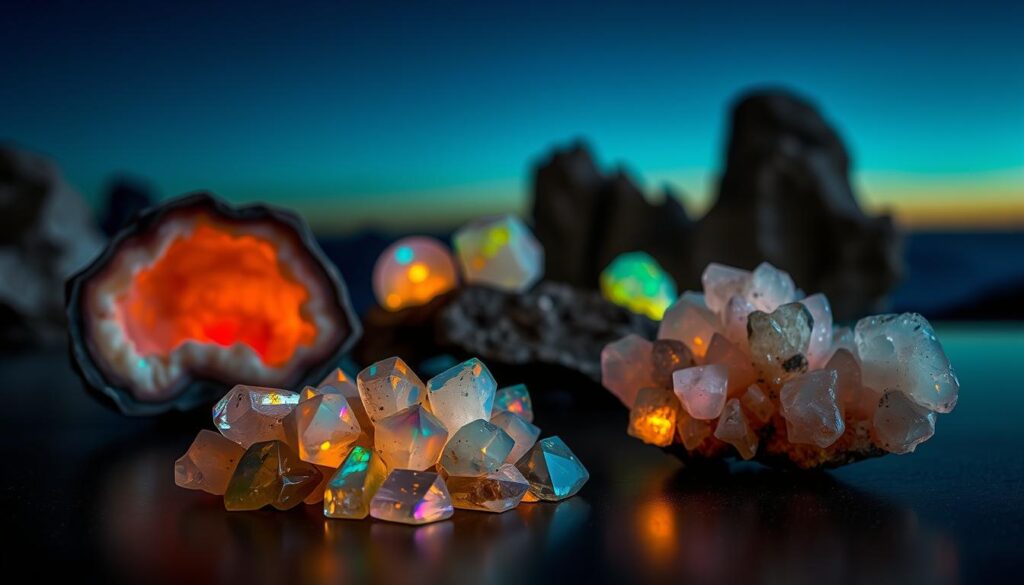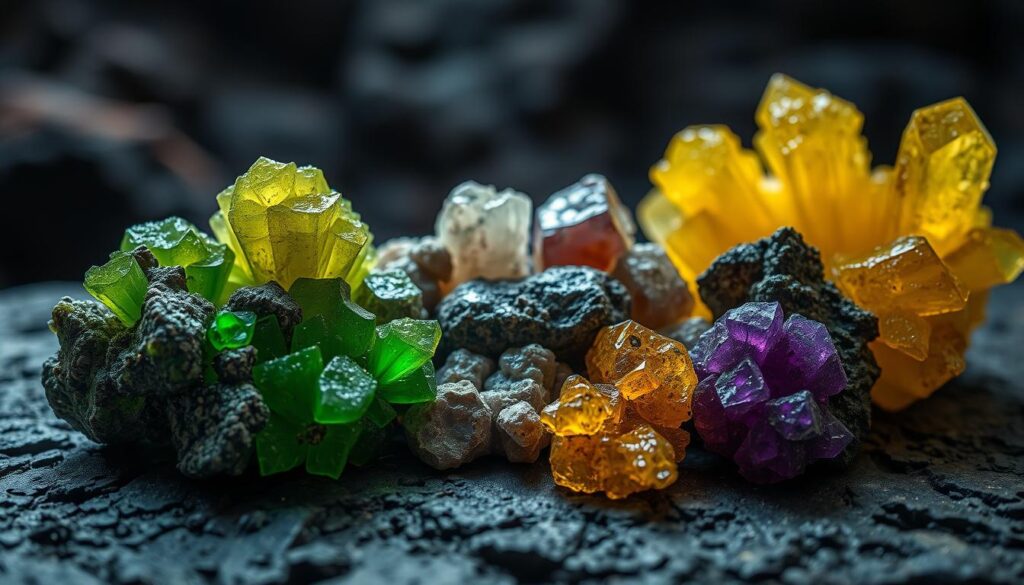
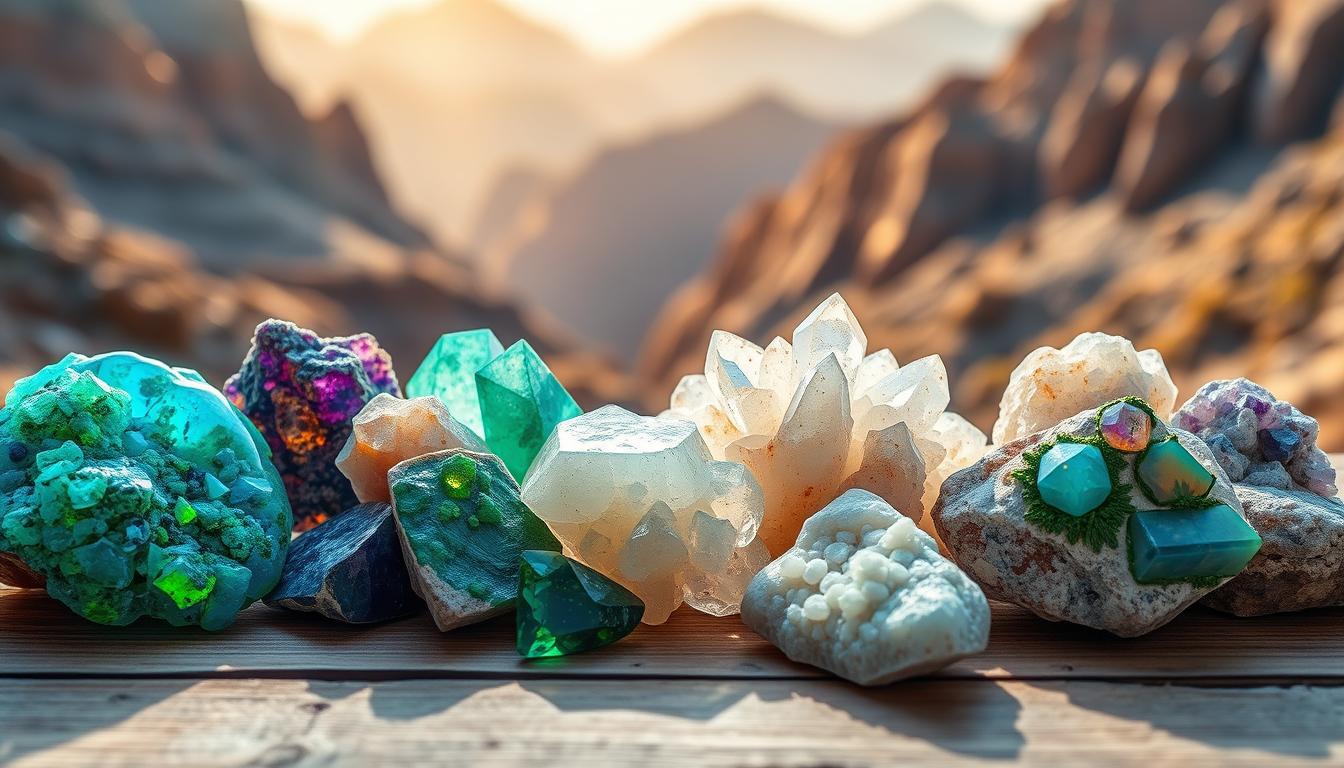
Strange Minerals Found Around The World reveal nature’s incredible ability to create formations that seem almost alien in appearance. These unusual geological specimens challenge our understanding of what rocks and crystals can look like, displaying colors, shapes, and properties that appear more like science fiction than reality.
From glowing minerals that light up under UV rays to formations that look like they belong on another planet, our Earth contains some truly extraordinary geological treasures. These rare specimens are found in remote locations across the globe, each with unique formation stories spanning millions of years.
TL;DR
- Bismuth crystals naturally form rainbow-colored geometric staircases that look completely artificial but occur in nature.
- Fluorite can glow bright purple, blue, or green under UV light due to trace amounts of rare earth elements.
- Desert roses are gypsum formations that grow in desert sand, creating flower-like crystal clusters up to 4 feet wide.
- Peacock ore (bornite) displays metallic purple, blue, and gold colors when exposed to air and moisture.
Strange Minerals Found Around The World
Our planet produces mineral formations that defy expectations through unique geological processes. These strange specimens form under specific temperature, pressure, and chemical conditions that rarely occur together, making them exceptionally rare finds.
Many of these unusual minerals were only discovered in the past century as mining operations reached deeper into the Earth. Scientists continue finding new varieties each year, with over 70 new mineral species identified annually worldwide according to the International Mineralogical Association.
Rainbow-Colored Geometric Formations
Some minerals create patterns so precise they appear machine-made rather than natural. These geometric wonders form through mathematical crystal growth patterns that produce stunning visual effects.
Bismuth Crystals
Bismuth creates some of nature’s most geometric formations, growing in perfect stepped pyramids with rainbow iridescence. These crystals form when molten bismuth cools slowly, allowing atoms to arrange in precise mathematical patterns that create staircase-like structures.
The rainbow colors appear when a thin oxide layer forms on the surface, creating interference patterns with light. Large bismuth specimens can weigh several pounds and display colors ranging from deep purple to bright gold.
Fluorite Formations
Fluorite produces perfect cubic crystals in colors from clear to deep purple, often with geometric internal patterns. Under ultraviolet light, many fluorite specimens glow intensely due to trace amounts of rare earth elements trapped within the crystal structure.
The most prized fluorite specimens come from China’s Hunan Province, where perfect purple cubes grow up to 6 inches on each side. These formations take thousands of years to develop in underground cavities.
Desert and Cave Mysteries
Some of Earth’s strangest minerals form in extreme environments where few people venture. Desert heat and underground cave systems create unique conditions for unusual crystal growth.
Desert Roses
Desert roses form when gypsum crystals grow in sand, creating flower-like clusters that incorporate sand grains into their structure. These formations develop over centuries as groundwater evaporates in arid climates, leaving behind intricate crystal arrangements.
The largest desert roses can span 4 feet across and weigh hundreds of pounds. Oklahoma’s state rock is the desert rose, found throughout the state’s red dirt regions.
Cave Pearls and Flowstone
Deep caves produce some of nature’s most delicate mineral formations through slow water dripping over thousands of years. Cave pearls form when water drops create perfectly round calcite spheres, while flowstone creates curtain-like formations that resemble frozen waterfalls.
Mammoth Cave National Park in Kentucky contains some of the world’s largest flowstone formations, with translucent calcite sheets spanning entire chamber walls. These formations grow less than an inch per century.
Collecting Strange Minerals
Always research local regulations before collecting minerals, as many locations require permits. Start with rock and mineral shows to see specimens up close before investing in expensive pieces.
Color-Changing and Metallic Wonders
Certain minerals display colors and metallic properties that change based on viewing angle or environmental conditions. These optical effects result from unique crystal structures that interact with light in unusual ways.
Peacock Ore (Bornite)
Bornite displays brilliant purple, blue, and gold colors when exposed to air, earning the nickname peacock ore. Fresh bornite appears bronze-colored, but oxidation creates the stunning iridescent surface that collectors prize.
This copper iron sulfide mineral forms in high-temperature environments and serves as an important copper ore. The best peacock ore specimens come from Mexico and Arizona mining regions.
Labradorite Flash
Labradorite appears gray and ordinary until light hits its surface at the right angle, revealing flashes of blue, green, and gold. This optical effect, called labradorescence, occurs when light reflects between microscopic layers within the crystal structure.
Madagascar produces the world’s finest labradorite specimens, with some displaying the full spectrum of colors. Large polished pieces can show rainbow flashes across their entire surface.
Radioactive and Glowing Specimens
Some minerals contain radioactive elements or phosphorescent properties that make them glow in the dark or under specific lighting conditions. These specimens require special handling but create spectacular displays.
Uraninite and Autunite
Uraninite, the primary uranium ore, appears black and metallic but glows green under UV light due to uranium decay products. Autunite forms bright yellow-green crystals that fluoresce intensely and contain significant radioactive elements.
These minerals require proper storage in lead-lined containers and limited exposure time. Many specimens come from abandoned uranium mines in the American Southwest.
Willemite from Franklin, New Jersey
Franklin, New Jersey produces some of the world’s most fluorescent minerals, with willemite glowing bright green under UV light. The town’s zinc mines created unique chemical conditions that produced over 300 different mineral species, many found nowhere else on Earth.
Collectors consider Franklin minerals among the most spectacular fluorescent specimens available. The Sterling Hill Mining Museum displays hundreds of glowing mineral varieties from this unique location.
Frequently Asked Questions
Are strange minerals safe to handle?
Most unusual minerals are safe for brief handling, but some contain toxic elements like lead, mercury, or radioactive materials. Always research a mineral’s composition before handling and wash hands thoroughly afterward.
Where can I see these minerals in person?
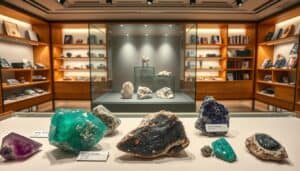
Natural history museums, rock and mineral shows, and specialized mineral dealers offer opportunities to view strange specimens. Many universities also maintain geological collections open to the public.
Why do some minerals glow under UV light?
Fluorescence occurs when minerals contain trace amounts of elements like manganese, chromium, or rare earth metals that absorb UV energy and re-emit it as visible light. The specific elements determine the fluorescent color.
How much do strange minerals cost?
Prices vary widely based on size, quality, and rarity, ranging from $10 for small specimens to thousands for museum-quality pieces. Common fluorescent minerals cost $20-100, while rare specimens can exceed $1,000.
Can I find strange minerals myself?
Many unusual minerals can be found at designated collecting sites, old mine dumps, and specific geological formations. Research local geology and join mineral clubs to learn the best collecting locations in your area.
Final Thoughts
Strange Minerals Found Around The World showcase nature’s incredible creativity in forming geological specimens that challenge our imagination. These unusual formations remind us that Earth contains wonders we’re still discovering and understanding.
Whether you’re interested in collecting, studying, or simply admiring these natural treasures, each strange mineral tells a unique story of the geological processes that shaped our planet. Start exploring local mineral shows or museums to witness these remarkable formations firsthand, and consider learning about collecting locations where you might find your own specimens.