How Old Geological Events Created Today’s Gem Areas tells a fascinating story that spans billions of years. The precious stones we treasure today formed through ancient volcanic eruptions, mountain-building processes, and continental collisions that occurred long before humans walked the Earth.
Understanding these geological processes helps explain why certain regions produce specific types of gems and why some areas remain barren. The connection between ancient Earth events and modern gemstone deposits reveals nature’s incredible ability to create beauty through extreme pressure, heat, and time.
TL;DR
- Most gem-bearing regions formed 1-4 billion years ago during major tectonic events and volcanic activity.
- The Mogok Valley in Myanmar produces 90% of the world’s finest rubies due to limestone metamorphism 500 million years ago.
- Brazil’s gem triangle contains over 60 different gemstone varieties formed by ancient continental collisions 2 billion years ago.
- Volcanic kimberlite pipes created 1-3 billion years ago brought diamonds from 150+ miles deep to Earth’s surface.
How Old Geological Events Created Today’s Gem Areas
The Earth’s gem-producing regions trace their origins to massive geological upheavals that reshaped continents and ocean floors. These ancient events created the perfect conditions for gemstone formation through intense heat, pressure, and chemical reactions that took millions of years to complete.
Three primary geological processes contributed to today’s major gem deposits: metamorphic transformation of existing rocks, igneous intrusions from deep magma chambers, and hydrothermal fluid circulation through fractured bedrock. Each process created distinct types of gemstones in specific geological environments that we can still identify today.
Ancient Tectonic Collisions and Mountain Building
When continents crashed together hundreds of millions of years ago, the immense pressure and heat transformed ordinary rocks into gemstone-bearing formations. The Himalayan collision zone, which began 50 million years ago, created some of the world’s most productive ruby and sapphire deposits in Myanmar, Kashmir, and Afghanistan.
The Appalachian Mountains formed through multiple collision events between 480-250 million years ago, generating the emerald deposits found in North Carolina and the garnets scattered throughout the region. These mountain-building episodes subjected limestone, shale, and granite to extreme metamorphic conditions that crystallized trace elements into precious gems.
The Mogok Valley Formation
Myanmar’s legendary Mogok Valley owes its ruby wealth to a specific geological event 500 million years ago. Ancient limestone beds rich in aluminum underwent metamorphism when tectonic forces buried them deep beneath younger rock layers, creating the marble matrix that hosts the world’s finest rubies.
The valley’s unique geological signature includes white marble, blue sapphires, and spinels alongside the famous “pigeon’s blood” rubies. This combination indicates the precise temperature and pressure conditions that existed during the Paleozoic Era metamorphic event.
Volcanic Activity and Igneous Gem Formation
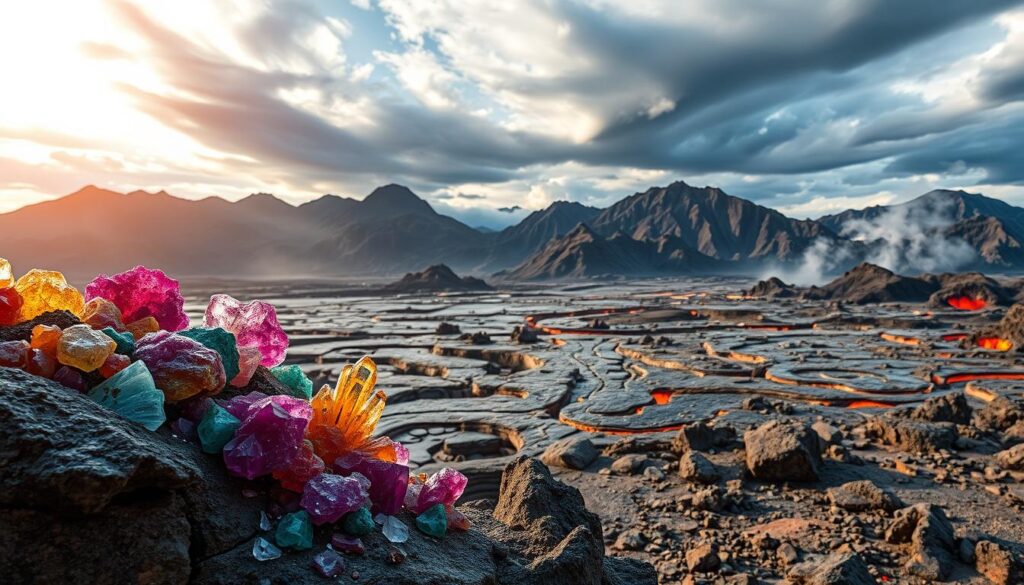
Ancient volcanic systems created many of today’s most important gem localities through magma intrusions and explosive eruptions. The Brazilian Shield, formed by volcanic activity 2 billion years ago, hosts an incredible diversity of gemstones including aquamarine, tourmaline, topaz, and emeralds.
Pegmatite formations resulted from slow-cooling granite magma chambers that allowed large, perfect crystals to grow over thousands of years. These coarse-grained igneous rocks contain concentrated rare elements that formed exotic gemstones like kunzite, morganite, and paraiba tourmaline.
Kimberlite Pipe Diamond Sources
Diamonds reached Earth’s surface through violent volcanic eruptions that created narrow pipes extending deep into the mantle. These volcanic areas produce gemstones through kimberlite pipes that formed 1-3 billion years ago when carbon-rich magma exploded upward at speeds exceeding 200 miles per hour, carrying diamonds from depths greater than 150 miles.
South Africa’s famous diamond mines tap into these ancient volcanic conduits, with pipes like the Big Hole at Kimberley representing single explosive events from the Cretaceous Period. The Siberian diamond fields formed through similar processes during the Devonian Period 400 million years ago.
Hydrothermal Systems and Fluid-Deposited Gems
Hot mineral-rich fluids circulating through fractured bedrock created many important gemstone deposits through precipitation and chemical replacement. The Ural Mountains’ emerald deposits formed when beryllium-rich hydrothermal solutions encountered chromium-bearing rocks 300 million years ago.
Colombia’s emerald belt represents a unique geological environment where organic-rich sedimentary rocks provided the chemical components for emerald formation. Hydrothermal fluids associated with Tertiary Period mountain building 65 million years ago concentrated beryl in calcite veins that remain productive today.
Identifying Ancient Geological Events
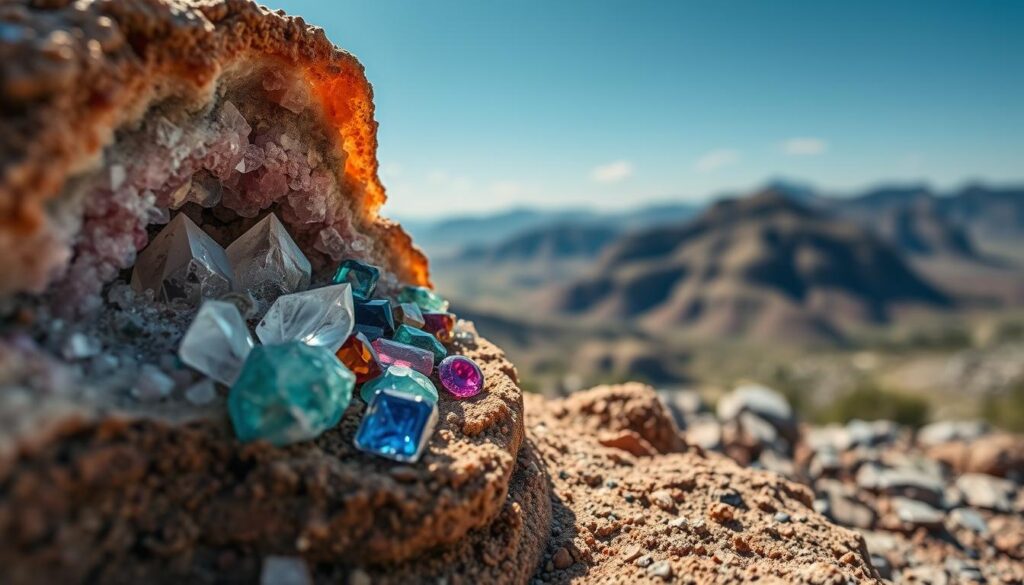
Look for specific rock associations and mineral combinations that indicate the geological processes responsible for gem formation. Understanding these signatures helps predict where similar gems might occur in unexplored regions.
Continental Drift and Gem Distribution
The breakup of ancient supercontinents scattered related gem deposits across modern continents that were once connected. Gondwana’s fragmentation 200 million years ago explains why similar sapphire deposits occur in Madagascar, Sri Lanka, and Australia despite their current geographic separation.
Pangaea’s assembly and breakup cycles concentrated certain elements in specific crustal blocks, creating the distinctive gem signatures we associate with different continents today. Africa’s kimberlite diamond pipes, South America’s emerald deposits, and Asia’s corundum localities reflect these ancient continental configurations.
Erosion and Secondary Gem Deposits
Millions of years of weathering and erosion redistributed gems from their original host rocks into placer deposits that became some of history’s most famous mining locations. The gem gravels of Sri Lanka, Madagascar’s sapphire fields, and Montana’s Yogo Gulch represent concentrated accumulations of gems liberated from ancient source rocks.
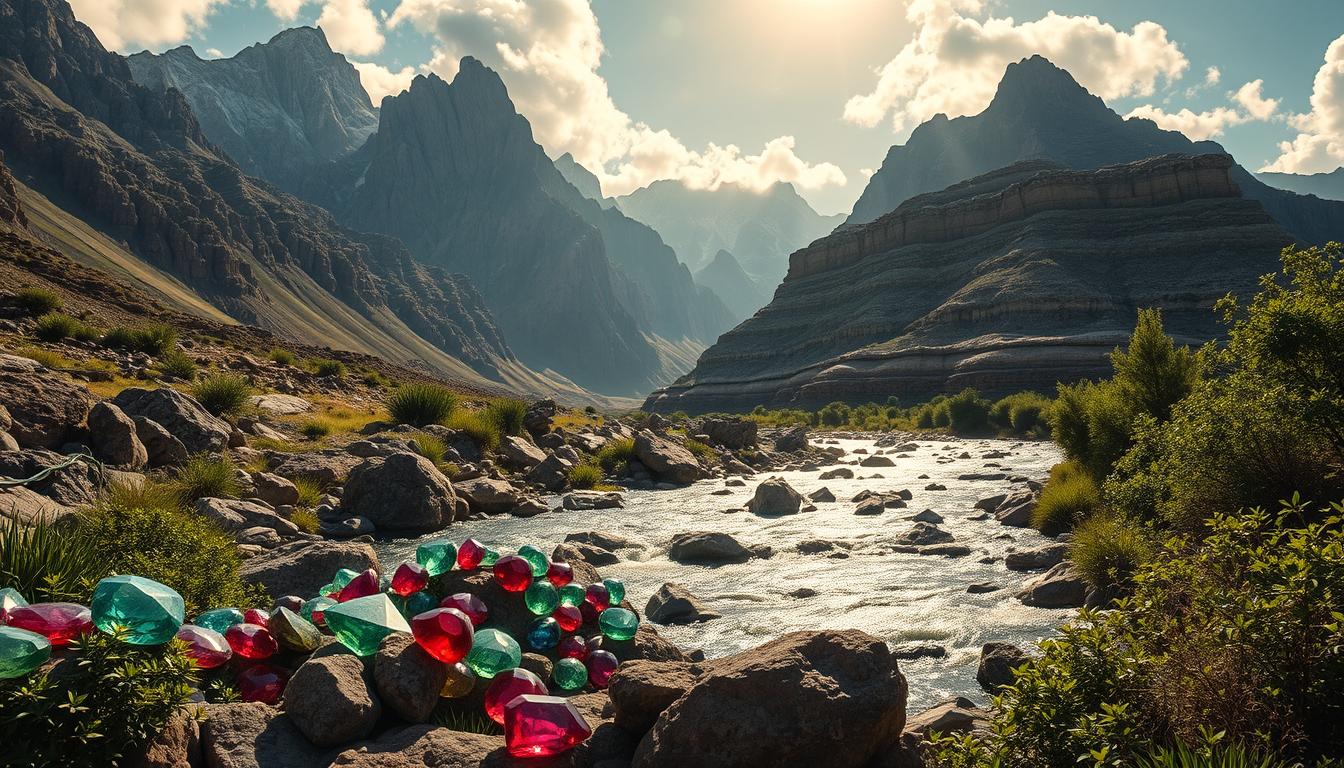
River systems transported durable gemstones far from their origins, creating alluvial deposits that early prospectors could work with simple tools. These secondary concentrations often provided the first clues to discovering the original gem-bearing formations hidden in nearby mountains, which explains why riverbeds are good for rock collecting.
Climate and Weathering Effects
Ancient climate cycles influenced gem formation and preservation through chemical weathering patterns that concentrated or dispersed gemstone-forming elements. Tropical weathering during greenhouse periods leached silica and aluminum from feldspars, contributing to the formation of bauxite deposits that later became corundum sources.
Ice ages and glacial activity exposed previously buried gem deposits while grinding others into powder, explaining the patchy distribution of surface gem occurrences. The retreat of Pleistocene glaciers revealed many North American gem localities that had been hidden for millions of years.
Frequently Asked Questions
How long does it take for gemstones to form naturally?
Most gemstones require millions to billions of years to form, with diamonds taking 1-3 billion years and emeralds forming over 20-600 million years depending on the specific geological environment.
Why are certain gemstones only found in specific geographic regions?
Gemstone formation requires precise combinations of chemical elements, temperature, pressure, and geological processes that only occurred in certain locations during specific periods in Earth’s history.
Can new gemstone deposits still form today?
Yes, but extremely slowly – volcanic activity and hydrothermal systems continue creating conditions for gem formation, though the process takes millions of years to produce gem-quality crystals.
How do geologists locate new gemstone deposits?
Geologists study ancient rock formations, mineral associations, and geology maps to identify areas with similar characteristics to known gem-producing regions from comparable time periods.
What role did ancient supercontinents play in gem distribution?
Supercontinent assembly concentrated rare elements in specific crustal zones, while their breakup scattered related gem deposits across multiple modern continents that share similar geological histories.
Final Thoughts
How Old Geological Events Created Today’s Gem Areas demonstrates that every precious stone tells a story spanning hundreds of millions of years. The rubies of Myanmar, diamonds of South Africa, and emeralds of Colombia all trace their origins to specific moments in Earth’s geological history when conditions aligned perfectly for their formation.
Understanding these ancient processes not only explains why gems occur where they do but also guides modern exploration efforts toward discovering new deposits with similar geological signatures. The next time you admire a precious gemstone, remember that you’re holding a piece of Earth’s ancient history crystallized into something beautiful.