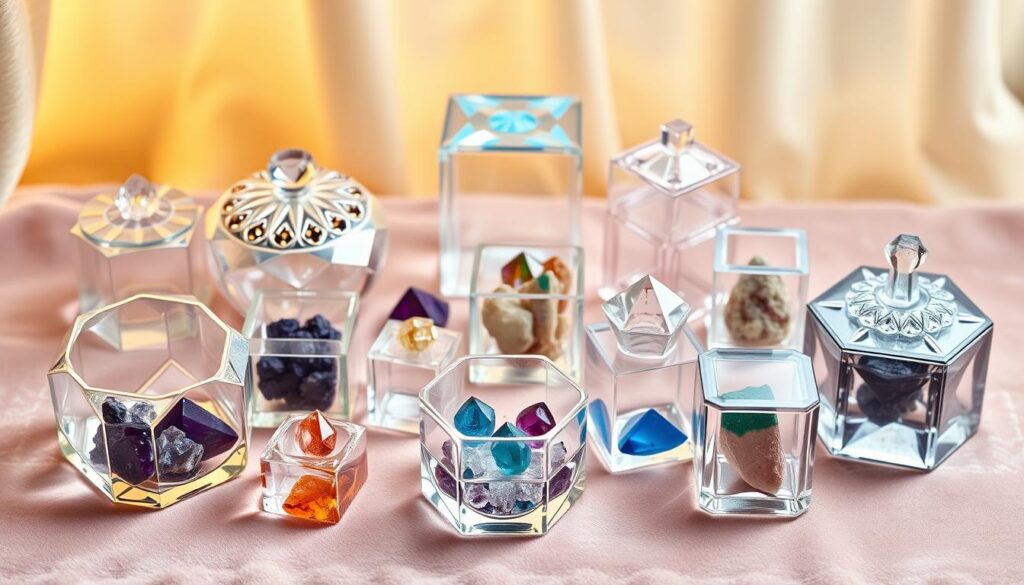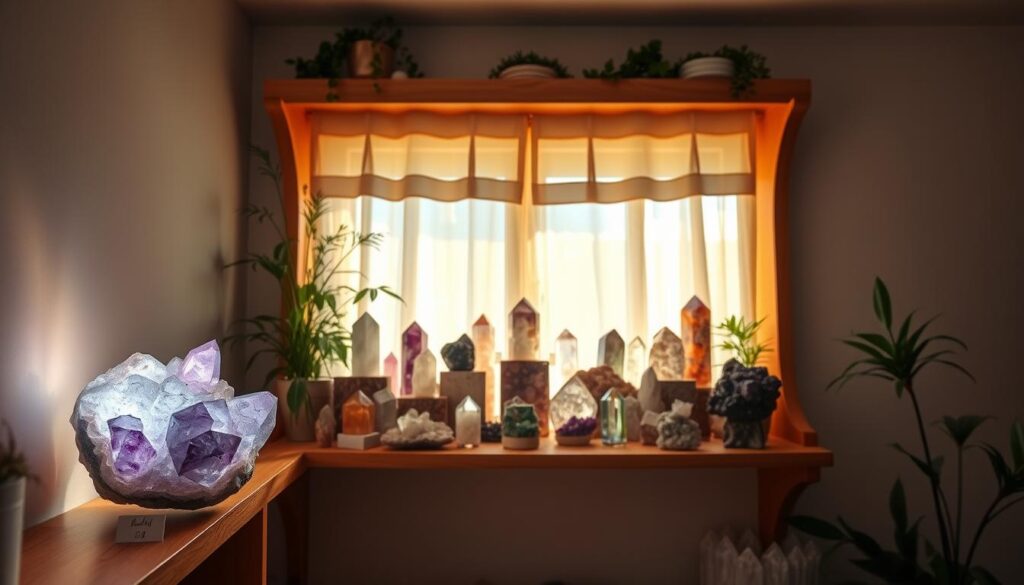
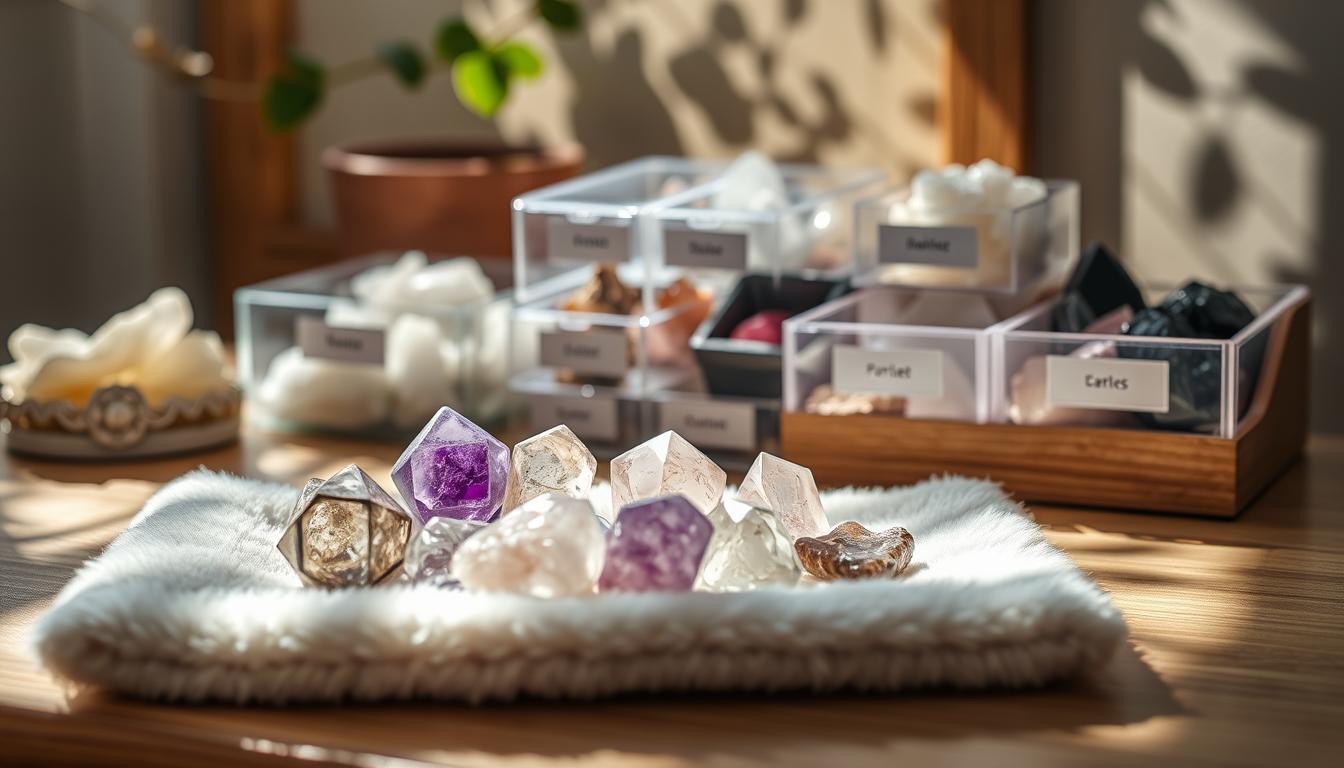
How To Store Crystals Without Damage requires careful planning to preserve both their physical beauty and energetic properties. Many crystal collectors unknowingly damage their precious stones through improper storage methods that can cause scratches, chips, or energy interference.
Your crystals deserve protection from environmental factors and physical harm that can diminish their appearance and healing potential. The right storage approach keeps your collection safe while maintaining easy access for daily use and meditation practices.
TL;DR
- Wrap each crystal individually in soft cloth to prevent scratches from contact with other stones.
- Store crystals away from direct sunlight to prevent fading in stones like amethyst and rose quartz.
- Use wooden or fabric-lined boxes instead of plastic containers to avoid energy blockage.
- Keep a humidity level between 40-50% to prevent cracking in delicate crystals like selenite.
How To Store Crystals Without Damage
Proper crystal storage begins with understanding that different stones have varying hardness levels and energy sensitivities. Each crystal in your collection needs individual protection to prevent physical damage and maintain its natural vibrations.
The basic rule involves keeping crystals separated from each other to avoid scratches and chips. Harder stones like quartz can easily damage softer minerals like calcite or fluorite when stored together without protection.
Essential Storage Materials
Natural materials work best for crystal storage because they don’t interfere with the stones’ energy fields. Synthetic materials can create barriers that some practitioners believe block or alter crystal vibrations.
- Soft cotton or silk cloth – wraps individual crystals safely without scratching.
- Wooden boxes or drawers – provide natural protection and good energy flow.
- Fabric-lined jewelry boxes – offer compartments that keep stones separated.
- Natural fiber pouches – portable options for frequently used crystals.
- Tissue paper – adds extra cushioning between wrapped stones.
Temperature and Environment Control
Crystals respond to environmental changes just like any natural material. Extreme temperature fluctuations can cause expansion and contraction that leads to internal stress fractures in your stones.
Room temperature storage areas work best for most crystal collections. Avoid storing crystals in basements, attics, or areas that experience significant temperature swings throughout the day or seasons.
Humidity Management
Too much moisture can damage water-soluble crystals like selenite, halite, and some forms of calcite. These stones can actually dissolve or become cloudy when exposed to high humidity levels over time.
Conversely, extremely dry conditions can cause some crystals to develop stress fractures. A moderate humidity level helps maintain the structural integrity of your entire collection, with the EPA recommending indoor humidity levels between 30-50% for optimal material preservation.
Light Protection Strategies
Direct sunlight fades many popular crystals including amethyst, rose quartz, smoky quartz, and fluorite. These stones can lose their rich colors when exposed to UV rays over extended periods.
Store your collection in a dark or dimly lit area to preserve natural coloration. If you display crystals in sunny rooms, rotate them regularly or use UV-filtering glass to minimize exposure. For more detailed guidance on showcasing your collection while protecting it, check out our comprehensive guide on how to display crystal collections.
Quick Wrapping Method
Place each crystal in the center of a soft cloth square and gather the corners up like a small bundle. This creates a protective pouch that prevents scratches while allowing easy unwrapping.
Organization and Accessibility
A well-organized storage system helps you locate specific crystals quickly while minimizing handling of other stones in your collection. Frequent rummaging through stored crystals increases the risk of accidental drops and impacts.
Label your storage containers or create a simple inventory list that shows where each crystal is located. This system saves time and reduces unnecessary handling that can lead to damage. If you’re just beginning to build your collection, our guide on the best starter crystals for beginners can help you choose specimens that are both durable and rewarding to collect.
Compartmented Storage Solutions
Individual compartments prevent crystals from rolling around and knocking into each other during transport or daily use. Many collectors use tackle boxes, jewelry organizers, or custom-built wooden cases with divided sections.
Ensure each compartment has soft lining material to cushion the crystals. Even with individual spaces, adding tissue paper or cloth padding provides extra protection against impacts. Understanding whether to store single crystals vs crystal clusters separately can also help you organize your storage system more effectively.
Special Considerations for Delicate Crystals
Some crystals require extra care due to their fragile nature or unique properties. Understanding these special needs helps prevent costly damage to rare or expensive specimens.
- Selenite – store in dry conditions and handle minimally due to water solubility.
- Pyrite – keep away from moisture to prevent oxidation and crumbling.
- Opal – maintain moderate humidity to prevent cracking from dehydration.
- Desert roses – protect from impacts as the crystal formations are extremely fragile.
- Cluster formations – wrap carefully to protect delicate points and formations.
Travel and Transport Protection
Moving crystals requires extra padding and secure containers to prevent damage during transport. Even short trips can result in chips or breaks if stones shift during movement.
Use bubble wrap or extra cloth layers for valuable pieces, and pack crystals snugly so they cannot move within their containers. Hard-sided cases provide better protection than soft bags for traveling with crystal collections.
Frequently Asked Questions
Can I store different types of crystals together?
You can store different crystals together if each stone is individually wrapped to prevent scratching. Harder stones will damage softer ones if they make direct contact.
Do crystals need to breathe in storage?
Crystals don’t need air circulation like living things, but many practitioners prefer natural materials over airtight plastic containers. Good ventilation helps prevent moisture buildup that could damage water-sensitive stones.
How often should I check on stored crystals?
Check your stored crystals every few months to ensure they remain in good condition. This allows you to spot any developing issues like moisture damage or loose wrappings before they cause serious harm.
Is it safe to store crystals in the basement or garage?
Basements and garages often have temperature and humidity fluctuations that can damage crystals over time. Choose a climate-controlled indoor location with stable conditions instead.
Final Thoughts
How To Store Crystals Without Damage becomes simple once you establish a system that protects each stone individually while maintaining easy access to your collection. The investment in proper storage materials pays off by preserving both the beauty and value of your crystals for years to come.
Start organizing your collection today with the materials you have available, then gradually upgrade to better storage solutions as your collection grows. Remember to also learn proper cleaning techniques for all stone types to maintain your crystals’ appearance and energy between storage periods.