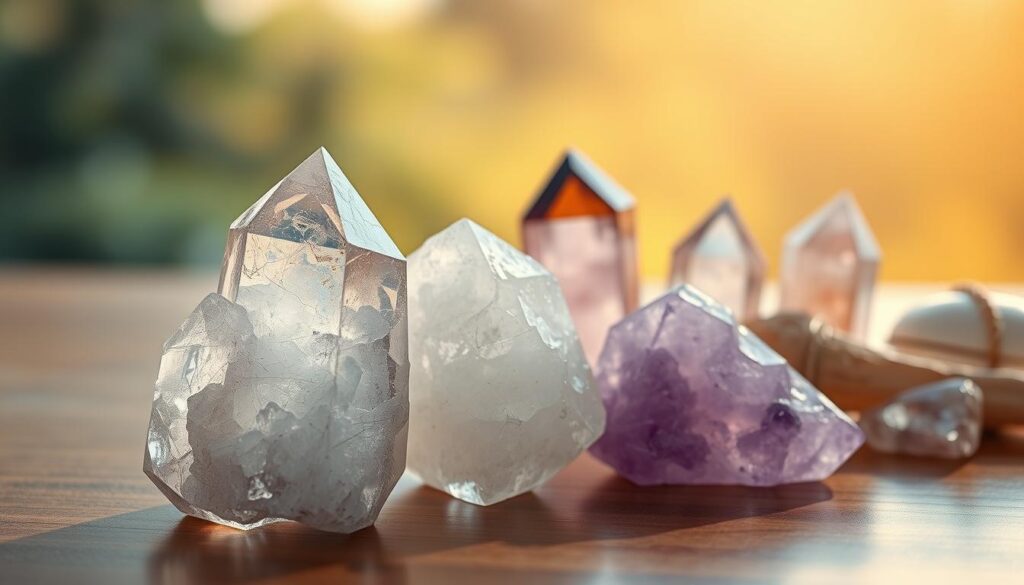
Clear Vs Cloudy Crystals For Collectors creates an important decision point when building your crystal collection. Understanding the differences between transparent and opaque specimens helps you make smart choices about which crystals to add to your collection. Each type offers unique benefits, from the brilliant sparkle of clear quartz to the gentle energy of milky specimens.
Whether you’re drawn to crystal-clear transparency or the soft beauty of cloudy formations, knowing what makes each type special will guide your collecting journey. The clarity of a crystal affects not just its appearance but also its value and the energy it brings to your space.
TL;DR
- Clear crystals allow 90-95% light transmission while cloudy crystals typically allow only 10-30% due to microscopic inclusions.
- Clear quartz specimens can cost 2-3 times more than milky quartz of the same size due to rarity and visual appeal.
- Cloudy crystals form when temperatures drop rapidly during growth, trapping tiny air bubbles or mineral particles inside.
- Professional collectors use a 10x loupe to examine crystal clarity and identify authentic specimens from treated or synthetic ones.
Clear Vs Cloudy Crystals For Collectors
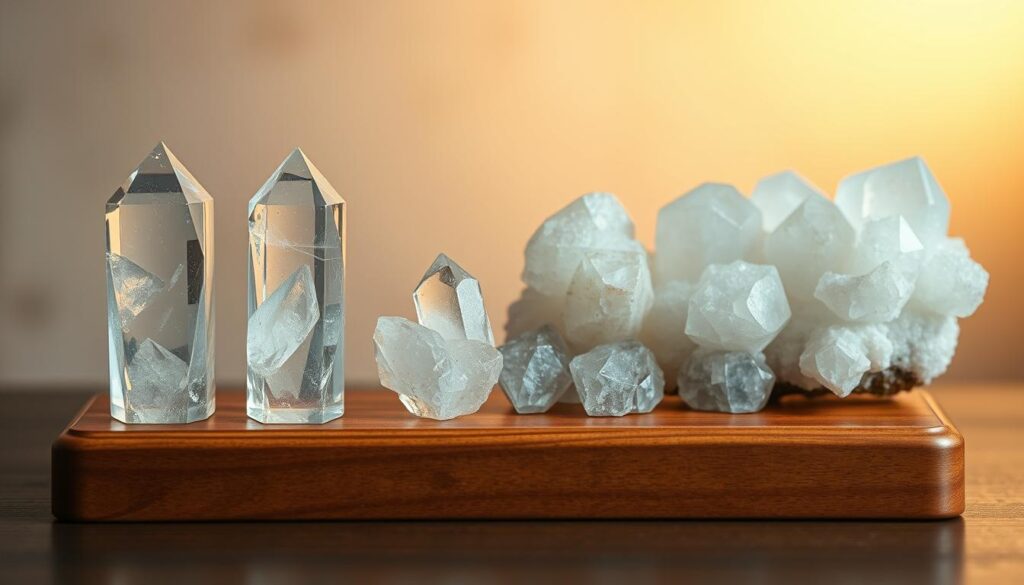
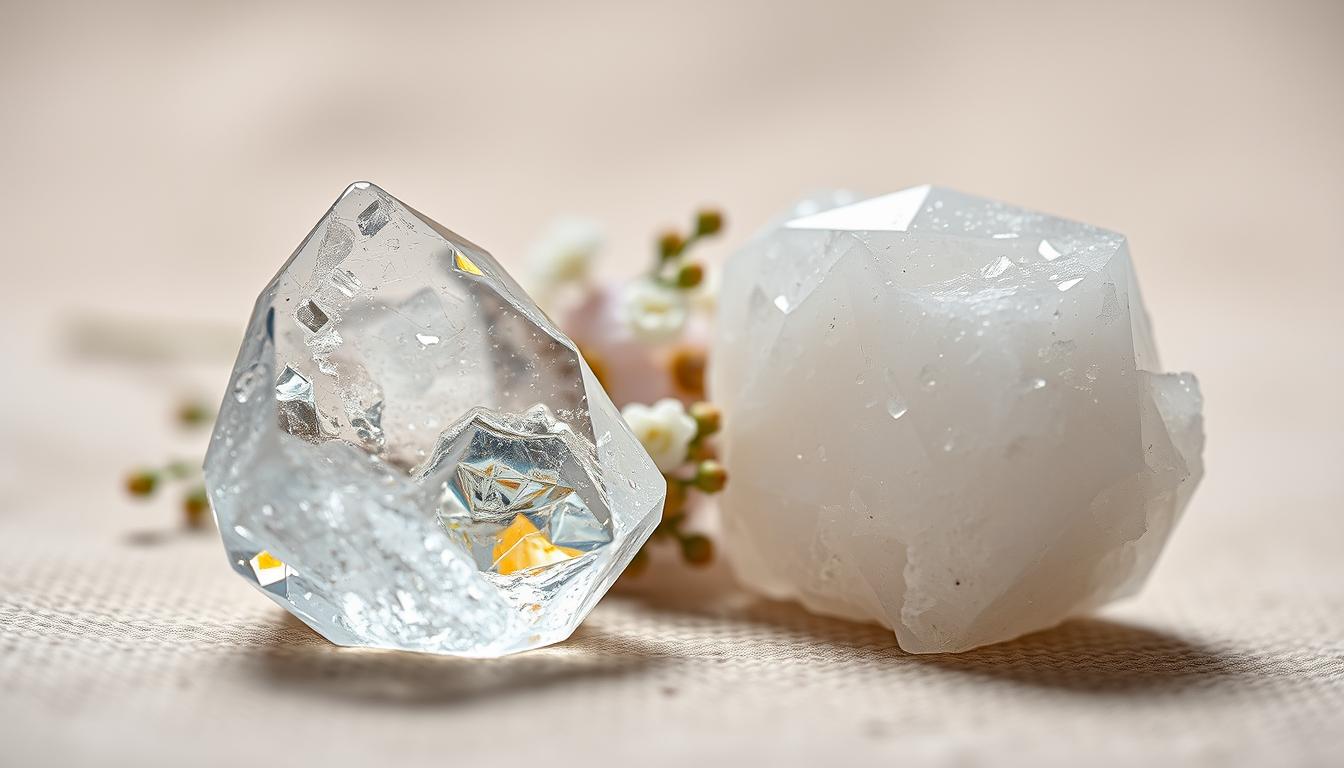
The main difference between clear and cloudy crystals lies in their internal structure and formation process. Clear crystals develop in stable conditions with minimal impurities, allowing light to pass through without obstruction. Cloudy crystals contain microscopic inclusions – tiny particles, air bubbles, or mineral deposits that scatter light and create their characteristic opaque appearance.
This fundamental difference affects everything from pricing to metaphysical properties. Clear specimens often command higher prices in the collector market due to their rarity and visual impact, while cloudy varieties are prized for their unique patterns and gentle energy.
Understanding Crystal Formation and Clarity
Crystal clarity develops during the formation process deep within the Earth. When conditions are perfect – stable temperature, pure mineral solutions, and slow cooling – crystals grow without interruption, creating clear specimens. When conditions change rapidly or impurities are present, the result is cloudy or opaque crystals.
The speed of formation plays a major role in clarity. Slow-forming crystals have time to develop perfect internal structures, while rapid formation traps impurities and creates cloudiness.
Natural Factors That Affect Clarity
Several environmental conditions during formation determine whether a crystal will be clear or cloudy:
- Temperature stability – Consistent heat allows perfect crystal growth without inclusions.
- Mineral purity – Clean solutions produce clear crystals while contaminated ones create cloudiness.
- Pressure conditions – Steady pressure prevents internal stress fractures that cause opacity.
- Formation speed – Slower growth typically results in higher clarity.
Popular Clear Crystal Varieties
Clear crystals are among the most sought-after specimens in any collection. Their transparency creates stunning visual effects and makes them perfect for display pieces.
Clear Quartz
Clear quartz represents the gold standard for crystal clarity. These specimens allow maximum light transmission and create beautiful prismatic effects when positioned near windows. High-quality clear quartz shows no internal flaws or cloudiness when viewed under magnification.
Collectors value clear quartz for its versatility and beauty. The crystal works well in both raw and polished forms, making it suitable for various display options.
Clear Calcite
Optical calcite, also known as Iceland spar, demonstrates perfect clarity with unique double-refraction properties. When you place text beneath clear calcite, you’ll see two images due to its special optical characteristics. This feature makes clear calcite specimens particularly valuable to collectors who appreciate both beauty and scientific properties.
Clear Fluorite
High-grade clear fluorite specimens are rare and highly prized. These crystals often display perfect geometric forms with glass-like clarity. Clear fluorite can be completely colorless or show subtle tints while maintaining excellent transparency.
Clarity Testing Tip
Hold your crystal up to printed text – clear specimens should allow you to read through them easily. If the text appears blurry or distorted, the crystal has internal inclusions that affect clarity.
Understanding Cloudy Crystal Appeal
Cloudy crystals offer their own unique beauty and value to collectors. The inclusions that create cloudiness often form interesting patterns, landscapes, or phantom images within the crystal structure.
Milky Quartz Characteristics
Milky quartz gets its cloudy appearance from millions of tiny fluid inclusions trapped during formation. These microscopic bubbles scatter light throughout the crystal, creating a soft, creamy appearance. Many collectors prefer milky quartz for its gentle, soothing energy and affordable pricing compared to clear varieties.
The degree of cloudiness varies significantly in milky quartz specimens. Some show light haziness while others are completely opaque, offering collectors a range of options within this single variety.
Included Crystals and Their Stories
Cloudy crystals often contain fascinating inclusions that tell the story of their formation. These might include:
- Phantom crystals – Show the outline of earlier growth stages within the crystal.
- Garden quartz – Contains mineral inclusions that look like tiny landscapes or gardens.
- Rutilated specimens – Feature needle-like mineral inclusions creating striking internal patterns.
- Tourmalinated varieties – Include black tourmaline crystals growing within clear or cloudy quartz.
Valuation Differences Between Clear and Cloudy Crystals
The crystal market values clear and cloudy specimens differently based on rarity, visual appeal, and collector demand. Understanding these value factors helps you make informed purchasing decisions, especially when considering the best crystals for beginner collectors who want maximum value for their investment.
Clear Crystal Pricing Factors
Clear crystals typically command premium prices due to several factors. Perfect clarity is rare in nature, making flawless specimens more valuable. Size also matters significantly – large, clear crystals are exponentially more expensive than smaller ones.
The quality grading system for clear crystals considers transparency, surface condition, and internal flaws. Museum-quality clear specimens with no visible inclusions can sell for hundreds or thousands of dollars depending on size and crystal type.
Cloudy Crystal Value Considerations
Cloudy crystals often offer better value for beginning collectors. While generally less expensive than clear varieties, certain cloudy specimens can be quite valuable. Crystals with unusual inclusion patterns, rare phantom formations, or exceptional aesthetic appeal can command high prices.
The key to valuing cloudy crystals lies in understanding what makes them special. A common milky quartz might cost a few dollars, but a specimen with rare inclusions or exceptional beauty could be worth considerably more.
Collecting Strategies for Both Types
Successful crystal collectors often focus on building balanced collections that include both clear and cloudy varieties. This approach provides diversity in visual appeal, energy properties, and investment potential, similar to the strategies outlined in our complete beginner’s guide to crystal collecting.
Building a Diverse Collection
Start with one high-quality clear specimen and one exceptional cloudy piece in your chosen crystal type. This gives you a foundation for comparison and helps you understand the differences between clarity grades. As your collection grows, you can add specimens that showcase the full range of clarity variations.
Consider focusing on one crystal family, such as quartz, and collecting examples of all clarity levels. This focused approach helps you become an expert in that particular crystal type while building a cohesive collection.
Quality Assessment Techniques
Learning to evaluate crystal quality goes beyond simple clarity assessment. Examine specimens under good lighting to spot internal flaws, surface damage, or treatment signs. Use a 10x jeweler’s loupe to inspect fine details and inclusions that affect value.
For clear crystals, look for optical clarity, freedom from cracks, and minimal surface scratches. In cloudy specimens, evaluate the beauty and uniqueness of inclusion patterns, overall symmetry, and structural integrity. When learning how to distinguish natural crystals from manufactured ones, these quality assessment skills become even more critical.
Frequently Asked Questions
Which type of crystal is better for beginners?
Cloudy crystals are often better for beginners due to their lower cost and forgiving nature. They allow new collectors to learn without the pressure of handling expensive clear specimens.
Do clear crystals have stronger energy than cloudy ones?
Energy strength varies by individual belief and crystal type rather than clarity alone. Many people find cloudy crystals have gentler, more nurturing energy compared to the amplifying properties of clear specimens.
How can I tell if a clear crystal is natural or treated?
Natural clear crystals often have minor imperfections or slight color variations, while treated crystals may appear too perfect. Professional testing or certification provides definitive authentication.
Are cloudy crystals less valuable than clear ones?
Not necessarily – value depends on rarity, beauty, and collector demand. Some cloudy specimens with unique inclusions or rare formations can be more valuable than common clear crystals.
What’s the best way to display different clarity types?
Use backlighting for clear crystals to showcase their transparency, and front lighting for cloudy specimens to highlight their internal patterns and textures.
Final Thoughts
Clear Vs Cloudy Crystals For Collectors represents a choice between different types of natural beauty rather than a simple quality hierarchy. Both clear and cloudy specimens offer unique advantages to collectors, from the stunning transparency of clear crystals to the fascinating inclusion patterns in cloudy varieties.
Building a collection that includes both types gives you the full spectrum of what crystals can offer. Start with specimens that speak to you personally, whether they’re crystal clear or beautifully cloudy, and let your collection grow naturally from there. Remember to consider proper storage methods to protect your crystals from damage and explore effective display techniques for showcasing your growing collection.