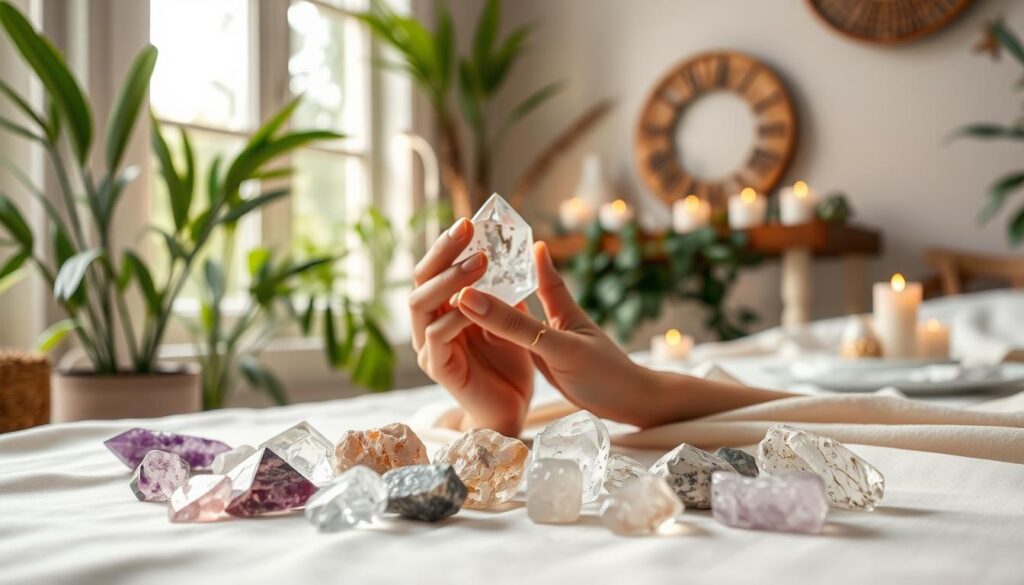
How To Clean Crystals Safely involves understanding the unique properties of each stone and choosing the right method to preserve their natural beauty and energy. Many crystals can be damaged by water, heat, or harsh chemicals, making proper cleaning essential for maintaining your collection.
Whether you’re new to crystal collecting or have been working with stones for years, knowing safe cleaning methods protects your investment and keeps your crystals looking their best. Different stones require different approaches, and what works for one crystal might harm another.
TL;DR
- Water-safe crystals like quartz and amethyst can be cleaned with mild soap and lukewarm water for 2-3 minutes.
- Salt-sensitive stones like selenite, malachite, and hematite should never touch water or salt-based cleaning methods.
- Soft brush cleaning with a dry toothbrush removes dirt from crystal crevices without risking water damage.
- Moonlight cleansing for 6-8 hours provides energetic cleaning without physical contact that could harm delicate stones.
How To Clean Crystals Safely
Safe crystal cleaning starts with identifying your stone type and its hardness level on the Mohs scale. Harder stones like quartz (hardness 7) can handle more aggressive cleaning than softer stones like fluorite (hardness 4).
Always research your specific crystal before cleaning, as some stones have unique sensitivities that aren’t immediately obvious. Keep a reference guide handy to check each stone’s properties before you begin any cleaning process.
Water-Safe Crystal Cleaning Methods
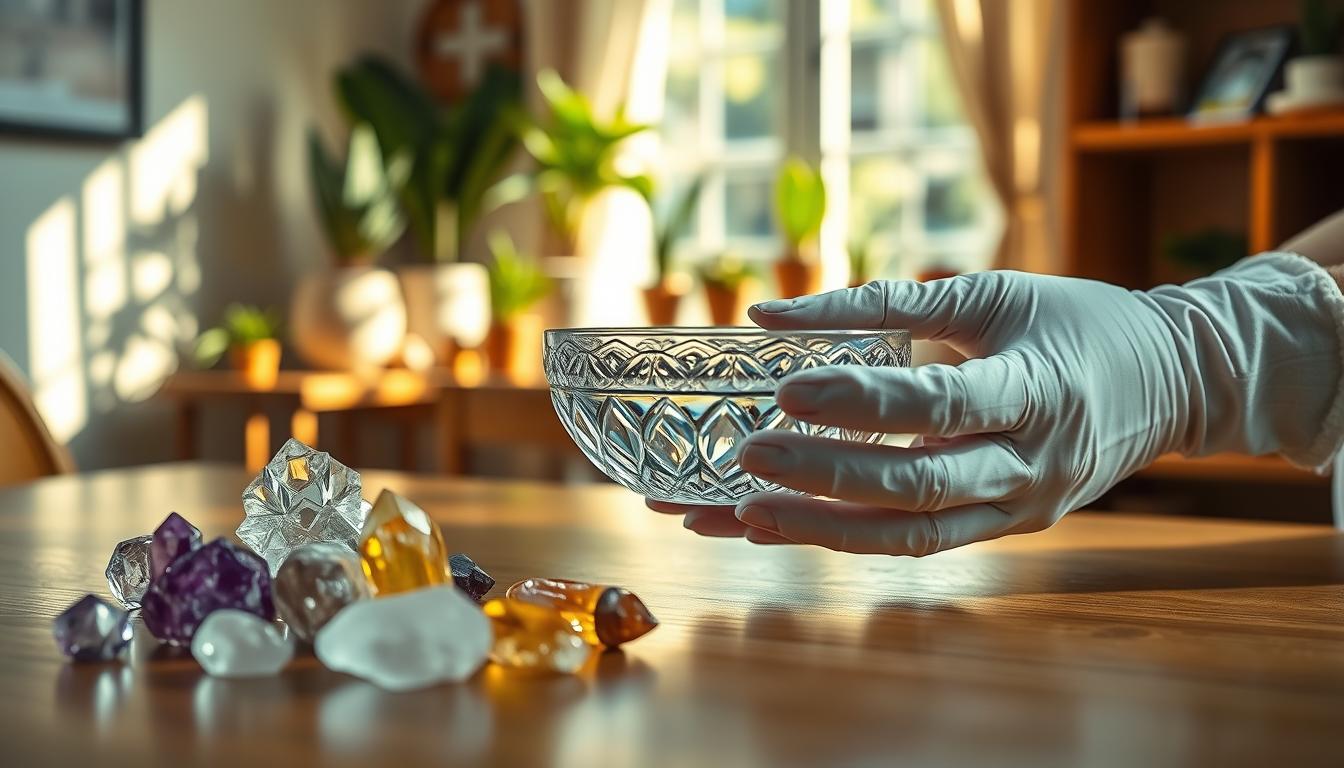
Most quartz varieties, including clear quartz, amethyst, and citrine, can be safely cleaned with water. Use lukewarm water and a mild soap like dish detergent, avoiding hot water that could cause thermal shock.
Gently scrub with a soft toothbrush to remove dirt from surface cracks and crevices. Rinse thoroughly and dry immediately with a soft cloth to prevent water spots from forming on the crystal surface.
Safe Water Cleaning Steps
- Check hardness rating. Only clean stones with Mohs hardness 7 or higher with water.
- Use lukewarm water. Hot water can crack crystals through thermal expansion.
- Add mild soap. One drop of dish soap per cup of water creates effective cleaning solution.
- Scrub gently. Use a soft toothbrush in circular motions to avoid scratching.
- Rinse completely. Remove all soap residue that could leave cloudy films.
- Dry immediately. Pat dry with soft cloth to prevent water damage.
Crystals That Cannot Touch Water
Several popular crystals dissolve, crack, or become damaged when exposed to water. These stones require dry cleaning methods only to preserve their structure and appearance.
Salt-based crystals like halite dissolve completely in water, while layered stones like selenite can flake apart. Metal-containing crystals may rust or develop stains that permanently damage their appearance.
Water-Sensitive Crystals
- Selenite – Dissolves and becomes cloudy in water
- Malachite – Contains copper that can leach toxic substances
- Hematite – Iron content causes rust stains
- Pyrite – Creates sulfur compounds that smell and stain
- Calcite – Soft stone that dissolves in acidic water
- Angelite – Turns back into gypsum when wet
- Celestite – Fragile structure cracks with temperature changes
Dry Cleaning Techniques
Dry cleaning methods work for all crystal types and provide the safest option when you’re unsure about water sensitivity. These techniques remove physical dirt without risking chemical or structural damage.
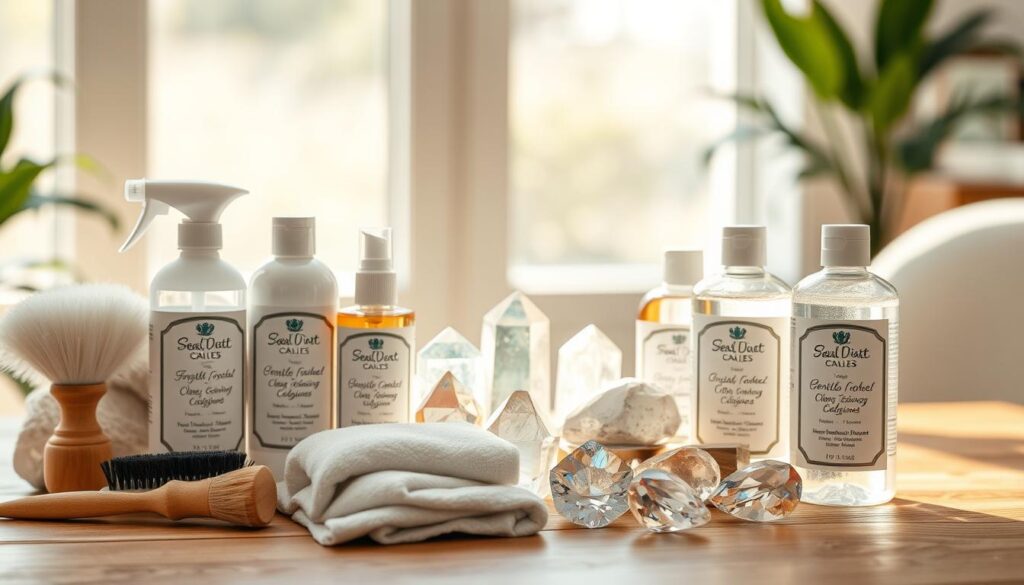
Use soft brushes, compressed air, or dry cloths to clean crystal surfaces. Work slowly and gently to avoid scratching softer stones or breaking off small crystal points.
Effective Dry Cleaning Tools
- Soft toothbrush – Removes dirt from cracks and crevices safely
- Microfiber cloth – Polishes smooth surfaces without scratching
- Compressed air – Blows dust from delicate areas without contact
- Cotton swabs – Cleans small detailed areas precisely
- Soft paintbrush – Dusts large surface areas gently
Test First Rule
Always test any cleaning method on a small, hidden area of your crystal first. Wait 24 hours to check for any damage before cleaning the entire stone.
Energy Cleansing Methods
Many crystal enthusiasts combine physical cleaning with energy cleansing to refresh both the appearance and metaphysical properties of their stones. These methods work alongside physical cleaning without risking damage.
Energy cleansing techniques like moonlight, sage smoke, or sound vibrations don’t involve direct contact with potentially harmful substances. They’re safe for all crystal types and can be used regularly for maintenance.
Popular Energy Cleansing Methods
- Moonlight exposure – Place crystals outside during full moon for 6-8 hours
- Sage smudging – Pass smoke around crystals for 2-3 minutes
- Sound cleansing – Use singing bowls or bells near crystals for 5 minutes
- Selenite charging – Place other crystals on selenite slabs overnight
- Brown rice burial – Bury crystals in dry rice for 24 hours
What to Avoid When Cleaning Crystals
Certain cleaning methods can permanently damage crystals even if they seem gentle or natural. Understanding these common mistakes that new crystal collectors make protects your collection from irreversible harm.
Chemical cleaners, extreme temperatures, and abrasive materials can crack, discolor, or dissolve crystals. Salt water, despite being natural, corrodes many metal-containing stones and should be avoided unless you know your crystal is salt-safe.
Dangerous Cleaning Methods
- Boiling water – Thermal shock cracks most crystals
- Bleach or ammonia – Chemical damage that can’t be reversed
- Salt water – Corrodes metal-containing and soft stones
- Ultrasonic cleaners – Vibrations can shatter included or fractured crystals
- Abrasive scrubbers – Scratches and dulls crystal surfaces permanently
- Freezing – Rapid temperature changes cause internal stress fractures
Frequently Asked Questions
How often should I clean my crystals?
Clean crystals monthly for regular use or whenever they appear dusty or dull. Handle cleaning gently and only as needed to avoid unnecessary wear on your stones.
Can I use soap on all water-safe crystals?
Use only mild, pH-neutral soap like dish detergent on water-safe crystals. Avoid harsh detergents, perfumed soaps, or anything with strong chemicals that could leave residue.
What’s the safest way to clean unknown crystals?
Use dry cleaning methods only until you can identify the crystal type and research its specific cleaning requirements. A soft brush and compressed air work safely on all crystal types.
Is it safe to clean crystals in the dishwasher?
Never put crystals in dishwashers as the hot water, harsh detergents, and intense spray can damage even the hardest stones. Always clean crystals by hand with gentle methods.
Can sunlight damage crystals during cleaning?
Some crystals like amethyst, rose quartz, and fluorite can fade in direct sunlight. Keep crystals out of bright sun while cleaning and drying to preserve their natural colors.
Final Thoughts
How To Clean Crystals Safely requires matching the right cleaning method to each stone’s specific properties and sensitivities. Taking time to research your crystals before cleaning prevents costly damage and keeps your collection beautiful for years.
Start with the gentlest method that will do the job, and remember that regular light cleaning is better than occasional aggressive cleaning. Your crystals will maintain their natural beauty and energy when treated with proper care and respect, and proper storage methods will further protect your investment.