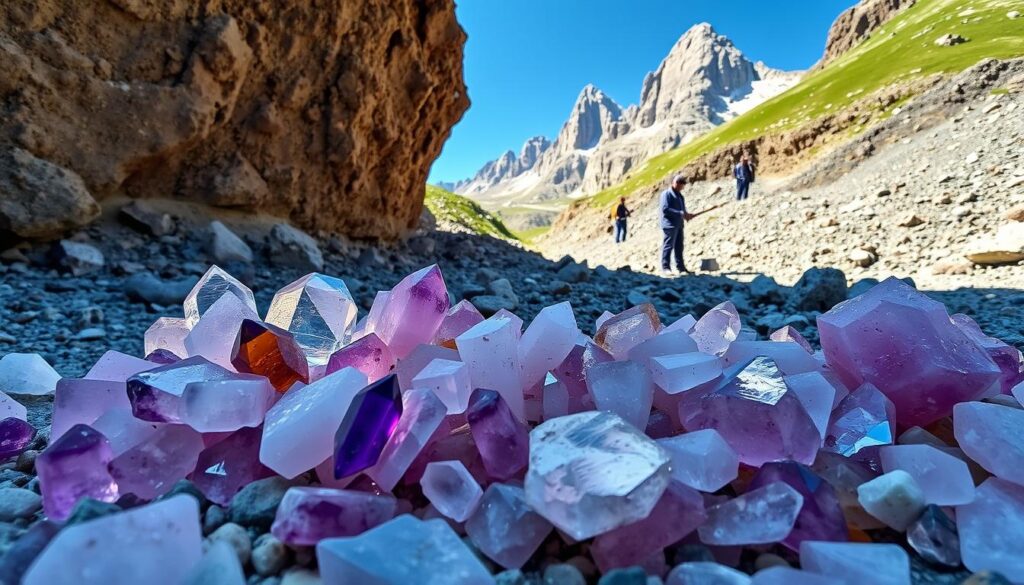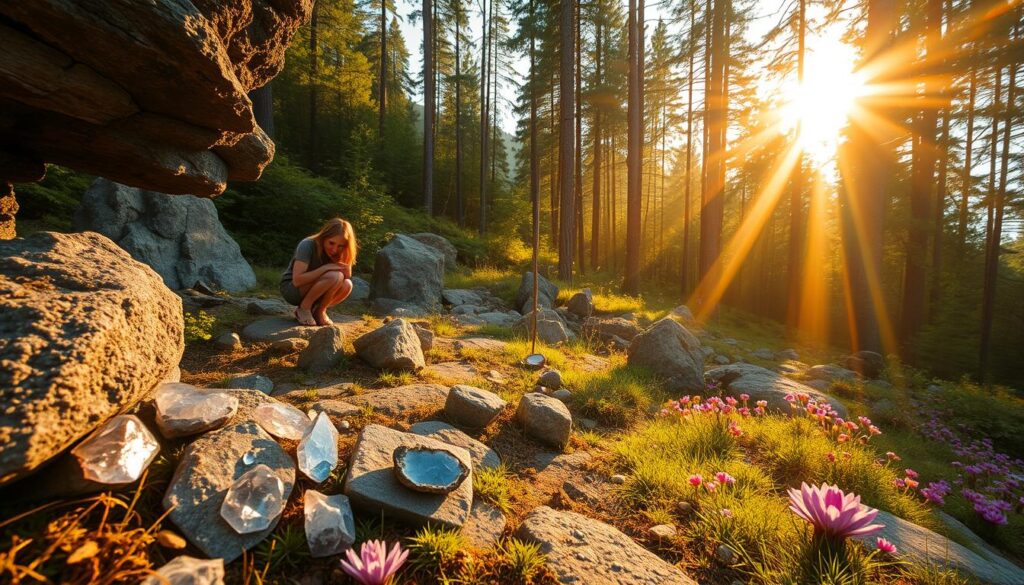
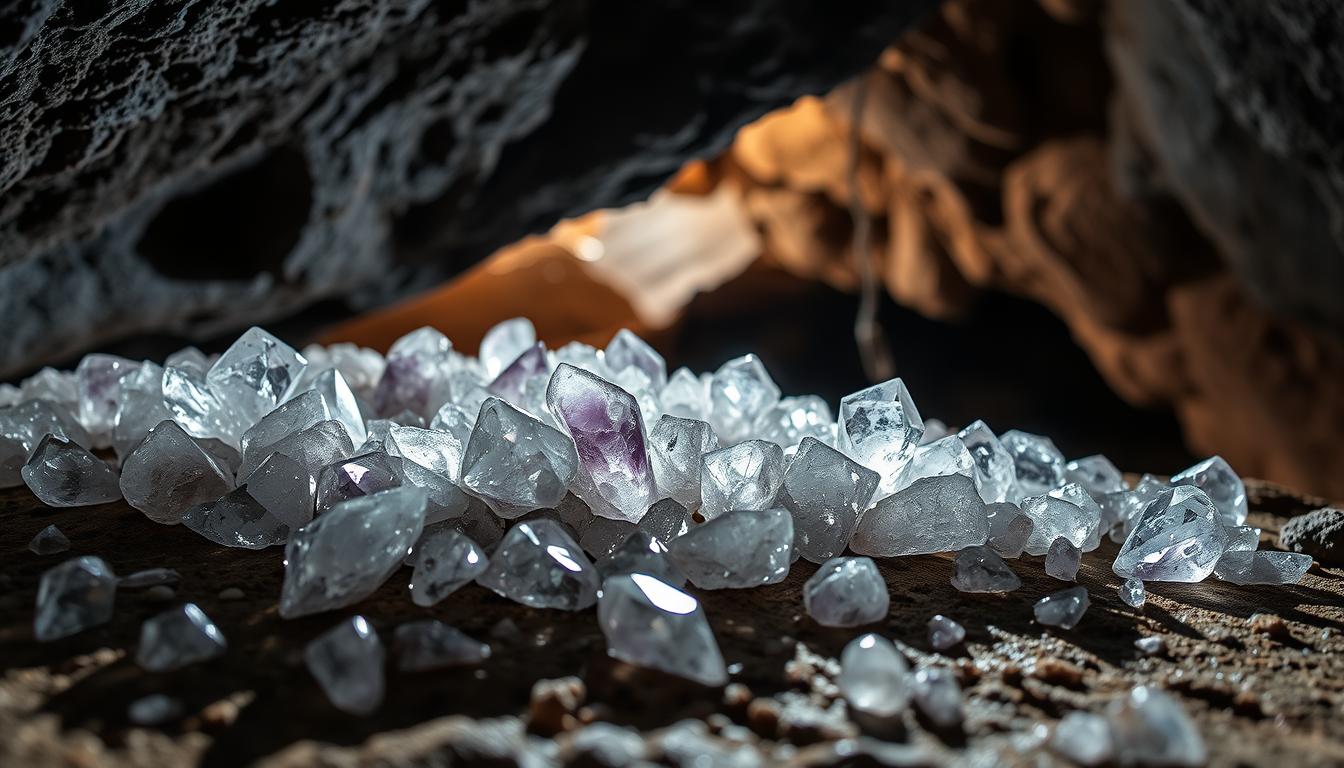
Where Crystals Are Commonly Found spans numerous locations across our planet, from deep underground caves to accessible surface deposits. Whether you’re a seasoned rockhound or just starting your crystal collecting journey, knowing the right places to search can make all the difference between finding common quartz and discovering rare specimens.
Natural crystal formations occur through specific geological processes that take thousands to millions of years. Understanding these environments helps collectors focus their efforts on the most productive locations rather than searching randomly.
TL;DR
- Pegmatite formations contain over 300 different mineral species and produce some of the world’s largest crystals.
- Volcanic areas yield crystals like obsidian, pumice, and peridot within 50 miles of active or dormant volcanoes.
- Sedimentary rock layers hold 60% of all geode discoveries, particularly in limestone and shale formations.
- Metamorphic zones produce garnet, staurolite, and andalusite crystals at temperatures above 400°C during formation.
Where Crystals Are Commonly Found in Nature
Crystals form in three main geological environments, each producing distinct types of specimens. These locations offer the best opportunities for both casual collectors and serious mineral hunters.
The most productive crystal hunting happens in areas where geological processes have concentrated minerals over long periods. These hotspots often show visible signs that indicate promising collecting conditions.
Igneous Rock Formations
Volcanic and plutonic rocks create ideal conditions for crystal formation through slow cooling processes. Pegmatites, which are coarse-grained igneous rocks, produce some of the most spectacular crystal specimens found anywhere.
- Granite pegmatites – contain feldspar, mica, quartz, and rare minerals like tourmaline and beryl.
- Volcanic cavities – form amethyst, agate, and zeolite crystals in gas bubble spaces.
- Lava flows – create obsidian and volcanic glass formations near eruption sites.
- Hydrothermal veins – produce quartz, calcite, and metallic ore crystals through hot water circulation.
Sedimentary Crystal Deposits
Layered sedimentary rocks trap and concentrate minerals through water evaporation and chemical precipitation. These formations often contain the most accessible crystal collecting sites for beginners.
- Limestone caves – develop calcite formations, stalactites, and flowstone crystals.
- Salt flats – produce halite cubes and gypsum crystals through evaporation.
- Sandstone layers – contain iron oxide crystals and mineral replacements.
- Shale deposits – hold pyrite cubes, marcasite, and fossil replacements.
Geographic Hotspots for Crystal Collecting
Certain regions worldwide have gained reputations as premier crystal collecting destinations. These areas combine favorable geology with accessibility for collectors of all experience levels.
North American locations offer diverse collecting opportunities from coast to coast. The geological variety across different states provides access to hundreds of crystal species without international travel.
Western United States
The mountainous western states contain some of North America’s richest mineral deposits. Volcanic activity and mountain-building processes have created numerous crystal collecting sites.
- Arkansas – famous for clear quartz crystals from the Ouachita Mountains.
- Montana – produces sapphires, garnets, and agates in accessible locations.
- Colorado – yields amazonite, topaz, and smoky quartz at high elevations.
- Arizona – contains turquoise, peridot, and copper mineral specimens.
International Crystal Localities
Global destinations offer unique specimens not found in North American deposits. These locations often specialize in specific crystal types due to their unique geological histories.
- Brazil – produces amethyst geodes, citrine, and the world’s largest quartz crystals.
- Madagascar – yields rose quartz, tourmaline, and rare collector specimens.
- Morocco – contains spectacular mineral clusters and desert rose formations.
- Mexico – famous for silver crystals, fluorite, and massive gypsum formations.
Specific Crystal Formation Environments
Different crystal types require specific conditions to form properly. Understanding these environments helps collectors target their searches for particular specimens.
Temperature, pressure, and chemical composition all influence which crystals develop in any given location. These factors create predictable patterns that experienced collectors learn to recognize.
Cave Systems and Cavities
Underground spaces provide protected environments where crystals grow undisturbed for thousands of years. These locations often contain the most perfect specimens due to stable conditions.
- Identify cave entrances. Look for limestone outcrops and natural openings in rock faces.
- Check for mineral staining. Iron oxide and copper stains indicate active mineralization.
- Examine cavity walls. Crystal formations typically grow on walls rather than floors.
- Test with UV light. Many cave minerals fluoresce under ultraviolet illumination.
Stream and River Deposits
Moving water concentrates heavy minerals and tumbles crystals smooth during transport. These locations offer easily accessible collecting without specialized equipment or permits.
- Gravel bars – concentrate heavy minerals like garnet and magnetite.
- Bedrock exposures – reveal in-place crystal formations along stream cuts.
- Flood deposits – scatter crystals across wide areas during high water events.
- Creek bends – create natural sorting areas where different minerals separate by weight.
Safety First When Crystal Hunting
Always inform someone of your collecting location and expected return time. Carry emergency supplies, first aid materials, and a reliable communication device when exploring remote areas.
Seasonal and Weather Considerations
Timing affects both access to collecting sites and the visibility of specimens in the field. Weather conditions can either help or hinder successful crystal hunting expeditions.
Spring conditions often provide the best collecting opportunities as winter freeze-thaw cycles expose fresh material. Recent rainfall cleans surfaces and makes crystals more visible against rock backgrounds.
Optimal Collecting Conditions
Specific weather patterns create ideal conditions for finding crystals in their natural settings. These conditions maximize both safety and success rates during collecting trips.
- After rainfall – washes away dust and debris, revealing hidden crystals.
- Early morning – provides optimal lighting angles for spotting reflective surfaces.
- Overcast days – eliminate harsh shadows that can hide specimens.
- Post-freeze periods – break apart weathered rock and expose fresh material.
Frequently Asked Questions
Can I find valuable crystals in my backyard?
Valuable crystals require specific geological conditions that most residential areas lack. However, you might find common minerals like quartz or calcite depending on your local bedrock.
Do I need permission to collect crystals on public land?
Most public lands allow casual collecting of common minerals for personal use. Always check with the National Park Service or Bureau of Land Management for specific regulations as some areas restrict collecting or require permits.
What tools do I need for crystal collecting?
Basic tools include a rock hammer, chisel set, safety glasses, gloves, and containers for specimens. A UV light helps identify fluorescent minerals in the field.
How deep underground are most crystals found?
Surface collecting yields most specimens as erosion exposes deeper formations over time. Crystals can form at any depth, but accessible specimens are typically within 10 feet of the surface.
Are there dangerous areas I should avoid when crystal hunting?
Avoid abandoned mines, unstable cliff faces, active quarries, and areas with recent rockfall. The Mine Safety and Health Administration provides safety guidelines for exploring near mining areas. Always prioritize safety over specimen collecting.
Final Thoughts
Where Crystals Are Commonly Found encompasses a fascinating variety of geological environments worldwide. From accessible stream beds to remote mountain pegmatites, each location offers unique collecting opportunities for different skill levels and interests.
Start exploring your local geology and gradually expand to regional hotspots as your knowledge and experience grow. Once you’ve collected specimens, learning proper storage techniques and cleaning methods will help preserve your finds for years to come. Consider joining the American Federation of Mineralogical Societies to connect with fellow collectors and learn about organized field trips. The combination of outdoor adventure and mineral discovery makes crystal collecting a rewarding lifelong pursuit.